


Artificial intelligence overview powerpoint presentation slides




Try Before you Buy Download Free Sample Product
 Impress Your
 Audience
 100%
100% Editable
 Save Hours
 of Time


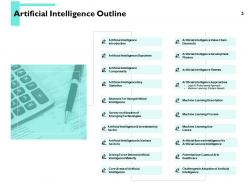
Automate your business operations by incorporating these Artificial Intelligence Overview PowerPoint Presentation Slides. The scope of machine learning is increasing day by day as it is much more convenient and efficient. Facilitate business transformation using this machine learning PowerPoint presentation. With the advent of new and improved technology, it is important to replace human intelligence with robotic process automation. Showcase the stimulation of human intelligence and how applying artificial intelligence can help the organization to grow using this computer science PowerPoint slideshow. You can also present a detailed analysis of AI along with its components, objectives, key statistics, reasons and many other points with the help of this machine intelligence PowerPoint visual. Some of the problems are beyond the control of a human. They do require cognitive intelligence. Utilize this problem-solving PowerPoint graphic in that situation to find apt solutions to your organizational problems. Therefore, download our artificial intelligence presentation to replace your old technology with machine consciousness, sentience, and mind.
People who downloaded this PowerPoint presentation also viewed the following :
Video for Artificial intelligence overview powerpoint presentation slides
Content of this Powerpoint Presentation
Can machines think like humans? This fundamental question has led to the foundation of Artificial Intelligence, which is today reaching its goals of a smart robot with human-like thinking and emotions.
AI plays a major role in today's world and across industries. It helps to automate and reduce the work of humans by focusing on more complex tasks. This leads to an increase in production and efficiency in businesses.
How would Artificial Intelligence transform the way we live, work, and interact with technology in the future? Click here and check our Artificial Intelligence Powerpoint Presentation Slides to get a complete intro.
AI algorithms assesses the behavior and preferences of users and provide experiences that can be personalized to the user's demands. To understand this better, SlideTeam has crafted Top 10 Artificial Intelligence Overview Powerpoint Presentation Slides. These templates are 100% editable, customizable, and content-ready and will help you tailor your presentation according to specific audience profiles.
Find here the Comprehensive Training Curriculum on Artificial Intelligence Training PPTs.
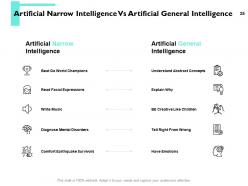
Artificial Intelligence can be divided into two categories: narrow AI and general AI. The Narrow AI is capable of doing specialized tasks, but the General AI is designed to replicate human intelligence. AI can generate images, videos, and content and can do the work of a human beyond expectations.
Let’s Explore!
Template 1: Artificial Intelligence Introduction
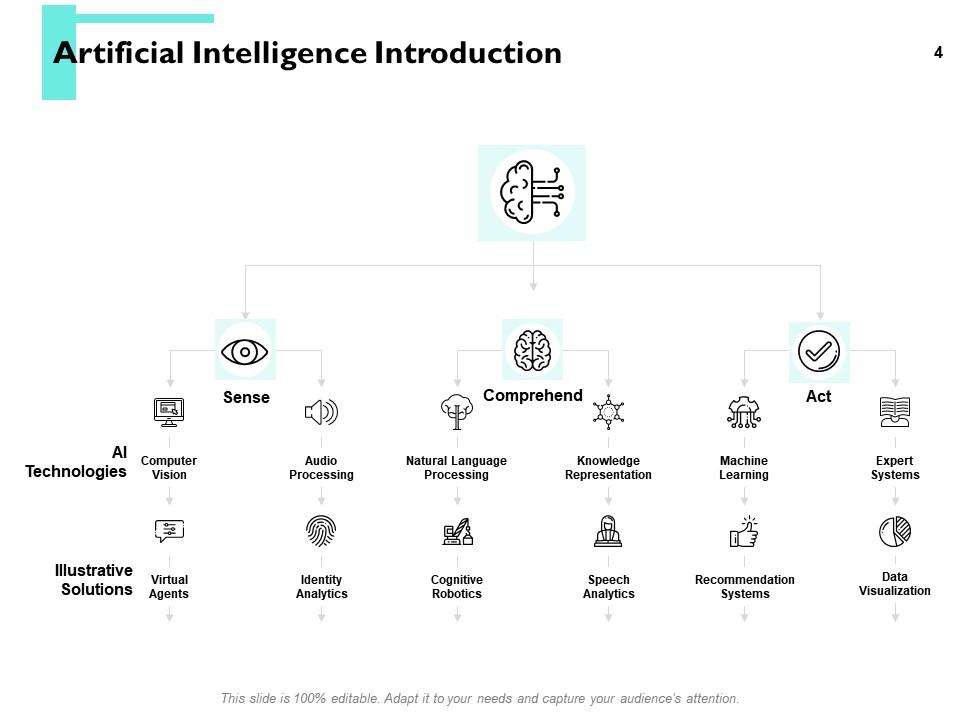
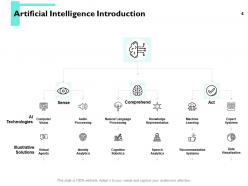
This PowerPoint presentation shows Artificial Intelligence's capabilities in three categories: sense, comprehend, and act. The first category, Sense, can translate data from sensors, cameras, and other sources. It comprises computer vision, audio processing, virtual agents, and identity analytics. The second category, Comprehend, is capable of simplifying difficult facts. It includes natural language processing, knowledge representation, speech analytics, and cognitive robots. The final category, Act, has the ability to make judgments and take action. It includes machine learning, expert systems, data visualization, and recommendation systems. All of these categories claim that AI can sense, comprehend, and act on accessible information.
Template 2: Artificial Intelligence Objectives
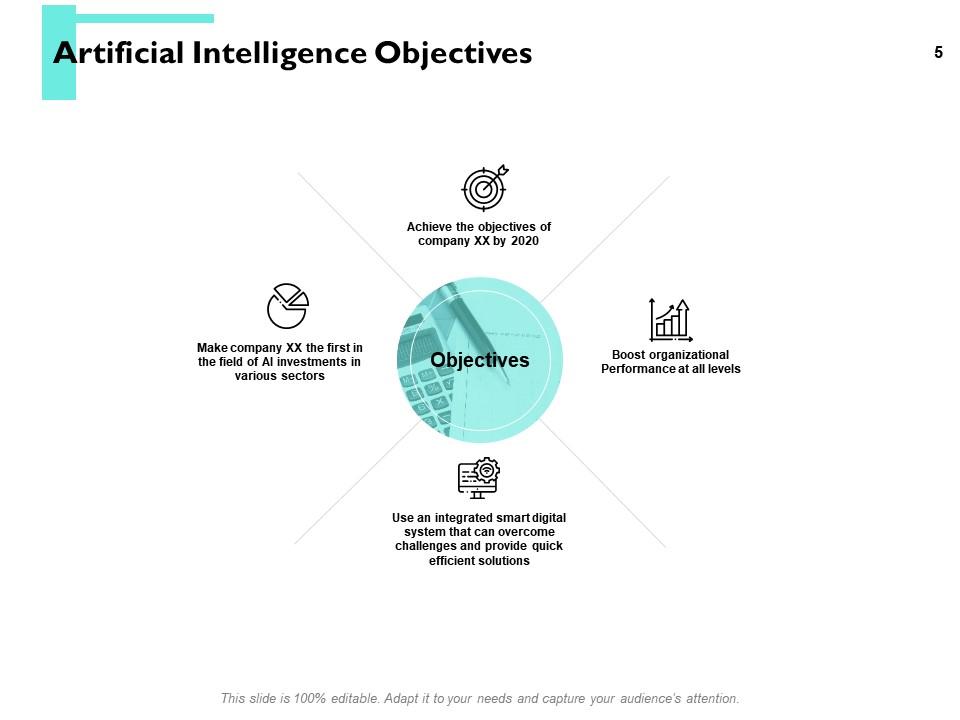
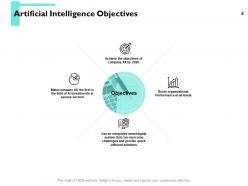
This PPT aims to achieve the company's objectives. It aims to make the company reach the top in the field of AI investments in all sectors. Artificial intelligence will assist in turning complex ideas and data into simple ones; hence, it's important to utilize it and get the best results from it.
Template 3: Artificial Intelligence Components
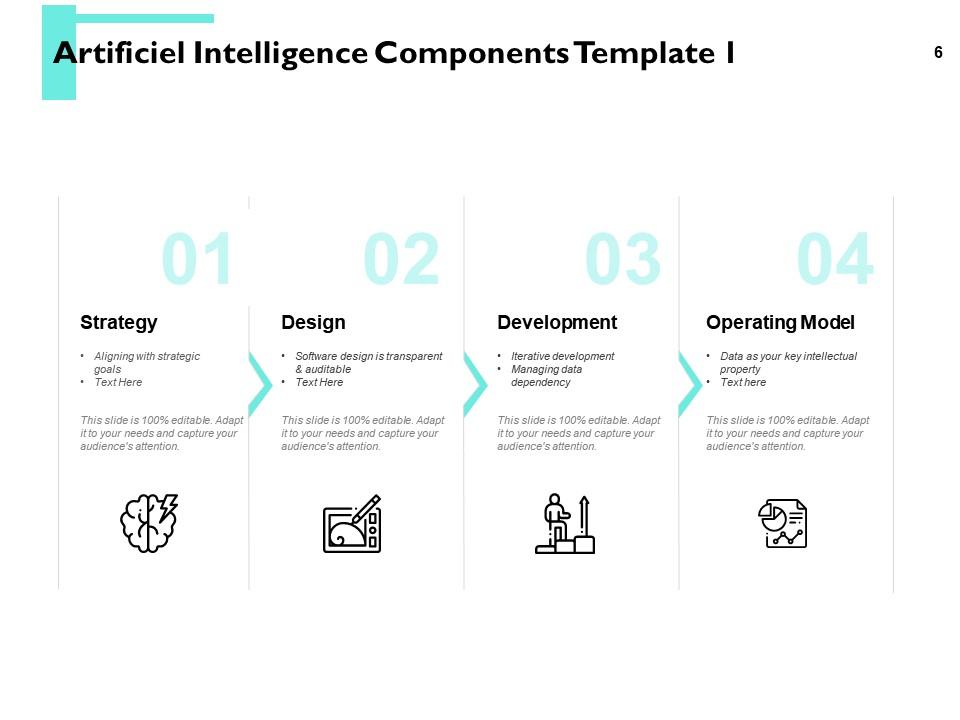
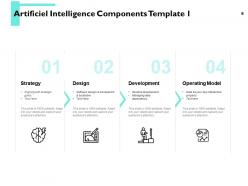
With this PowerPoint presentation, check the four key components of Artificial Intelligence: Strategy, Design, Development, and Operating Model. Strategy depicts the benefit of integrating AI into business models. The design focuses on analyzing and applying AI solutions and their user interfaces. Development highlights the creation of AI algorithms and their systems, and the Operating Model describes how to deploy, manage, and scale AI. These components provide a framework for using AI effectively to achieve the desired results in an organization. To make the work hassle-free and quick, implement all the components of AI and be a part of an advanced technological world.
Template 4: Artificial Intelligence Components
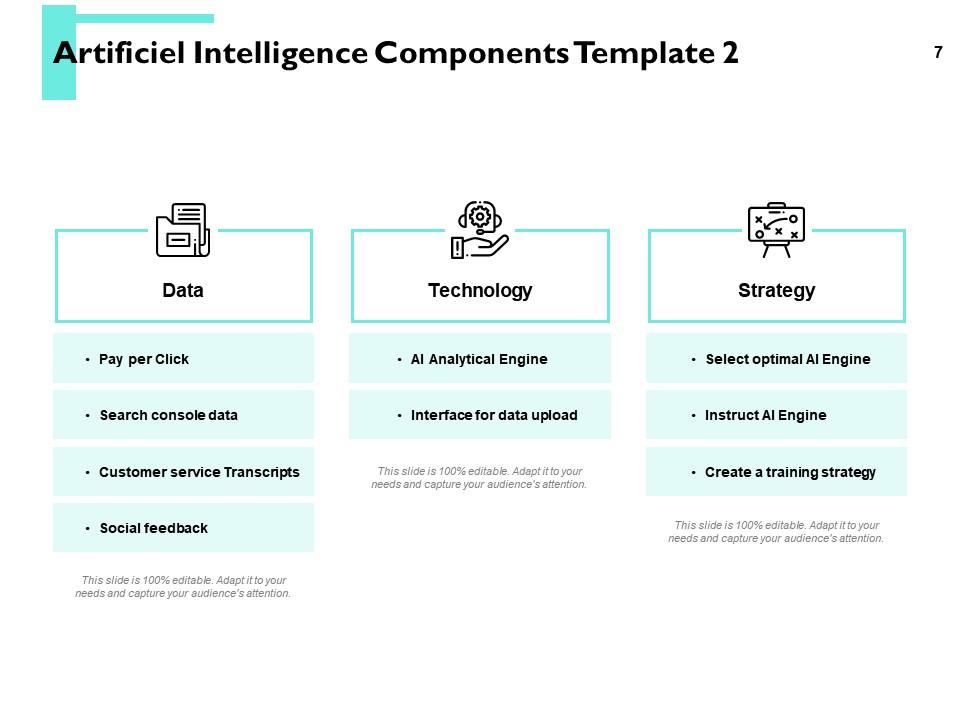
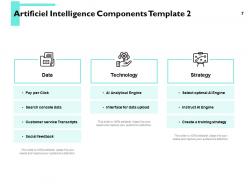
The three important components of AI are Data, Technology, and Strategy. With Data, we know the importance of quality data, which is the foundation of AI applications, and we study data collection, processing, and management. With Technology, know the tools and algorithms that power AI systems and learn about machine learning, computer vision capabilities, and natural language processing. With Strategy, know how to translate AI and align AI initiatives with the goals of the organization. These components will collectively help to understand and implement AI and assist in accomplishing the goals of the company.
Template 5: Artificial Intelligence Key Statistics
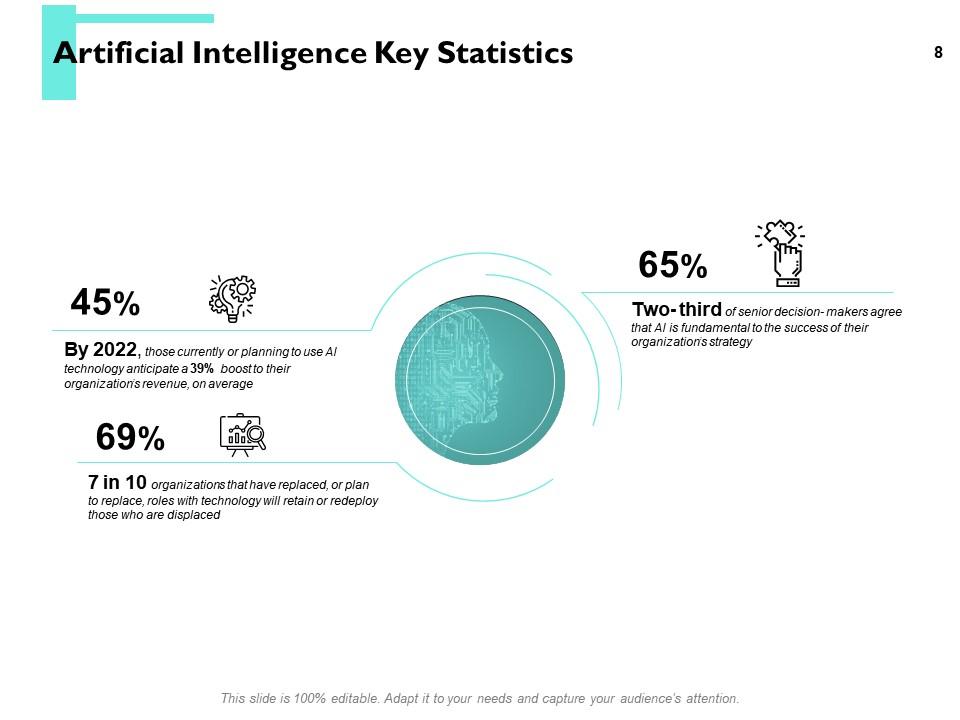
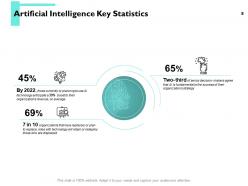
This PowerPoint presentation highlights the key statistics of Artificial Intelligence that cover the impact and significance of AI. The statistics report will disclose the usage of AI in companies, as well as its growth, market size, and success metrics. The idea is to understand the current state of AI and its future and enhance the understanding and engagement of the audience. These statistics will analyze the success rate of AI, its benefits and impact, and help decide its usage and implementation.
Template 6: Reasons For Using Artificial Intelligence
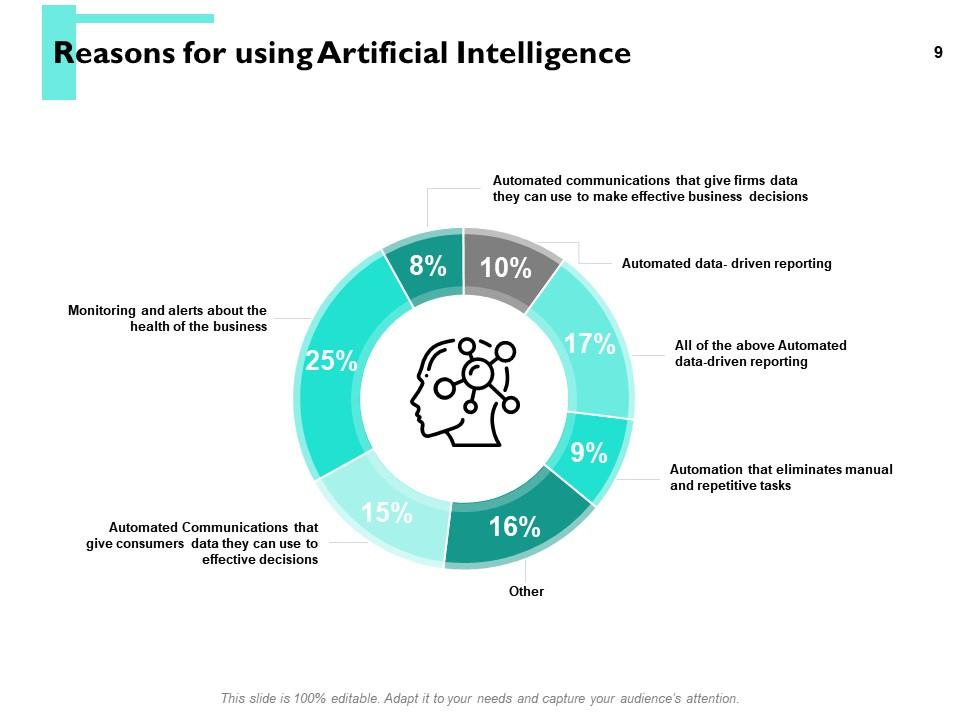
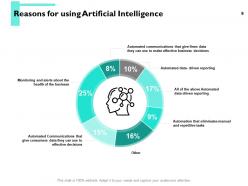
The next PPT covers the reasons for using Artificial Intelligence. These include increasing the efficiency of the company, improving decision-making, and bringing innovation. All these can be achieved through automated and advanced technologies built into AI. It helps to personalize user experiences and allocate resources effectively. It is a source of abundant data in both word and visual formats. Unlock new revenue options using AI and transform and expand your business models. With AI, scale and adapt your organizations and face the dynamic markets through innovation. Use AI to convert your dreams into reality, achieve the desired goals, and complete the projects.
Template 7: Survey on Adoption Of Emerging Technologies
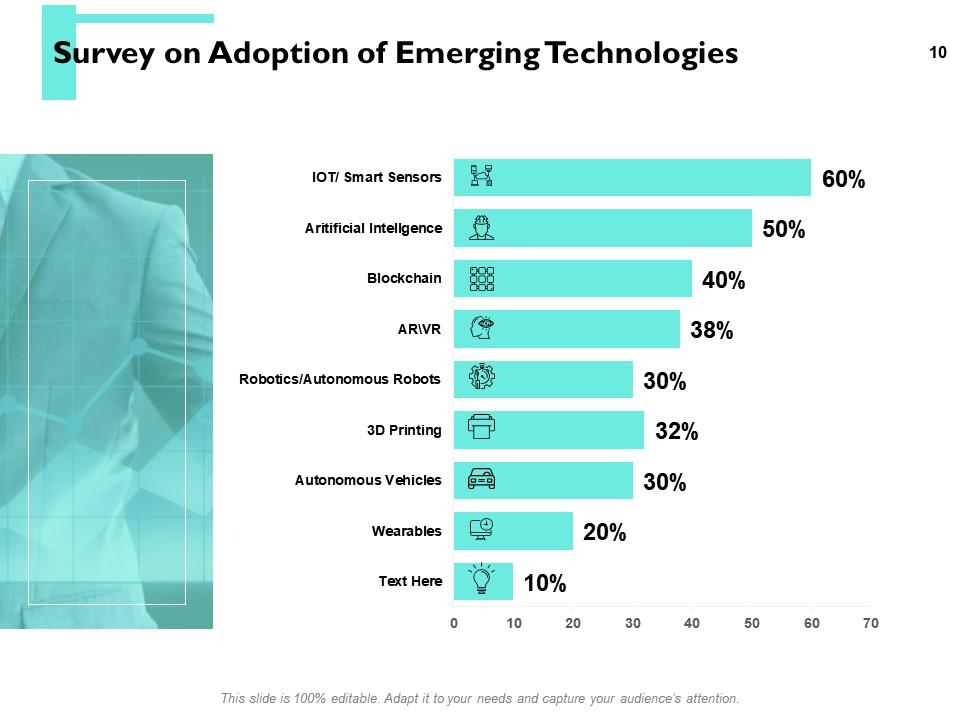
Through this PPT, a survey will be created on how technologies are adopted and implemented. The most widely used technology in recent times is AI, and with this survey, you can collect information on how, where, and when the technology is used. Know the advantages and disadvantages of using AI and how user-friendly it is. Also, know what is delaying or interrupting the implementation of AI and how it can be used in the best version to get the best results. Using the survey, make decisions on how to adopt AI in business models.
Template 8: Artificial Intelligence & Investment by Sector
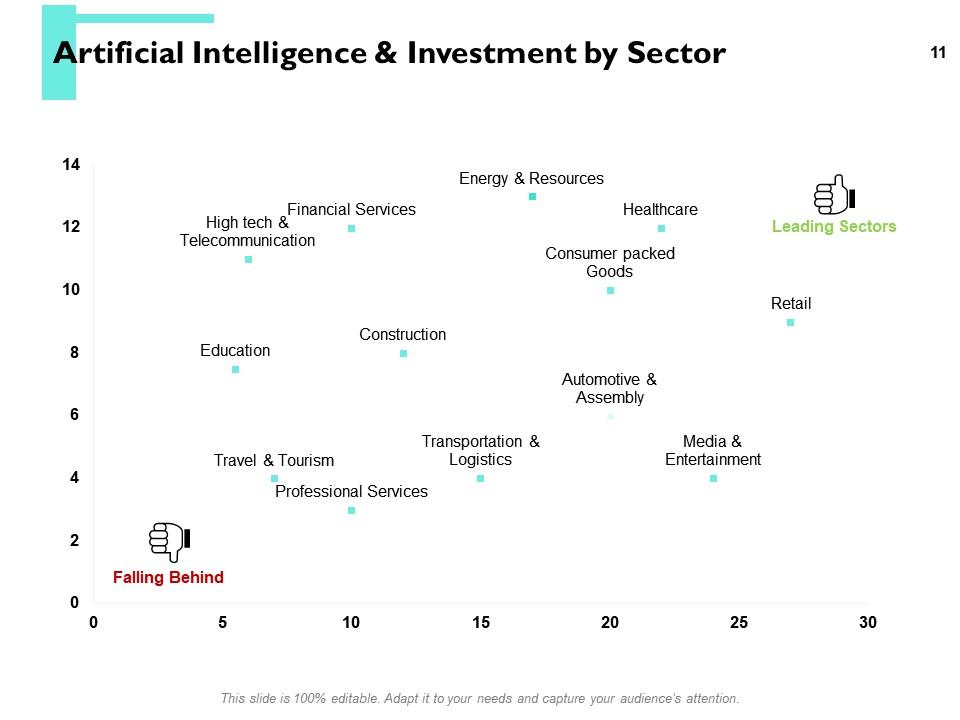
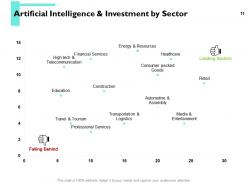
From the next PowerPoint presentation know the relationship between artificial intelligence and the investment it needs. The sectors where AI can find its place are Financial Services, Construction, Media and Entertainment, Travel and Tourism, Energy and Resources, Professional services, and more. Find out how industries from various sectors allocate funds to AI to bring innovation and face competition.
Template 9: Artificial Intelligence in Various Sectors
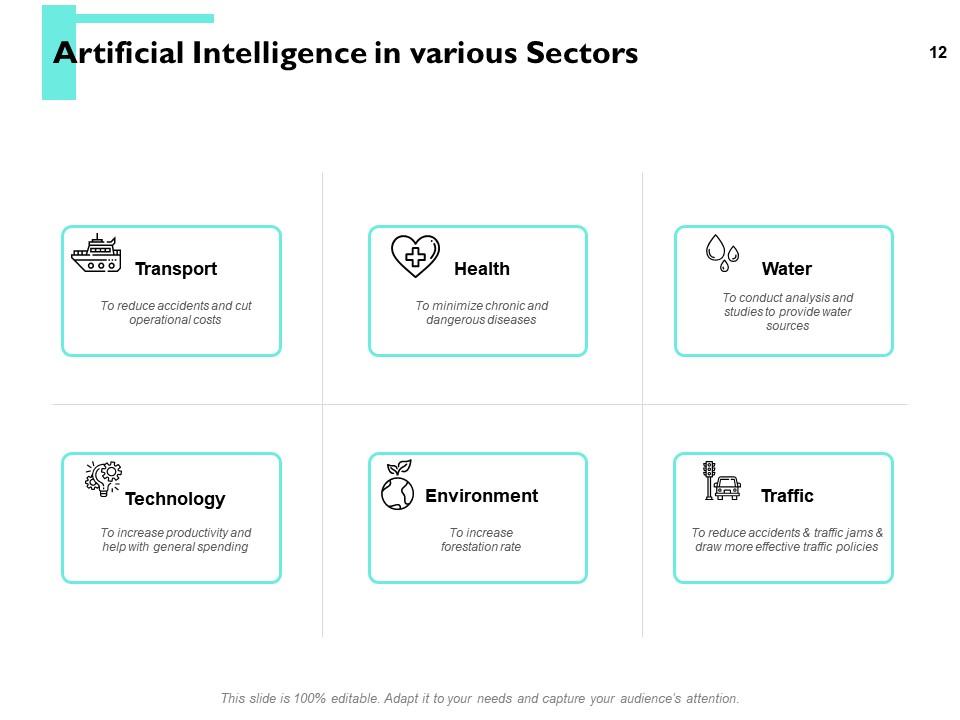
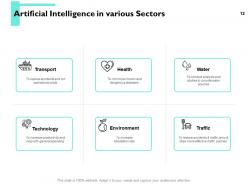
This template explains how AI is used in many sectors, such as water management, healthcare, environment, traffic control, transportation, and technology. Each sector defines how AI technologies may revolutionize and modernize processes and address problems. AI provides innovation in fields such as water allocation, traffic flow, and healthcare development and helps in pollution management and environmental monitoring, while technological improvements help in safe transportation.
Template 10: Driving Force Behind Artificial Intelligence Maturity
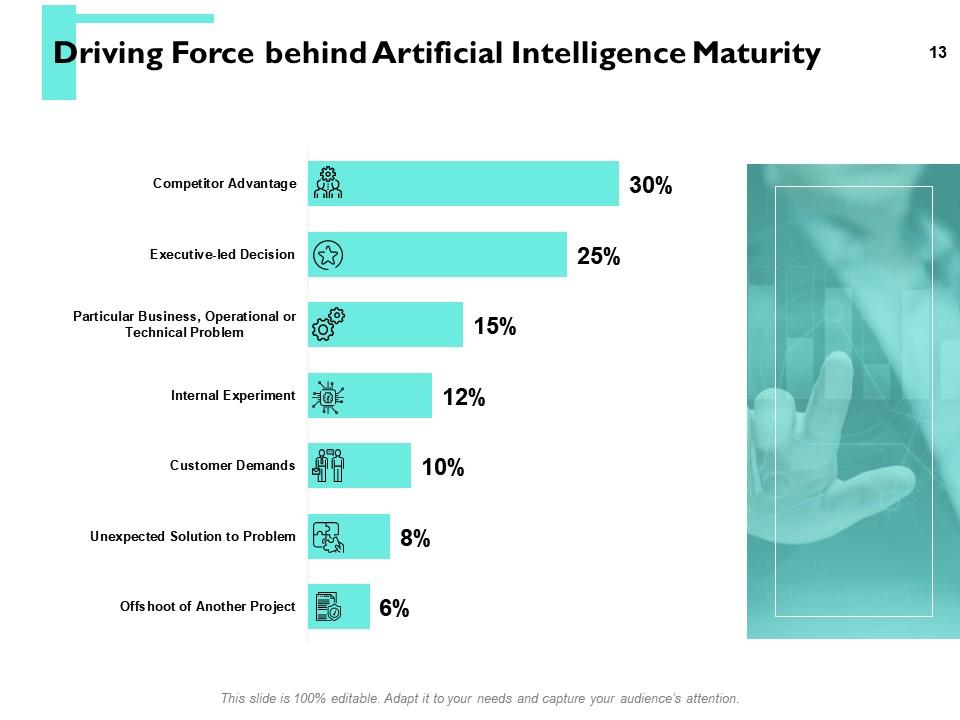
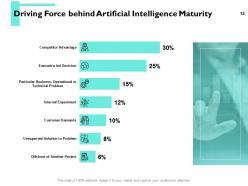
Use this PPT Template as a primer on factors that results in the AI technology being called mature and able to take the next step into daily use on the lines of the internet. The slide gives an insight into factors and causes that are influencing the growth and adoption of AI across industries. It explains and elaborates on the need for data, learning machine algorithms, and increasing investment in AI research and development. Companies must grasp these forces in order to deploy AI and keep up with the quickly changing technology world.
ARTIFICIAL INTELLIGENCE IS A BOON
AI helps companies stay competitive and become advanced technologically. AI connects the present and the future, and it has the capability of writing about the future of the economy. Convert all the complex data into simple ones through AI and add additional data to raise the quality of the content.
Get the work done in seconds using AI and save all your precious time. Process and analyze the information effectively and efficiently and make informed and strategic decisions. Get the answer to all the questions through Artificial Intelligence and add visuals, charts, and case studies to your projects. Achieve cost savings through AI automation and optimization and minimize errors in work.
Artificial intelligence overview powerpoint presentation slides with all 37 slides:
Use our Artificial Intelligence Overview Powerpoint Presentation Slides to effectively help you save your valuable time. They are readymade to fit into any presentation structure.






FAQs for Artificial intelligence overview
So basically, narrow AI is super focused on one thing - like how Netflix knows exactly what shows you'll binge next, or chess programs that crush grandmasters. General AI would be more like... well, us. Able to learn anything and everything. Right now we've got narrow AI everywhere (Siri, Tesla's autopilot, photo tagging) but general AI? That's still sci-fi territory, honestly. The media makes it sound way closer than it actually is. Whatever you're building, you're definitely working with narrow AI, so just pick one specific problem you want it to tackle. Don't expect magic.
Honestly, just pick one thing that's driving you crazy right now - don't go overboard trying to automate everything. Maybe it's data entry or those same customer questions over and over. Find something repetitive where AI won't mess up your team's groove. I've watched so many companies crash and burn because they went too big too fast. Train everyone on whatever you choose, be upfront about what it actually does (and doesn't), then build from there. Oh, and definitely nail that first process before moving on. You'll thank yourself later.
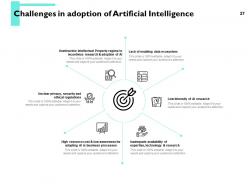
So the main stuff you gotta watch for: bias is huge - if your training data sucks, your AI will be discriminatory as hell. Privacy's another mess since these systems hoover up personal info like crazy. Job displacement is the obvious one everyone talks about. But honestly, the accountability thing might be the trickiest - like when an AI screws up, who actually takes the blame? If you're building anything, just audit your data sources constantly and bake fairness testing into your process from day one. Don't wait until later to fix it.
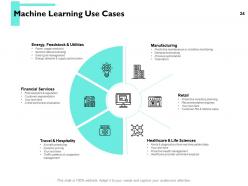
Honestly, ML is a game-changer for predictions - it spots patterns in huge datasets that we'd totally miss. Healthcare uses it to predict patient risks, finance catches fraud, retail figures out what customers want. The crazy part? These algorithms actually get better over time as they see more data. Manufacturing companies can even predict when machines will break down (which saves them tons of money, obviously). Your predictions just keep getting more accurate. I'd say pick one area in your business and test it out first. Don't try to do everything at once - that usually backfires.
Look, data entry and basic manufacturing jobs are probably toast. New roles will pop up though - they always do when tech shifts happen. Honestly, nobody really knows which specific jobs since AI changes so damn fast. Creative work, complex problem-solving, anything needing human connection? Those should stick around. My advice? Don't try to beat AI at its own game. Focus on skills that work WITH it instead - critical thinking, reading people, adapting quickly. Oh, and start learning new stuff now. Waiting around isn't gonna help anyone.
Dude, AI chatbots are a game changer for customer service - no more 20-minute hold music torture. Your customers get instant answers 24/7. The cool part? It learns what people need before they even ask by analyzing all that customer data you're sitting on. I'd start with something simple, like handling your basic FAQ stuff. Then you can let your actual humans deal with the messy complicated problems while the bot handles "what are your hours" for the millionth time. Oh, and it gets smarter with every conversation, which is honestly pretty wild when you think about it.
So NLP is basically how computers figure out what we're actually saying and respond back in a way that makes sense. Think Siri, Google Translate, those chatbots that pop up on websites. It's everywhere now - probably the AI stuff you use most without even thinking about it. The tech handles both understanding your question and spitting out decent answers. Oh, and spam filters too, which is honestly pretty clutch. If you're looking at AI for work stuff, just find where people are typing or talking to systems. That's your sweet spot for NLP.
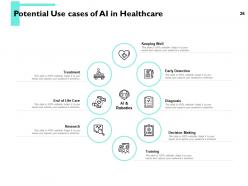
So AI is getting crazy good at reading X-rays and MRIs - like, sometimes better than actual doctors, which is wild. It can also predict who's gonna get sepsis or heart failure before they even show symptoms. On the treatment side, it helps figure out the right drug doses for each person and plans out surgeries. Oh, and drug discovery too - that's probably the most exciting part honestly. IBM Watson and Google's DeepMind are doing some really cool stuff if you want to check it out. The whole field is moving so fast it's hard to keep up.
Honestly, AI has some major issues you should watch out for. It makes mistakes but sounds super confident about them - which is kinda scary if you think about it. The whole "common sense" thing? Yeah, it doesn't really get that. Most systems are weirdly specialized too, like they'll crush one task but completely fail at something similar. Oh, and there's definitely bias problems since they learn from messy human data. They also need tons of training examples to function. My advice? Always fact-check what AI tells you, especially for anything important.
Honestly, AI is pretty amazing for sustainability stuff. Smart thermostats are just the beginning - it can track deforestation through satellite data, predict weather patterns, and optimize supply chains to cut waste. The cool thing is it spots patterns we'd totally miss in environmental data. Renewable energy systems get way more efficient with AI too. It processes huge datasets faster than any human could, which means better decisions happen quicker. My advice? Look at where your company's bleeding resources first - that's usually the sweet spot for AI solutions. The energy optimization alone can be game-changing.
Honestly, AI is weird with privacy - it cuts both ways. Companies can hoover up your data and build crazy detailed profiles without you even knowing. That's the nightmare scenario. But then AI also catches hackers and builds better encryption, so there's that. I guess what bugs me is how it just amplifies whatever the company wants to do with your info. Good companies will protect you better. Sketchy ones? Yeah, they'll get sketchier. You've gotta check who you're trusting with your data because AI makes everything more intense.
So AI basically speeds up decision-making by crunching tons of data super fast. Companies use it everywhere now - hiring algorithms scan resumes, predictive stuff helps with inventory, you name it. The cool part? It catches patterns your team might miss or take forever to find manually. My old company started using it for supply chain stuff and honestly saved them so much time. But here's the thing - the AI gives you the insights, but someone still needs to actually interpret what it means and make the real decisions. It's not magic, just really good at processing information.
Dude, AI in creative stuff is getting crazy good. Tools like DALL-E and Midjourney are making artwork from just typing what you want - some pieces are literally selling for thousands at auctions. Then you've got AIVA and Amper cranking out original music. Musicians use them to brainstorm melodies, artists for quick concept work. Honestly, the quality blows my mind sometimes. My advice? Start playing around with these tools sooner rather than later. They're not gonna replace artists, but they're becoming like really smart creative assistants. Worth getting familiar with them now.
Track the obvious stuff first - cost savings, revenue bumps, time saved, fewer errors. That's your solid ROI data. But don't ignore the fuzzy benefits like happier customers or employees getting more done (honestly, those can be huge). Get your baseline numbers before you start anything. Then check progress every few months - AI takes forever to show real results, like 6-18 months usually. Keep notes on everything so when your boss asks for more AI budget next year, you've got actual proof it works.
Dude, AI is everywhere now and actually working. Healthcare's gotten crazy good - IBM Watson helps doctors catch cancer better, and Google cut data center energy costs by 40%. JPMorgan uses it for catching fraud and trading stuff. Netflix's recommendations? They nail it 80% of the time (kinda scary how well they know me tbh). Amazon's whole supply chain runs on it, plus Tesla's autopilot is pretty solid. If you're thinking about using AI at work, look for boring repetitive tasks first - that's where you'll see results fast. Pattern recognition stuff too.
-
Excellent template with unique design.
-
Informative presentations that are easily editable.
-
Unique and attractive product design.
-
Qualitative and comprehensive slides.
-
Excellent design and quick turnaround.