


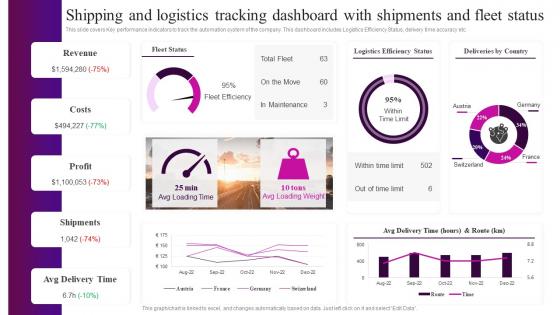
Automation In Logistics Industry Shipping And Logistics Tracking Dashboard




Try Before you Buy Download Free Sample Product
 Impress Your
 Audience
 100%
100% Editable
 Save Hours
 of Time


This slide covers Key performance indicators to track the automation system of the company. This dashboard includes Logistics Efficiency Status, delivery time accuracy etc.
People who downloaded this PowerPoint presentation also viewed the following :
Automation In Logistics Industry Shipping And Logistics Tracking Dashboard with all 7 slides:
Use our Automation In Logistics Industry Shipping And Logistics Tracking Dashboard to effectively help you save your valuable time. They are readymade to fit into any presentation structure.





FAQs for Automation In Logistics Industry Shipping And
Key technologies driving logistics automation today include autonomous vehicles, warehouse robotics, AI-powered predictive analytics, IoT sensors, and blockchain for supply chain transparency. These technologies streamline operations by reducing manual handling, optimizing route planning, and enabling real-time tracking, with many logistics companies finding that strategic automation delivers faster deliveries, lower operational costs, and enhanced customer experiences.
Automated systems enhance supply chain visibility by integrating real-time tracking, IoT sensors, automated data collection, predictive analytics, and centralized dashboards across all logistics touchpoints. Through these technologies, companies streamline inventory management, minimize delays, and deliver enhanced customer experiences, with many retail and manufacturing organizations finding that automated visibility ultimately reduces costs while improving operational efficiency.
Artificial intelligence optimizes logistics operations by enabling predictive analytics, route optimization, demand forecasting, inventory management, and warehouse automation. Through machine learning algorithms, companies streamline supply chain efficiency, reduce transportation costs, and minimize delivery times, with retailers and manufacturers finding that AI-driven logistics delivers enhanced customer satisfaction and significant competitive advantage.
Companies balance automation with human oversight by implementing hybrid models where automated systems handle routine tasks like inventory tracking, route optimization, and order processing, while humans manage strategic decisions, exception handling, and quality control. This strategic combination enables logistics operations to achieve operational efficiency and cost reduction through automation, while maintaining the flexibility and problem-solving capabilities that human oversight delivers, ultimately creating competitive advantage in increasingly complex supply chains.
Automation in logistics presents both significant upfront investments and substantial long-term cost reductions through decreased labor expenses, reduced errors, and enhanced operational efficiency. While initial implementation costs can be substantial, many organizations find that automated warehouses, transportation management systems, and inventory tracking deliver faster processing times, lower operational costs, and improved accuracy, ultimately providing competitive advantage within two to three years.
Automation revolutionizes inventory management and order fulfillment by enabling real-time tracking, predictive analytics, and seamless integration across supply chains. Through automated systems, logistics companies streamline warehouse operations, minimize human error, and accelerate processing times, with many retailers and distributors finding significantly improved accuracy and reduced operational costs.
Logistics companies face integration challenges including high upfront costs, workforce retraining requirements, legacy system compatibility issues, and operational disruption during transitions. While these hurdles require strategic planning and investment, many organizations find that phased implementation approaches, comprehensive staff development programs, and partnerships with technology providers ultimately deliver enhanced efficiency, reduced errors, and significant competitive advantages in increasingly demanding markets.
Automated delivery systems enhance customer satisfaction through real-time tracking, precise delivery windows, contactless options, reduced human error, and 24/7 availability. These technologies streamline operations by providing transparency, flexibility, and reliability, with many e-commerce companies and logistics providers finding that customers experience faster services, better communication, and ultimately higher satisfaction levels.
Automation addresses last-mile delivery challenges by optimizing route planning, enabling real-time tracking, and facilitating dynamic scheduling adjustments based on traffic and demand patterns. Through AI-powered logistics platforms and autonomous delivery systems, companies streamline operations, reduce delivery costs, and enhance customer experiences, with many retail and e-commerce organizations finding significantly improved delivery efficiency.
Automation in logistics delivers environmental benefits through optimized route planning, reduced fuel consumption, enhanced warehouse efficiency, and minimized packaging waste. These technologies streamline operations by decreasing empty vehicle miles, automating energy-efficient sorting systems, and enabling predictive maintenance, with many logistics companies finding that automated processes reduce carbon emissions while delivering cost savings and improved operational efficiency.
Warehouse automation includes robotic picking systems, automated storage and retrieval systems, conveyor belt networks, inventory management software, and autonomous mobile robots. These technologies streamline operations by reducing manual labor, minimizing errors, and accelerating order fulfillment, with many logistics companies finding that strategic automation delivers faster processing times and significantly lower operational costs.
Automation in logistics improves safety by reducing manual handling of heavy materials, implementing automated guided vehicles for material transport, and using robotic systems for hazardous operations. Through predictive maintenance sensors and AI-powered monitoring, distribution centers minimize equipment failures while streamlining workflows, with many warehouses finding that automated processes reduce workplace accidents by up to 70%.
Workers in automated logistics environments need technical skills like data analysis, robotics operation, and system monitoring, alongside soft skills including problem-solving, adaptability, and cross-functional collaboration. These capabilities enable professionals to manage AI-driven inventory systems, troubleshoot automated warehouses, and optimize supply chain workflows, with many logistics companies finding that upskilled employees deliver enhanced operational efficiency and competitive advantage.
SMEs can leverage automation through cloud-based solutions, software-as-a-service platforms, automated inventory management systems, robotic process automation for documentation, and partnerships with third-party logistics providers offering automated services. These approaches enable smaller businesses to streamline operations, reduce manual errors, and improve delivery times without major capital expenditure, with many finding that incremental automation adoption delivers immediate cost savings while building competitive advantage in an increasingly digital marketplace.
Increased logistics automation introduces security concerns including cybersecurity vulnerabilities, data breaches, system integration risks, IoT device exploitation, and supply chain disruption threats. These challenges present both operational risks and opportunities for enhanced security protocols, with many logistics companies finding that strategic cybersecurity investments, real-time monitoring systems, and robust authentication measures ultimately deliver stronger network resilience and competitive advantage.
-
It’s really cool, and you can find pretty much everything you could need for your work or school.
-
Every time I ask for something out-of-the-box from them and they never fail in delivering that. No words for their excellence!