


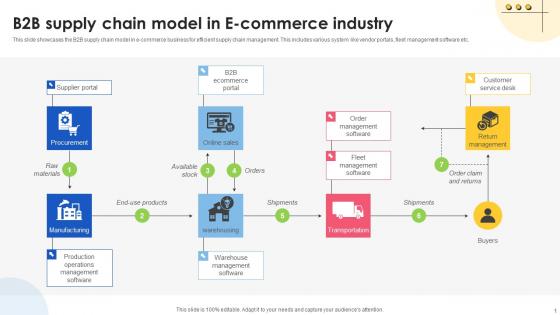
B2B Supply Chain Model In E Commerce Industry




Try Before you Buy Download Free Sample Product
 Impress Your
 Audience
 100%
100% Editable
 Save Hours
 of Time


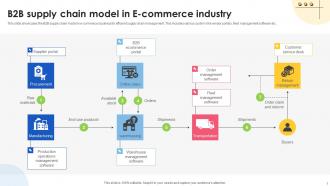
This slide showcases the B2B supply chain model in e commerce business for efficient supply chain management. This includes various system like vendor portals, fleet management software etc.
People who downloaded this PowerPoint presentation also viewed the following :
B2B Supply Chain Model In E Commerce Industry with all 9 slides:
Use our B2B Supply Chain Model In E Commerce Industry to effectively help you save your valuable time. They are readymade to fit into any presentation structure.








FAQs for B2B Supply Chain Model In
Honestly, it's mostly about scale and how complicated things get. B2B means you're handling bulk orders, longer lead times, and pricing gets messy with volume discounts and custom deals. B2C customers just want their order fast - like, Amazon Prime fast. You'll deal with way more people in B2B decisions too. Approval processes, specific delivery windows, system integrations - the whole nine yards. B2C is more automated and straightforward (thank god). My take? Build your B2B chain around flexibility first. Speed matters, but relationships and customization pay the bills.
Dude, just start with whatever's driving you crazy right now and automate that first. EDI handles all the boring order/invoice stuff with suppliers automatically. Your inventory system can actually predict when you're running low - which honestly saved my butt so many times. IoT sensors track shipments live, and APIs let your online store talk directly to your warehouse system. The real win though? You can see everything at once and catch problems before they blow up. Oh, and the data visibility thing isn't just hype - you'll actually spot bottlenecks way earlier.
Dude, you can literally see problems coming before they hit you. Track demand patterns and spot bottlenecks early instead of scrambling later. Real-time data from suppliers shows you exactly where inventory's getting stuck or running low. The waste reduction is insane once you actually know what's happening. Quality issues? You'll catch them way faster than before. Plus making sourcing decisions based on actual performance beats guessing every time. My advice - don't try to fix everything at once. Pick something annoying like stockouts and just focus on those metrics first.
Track operational stuff like order accuracy and delivery times first - those are make or break. Financial metrics matter too: customer acquisition costs, inventory turnover, how fast you move products from order to door. Customer satisfaction scores are honestly more critical in B2B than people think, since you're building long-term relationships. Repeat purchase rates tell the real story. Oh, and if you've launched new tech platforms, monitor adoption rates. Pick maybe 3-5 metrics that actually tie to your biggest goals. Monthly dashboards work great for staying on top of everything.
Dude, the order volumes alone will make your head spin - we're talking bulk shipments to warehouses instead of single packages. Delivery times get way longer too. You're dealing with procurement teams who have zero flexibility on delivery windows, which is honestly kind of stressful. Any delay screws up their whole operation, not just one person's day. Oh and freight management becomes this whole thing - specialized packaging, multiple drop-off locations, the works. My advice? Get tight with some solid freight partners first, then grab a tracking system that actually works in real-time. Trust me on this one.
Get everyone on shared platforms first - real-time updates on orders, inventory, delivery schedules, all that stuff. Email chains are honestly the worst thing ever for supplier relationships. Set up supplier portals or EDI connections so they can just grab demand forecasts and shipping requirements directly from your systems. Way less back-and-forth that way. Monthly business reviews help too for talking through performance and what's coming up. Oh, and make it stupidly easy for them to work with you. Less manual crap, more transparency about what you actually need. They'll appreciate not having to guess.
Look, digital transformation completely changes how B2B supply chains work. Instead of waiting days for updates, you get real-time visibility into everything. Automated ordering kicks in, predictive analytics catch problems early. Honestly, some old-school vendors still fight this stuff tooth and nail - kind of annoying. Your suppliers plug directly into your systems now. Customers handle things themselves through portals. You can finally track performance with actual data instead of guessing. My advice? Start with whatever manual process drives you crazy first. The whole phone-and-spreadsheet thing is basically dead anyway.
Dude, B2B payments are a total headache compared to regular consumer stuff. You're dealing with purchase orders, approval chains, and customers who want to pay you like 60 days later instead of right now. They need ACH transfers, wire payments, corporate credit - basically everything except simple card swipes. Plus they want it all integrated into their procurement systems, which honestly can be a nightmare to set up. B2C is just "tap and done" but B2B feels like you're waiting for the pope to approve every transaction. You've gotta build in those longer payment cycles and flexible terms or you'll lose deals.
Okay so three things that actually work for B2B inventory. Get your demand forecasting sorted first - look at your sales history and customer buying patterns so you're not constantly running out or sitting on dead stock. Automated reorder points are clutch because manually tracking everything is exhausting. ABC analysis is where you'll see real results though - focus tight control on your high-value stuff that moves fast, then chill out more with the smaller items. Oh and start with just your top 20% of products first. Way easier than trying to overhaul everything at once.
Honestly, it's a game changer - you get real-time inventory syncing so customers actually see what's in stock instead of those annoying "call us" placeholders. No more manual data entry screwups either. Your whole supply chain talks to itself automatically, which speeds up everything from ordering to shipping. Demand forecasting gets way more accurate too. I'd map out your current data flows first though - that's where you'll spot the worst bottlenecks. My buddy Sarah did this last year and said it was like night and day for her fulfillment times.
Honestly, the whole space is moving crazy fast right now. AI forecasting is getting really good - like scary good at predicting what you'll need. Real-time inventory tracking across suppliers is finally becoming standard, plus direct API connections are replacing all those annoying manual check-ins. Sustainability stuff is exploding too, everyone wants to see carbon footprints and ethical sourcing data. Warehouse automation is obviously everywhere now. The pandemic made companies realize putting all your eggs in one supplier basket was pretty dumb. Best bet? Find a platform that ties it all together because doing this manually will drive you insane.
Dude, your B2B customers literally want the Amazon experience now. Real-time tracking, flexible delivery, easy returns - the whole nine yards. B2C has totally flipped what people expect, even in business deals. You can't just focus on keeping costs low anymore (though that still matters obviously). Speed and transparency are huge. Get better tracking systems, offer multiple delivery options, and actually tell people when stuff goes wrong before they have to ask. Honestly? Just ask your customers what pisses them off most about how you do things now. That'll tell you everything.
Look, cybersecurity in B2B supply chains is huge - honestly, people don't realize how vulnerable they are. One breach doesn't just hit you, it spreads like wildfire to all your partners. Think about it: hackers get into your system and suddenly they've got access to pricing data, customer info, payment details from multiple companies. Worse? They could mess with your orders or inventory, creating chaos down the line. My old boss learned this the hard way when their supplier got hit and it took down our whole operation for three days. You really need solid security protocols and response plans with every partner you work with.
Honestly, your return policies need to be crystal clear from day one - way more than regular customer stuff since we're talking serious money here. Documentation saves your ass when someone disputes a $50K order, trust me on that one. Get your return process talking to your inventory system so stuff doesn't just sit around gathering dust. Automated return approvals help, plus your B2B customers will want to track everything through their portal anyway. These aren't "oops wrong size" returns either. You'll need real support for the complicated stuff. Oh, and find logistics partners who actually get commercial returns - total game changer.
Check out suppliers with environmental certs first - ISO 14001 is the main one. Then tackle shipping routes and bundle orders when possible. Honestly, the delivery stuff makes way more difference than you'd think. Partner with green packaging companies too. Oh, and definitely build some kind of dashboard where your customers can see their carbon impact - buyers love that transparency now. You could even do take-back programs if you're feeling ambitious. The whole thing works better when everyone can actually see the results, you know?
-
The service is fast, and I could access any presentation after buying the subscription. I don’t think I’ll ever have to worry about a presentation in my life.
-
Thank you for showering me with discounts every time I was reluctant to make the purchase.