


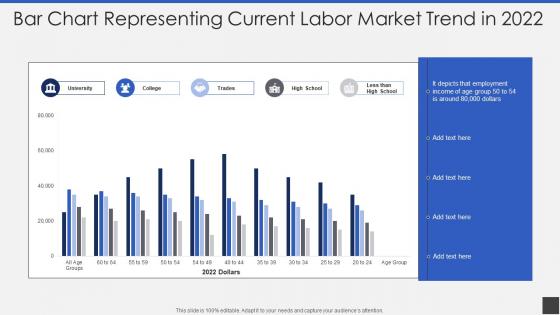
Bar Chart Representing Current Labor Market Trend In 2022




Try Before you Buy Download Free Sample Product
 Impress Your
 Audience
 100%
100% Editable
 Save Hours
 of Time


Our Bar Chart Representing Current Labor Market Trend In 2022 are topically designed to provide an attractive backdrop to any subject. Use them to look like a presentation pro.
People who downloaded this PowerPoint presentation also viewed the following :
Bar Chart Representing Current Labor Market Trend In 2022 with all 7 slides:
Use our Bar Chart Representing Current Labor Market Trend In 2022 to effectively help you save your valuable time. They are readymade to fit into any presentation structure.





FAQs for Bar Chart Representing Current Labor Market
The most significant labor market shifts in 2022 included widespread remote work adoption, accelerated digital skills demand, supply chain workforce shortages, increased employee mobility, and heightened focus on workplace flexibility. These changes fundamentally reshaped recruitment strategies across industries like healthcare, technology, and manufacturing, with many organizations finding that competitive compensation and hybrid work models became essential for talent retention and operational continuity.
Remote work significantly boosted employment rates in 2022 by expanding geographic job access, reducing commuting barriers, and enabling companies to tap broader talent pools across technology, finance, and professional services sectors. This shift accelerated digital transformation initiatives while reshaping industry dynamics, with many organizations finding that hybrid models enhanced employee retention, reduced operational costs, and delivered competitive advantages in talent acquisition.
Technology, healthcare, logistics, renewable energy, and e-commerce sectors experienced the highest job growth last year, driven by digital transformation, pandemic recovery needs, and evolving consumer behaviors. These industries streamlined operations through automation, enhanced service delivery, and expanded market reach, with many organizations finding that strategic workforce investments in these areas delivered competitive advantages and sustainable revenue growth.
Inflation significantly pressured organizations to increase wage growth and enhance employee benefits in 2022, with many companies implementing cost-of-living adjustments, accelerated salary reviews, and expanded healthcare packages. While these measures strained operational budgets, they ultimately enabled businesses to retain talent, maintain competitive positioning, and deliver improved employee satisfaction in an increasingly tight labor market.
Labor shortages forced companies to revolutionize recruitment strategies by expanding salary ranges, offering flexible work arrangements, enhancing benefits packages, and streamlining hiring processes. Organizations across healthcare, hospitality, and manufacturing increasingly adopted remote-first policies, skills-based hiring over degree requirements, and employee referral programs, ultimately delivering faster talent acquisition and improved retention rates.
Technology significantly reshaped 2022's labor market through remote work platforms, AI-driven recruitment tools, automation systems, digital skills training, and workforce analytics solutions. These technologies streamlined hiring processes, enabled flexible work arrangements, and accelerated digital transformation across industries, with many organizations finding that strategic technology adoption delivered competitive advantage while creating new job categories requiring advanced digital competencies.
The gig economy expanded significantly through increased platform adoption, regulatory scrutiny, and worker classification debates, while protection measures included portable benefits legislation, minimum wage extensions, and collective bargaining rights in various jurisdictions. Through these developments, gig workers gained enhanced social protections, healthcare access, and income stability, with many companies finding that investing in worker welfare ultimately delivers improved retention, service quality, and competitive advantage in increasingly regulated markets.
Aging baby boomers accelerating retirement, Gen Z entering the workforce with digital expectations, increased female workforce participation, and growing racial diversity in professional roles significantly reshaped 2022's labor market. These demographic shifts created both talent shortages in experienced positions and demand for flexible, technology-enabled work environments, with many organizations finding competitive advantage through inclusive hiring practices.
Employee expectations around work-life balance evolved significantly in 2022, with workers increasingly demanding flexible schedules, remote work options, hybrid arrangements, mental health support, and boundaries between personal and professional time. Organizations across healthcare, technology, and financial services found that addressing these expectations through comprehensive wellness programs, flexible policies, and respect for personal time ultimately delivered higher retention rates, improved productivity, and stronger competitive advantage in talent acquisition.
Key factors driving employee turnover in 2022 included inadequate compensation, limited career advancement opportunities, poor work-life balance, lack of flexible work arrangements, and insufficient recognition or benefits. Industries like retail, hospitality, and healthcare experienced particularly high turnover rates, with many organizations finding that addressing compensation gaps and implementing hybrid work models significantly improved retention and competitive positioning.
Skill shortages in 2022 compelled employers to revise hiring practices by expanding remote work options, offering competitive compensation packages, investing in upskilling programs, and reducing experience requirements for entry-level positions. Many organizations in healthcare, technology, and manufacturing found that emphasizing career development opportunities and flexible work arrangements became essential for attracting talent, ultimately reshaping recruitment strategies.
Employers increasingly offered hybrid models, flexible scheduling, remote work options, enhanced benefits packages, and compressed workweeks to attract talent in competitive markets. While organizations like banks and consulting firms initially resisted flexibility, many found that accommodating employee preferences for work-life balance ultimately delivered higher retention rates, reduced recruitment costs, and improved productivity across teams.
Government policies significantly influenced 2022 labor markets through pandemic recovery measures, infrastructure spending, immigration adjustments, and regulatory changes across healthcare, technology, and financial services sectors. These interventions streamlined workforce transitions, enhanced job creation in construction and green energy, while delivering competitive advantages for organizations adapting quickly, with many companies finding that policy-aligned hiring strategies ultimately reduced recruitment costs and improved talent retention.
**INPUT**: What trends in diversity, equity, and inclusion were evident in the hiring process? **OUTPUT**: DEI hiring trends included expanded sourcing strategies, bias-reduction technologies, inclusive interview processes, transparent compensation frameworks, and targeted mentorship programs. These approaches streamline recruitment by enhancing candidate pools, minimizing unconscious bias, and improving retention rates, with many organizations finding that strategic DEI initiatives ultimately deliver stronger team performance and competitive advantage.
Mental health awareness significantly transformed workplace policies by prompting organizations to implement comprehensive employee assistance programs, flexible work arrangements, mental health days, and on-site counseling services. Companies across industries, from tech firms to manufacturing, increasingly recognized that supporting employee wellbeing enhances productivity, reduces turnover, and attracts top talent, ultimately delivering competitive advantage in today's talent market.
-
The templates are handy and I can personalize them as per my needs. Glad to be your subscriber!
-
Great designs, Easily Editable.