


Be note book with pen and days tags flat powerpoint design




Try Before you Buy Download Free Sample Product
 Impress Your
 Audience
 100%
100% Editable
 Save Hours
 of Time


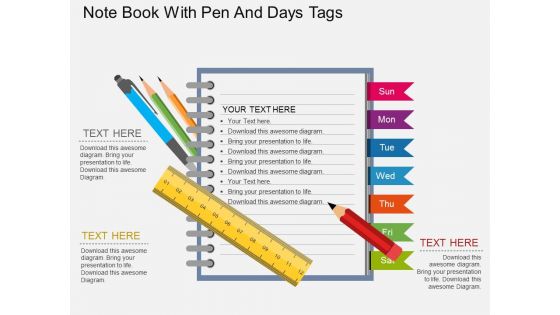
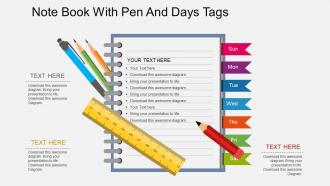
Need to analyse your business or wish to frame a daily business plan on a presentation design? For both the achievements, be Note Book with Pen and Days Tags Flat PowerPoint Design is an ideal Presentation icon to use. The notebook with pen and tags represent that a user can involve the business information on every specific day. And, when this innovative notebook and pen design is presented in a form of presentation, it definitely fetches the attention of audience. Since it is something every individual is comfortable in doing – managing plans and scheduling tasks in a notebook, it sounds something very relevant even to a layman. Additionally, when an audience is having an organized plan to carry on with, it becomes easier to get to work and finish with the tasks on desired time. This creative notebook and pen graphic PPT design can be thus used to showcase various sides of a business which will be beneficial for entrepreneurs, employees and every second person involved in one way or the other to achieve specific business goals. Determine the future with our be Note Book With Pen And Days Tags Flat Powerpoint Design. Your thoughts will make a defining contribution.
People who downloaded this PowerPoint presentation also viewed the following :
Be note book with pen and days tags flat powerpoint design with all 4 slides:
Take the dais by storm. Let your thoughts rain with our be Note Book With Pen And Days Tags Flat Powerpoint Design.
FAQs for Be note book with pen and days tags
Modern notebook and pen design utilizes materials like recycled paper, bamboo covers, sustainable wood, aluminum bodies, ceramic tips, and bio-based plastics for enhanced functionality. These materials streamline writing experiences by improving ink flow, paper texture, and grip comfort, while delivering aesthetic appeal and environmental responsibility, with many manufacturers finding that strategic material combinations ultimately enhance user satisfaction and brand differentiation.
Ergonomic pen and notebook design significantly enhances user comfort by reducing hand strain, improving grip stability, and promoting natural wrist positioning during extended writing sessions. These design features streamline productivity by minimizing fatigue, preventing repetitive stress injuries, and enabling sustained focus, with many professionals, students, and writers finding that ergonomic tools ultimately deliver better writing quality and longer comfortable usage periods.
Sustainability can be incorporated through recycled paper, biodegradable materials, refillable pen designs, soy-based inks, and bamboo or cork covers. These eco-friendly approaches streamline environmental responsibility while reducing manufacturing costs, with many educational institutions and corporate offices finding that sustainable stationery enhances their green initiatives and delivers long-term operational savings.
**INPUT**: What are the latest trends in notebook layouts and functionalities that cater to different writing styles? **OUTPUT**: Latest notebook trends include modular page systems, hybrid dot-grid layouts, productivity-focused spreads, digital integration features, and customizable binding options. These innovations enhance user experience by accommodating bullet journaling, professional note-taking, and creative planning simultaneously, with many writers finding that adaptive layouts streamline organization while enabling personalized workflows that boost productivity.
Digital integration enhances traditional notebooks and pens through smart paper technology, cloud synchronization, handwriting recognition software, pressure-sensitive styluses, and app connectivity features. These technologies streamline note-taking by automatically digitizing handwritten content, enabling real-time collaboration, and providing searchable archives, with many professionals finding that hybrid tools deliver both tactile satisfaction and digital efficiency.
Color psychology and branding significantly influence notebook and pen design by affecting consumer perception, purchase decisions, and brand loyalty through strategic color choices that evoke specific emotions and associations. Professional brands like Moleskine use sophisticated blacks and earth tones to convey premium quality, while educational suppliers employ bright, energetic colors to appeal to students, ultimately creating distinct market positioning and enhanced product appeal.
Cultural influences shape notebook and pen design through regional preferences for aesthetics, functionality, writing styles, and symbolic meanings. In East Asian markets, minimalist designs with premium materials reflect cultural values of precision and craftsmanship, while European consumers often favor traditional leather-bound notebooks and fountain pens, ultimately enabling manufacturers to deliver culturally resonant products that enhance user connection and drive regional market success.
Recent ink innovations include gel-based formulations, hybrid ink systems, thermochromic inks, quick-dry technologies, and ergonomic flow mechanisms. These advancements enhance writing experiences by delivering smoother application, reduced smudging, and improved color vibrancy, with manufacturers increasingly finding that strategic ink innovation drives competitive advantage in professional and educational markets.
Student notebooks benefit from ruled or grid layouts, durable binding, and organizational features like subject dividers, while professional notebooks emphasize clean aesthetics, premium materials, and flexible formats like dot grids or blank pages. These design approaches streamline note-taking effectiveness by matching layout complexity to usage patterns, paper quality to writing tools, and portability to environment demands, with many educational institutions and corporations finding that targeted design significantly enhances productivity and user satisfaction.
Best practices for pocket-sized notebooks include using lightweight yet durable materials, optimizing page layouts with appropriate line spacing, incorporating tear-resistant binding, selecting pen-friendly paper stock, and designing compact covers with functional elements. These design approaches enhance portability by balancing size constraints with writing comfort, with many professionals and students finding that strategic paper weight selection and binding methods ultimately deliver seamless note-taking experiences while maintaining durability.
Customizations in notebook and pen design cater to niche markets through personalized logos, specialized layouts, premium materials, and targeted functionality that align with specific professional needs and brand identities. These strategic customizations enable businesses, educational institutions, and creative professionals to enhance brand recognition, strengthen client relationships, and deliver memorable experiences, while individuals leverage personalized designs for professional differentiation and authentic self-expression in increasingly competitive markets.
Designers face challenges including balancing paper quality for different writing instruments, optimizing layouts for diverse content types like sketching and note-taking, managing size constraints while maximizing functionality, and accommodating varying user preferences. These multipurpose designs require strategic compromises between features, with many stationery companies finding that modular approaches and customizable sections ultimately deliver broader market appeal and enhanced user satisfaction.
Technology is revolutionizing notebook designs through smart paper with embedded sensors, digital ink integration, cloud synchronization capabilities, augmented reality features, and modular component systems. These innovations enable seamless handwriting-to-digital conversion, real-time collaboration across devices, and enhanced organizational functionality, with many professionals and students finding that interactive notebooks streamline workflow efficiency while maintaining traditional writing experiences.
User feedback significantly impacts notebook and pen design by identifying functional pain points, aesthetic preferences, ergonomic issues, and real-world usage patterns that designers might overlook. This iterative process enables manufacturers to refine grip comfort, paper quality, ink flow, and layout features, with many stationery companies finding that customer-driven improvements ultimately deliver enhanced user satisfaction and stronger market positioning.
Effective presentation of notebooks and pens enhances retail appeal through strategic product placement, attractive visual displays, interactive demonstration areas, coordinated color schemes, and clear pricing information. These merchandising techniques streamline customer decision-making by enabling tactile experiences and showcasing product quality, with many retailers finding that well-organized stationery displays ultimately deliver increased sales and enhanced customer satisfaction.
-
Easily Understandable slides.
-
Content of slide is easy to understand and edit.