


Behavioral Geographical And Situational Market Segmentation Strategy Complete Deck MKT CD




Try Before you Buy Download Free Sample Product
 Impress Your
 Audience
 100%
100% Editable
 Save Hours
 of Time


Market segmentation strategy is dividing a target market into smaller groups with comparable characteristics. Grab our insightfully designed PowerPoint Presentation on Behavioral, Geographical, and Situational market segmentation strategy. It provides an overview of market segmentation to attract the target audience. Additionally, Marketing Strategy PPT slides cover the whole process of understanding the market environment. Moreover, Customer Demographics PPT templates create customer segmentation strategies based on situational, behavioral, and geographical characteristics. It also covers initiatives, benefits, and formulation of the strategy along with market segmentation strategy and its types. Lastly, the SWOT Analysis PPT layout covers SWOT analysis of the industry as well as the marketing impacts. This 100 percentage editable template empowers you to customize the content according to your specific needs. Gain access to this invaluable resource now and unlock new potential for your business.
People who downloaded this PowerPoint presentation also viewed the following :
Content of this Powerpoint Presentation
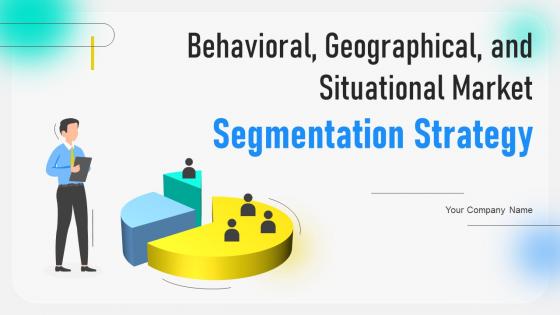
Slide 1: This slide introduces Behavioral, Geographical, and Situational Market Segmentation Strategy. State your company name and begin.
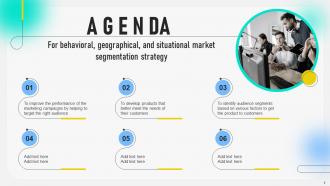
Slide 2: This is an Agenda slide. State your agendas here.
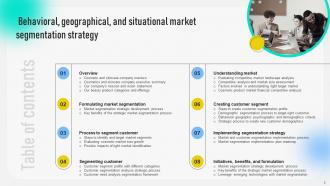
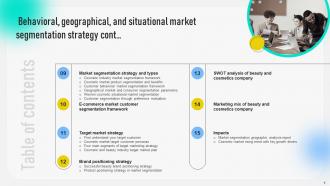
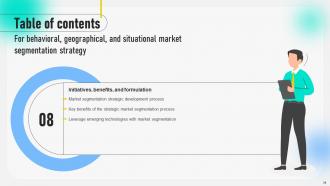
Slide 3: This slide shows Table of Content for the presentation.
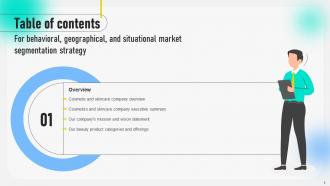
Slide 4: This slide continues showing Table of Content for the presentation.
Slide 5: This slide shows title for topics that are to be covered next in the template.
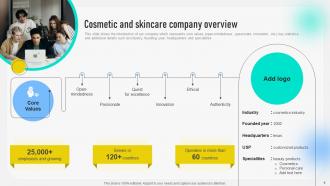
Slide 6: This slide contains introduction of company which represents core values, key statistics, and additional details.
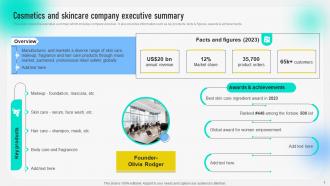
Slide 7: This slide covers the executive summary which includes company overview.
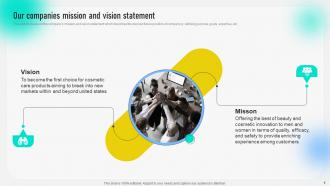
Slide 8: This slide describes company’s mission and vision statement.
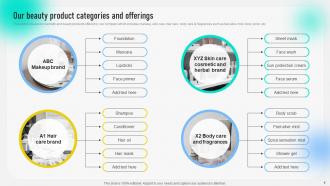
Slide 9: This slide presents products offered by company with additional textboxes and related imagery.
Slide 10: This slide shows title for topics that are to be covered next in the template.
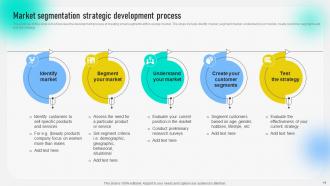
Slide 11: This slide presents the development process of creating small segments within a large market.
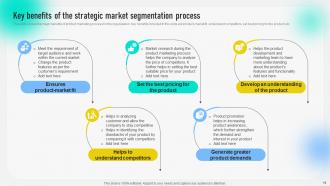
Slide 12: This slide describes major benefits of product marketing process for the organization.
Slide 13: This slide shows title for topics that are to be covered next in the template.
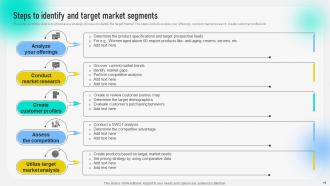
Slide 14: This slide display a strategic process to identify the target market.
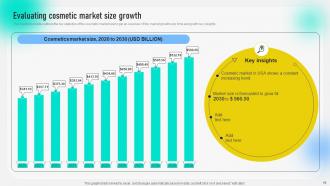
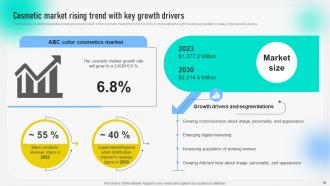
Slide 15: This slide outlines the key statistics of market size to get an overview of the market growth over time.
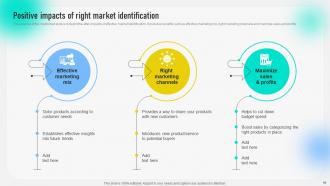
Slide 16: This slide presents the after-impacts of effective market identification.
Slide 17: This slide shows title for topics that are to be covered next in the template.
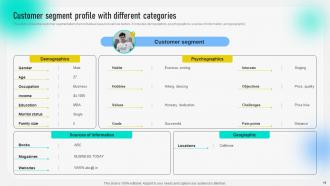
Slide 18: This slide presents customer segmentation of an individual based on various factors.
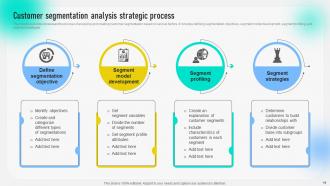
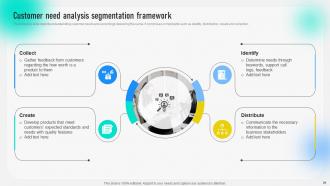
Slide 19: This slide describes the process of analyzing and creating customer segmentation based on various factors.
Slide 20: This slide presents understanding of customer needs and accordingly delivering the same.
Slide 21: This slide shows title for topics that are to be covered next in the template.
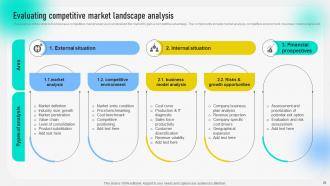
Slide 22: This slide displays competitive market analysis to understand the market to gain a competitive advantage.
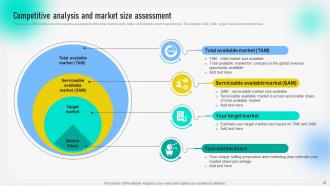
Slide 23: This slide presents the assessment of total market size to better understand current market trends.
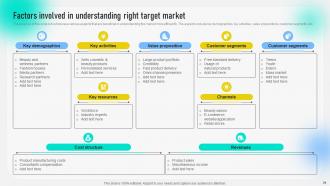
Slide 24: This slide showcases various aspects that are beneficial in understanding the market more efficiently.
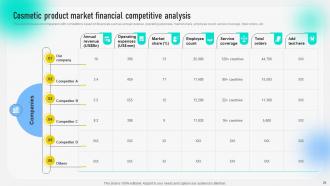
Slide 25: This slide focuses on comparison with competitors based on financials.
Slide 26: This slide shows title for topics that are to be covered next in the template.
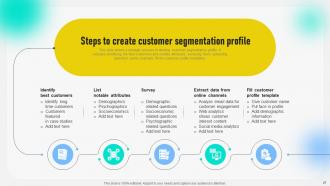
Slide 27: This slide presents strategic process to develop customer segmentation profile.
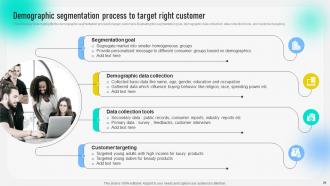
Slide 28: This slide highlights the demographic segmentation process to target customers.
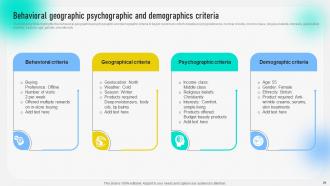
Slide 29: This slide highlights the behavioral, geographical, psychographic, and demographic criteria to target customers.
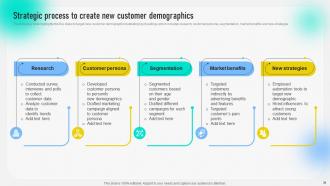
Slide 30: This slide describes five steps to target new customer demographic.
Slide 31: This slide shows title for topics that are to be covered next in the template.
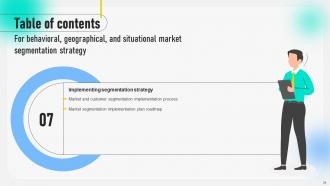
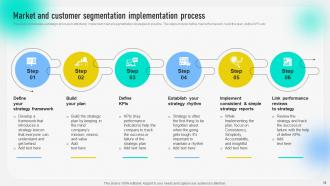
Slide 32: This slide depicts a strategic process to effectively implement market segmentation strategies in practice.
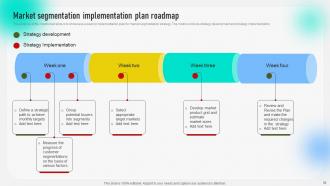
Slide 33: This slide is to showcase a weekly implementation plan for market segmentation strategy.
Slide 34: This slide shows title for topics that are to be covered next in the template.
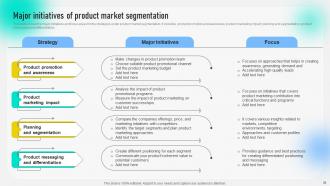
Slide 35: This slide provides major initiatives and focus areas for the strategies under product market segmentation.
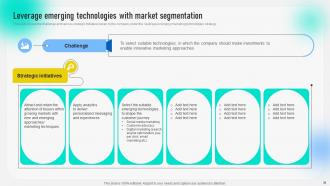
Slide 36: This slide presents challenge and various strategic initiatives taken by the company.
Slide 37: This slide shows title for topics that are to be covered next in the template.
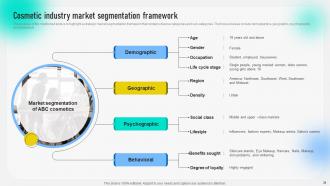
Slide 38: This slide presents strategic market segmentation framework that contains diverse categories and sub-categories.
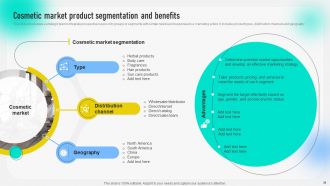
Slide 39: This slide present plan to integrate prospective buyers into groups or segments with similar needs and responses to a marketing action.
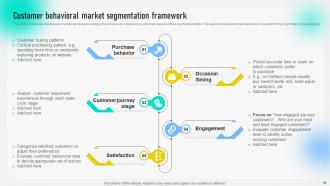
Slide 40: This slide describes behavioural market segmentation strategy that focuses on categorizing customers based on their purchasing habits.
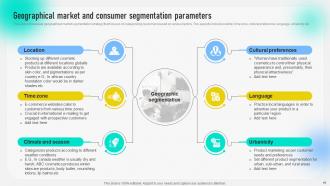
Slide 41: This slide showcases geographical market segmentation strategy that focuses on categorizing customers based on various factors.
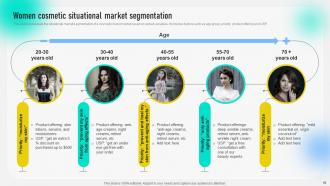
Slide 42: This slide presents situational market segmentation of a brand market based on certain variables.
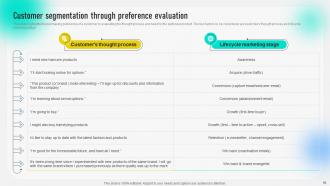
Slide 43: This slide displays the purchasing preference of a customer by evaluating the thought process and need for the particular product.
Slide 44: This slide shows title for topics that are to be covered next in the template.
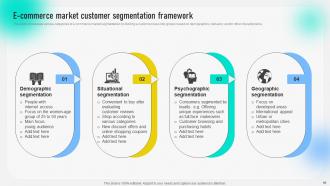
Slide 45: This slide presents various categories of e-commerce market segmentation by dividing a customer base.
Slide 46: This slide shows title for topics that are to be covered next in the template.
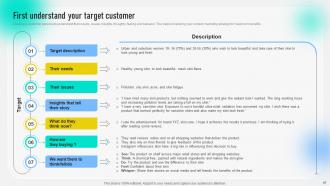
Slide 47: This slide depicts how to develop a customer persona to understand their needs.
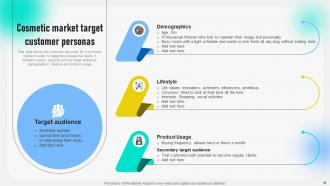
Slide 48: This slide shows the customer personas for a cosmetic market in order to target the prospective leads.
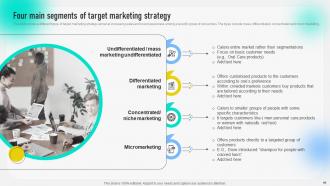
Slide 49: This slide presents different types of target marketing strategy aimed at increasing sales and brand awareness.
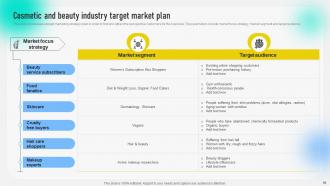
Slide 50: This slide provides target marketing strategic plan in order to find and attract the perspective customers for the business.
Slide 51: This slide shows title for topics that are to be covered next in the template.
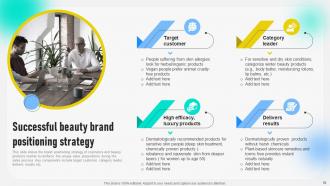
Slide 52: This slide presents the brand positioning strategy of cosmetics and beauty products market.
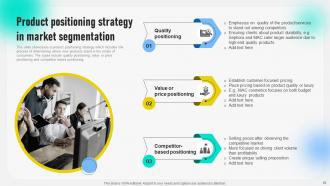
Slide 53: This slide describes a product positioning strategy.
Slide 54: This slide shows title for topics that are to be covered next in the template.
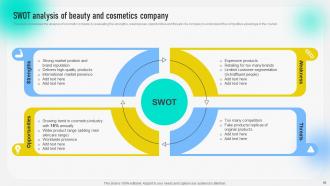
Slide 55: This slide shows SWOT analysis describing- Strength, Weakness, Opportunity, and Threat.
Slide 56: This slide shows title for topics that are to be covered next in the template.
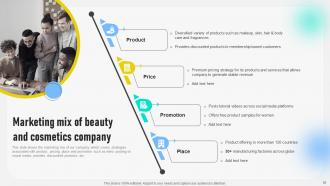
Slide 57: This slide presents marketing mix of company which covers strategies associated with product, pricing and place.
Slide 58: This slide shows title for topics that are to be covered next in the template.
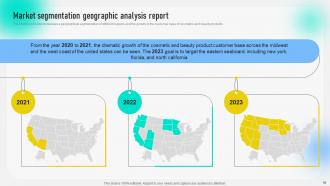
Slide 59: This slide showcases a geographical segmentation of different regions and the growth of the customer base of products.
Slide 60: This slide describes the growing trend and CAGR of market.
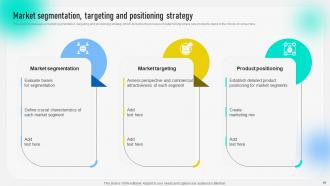
Slide 61: This slide presents market segmentation, targeting and positioning strategy.
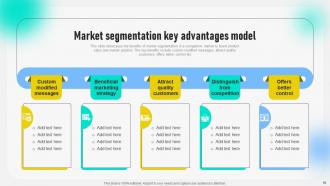
Slide 62: This slide describes the benefits of market segmentation in a competitive market to boost product sales and market position.
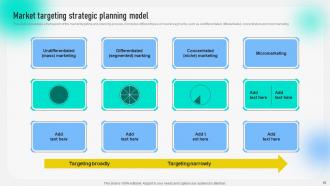
Slide 63: This slide displays a framework of market targeting and planning process.
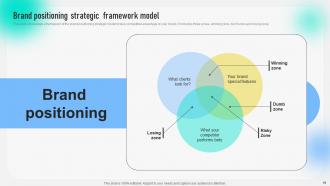
Slide 64: This slide presents a framework of the brand positioning strategic model to take competitive advantage of brand.
Slide 65: This slide shows all the icons included in the presentation.
Slide 66: This slide is titled as Additional Slides for moving forward.
Slide 67: This is Our Team slide with names and designation.
Slide 68: This is About Us slide to show company specifications etc.
Slide 69: This is Our Vision, Mission & Goal slide.
Slide 70: This slide shows Post It Notes. Post your important notes here.
Slide 71: This slide displays Mind Map with related imagery.
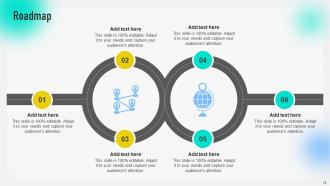
Slide 72: This slide presents Roadmap with additional textboxes.
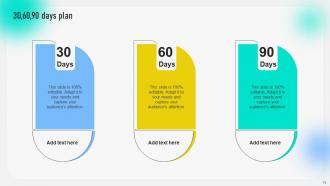
Slide 73: This slide provides 30 60 90 Days Plan with text boxes.
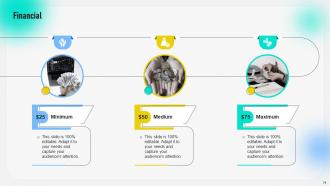
Slide 74: This is a financial slide. Show your finance related stuff here.
Slide 75: This is a Quotes slide to convey message, beliefs etc.
Slide 76: This is a Thank You slide with address, contact numbers and email address.
Behavioral Geographical And Situational Market Segmentation Strategy Complete Deck MKT CD with all 81 slides:
Use our Behavioral Geographical And Situational Market Segmentation Strategy Complete Deck MKT CD to effectively help you save your valuable time. They are readymade to fit into any presentation structure.






FAQs for Behavioral Geographical And Situational Market Segmentation Strategy Complete
Market segmentation relies on demographic factors like age and income, geographic location, psychographic elements including lifestyle and values, and behavioral patterns such as purchasing habits and brand loyalty. These criteria enable businesses to create targeted marketing strategies, develop tailored products, and allocate resources more effectively, with many organizations finding that strategic segmentation significantly enhances customer engagement and competitive positioning.
Businesses can effectively identify target segments by analyzing customer demographics, purchasing behaviors, geographic locations, psychographic profiles, and usage patterns through comprehensive market research. This strategic combination of data analytics, customer surveys, and behavioral tracking enables organizations to streamline marketing efforts, enhance resource allocation, and deliver personalized experiences, ultimately improving conversion rates and competitive advantage.
Demographic segmentation enables businesses to tailor marketing strategies by categorizing consumers based on age, income, gender, education, and location, creating targeted messaging that resonates with specific groups. This approach streamlines resource allocation and enhances campaign effectiveness, with companies in retail, financial services, and healthcare finding that demographic-focused strategies deliver higher conversion rates and stronger customer engagement.
Psychographic segmentation focuses on consumers' lifestyles, values, attitudes, and personality traits, while behavioral segmentation analyzes actual purchasing patterns, brand loyalty, and usage frequency. While psychographic insights help retailers and financial services companies understand why customers make decisions, behavioral data reveals what they actually buy, with many organizations finding that combining both approaches delivers more precise targeting and enhanced customer experiences.
Geographic segmentation offers advantages including targeted local marketing, cost-effective advertising spend, cultural relevance, simplified distribution logistics, and enhanced customer connection. This approach enables businesses to tailor messaging for specific regions, optimize resource allocation based on location demographics, and deliver more personalized experiences, with many retail and restaurant chains finding that localized strategies significantly boost engagement and sales performance.
Companies leverage data analytics for market segmentation through customer behavior analysis, demographic profiling, purchase pattern recognition, and predictive modeling techniques. These approaches enable businesses to identify distinct consumer groups, personalize marketing campaigns, and optimize resource allocation across segments, with many retail and financial services organizations finding that data-driven segmentation significantly improves targeting precision and conversion rates.
Market segmentation research tools include survey platforms like Qualtrics and SurveyMonkey, analytics software such as Google Analytics and Adobe Analytics, social media listening tools, CRM systems, and statistical software like SPSS. These technologies streamline data collection, customer behavior analysis, and demographic insights, with many retail and financial services companies finding that strategic tool combinations deliver deeper market understanding and competitive advantage.
Cultural factors significantly influence market segmentation by shaping consumer preferences, purchasing behaviors, communication styles, and brand perceptions across different demographic groups. Companies leverage cultural insights to develop targeted messaging, product adaptations, and distribution strategies, with many retail and food service organizations finding that culturally-informed segmentation delivers higher engagement rates and stronger customer loyalty.
Common market segmentation pitfalls include over-segmentation that spreads resources too thin, creating segments too small to be profitable, relying on outdated demographic data, and ignoring customer behavior changes. These mistakes can lead to ineffective marketing campaigns, wasted budget allocation, and missed opportunities, with many organizations finding that regular segment validation and data refresh ultimately deliver better targeting accuracy and higher ROI.
Small businesses can implement market segmentation through cost-effective methods like social media analytics, customer surveys, website behavior tracking, and basic demographic analysis of existing clients. These approaches enable targeted marketing campaigns, personalized messaging, and strategic resource allocation without significant investment, with many small retailers and service providers finding that focused segmentation delivers higher conversion rates and customer loyalty.
Segmentation significantly influences product development by identifying specific customer needs, preferences, and pain points across different market segments, enabling companies to create targeted solutions. This strategic approach drives innovation in sectors like automotive, where manufacturers develop electric vehicles for environmentally conscious consumers, and healthcare technology for aging populations, ultimately delivering higher customer satisfaction and competitive differentiation.
Seasonal trends significantly influence market segmentation by requiring businesses to adjust targeting approaches, messaging strategies, and product positioning based on cyclical consumer behaviors and demand patterns. Retail companies shift focus from winter clothing segments to spring collections, while travel industries pivot between business travelers and vacation segments, enabling organizations to optimize resource allocation and maximize revenue during peak seasonal opportunities.
Social media insights aid target segment refinement by analyzing engagement patterns, demographic data, behavioral preferences, and content interactions across platforms. These analytics enable businesses to identify previously overlooked micro-segments, validate existing customer personas, and discover emerging market opportunities, with many retailers and service providers finding that social listening significantly enhances their segmentation accuracy and marketing effectiveness.
Effective market segmentation requires comprehensive demographic analysis, behavioral pattern assessment, geographic considerations, psychographic profiling, and needs-based categorization. These approaches streamline targeting by identifying distinct customer groups, enhancing resource allocation, and enabling personalized messaging strategies, with many organizations finding that strategic segmentation ultimately delivers improved conversion rates and competitive advantage.
Businesses can measure segmentation success through customer acquisition rates, segment-specific revenue growth, retention metrics, conversion rates, and engagement levels across different segments. These measurements enable companies to identify high-performing segments, optimize marketing spend allocation, and refine targeting strategies, with many organizations finding that well-measured segmentation delivers significantly improved ROI and customer lifetime value.
-
Best Representation of topics, really appreciable.
-
I can always count on your designs for my professional needs. I believe I found a one-stop-shop for PPTs.