

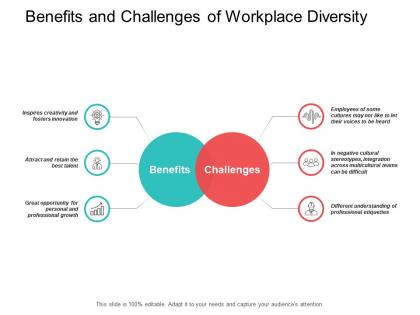
Benefits and challenges of workplace diversity




Try Before you Buy Download Free Sample Product
 Impress Your
 Audience
 100%
100% Editable
 Save Hours
 of Time


Encourage joyful interactions with our Benefits And Challenges Of Workplace Diversity. Introduce folks to entertaining activities.
People who downloaded this PowerPoint presentation also viewed the following :
Benefits and challenges of workplace diversity with all 5 slides:
Introduce folks to entertaining activities with our Benefits And Challenges Of Workplace Diversity. Encourage joyful interactions.


FAQs for Benefits and challenges
Honestly, diverse teams just make better decisions - they catch stuff you'd totally miss on your own. Creative solutions come way easier when people think differently. Your talent pool gets huge when you're not just hiring from the same backgrounds over and over. Financial performance tends to be stronger too, which is nice. Oh, and if your customers are diverse (which, let's be real, they probably are), you'll actually get them better. I'd look at your hiring first - see if you're accidentally being too narrow with where you find candidates. That's usually the easiest place to start making changes.
Honestly, start with the hard numbers - hiring, promotions, retention broken down by demographics. Those tell the real story. Survey data's huge too since it shows how people actually feel about belonging at work. Also track stuff like who's participating in mentorship programs and ERGs. Quick side note - make sure you're measuring whether diverse voices are actually getting heard in meetings, not just invited to them. That's where the rubber meets the road. Set your baseline first, then check quarterly. Don't go crazy though - pick maybe 3-5 metrics that align with what you're trying to fix and stick with those consistently.
Honestly, your leaders make or break diversity efforts. They've got to actually put money behind it and hold people accountable - otherwise it's just performative BS that nobody takes seriously. I've seen so many companies where executives talk a good game but don't change their hiring practices or call out bad behavior. The good ones model inclusive behavior themselves and create spaces where people actually feel safe speaking up. Short version: if your C-suite isn't genuinely committed to this stuff, don't expect any real change no matter how many workshops HR makes you sit through.
Oh man, this is such a pain but totally doable! First thing - anonymize those resumes during screening. Removes so much unconscious crap right off the bat. For interviews, ask everyone the same questions (I know, sounds boring but it works). Never let one person make hiring decisions alone - always get multiple perspectives involved. Bias training is helpful I guess, though honestly it's not a magic fix. The real trick is building systems that bypass our terrible "gut instincts." Because spoiler alert - our guts are incredibly biased! Start small with one change and add more over time.
Start by looking at your promotion data - where are the gaps happening? You'll want clear advancement criteria that everyone can see, not this "who you know" BS that's everywhere. Mentorship programs help, but sponsorship is honestly more powerful - connecting underrepresented folks directly with senior leaders who can actually open doors. Regular career chats between managers and employees matter too. The performance review process needs standardizing to cut out bias. Oh, and document everything so people aren't guessing what it takes to move up. It's basically about making the whole system more transparent.
Look, when you mix different backgrounds and cultures on a team, you get way better ideas. People challenge each other's thinking in ways that just don't happen otherwise. Like, someone might suggest something totally unexpected that makes everyone go "oh wait, why didn't we think of that?" Some short bursts of genius, honestly. The trick though - and this part's crucial - everyone needs to feel safe speaking up. Otherwise you're just wasting all that potential. Different perspectives only work if people actually share them, you know?
Honestly, the biggest pain is gonna be people rolling their eyes before you even start talking. Most employees think it's just another mandatory thing to sit through. Leadership buy-in is huge too - without that, you're basically dead in the water. Don't try to make everything fit every department the same way, that never works. Oh and measuring success? Way harder than just counting who showed up. Budget's always tight so you can't do the follow-up sessions that actually make this stuff stick. Make it interactive though - real workplace examples instead of boring slides work way better.
Honestly, diverse workplaces just work better for keeping people around. Employees stick with companies where they feel represented and actually belong - makes total sense, right? Different backgrounds bring fresh perspectives, which keeps work interesting and drives better solutions. Job satisfaction scores are consistently higher in inclusive environments too. Short version: if you want to retain talent, take a hard look at whether your workplace genuinely welcomes different voices. I mean, people can smell fake diversity from a mile away. Start there and you'll probably see retention improve pretty quickly.
Honestly, start with your job postings - different platforms, less corporate-speak in descriptions. Training helps but the real stuff happens daily. Got people from different backgrounds? Actually listen to them. Celebrate holidays beyond Christmas (trust me, it matters). Employee resource groups are clutch for letting people connect. Your leadership needs to look diverse too - can't have all white dudes at the top and expect change. Oh, and when someone brings up concerns, don't just nod and move on. Follow through with actual changes or you'll lose credibility fast.
Honestly, actions matter way more than those diversity pages nobody reads. Post actual numbers - hiring stats, promotion rates, the real stuff. Don't pretend you've got it all figured out either, because that's just BS and everyone knows it. Put diverse voices front and center in communications and spotlight features. Oh, and create safe ways for people to give feedback without worrying about backlash - that's huge. Maybe start by looking at what you're putting out there now? Like, would YOU buy this if you were a skeptical employee? Because if leadership doesn't seem genuine about caring, nobody's gonna trust the effort.
So basically you've got Title VII covering race, religion, sex, and national origin discrimination. Then there's ADA for disability stuff and ADEA for age discrimination - honestly it gets messy quick. Your main trouble spots? Biased hiring, unequal pay, toxic workplaces, and not accommodating disabilities properly. Keep your job posts inclusive, document everything when hiring (seriously, everything), and get managers trained on unconscious bias. Oh and audit what you're doing now before problems pop up. Trust me, getting a lawyer involved early beats scrambling later when someone files a complaint.
Look, mixing up your team backgrounds is honestly a game changer. Different people catch things others totally miss - like blind spots you didn't even know existed. Yeah, it gets messy when everyone's challenging each other's ideas, but that's actually when the best stuff happens. You'll get way more creative solutions because people think differently based on their experiences. Oh, and pro tip - those quiet team members? They usually have the most insightful takes, so make sure you're asking for their input during meetings instead of letting the loud ones dominate.
Track your demographic breakdowns first - percentages across teams, leadership, new hires. Retention rates matter more than people think though, because what's the point of diverse hiring if everyone bounces? Look at promotion rates and pay gaps by group. Employee engagement surveys should get broken down by demographics too. Oh, and process stuff like diverse interview panels actually moves the needle. I'd check these numbers every quarter - spotting trends early is where you'll see real change happen. Some companies get obsessed with vanity metrics, but focus on what actually tells the story.
Honestly, remote work can be amazing for diversity if you do it right. You're not stuck hiring only people who live nearby anymore - the whole world opens up. Parents don't have to stress about daycare pickups, people with disabilities avoid office barriers, and folks in cheaper neighborhoods aren't dealing with brutal commutes. But here's the thing - you totally lose those random hallway chats that actually help people connect across different backgrounds. I've seen teams where the remote employees just... fade into the background, you know? You've got to work way harder at creating virtual spaces where everyone actually gets heard and has real access to leadership.
Honestly, start with mentorship programs - pair diverse leaders with senior execs who'll actually fight for them when decisions get made. Employee resource groups help too since people need those networks. Your promotion process probably has bias issues, so try structured interviews and diverse panels. Here's what companies always screw up though: they promote someone then basically abandon them. Give them real leadership training, challenging projects, feedback - the whole deal. Oh and audit your current pipeline first so you're not just guessing where the problems are. Makes a huge difference.
No Reviews