


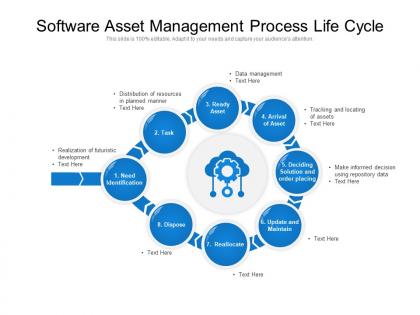
Software asset management process life cycle




Try Before you Buy Download Free Sample Product
 Impress Your
 Audience
 100%
100% Editable
 Save Hours
 of Time


Alter the dynamics with our Software Asset Management Process Life Cycle. Create infrastructure to fulfill growing demands.
People who downloaded this PowerPoint presentation also viewed the following :
Software asset management process life cycle with all 2 slides:
Create infrastructure to fulfill growing demands with our Software Asset Management Process Life Cycle. It will alter the dynamics.
FAQs for Software asset management
Dude, SAM is basically a money-saver and butt-cover rolled into one. You'll spot unused licenses you're paying for and avoid buying stuff you don't need. Software audits are genuinely terrifying - those penalty fees will make you cry. Plus you get actual visibility into what your teams are using, which helps with security and future planning. My old company got audited once and it was a nightmare. Start by just comparing what's installed versus what you're actually paying for. The compliance benefits alone make it worthwhile, trust me.
Dude, SAM shows you what software you actually own vs what you're throwing money at each month. Most places are wasting like 30% on licenses nobody uses - it's wild. Track who's actually using what and you'll spot the duplicates fast. Plus it keeps you compliant so you don't get slammed with those brutal audit fees. I'd set up monthly check-ins or whatever works. When renewal time hits, you'll have real data to negotiate with instead of just guessing. Honestly saved my last company a ton once we started paying attention to it.
Look, the biggest pain is gonna be your data being everywhere - different systems, licenses in random Excel files, nobody knows who's using what. Getting people on board? That's another nightmare. IT doesn't want extra work, procurement hates new processes. And don't even get me started on vendor contracts - I swear they write them to be confusing on purpose. My advice? Pick one software type first. Get some quick wins so people actually see the point. Otherwise you'll just frustrate everyone and kill the whole thing before it starts.
So basically SAM shows you what software you actually have vs what you're paying for. It tracks all your installations and usage so you can catch problems before audits happen - and trust me, getting hit with surprise licensing fees during an audit is the worst. You'll also learn about different license rules, like which apps you can virtualize or move around between computers. The key thing is doing regular check-ins to spot issues early. Honestly, your legal team will thank you for staying on top of this stuff instead of scrambling when vendors come knocking.
Most SAM tools connect pretty easily to what you've already got - APIs, database connections, data feeds that sync everything up. They'll pull hardware info from your CMDB and link up with network discovery tools, even your procurement stuff to track purchases. You don't have to blow everything up and start over, which is honestly a relief. The SAM platform just sits on top doing the heavy lifting for compliance and licensing while using your existing asset data. I'd probably map out how your data flows right now first, then shop around for vendors with connectors that actually work with your tools.
Dude, automation seriously saves your butt with SAM. No more manually hunting down what software everyone's running - it finds everything automatically. Real-time license tracking? Yeah, it handles that too. Plus you'll get warnings before compliance becomes a nightmare (trust me, you don't want to deal with audit season unprepared). Honestly the best part is not having to constantly bug people for software inventories anymore. I'd start with automating discovery first since that's where you'll see the biggest time savings right away.
For measuring SAM effectiveness, I'd start with compliance rates and software spend - those numbers will get your boss's attention real quick. Discovery accuracy matters too since you can't manage what you don't know exists. Shadow IT incidents are another good one to track. Honestly, audit readiness scores saved my butt last year when we got surprise-audited. Time-to-resolution for license requests shows if your process actually works or if people are just working around you. Set up a monthly dashboard and compare trends quarterly. The spend optimization piece is huge - shows whether you're bleeding money or actually saving it.
Automated discovery tools - start there. Seriously, manual tracking is a nightmare once you hit any real size. Run scans weekly minimum, hit every network segment including those remote workers everyone forgets about. I'd dump everything into a centralized CMDB and assign clear owners for different software types. Connect your procurement flow so new stuff updates automatically instead of disappearing into the void. Weekly scans will show you blind spots you didn't even know existed. Make it routine work, not some crazy quarterly fire drill.
Cloud computing basically breaks your old SAM playbook. Traditional license counting becomes useless when resources are spinning up and down automatically. Dynamic scaling and subscription models make tracking a real pain - trust me on this one. Spreadsheets won't work anymore, you need real-time visibility tools. SaaS subscriptions are probably scattered across different departments too. Get yourself some cloud management platforms that actually monitor usage patterns. They'll ping you before you hit licensing limits, which honestly saves so much headache later.
Honestly, SAM ethics boils down to three big things. First, follow your software licensing - boring but necessary. Second, if you're tracking what employees do, tell them upfront. Nobody likes finding out they're being monitored after the fact. Third, don't be creepy about it - use the data for compliance and costs, not to micromanage people to death. Be clear about your policies and what you're collecting. Oh, and actually stick to what you say you'll do with the info. Trust me, transparency saves you so many headaches later. It's really about not being shady while covering your business needs.
Honestly, SAM is a game-changer for software purchasing. Instead of flying blind, you'll actually see what licenses you own and which ones are collecting dust. Think of it like a dashboard for all your software - super helpful for spotting duplicate purchases before they happen. You can negotiate way better deals when you know your actual usage patterns, plus find opportunities to consolidate vendors or downsize licenses you're not fully using. Oh, and definitely audit everything you have now before your next renewal cycle hits. Trust me on that one.
Dude, don't skip SAM - it'll come back to haunt you. Compliance audits can hit you with massive fines, I'm talking six figures sometimes. Your security gets sketchy when you can't track what software is actually running. Budget-wise? Total mess with duplicate licenses and renewals you forgot about. Your IT team will be pulling their hair out trying to manage everything without proper visibility. Honestly, the operational headaches alone make it worth doing right. Oh, and software sprawl is real - start by just figuring out what's actually installed everywhere first.
Honestly, SAM is a game-changer for cybersecurity. You get total visibility into what's actually running in your environment. Know every app, version, and license? Then you can spot vulnerable stuff that needs patches right away. It also catches unauthorized software - and trust me, people install the weirdest things when IT isn't looking. Your properly licensed software gets security updates, plus compliance audits become way less painful. I'd start with a full inventory audit first. You'll definitely find some... interesting surprises lurking around.
Honestly, AI-driven license optimization is where everything's heading - don't sleep on that. Your old on-premise tracking is basically useless now with everyone going cloud-first. SaaS sprawl is insane too (I've seen companies with like 400+ apps they forgot they even have). Usage-based licensing is replacing the seat-based stuff more and more. You'll want SAM tools that handle hybrid setups and give you real-time analytics. Oh, and automated compliance monitoring is huge right now. Better to get ahead of this than scramble later when it costs 3x more.
Dude, training is huge for SAM - like, make or break huge. People need to get license compliance and procurement basics, otherwise they'll just install random software and create legal disasters. I've watched companies with amazing tools completely bomb because nobody understood the fundamentals. Staff awareness sessions are your starting point, then go deeper with anyone handling software purchases or deployment. Without it, you're basically gambling with compliance nightmares. Oh, and daily actions matter way more than people think - one wrong move can cost you big time later.
No Reviews