


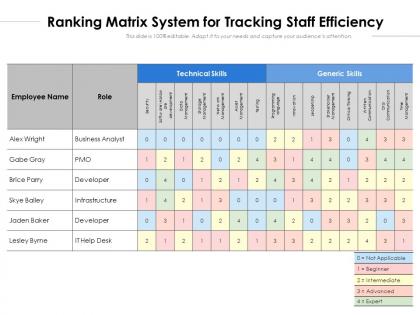
Ranking matrix system for tracking staff efficiency




Try Before you Buy Download Free Sample Product
 Impress Your
 Audience
 100%
100% Editable
 Save Hours
 of Time


Expose injustice with our Ranking Matrix System For Tracking Staff Efficiency. Clearly bring out biased approaches.
People who downloaded this PowerPoint presentation also viewed the following :
Ranking matrix system for tracking staff efficiency with all 2 slides:
Clearly bring out biased approaches with our Ranking Matrix System For Tracking Staff Efficiency. Be able to expose injustice.

FAQs for Ranking matrix system for
So honestly? Start simple with just 2-3 metrics or you'll drive yourself crazy trying to track everything. I'd go with productivity stuff first - like tasks completed per day, error rates, maybe customer satisfaction scores. Project completion times are solid too. Revenue per employee is clutch if your team actually brings in money directly. Oh and utilization rates - that shows you how much time people spend on real work vs pointless admin crap. Pick whatever matches your team's actual goals though. Better to measure a few things consistently than half-ass tracking ten different KPIs.
Honestly, tech can handle all that boring stuff you're doing by hand right now. Time tracking, project updates, task monitoring - there's apps for everything. You get instant data instead of waiting weeks for reports. Productivity apps will track when you're actually focused and spot where things get stuck. Some even use AI to catch patterns you'd totally miss. Just don't go crazy picking tools that don't play nice with what you already use - that's worse than doing it manually. Pick one thing that actually matters to your team first, then add more later.
Look, engaged employees are literally everything when it comes to tracking efficiency. Without buy-in, people just game the system or ignore it completely - I've watched this happen so many times it's not even funny. Your team needs to see the tracking as useful feedback, not some creepy surveillance thing. Explain upfront why you're doing it and how it actually helps them, not just the bosses. When people are genuinely engaged, they'll use the tools right and give you real data. They actually want to get better and will help you spot problems. Otherwise you're just collecting garbage numbers.
Honestly, I'd start simple with time tracking software and maybe task completion rates - those are pretty easy to set up without going crazy. Direct observation works but man, it eats up so much time. Customer satisfaction scores give you real data, and regular check-ins help you catch stuff the numbers don't show. Peer feedback systems are solid too if your team's into that. Quality metrics matter obviously, though productivity dashboards can get overwhelming fast. Don't try tracking everything at once - pick like 2-3 methods that actually fit how your team works.
Honestly, feedback loops are game-changers because they show you what's *really* slowing your team down - not just the surface-level stuff in reports. Like, maybe your processes are confusing or someone needs training but feels weird asking. Weekly check-ins or quick anonymous surveys catch this stuff that numbers totally miss. People actually perform better when they feel heard too (shocking, right?). The trick is making it super easy to give feedback and then actually doing something about it. Even something small like a 5-minute Friday huddle works. Just pick one thing and start there.
Honestly, the visibility thing kills me - you can't just peek over and see if someone's drowning in work or totally checked out. Time zones are a nightmare too since half your team's asleep when stuff needs to happen. Some people are great at updating you on their progress, but others? Their "almost done" could mean literally anything lol. You miss those random hallway conversations where you'd naturally catch up on projects. I'd focus on what people actually deliver instead of trying to monitor every little thing they do. Set clear deadlines and let them figure out how to hit them.
Monthly checks work best for most people - gives you solid data without making everyone paranoid. When someone's brand new or it's crunch time, maybe bump it to weekly. Daily tracking? That's just asking for people to mess with the numbers. Honestly, I've seen teams get so focused on gaming their metrics they forget to actually work. For project stuff, just do it when things wrap up instead of forcing calendar dates. Pick whatever frequency fits your team and don't keep changing it. You'll figure out pretty quick if monthly's too much or not enough.
Check out BambooHR, 15Five, or Lattice - they're solid for tracking performance and setting goals. Pretty comprehensive stuff. If money's tight though, Asana or Monday.com work fine for basic monitoring. I've actually seen teams crush it with just weekly check-ins on those platforms. Honestly, the "best" tool doesn't matter if your team won't use it. Pick something intuitive over something fancy. Try free trials of maybe 2-3 options first - you'll know pretty quickly which one clicks with how you guys work.
Make the data visible to everyone - dashboards work great for this. Celebrate improvements, not just your top people. I've watched managers totally tank team morale by constantly calling out who's struggling (huge mistake). Use those numbers to figure out what's actually working, then help people learn from each other. Set goals that make sense based on real data. Oh, and definitely recognize when someone hits their targets - people need that validation. The whole point is making it about getting better together, not some weird punishment system that stresses everyone out.
Honestly, the biggest problem is you're basically creating a workplace where nobody trusts each other. Privacy goes out the window and everyone feels watched constantly - which, ugh, sounds miserable. Different people work at different paces but still crush their goals, so you might accidentally punish someone who's just more thoughtful than fast. Also, are you actually measuring good work or just... activity? Sometimes the metrics lie. I'd say be upfront about what you're tracking and get your team involved in figuring out what efficiency actually looks like. Don't make decisions based purely on the numbers though.
Manufacturing tracks units per hour and downtime. Retail's all about sales per employee. Healthcare looks at patient outcomes and caseloads - honestly makes sense given what they do. Tech companies get obsessed with sprint velocity and code commits (sometimes too obsessed if you ask me). Call centers focus on handle time and resolution rates. Each industry just ties their metrics to whatever actually drives value for them. So when you're figuring this out for your team, start by identifying what really moves the needle in your business. Don't just copy what other companies do.
Dude, workplace culture hits your performance way harder than most people realize. I've seen amazing teams completely fall apart because of toxic environments - it's wild how fast that happens. Good culture means people actually want to collaborate and stick around longer. Bad culture? Higher sick days, people quitting left and right, zero innovation. The numbers don't lie. Here's what's helped me figure this out: look at both the hard metrics AND the softer stuff together. Exit interviews, employee surveys, how often teams actually work together - that combo tells you what's really driving your performance data instead of just guessing.
Honestly, tracking efficiency is such a game-changer for training. You'll start seeing patterns everywhere - like Sarah always struggles with the inventory system, or everyone takes forever on those monthly reports (which probably means the process sucks). It's not about micromanaging people, though some folks get weird about being monitored. What you're really doing is finding skill gaps. Maybe someone needs extra help, or they're actually ready for bigger projects. The trick is using that data for good conversations about growing their skills instead of just calling out mistakes.
Honestly, don't get caught up in individual numbers - they're pretty meaningless on their own. Look for bigger trends instead. What patterns do you see across different teams or time periods? Break your data down by experience level, workload, that kind of stuff. The real goldmine is comparing your top performers with people who are struggling - you'll spot actual behaviors worth copying. Then build something around those insights, whether it's training or changing up workflows. Pick one clear pattern first though, don't try to fix everything at once.
Be transparent about tracking methods but keep individual scores private. Share team averages and overall trends openly - that stuff's actually useful. But posting individual rankings? That's a disaster waiting to happen, trust me. Give employees access to their own data while keeping performance talks between you and them. Honestly, I've watched good teams fall apart over public leaderboards. Make your measurement criteria crystal clear from the start so nobody gets blindsided later. It's really about finding that balance between openness and privacy.
No Reviews