


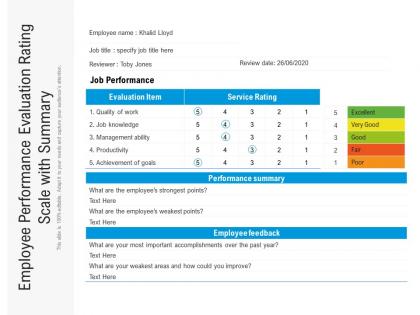
Employee performance evaluation rating scale with summary




Try Before you Buy Download Free Sample Product
 Impress Your
 Audience
 100%
100% Editable
 Save Hours
 of Time


Our Employee Performance Evaluation Rating Scale With Summary are explicit and effective. They combine clarity and concise expression.
People who downloaded this PowerPoint presentation also viewed the following :
Employee performance evaluation rating scale with summary with all 2 slides:
Give your audience a fulfilling experience. They will find our Employee Performance Evaluation Rating Scale With Summary elevating.
FAQs for Employee performance evaluation rating
So there's five main things they look at: hitting your targets, work quality, how well you play with others, professional development stuff, and just showing up reliably. The collaboration part is honestly pretty subjective - like, what does "plays well with others" even mean? But they try to use peer feedback to make it less weird. Your department matters too - sales people get judged way more on revenue numbers while engineering cares about code quality and getting projects done. I'd definitely ask your manager which ones they weight the heaviest since that can totally make or break your rating.
Honestly, think of feedback like a GPS for your team - keeps everyone on the right path without getting lost. People actually want to know how they're doing instead of wondering for months if they suck at their job. Those yearly reviews are the worst, right? Everyone just sits there confused. Weekly check-ins work way better. Doesn't have to be formal or anything, just quick touchbases so people aren't stressed about where they stand. When someone knows you notice their work, they'll keep putting in effort. It's pretty straightforward - recognition drives performance way more than silence does.
Honestly, self-assessments are your chance to control the narrative before your boss writes their review. Most managers actually use what you write as their starting point, so it's weirdly influential. You can highlight your big wins and frame any rough patches as growth areas - which sounds way better than "I screwed up that project in March." The annoying part? You'll realize you forgot half the stuff you accomplished this year. That's normal though. Just dig through old emails for specific examples and throw in numbers when you can. Don't write boring generic stuff - be real about what you did.
Honestly, you've gotta tie your evaluation stuff directly to what your company actually gives a damn about. Like if innovation matters to leadership, measure how people pitch new ideas or fix broken processes - not some generic "plays well with others" nonsense. I've watched so many performance reviews that felt totally random compared to what the bosses actually wanted. Your rating questions should reflect the exact behaviors that make your company successful. The trick is getting super specific about what "living the values" looks like in real life, then actually measuring people against that instead of some cookie-cutter template.
Honestly, you'll want to mix things up with different evaluation methods - 360 feedback, peer reviews, self-assessments, the whole deal. Standardized rubrics are clutch because everyone's measuring the same stuff. I've watched way too many performance reviews turn into popularity contests instead of actual work assessments! Start documenting specific examples now rather than scrambling to remember things later. Having another manager double-check evaluations before they go out helps catch bias too. The goal is building a solid paper trail of concrete data that backs up your ratings.
Quarterly's the way to go, trust me. Annual reviews are basically worthless - by then everything's ancient history and small problems have blown up into huge messes. Monthly feels like it should work better, but honestly? It just burns everyone out. You can actually fix stuff before it gets ugly with quarterly check-ins. Plus your people get regular props and chances to grow. Just don't make it all about what went wrong last time - keep looking ahead. Oh, and pick the same week each quarter or you'll forget. I learned that the hard way.
Oh man, performance reviews are such a minefield! You've got the halo effect where someone's amazing at one thing and suddenly they can do no wrong. Then there's recency bias - basically you only remember what happened last week, not six months ago. Confirmation bias is huge too, where you just look for stuff that backs up what you already think about someone. And don't get me started on similarity bias - we all secretly favor people who are like us. Honestly, the best fix? Use actual structured forms with real examples, get feedback throughout the year (not just during review season), and just know these biases exist. Awareness is half the battle.
Honestly, tech makes performance reviews so much less painful. Real-time goal tracking through performance platforms beats the hell out of spreadsheets. You'll get way better insights too - 360 feedback happens automatically, and some AI tools can actually spot skill gaps you'd never notice otherwise. No more drowning in paperwork either, which is probably my favorite part. The analytics help you make smarter decisions instead of just going with your gut. Don't go crazy though - just pick one tool that fixes your biggest headache first. Maybe start with feedback collection if that's what's killing you right now.
Honestly, good performance reviews can make or break whether your top talent sticks around. People want to know where they stand and what's next for them - it's like basic human nature. When you nail it, they feel valued and you get a solid plan for their growth. But skip them or do them poorly? Your best employees will bounce faster than you think. I've seen it happen too many times. The trick is making these conversations actually meaningful instead of just going through the motions. Set real goals and don't just forget about the development stuff you talked about.
Role-playing is honestly a game changer - way better than figuring it out with actual employees watching you stumble. Get your managers practicing on fake scenarios first. The SBI thing works great: Situation, Behavior, Impact. Gives them something to follow instead of just rambling. Don't let them pile on criticism without mixing in good stuff too. Specific examples beat vague feelings every time. Make it feel like you're just talking, not delivering some formal speech. Monthly practice keeps them from getting rusty - these conversations get easier the more you do them.
Honestly, just ditch the whole annual review thing and talk to your people monthly instead. I know it sounds like more work, but trust me - they'll actually perform better when they're not constantly wondering if they're screwing up. Mix in some peer feedback too, where teammates can give each other input on projects. Quick wins matter more than you'd think. Celebrate the small stuff and don't make people feel like crap when they mess up - frame it as "what'd we learn here?" Schedule those monthly chats this week though. The consistency is what actually builds this into your team culture over time.
Oh totally - evaluations are super different depending on your department. Sales people get judged on hitting their numbers, while creative teams care more about project quality and coming up with new ideas. Tech folks usually do peer reviews or look at code quality (which honestly seems way more stressful to me than regular reviews). HR focuses on employee satisfaction scores and that kind of stuff. The main thing is that your evaluation should actually match what good work looks like for your specific job. You don't want some generic template that misses what you're really supposed to be doing well at.
Focus on job performance and actual behaviors, not personal stuff or protected characteristics. Document everything - seriously, you'll thank yourself later if things get messy. Same standards for everyone in similar roles, otherwise you're asking for discrimination issues. Let employees respond to their evaluations too and write down any pushback they give you. Honestly, the documentation part is annoying but it's what saves you. Stick to facts and stay consistent across the board. Oh, and contractions are fine in casual writing like this!
Okay so first thing - make those criteria super clear right from onboarding. Post them where people can actually find them, not buried in some random folder. Your managers need to talk about this stuff in regular one-on-ones too, not just wait until review time (honestly, that's just setting everyone up to fail). Break down what "meets expectations" means with real examples - none of that vague corporate speak. Oh, and have people sign off that they get it. If someone's shocked by their evaluation, that's on you for not explaining it well enough throughout the year.
Honestly, start small with a pilot group - don't go company-wide right away. Most people suck at giving feedback naturally, so you'll need to train them first. Keep it anonymous and focused on actual behaviors, not someone's personality (that gets messy fast). Pick a platform that doesn't make people want to throw their computer out the window. The real magic happens in follow-up coaching sessions though - dumping raw feedback on someone without guidance is just cruel. Also be super clear upfront whether this is for development or performance reviews, because people get weird if they don't know.
No Reviews