


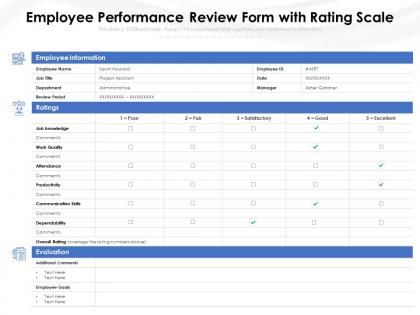
Employee performance review form with rating scale




Try Before you Buy Download Free Sample Product
 Impress Your
 Audience
 100%
100% Editable
 Save Hours
 of Time


Our Employee Performance Review Form With Rating Scale are topically designed to provide an attractive backdrop to any subject. Use them to look like a presentation pro.
People who downloaded this PowerPoint presentation also viewed the following :
Employee performance review form with rating scale with all 2 slides:
Use our Employee Performance Review Form With Rating Scale to effectively help you save your valuable time. They are readymade to fit into any presentation structure.
FAQs for Employee performance review form
So basically you want three main things: goals, feedback, and planning ahead. First, go through how they did compared to what you set last time. Give specific examples - both good stuff and areas that need work. Then talk about what skills they should develop or gaps to fill. Honestly, the biggest thing is just having an actual conversation instead of being all formal and checklist-y. Nobody wants that awkwardness. Work together to set clear goals they can actually measure for next time. Oh and definitely write it all down afterward so you're both on the same page about expectations going forward.
Honestly, the biggest game-changer is writing stuff down all year long. I learned this the hard way - your brain will totally betray you and you'll only remember like the past month. Keep the same standards for everyone (super important for avoiding bias), and focus on what people actually accomplished, not whether you personally vibe with them. Get other people's input too if you can. During your regular check-ins, jot down specific examples so you're not scrambling later. Before each review, just pause and think - would I say this same thing to anyone who had these results?
Honestly, self-assessments are your chance to tell your own story before your boss does. Highlight the wins they might've forgotten about - you know, that time you stayed late to fix everything but nobody really saw it? Plus you can explain the messy situations that made things harder. I always think of it like building your case, not just rattling off tasks. Shows you're actually reflecting on your work too, which managers eat up. Don't just list what you did though - make it clear why it mattered.
Honestly, ditch those spreadsheets and get a decent performance management platform. Track goals year-round instead of panic-scrambling to remember what happened months ago. Your team can do self-assessments, collect feedback from peers, and you'll get automated reminders for check-ins (thank god, because I always forget). The analytics are pretty solid too - they'll catch development opportunities you'd totally miss. Oh, and 360 reviews become way less of a nightmare. Just pick one tool to start with. Trust me, you'll wonder why you waited so long to make the switch.
Honestly, the key is being specific about what they actually did wrong. Like say "you missed three deadlines this month" instead of calling them disorganized - way more helpful. That feedback sandwich thing? Kinda overrated tbh, people see right through it. I'd just be straightforward but not harsh about it. Ask them what's going on from their side too. Then work together on fixing whatever the issue is. Oh, and definitely nail down what they need to do next with actual dates. Otherwise you'll be having this same conversation again in two months.
Yeah, most places still do the once-a-year thing but that's honestly pretty useless. By the time you're giving feedback, it's way too late to fix anything. Quarterly check-ins work way better - or even monthly if you can swing it. People shouldn't have to wait 12 months to find out they're screwing something up, you know? Plus annual reviews turn into this whole dramatic thing instead of just normal conversations. I'd start with quarterly ones and maybe throw in some quick monthly chats. Way easier to celebrate good stuff when it actually happens too.
Mix the hard numbers with the softer skills - that's where you get the real picture. Goal completion and productivity metrics are obvious ones, but honestly collaboration and communication skills matter way more than most managers think. Problem-solving, initiative, how they vibe with company culture. Oh and track their professional development too - are they actually growing? I'd stick to maybe 5 metrics max because nobody wants to wade through endless spreadsheets. The whole point is having actual conversations during reviews, not drowning in data.
You gotta get structured about this stuff - standardized rubrics, multiple people reviewing, actual measurable criteria instead of just vibes. I've seen way too many performance reviews that are basically popularity contests, it's ridiculous. Train your managers on unconscious bias and make them back up their ratings with real examples. Oh, and try calibration sessions where reviewers compare notes before submitting final scores. The magic happens when you force people to explain their thinking with concrete evidence. Most bias disappears once someone has to actually justify their gut reaction, you know?
Oh man, don't wait until review season to start giving feedback - that's like cramming for finals. Super counterproductive. Also avoid the "recency bias" thing where you only remember what happened last week instead of the whole year. Being too vague is useless too - "communicate better" tells them literally nothing actionable. And please don't just lecture them about their weaknesses for an hour straight. Instead, keep notes throughout the year (I know, sounds boring but trust me), give real examples, and actually ask what they need from you. Makes it feel less like a performance and more like you're both trying to figure out how they can crush it.
Here's what I'd do - flip those reviews into actual career conversations instead of just "here's what you did wrong" sessions. Talk about where your employee wants to go, then figure out the training or projects that'll get them there. Document everything though, because honestly half the managers I know promise development stuff and then totally forget about it. You want to identify skill gaps together and make real plans. Short sentences work here. Don't wait a whole year to circle back either - check in every few months or you'll both lose momentum.
So 360 feedback basically gets input from everyone - your boss, coworkers, people under you, sometimes even clients. Way better than just one person's opinion, you know? I'll be honest, it's kinda scary at first because you're getting hit from all angles. But wow, the stuff you learn about yourself is wild. You'll spot things you never realized were issues, plus get props for skills you weren't even sure about. The trick is making sure people feel safe enough to be real with you instead of just being polite. I'd say test it with maybe 3-4 people you trust first before going all-in with everyone.
Okay so first thing - document everything with specific examples. Don't be that manager who avoids the awkward conversation because honestly, it just gets worse. Sit down with them and be straight about what's not working. Create an improvement plan together with clear goals and deadlines (I usually do 30-90 days depending on how bad it is). Give them what they need - training, mentoring, maybe less on their plate. If they don't improve after a fair chance? Then you've gotta make the tough call.
Oh man, your managers definitely need help with the basics - constructive feedback, SMART goals, and not making those awkward performance conversations even worse. Active listening is huge too. Don't bother with that sandwich method thing, it's so dated now. They should practice beforehand though - maybe role-play with HR? Also cover the legal stuff around performance talks and how to actually document things properly. Creating improvement plans that people can follow is key. Honestly, most managers wing it their first time and it shows.
Honestly, the best performance reviews I've had felt more like planning sessions than evaluations. Instead of dwelling on what went wrong, focus on what's next - future goals and growth opportunities. Make it two-way too. Employees should feel comfortable giving feedback up. Set specific goals you'll actually check in on throughout the year, not just forget about until next review season. Oh, and ditch the annual box-checking thing - regular development conversations work way better. When people see feedback as helpful rather than something to dread, that's when you get real improvement happening.
First thing - get it all down on paper while it's fresh in your head. Shoot them an email summarizing everything you talked about (trust me, people remember things differently two weeks later). Set up those regular check-ins you promised and actually put them in your calendar right now. Don't be that manager who says "let's touch base soon" then disappears for three months. Update their file with any pay changes or whatever. The follow-through is honestly where most people drop the ball, so those calendar reminders aren't optional.
No Reviews