


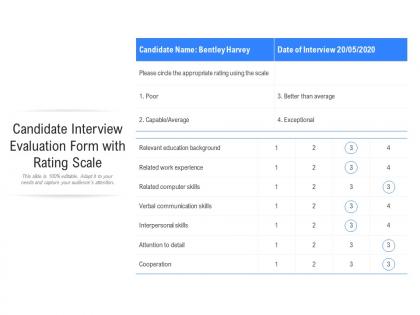
Candidate interview evaluation form with rating scale




Try Before you Buy Download Free Sample Product
 Impress Your
 Audience
 100%
100% Editable
 Save Hours
 of Time


Our Candidate Interview Evaluation Form With Rating Scale are topically designed to provide an attractive backdrop to any subject. Use them to look like a presentation pro.
People who downloaded this PowerPoint presentation also viewed the following :
Candidate interview evaluation form with rating scale with all 2 slides:
Use our Candidate Interview Evaluation Form With Rating Scale to effectively help you save your valuable time. They are readymade to fit into any presentation structure.
FAQs for Candidate interview evaluation form
Look for the obvious stuff first - can they actually code/do the work? But honestly, I've learned the hard way that skills aren't everything. Pay attention to how they walk through problems and whether they seem like someone you'd want to grab coffee with. Communication matters way more than people think. Good candidates will ask smart questions about the team and what success looks like in the role. Oh, and make yourself a little scoring sheet beforehand - otherwise you'll just hire whoever you vibed with last, which isn't always the right call.
Ugh, unconscious bias is such a pain - you'll end up loving candidates who seem just like you while totally writing off amazing people because of their name or how they talk. Honestly, I've watched this happen so many times. Structure your interviews with the same questions for everyone and score people on actual skills, not gut feelings. Get other people involved too since we all have different blind spots. Oh, and take breaks between interviews - your brain gets weird when you're seeing people back-to-back. The whole point is ditching those snap judgments that feel right but aren't.
Cultural fit is basically figuring out if someone will actually mesh well with your team and company vibe. You want to see if they share your core values and can roll with how you all communicate and work together. Here's the thing though - it gets super tricky because you don't want to accidentally hire based on personal bias. Define what "fit" actually means for your specific role first, before you even start interviews. Focus on behaviors that matter for the job, not whether someone reminds you of your college roommate or whatever. The goal is finding people who'll thrive in your environment.
Skip the generic "tell me about a time" questions - they're basically useless. Instead, throw them a real scenario they'd actually deal with in the job. I always love when candidates ask clarifying questions first rather than just diving in blindly. Watch how they think through it step by step. Honestly, their process matters way more than getting the "perfect" answer. Some of my best hires have said stuff like "I'd need to research this part" or walked through three different approaches. Oh, and let them use a whiteboard if they want - some people think better when they can draw things out.
Okay so first thing - make a rubric with clear criteria for each skill you're testing. Score right after each question while it's still fresh, not at the end when everything blurs together. I totally messed this up once and mixed up two candidates' answers... awkward. Jot down quick notes on their specific examples, then rate them on whatever scale you're using. Don't fall into that trap where everyone gets a middle score though. Oh and definitely have multiple people score separately first, then compare. You'd be surprised how much bias creeps in when you're flying solo.
Don't just dump all your behavioral questions at the end - that's boring and feels like a checklist. Space them out and actually connect each one to what matters for the job. Like if teamwork's crucial, ask about conflict resolution. I made this mistake early on and learned absolutely nothing useful about candidates! Use STAR method scoring and always have follow-ups ready. When someone gives you a weak surface-level answer, dig deeper with "What specifically did you do?" Create a simple rubric beforehand so you're not all over the place with different candidates. Oh, and push for real examples, not hypothetical "I would do this" nonsense.
Honestly, start with just 2-3 metrics or you'll drive yourself crazy. Time-to-hire is obvious but super useful. I'd definitely track candidate satisfaction - send quick surveys after interviews. The real gold mine though? Compare how different interviewers rate similar candidates. It's wild how inconsistent we can be. Quality of hire matters too - check 90-day performance and retention rates. Oh, and watch your offer acceptance rates like a hawk. If people are bailing mid-process, that's telling you something. Pick what actually matters to your team first, then expand from there.
Honestly, candidate feedback is gold for fixing your interview process. When multiple people say your tech questions don't match the actual job, you're probably testing the wrong stuff. It also reveals interviewer bias - like if candidates always feel rushed with Steve from engineering (we all have that one person). Sometimes candidates notice culture issues we're totally blind to. Quick tangent - I learned this the hard way when three candidates mentioned our office felt "tense" during their visit. We hadn't even realized it was performance review season and everyone was stressed. Check feedback themes regularly and tweak your evaluation approach. Don't just collect it and forget about it.
Start with structured interviews - same questions for everyone. Make a scoring rubric ahead of time so you're not just winging it based on vibes (trust me, that never ends well). Get multiple people interviewing and compare notes after. Definitely do some bias training for your panel - sounds boring but actually helps a ton. Oh, and write down why you gave each score. Seems tedious but you'll thank yourself later when you need to explain decisions or notice weird patterns in how you're evaluating people.
Honestly, you've got to get everyone on the same page with how they're scoring candidates. Build out some actual rubrics with specific criteria - like instead of just "good communication," spell out what that looks like in practice. Get your interviewers trained on it (yeah I know, more meetings). Have them use the same core questions and score people independently first, then compare. The behavioral indicators thing is huge - it takes all the guesswork out of whether someone's actually qualified or just charming. I'd test it with one team first before rolling it out everywhere. Way easier to fix issues early.
Oh man, you should definitely try recording interviews first - game changer for catching stuff you missed. There's AI tools now that analyze speech patterns and can spot bias in your scoring, which is pretty wild. Multiple interviewers can drop their feedback into shared platforms without those annoying email chains. Honestly? The time savings alone makes it worth trying. Some apps auto-generate scorecards too, keeps everyone on the same page. Start basic with just recording though - don't go crazy with all the fancy analytics right away. You'll probably find one simple tool that works and stick with it.
Yeah, body language counts but don't let it trump what they're actually saying. Look for when their words match their vibe - like sitting up straight while talking about wins or genuinely lighting up about the job. But honestly? Some people just get nervous and fidget during interviews (guilty as charged). Minor stuff doesn't matter much. What I'd watch for: decent eye contact, actually listening to your questions, and appropriate energy. Oh and if someone's naturally introverted, they might seem "off" but could still be perfect for the role. Use body language to back up your gut feeling, not make the whole decision.
Mix coding exercises with questions about their actual work experience. Skip the leetcode nonsense - give them something they'd actually build on the job. I like watching how they think out loud and what questions they ask when stuck. Dig into their resume too. Ask stuff like "what broke?" or "how'd you figure that out?" honestly the debugging stories tell you more than perfect code samples. Short answer: see how they problem-solve and whether they can learn from mistakes.
Get your interview panel together within a day or two - that's when everyone still remembers the details. Send out feedback forms to capture everyone's thoughts, then compile everything into a simple comparison chart. Honestly, I've learned you need someone neutral running these discussions or people just echo the loudest voice in the room. Document why you picked who you picked (legal stuff, but also helpful later). Candidates deserve an update within a week either way. The whole thing works better when you've got a system that captures real input instead of just going with whoever "felt right." Makes the decision way more defensible too.
Oh man, this is such a real problem! Personal chemistry can totally throw off your judgment. You'll find yourself excusing weak technical skills because someone made you laugh, or you'll write off a solid candidate just because the conversation felt stilted. Honestly, I think we all do this more than we'd like to admit. The thing is, team fit does matter - you don't want to work with jerks. But it shouldn't trump whether they can actually handle the role. Try using structured questions and scoring systems to keep your bias in check.
No Reviews