


Best AI Tools For Process Optimization Powerpoint Presentation Slides AI CD V




Try Before you Buy Download Free Sample Product
 Impress Your
 Audience
 100%
100% Editable
 Save Hours
 of Time


AI tools are software programs that help businesses perform specific tasks using Artificial Intelligence AI algorithms and enable process automation. Grab our insightfully designed Best AI Tools for Process Optimization template. Our Artificial intelligence tools deck represents an overview of AI tools highlighting the US AI market and industrial benefits where tools are highly used, like Healthcare, finance, retail, manufacturing, etc. It also covers details for the healthcare AI market, the evolution of AI in the healthcare sector, key challenges and AI tools with use cases Merative, Viz, ai, Enlitic, Regard and Twill. Our AI software PPT depicts AI in the fintech market, AI applications in the financial market and trends. Further, it covers the challenges and AI tools with use cases Chain GPT, Paymefy, Evolia and H2O along with a sectorial overview of AI in the retail market, retail evolution through AI, challenges and AI tools with use cases. Moreover, our machine learning tools module presents AI in the manufacturing market, challenges, AI implementation framework, the impact of AI on manufacturing and AI tools with their applications AnyAPI and Future io, along with a sectorial overview of AI in the transportation industry. Lastly, it exhibits the challenges and AI tools with use cases Polymath, Better Travel and AI Adventures. Get instant access.
Deliver this complete deck to your team members and other collaborators. Encompassed with stylized slides presenting various concepts, this Best AI Tools For Process Optimization Powerpoint Presentation Slides AI cd V is the best tool you can utilize. Personalize its content and graphics to make it unique and thought-provoking. All the one hundred eleve slides are editable and modifiable, so feel free to adjust them to your business setting. The font, color, and other components also come in an editable format making this PPT design the best choice for your next presentation. So, download now.
People who downloaded this PowerPoint presentation also viewed the following :
Content of this Powerpoint Presentation
Slide 1: This slide introduces Best AI Tools for Process Optimization. Commence by stating Your Company Name.
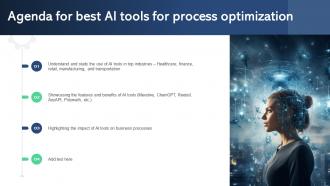
Slide 2: This slide depicts the Agenda of the presentation.
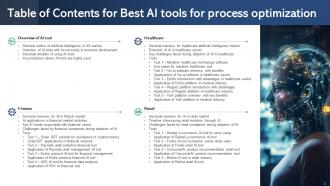
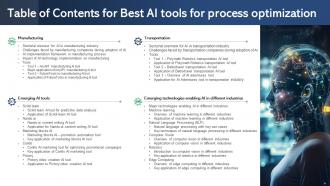
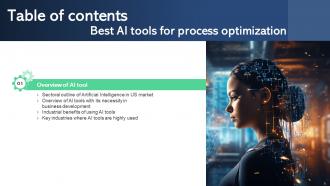
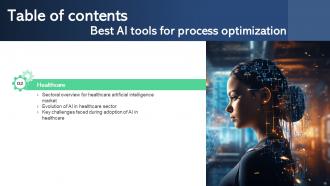
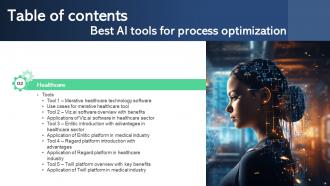
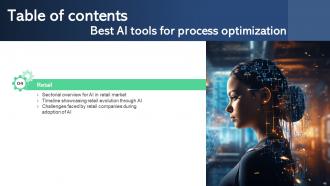
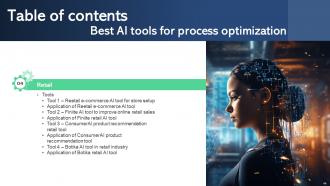
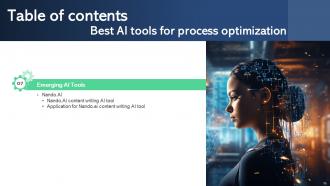
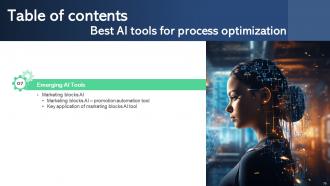
Slide 3: This slide includes the Table of contents.
Slide 4: This slide further continues the Table of contents.
Slide 5: This slide states the Title for the Topics to be discussed further.
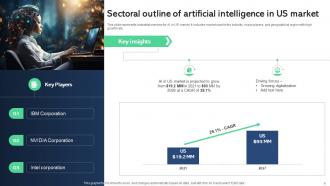
Slide 6: This slide represents industrial overview for AI in US market.
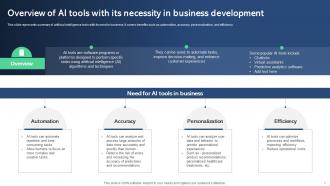
Slide 7: This slide showcases the Overview of AI tools with its necessity in business development.
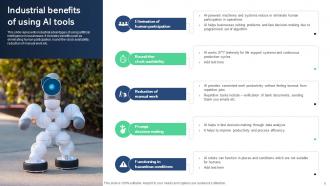
Slide 8: This slide highlights the Industrial benefits of using AI tools.
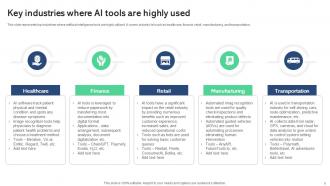
Slide 9: This slide states the Key industries where AI tools are highly used.
Slide 10: This slide depicts the Heading for the Contents to be covered in the upcoming template.
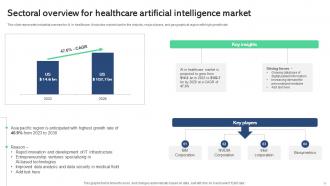
Slide 11: This slide shows the Sectoral overview for healthcare artificial intelligence market.
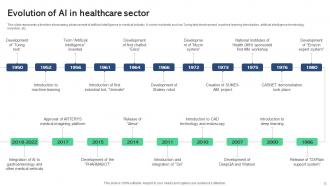
Slide 12: This slide represents a timeline showcasing advancement of artificial intelligence in medical industry.
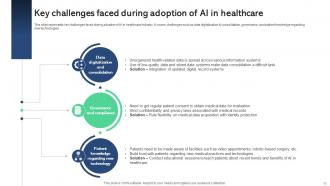
Slide 13: This slide highlights the Key challenges faced during adoption of AI in healthcare.
Slide 14: This slide portrays the Title for the Ideas to be discussed further.
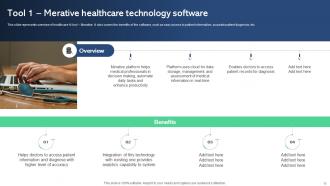
Slide 15: This slide represents overview of healthcare AI tool – Merative.
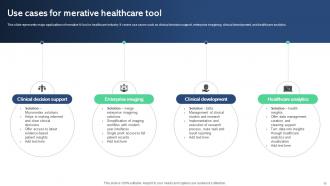
Slide 16: This slide states the Use cases for merative healthcare tool.
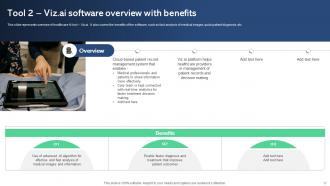
Slide 17: This slide talks about Tool 2 – Viz.ai software overview with benefits.
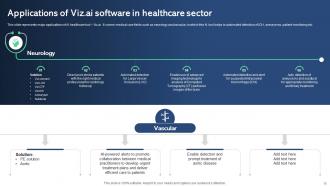
Slide 18: This slide reveals the Applications of Viz.ai software in healthcare sector.
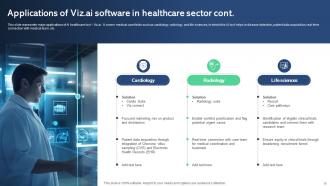
Slide 19: This slide continues the Applications of Viz.ai software in healthcare sector.
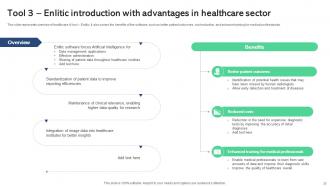
Slide 20: This slide represents overview of healthcare AI tool – Enlitic.
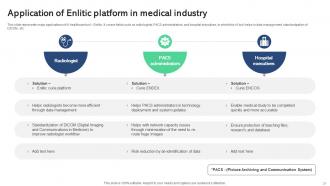
Slide 21: This slide mentions about the Application of Enlitic platform in medical industry.
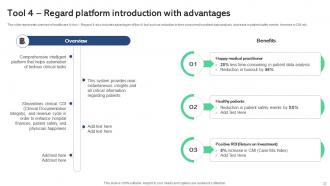
Slide 22: This slide shows the overview of healthcare AI tool – Regard.
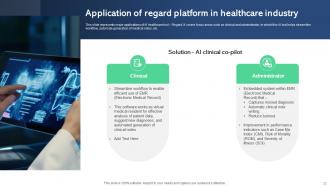
Slide 23: This slide portrays the Application of regard platform in healthcare industry.
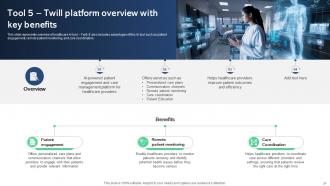
Slide 24: This slide represents overview of healthcare AI tool – Twill.
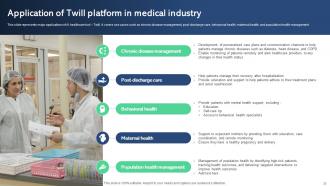
Slide 25: This slide highlights the Application of Twill platform in medical industry.
Slide 26: This slide reveals the Heading for the Ideas to be covered next.
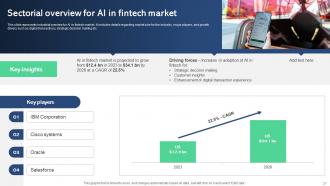
Slide 27: This slide portrays industrial overview for AI in fintech market.
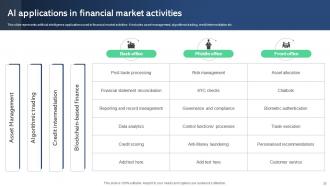
Slide 28: This slide presents artificial intelligence applications used in financial market activities.
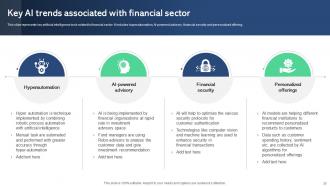
Slide 29: This slide highlights the Key AI trends associated with financial sector.
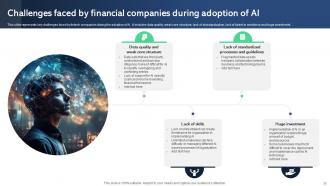
Slide 30: This slide exhibits the Challenges faced by financial companies during adoption of AI.
Slide 31: This slide depicts the Title for the Contents to be discussed further.
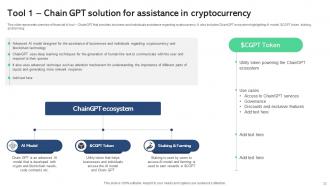
Slide 32: This slide shows overview of financial AI tool – ChainGPT that provides business and individuals assistance regarding cryptocurrency.
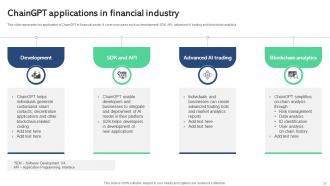
Slide 33: This slide talks about the ChainGPT applications in financial industry.
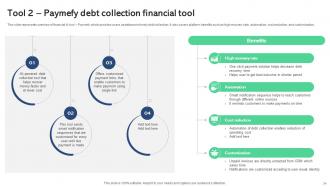
Slide 34: This slide represents overview of financial AI tool – Paymefy which provides users assistance in timely debt collection.
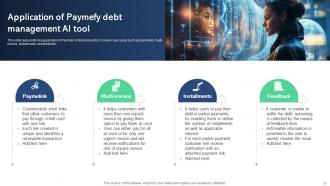
Slide 35: This slide states the Application of paymefy debt management AI tool.
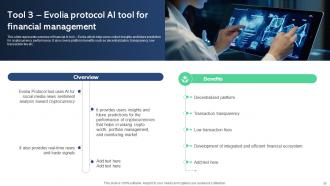
Slide 36: This slide portrays the overview of financial AI tool.
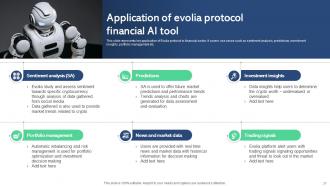
Slide 37: This slide highlights the Application of evolia protocol financial AI tool.
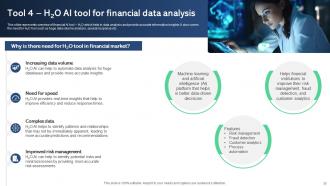
Slide 38: This slide reveals overview of financial AI tool – H2O which help in data analysis and provide accurate information insights.
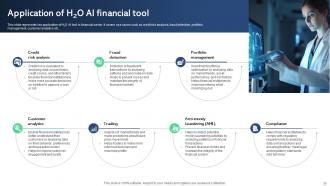
Slide 39: This slide states the Application of H2O AI financial tool.
Slide 40: This slide contains the Heading for the Topics to be covered next.
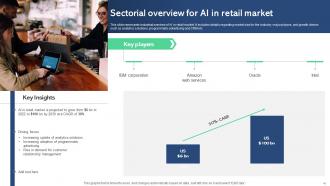
Slide 41: This slide represents industrial overview of AI in retail market.
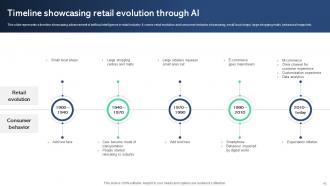
Slide 42: This slide displays the Timeline showcasing retail evolution through AI.
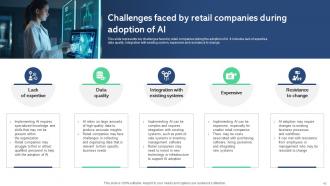
Slide 43: This slide exhibits the Challenges faced by retail companies during adoption of AI.
Slide 44: This slide portrays the Title for the Topics to be discussed further.
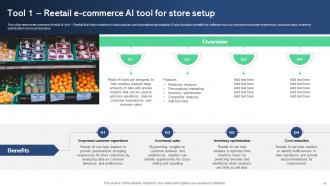
Slide 45: This slide represents overview of retail AI tool – Reetail that helps retailers in data analysis and operations optimization.
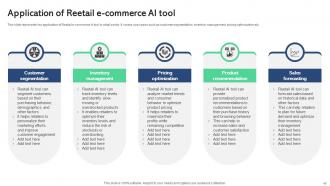
Slide 46: This slide states the Application of Reetail e-commerce AI tool.
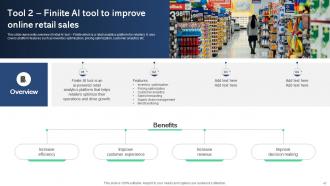
Slide 47: This slide shows the overview of retail AI tool – Finiite which is a retail analytics platform for retailers.
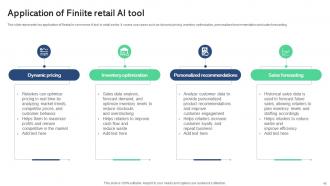
Slide 48: This slide highlights the Application of Finiite retail AI tool.
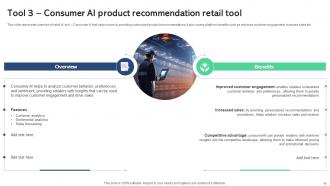
Slide 49: This slide indicates information about the Tool 3 – ConsumerAI product recommendation retail tool.
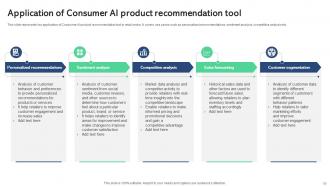
Slide 50: This slide reveals the Application of ConsumerAI product recommendation tool.
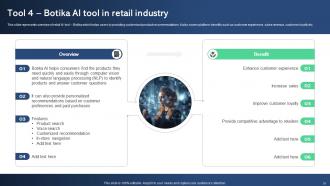
Slide 51: This slide represents overview of retail AI tool – Botika which helps users by providing customized product recommendations.
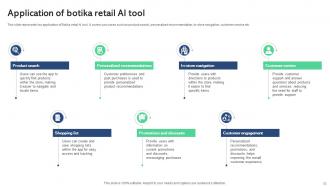
Slide 52: This slide states the Application of botika retail AI tool.
Slide 53: This slide portrays the Heading for the Contents to be discussed next.
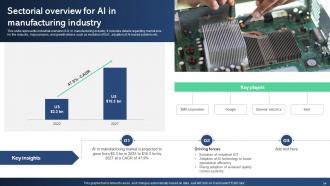
Slide 54: This slide represents industrial overview of AI in manufacturing industry.
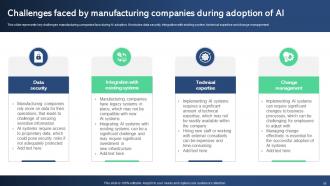
Slide 55: This slide exhibits the Challenges faced by manufacturing companies during adoption of AI.
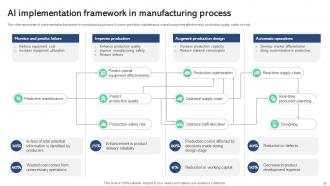
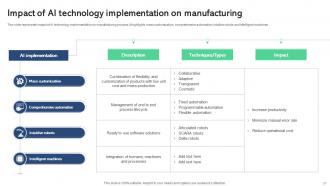
Slide 56: This slide presents AI implementation framework in manufacturing process.
Slide 57: This slide shows the AI implementation framework in the manufacturing process.
Slide 58: This slide portrays the Title for the Ideas to be covered further.
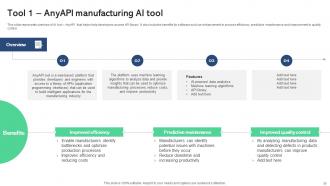
Slide 59: This slide represents overview of AI tool – AnyAPI that helps help developers access API library.
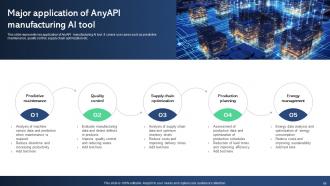
Slide 60: This slide highlights the Major application of AnyAPI manufacturing AI tool.
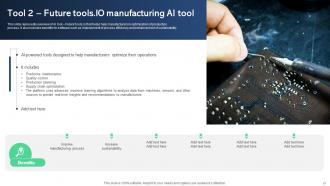
Slide 61: This slide represents overview of AI tool – FutureTools.Io that helps help manufacturers in optimization of production process.
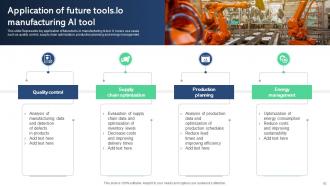
Slide 62: This slide shows the Application of FutureTools.Io manufacturing AI tool.
Slide 63: This slide portrays the Heading for the Ideas to be discussed next.
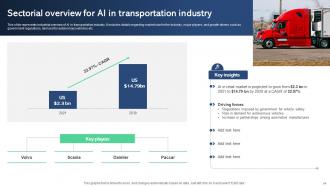
Slide 64: This slide depicts the Sectorial overview for AI in transportation industry.
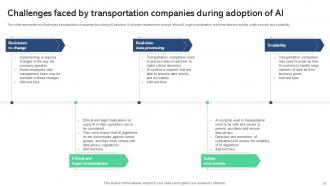
Slide 65: This slide exhibits the Challenges faced by transportation companies during adoption of AI.
Slide 66: This slide presents the Title for the Contents to be covered in the upcoming template.
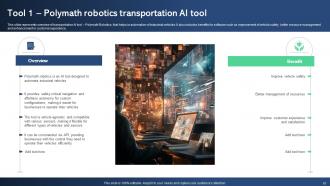
Slide 67: This slide reveals overview of transportation AI tool – Polymath Robotics, that helps in automation of industrial vehicles.
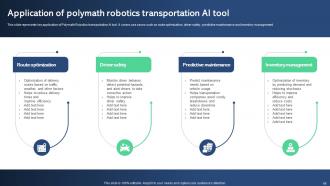
Slide 68: This slide highlights the Application of polymath robotics transportation AI tool.
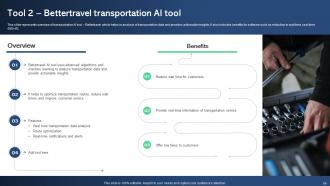
Slide 69: This slide shows the overview of transportation AI tool – Bettertravel.
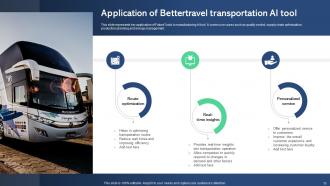
Slide 70: This slide represents key application of FutureTools.Io manufacturing AI tool.
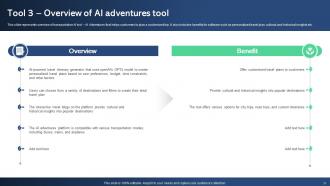
Slide 71: This slide talks about the Tool 3 – Overview of AI adventures tool.
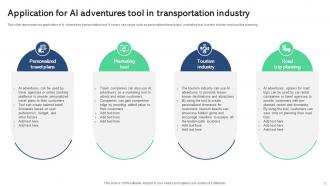
Slide 72: This slide displays the Application for AI adventures tool in transportation industry.
Slide 73: This slide indicates the Heading for the Topics to be discussed next.
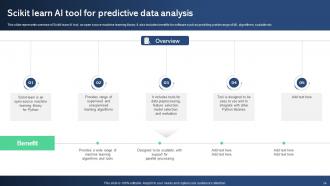
Slide 74: This slide represents overview of Scikit learn AI tool, an open source machine learning library.
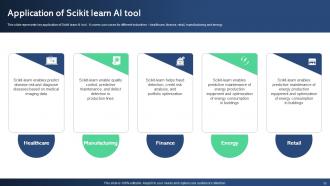
Slide 75: This slide highlights the Application of Scikit learn AI tool.
Slide 76: This slide portrays the Title for the Topics to be covered further.
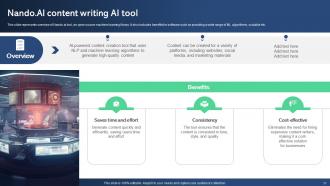
Slide 77: This slide presents the overview of Nando.ai tool, an open source machine learning library.
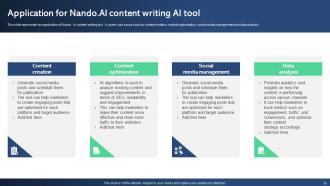
Slide 78: This slide states the Application for Nando.ai content writing AI tool.
Slide 79: This slide portrays the Heading for the Contents to be discussed next.
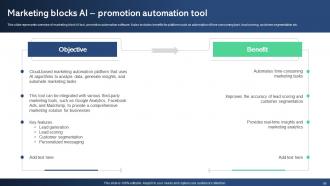
Slide 80: This slide represents overview of marketing block AI tool, promotion automation software.
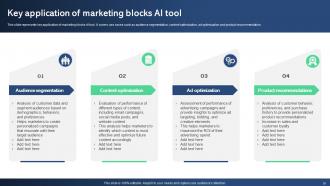
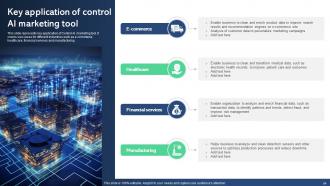
Slide 81: This slide highlights the Key application of marketing blocks AI tool.
Slide 82: This slide states the Title for the Ideas to be covered further.
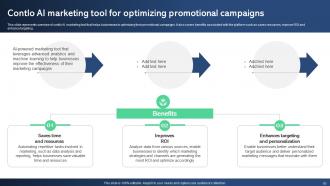
Slide 83: This slide represents overview of contlo AI marketing tool that helps businesses in optimizing their promotional campaigns.
Slide 84: This slide presents the Key application of Contlo AI marketing tool.
Slide 85: This slide shows the Heading for the Ideas to be discussed next.
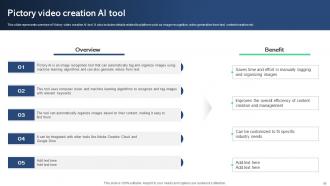
Slide 86: This slide represents overview of Pictory video creation AI tool.
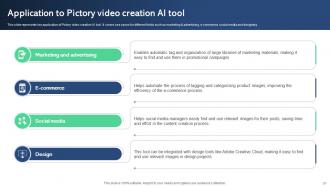
Slide 87: This slide highlights the Application to Pictory video creation AI tool.
Slide 88: This slide reveals the Title for the Contents to be covered in the following template.
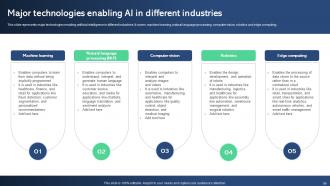
Slide 89: This slide exhibits the Major technologies enabling AI in different industries.
Slide 90: This slide contains the Heading for the Topics to be discussed next.
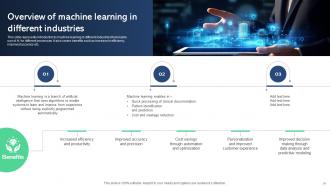
Slide 91: This slide portrays the Overview of machine learning in different industries.
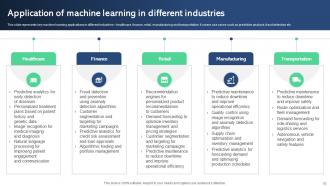
Slide 92: This slide talks about the Application of machine learning in different industries.
Slide 93: This slide shows the Title for the Topics to be covered in the upocming template.
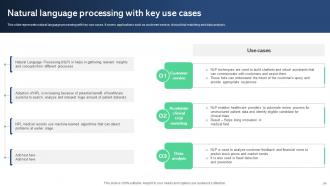
Slide 94: This slide highlights the Natural language processing with key use cases.
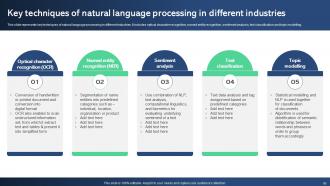
Slide 95: This slide states the Key techniques of natural language processing in different industries.
Slide 96: This slide mentions about the Heading for the Contents to be discussed further.
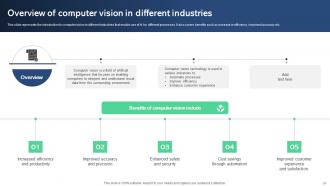
Slide 97: This slide portrays the Overview of computer vision in different industries.
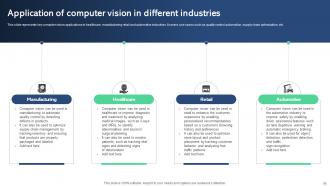
Slide 98: This slide highlights the Application of computer vision in different industries.
Slide 99: This slide reveals the Title for the Ideas to be covered next.
Slide 100: This slide represents introduction to machine learning in different industries that enable use of AI for different processes.
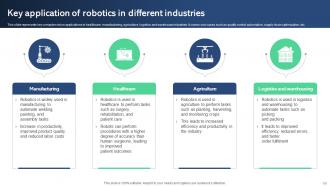
Slide 101: This slide depicts the Key application of robotics in different industries.
Slide 102: This slide shows the Heading for the Ideas to be discussed further.
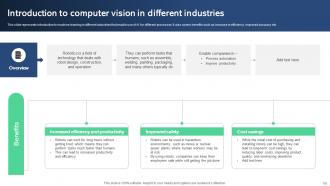
Slide 103: This slide represents the introduction to computer vision in different industries that enable use of AI for different processes.
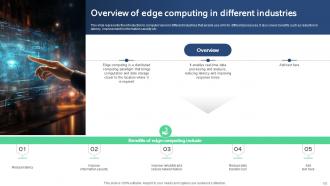
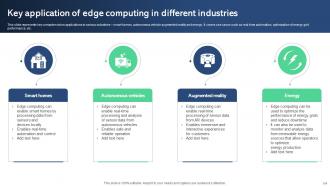
Slide 104: This slide states the Key application of edge computing in different industries.
Slide 105: This is the Icons slide containing all the Icons used in the plan.
Slide 106: This slide is used for displaying some Additional information.
Slide 107: This is the Idea generation slide for encouraging fresh ideas.
Slide 108: This slide contains the Post it notes for reminders and deadlines.
Slide 109: This is the About us slide. State your comapny-related information here.
Slide 110: This is the Puzzle slide with related imagery.
Slide 111: This is the Thank You slide for acknowledgement.
Best AI Tools For Process Optimization Powerpoint Presentation Slides AI CD V with all 119 slides:
Use our Best AI Tools For Process Optimization Powerpoint Presentation Slides AI cd V to effectively help you save your valuable time. They are readymade to fit into any presentation structure.










FAQs for Best AI Tools For Process Optimization Powerpoint Presentation Slides
Honestly, it's like having this crazy good analyst working 24/7 who spots stuff you'd totally miss. Predicts equipment breakdowns before they happen, fixes your supply chain routes, handles boring repetitive work. Plus it learns your patterns over time - gets scary good at catching problems early. I know a few companies that slashed costs by like 20-30% just from AI managing their inventory and workflows. Though I'd say start small first? Pick whatever process is making you want to pull your hair out and test some AI tools on that. No point going all-in right away.
So basically you feed all your historical data - vibrations, temps, pressure readings, past breakdowns - into ML algorithms that learn the patterns. Then they can actually predict when stuff's about to fail before it happens. Pretty wild how spot-on they get sometimes. Your sensors pick up the warning signs and flag components that'll likely crap out soon. Way better than scrambling when everything suddenly breaks down during production, you know? I'd start with whatever machines you absolutely can't afford to lose and just focus on getting solid sensor data from those first.
Blue Yonder and o9 Solutions are probably your best bet - they handle everything from demand forecasting to route planning. Kinaxis works well too, particularly for planning and risk stuff. The enterprise options get expensive fast though. ClearMetal's decent for logistics visibility if you need something cheaper. Llamasoft does network design pretty well. Oh, and most of these use machine learning to predict demand and optimize routes, which is nice. Honestly, I'd just pick your biggest headache and run a pilot there first instead of trying to fix everything at once.
Dude, AI analytics is honestly a game changer for decision-making. It finds patterns in your data that you'd never catch on your own. Instead of waiting forever for reports, you get insights right away. The predictive stuff is pretty wild too - shows you what's probably coming next. No more flying blind with gut instincts when you've got actual data trends backing you up. Processing huge amounts of info happens instantly, which is nice because who has time for that? It'll even catch problems before they blow up on you. I'd say test it on just one thing first and see how much clearer everything gets.
So basically, these AI tools hook up to your ERP through APIs or those pre-built connectors - like digital bridges that let everything communicate. They grab live data (inventory, schedules, resources) and send back suggestions or automatic tweaks. SAP and Oracle usually have native integrations already, which is clutch honestly. The trick is getting data flowing both directions smoothly so the AI can actually see what's going on and help optimize stuff. Oh, and definitely check what your ERP vendor supports first - might save you a headache later.
First things first - map out your workflows before you automate anything. I made that mistake once and it was a nightmare. You'll want drag-and-drop builders, solid API connections, and real-time dashboards to monitor everything. Exception handling is huge too because stuff breaks. Analytics matter since you'll need to show leadership the ROI eventually. Oh, and integration with whatever systems you're already using is non-negotiable. My advice? Pick your top 3 processes that are driving you crazy, then demo tools specifically on those. Way easier than trying to boil the ocean.
So NLP tools can totally automate your ticket stuff - like sorting by sentiment and suggesting responses. Incoming messages get routed automatically to whoever needs to handle them based on what the customer's actually saying. Honestly saves a ton of time vs doing it all manually. Chatbots get way smarter too, they'll escalate the tricky stuff to real people when needed. I'd start with just auto-tagging tickets first though - don't overwhelm your team right away. Once they're cool with that, then you can add the fancier features.
Focus on the obvious stuff first - how much faster things are moving and whether you're actually saving money. Error rates matter too because speedy but broken processes are useless. I'd definitely track if people are actually using the AI tools or just ignoring them (happens more than you'd think). Employee happiness is huge - grumpy workers will find ways around your shiny new system. ROI timeline gives you concrete numbers for the bosses. Start small though. Pick maybe 3 metrics that hit your worst problems, then add more once you've got those dialed in.
Your workflow data can actually reveal patterns humans totally miss. AI tracks how long tasks take, where teams hand things off, and spots the exact slowdown points. It's like having someone watch your processes 24/7 with perfect memory. Plus it digs into historical trends to predict future bottlenecks - honestly pretty neat stuff. Process mining tools make this way easier than it sounds. Just dump your current data into something like that and boom, you'll see exactly where time's getting wasted. Way better than guessing what's broken.
Dude, manufacturing is killing it with AI right now - they're seeing like 20-30% efficiency boosts in predictive maintenance and quality control. Healthcare's doing great too, especially with patient flow stuff. Finance is obviously all over fraud detection and trading algorithms. What's wild is how well retail is doing with inventory and demand forecasting - didn't expect that honestly. The pattern I'm seeing? Industries with repetitive processes and tons of data do best. If your company has predictable workflows that pump out lots of data, you should totally look into AI optimization tools.
Look, AI monitoring is pretty solid for catching compliance stuff before it blows up. Start with your riskiest processes - that's where you'll see the biggest impact. The pattern recognition is honestly where it shines - weird financial transactions, data privacy gaps, regulatory changes across different areas. Way better than waiting for manual audits that happen like twice a year. You can build automated checkpoints into your workflows, track everything for audits, and it'll even predict problems based on old data. Real-time monitoring vs. periodic checks? Not even close.
Honestly, just pick one small thing to test first - don't go crazy trying to automate everything at once. Your data needs to be actually clean before you even think about AI, otherwise you'll just get fancy garbage back. I'd spend time getting your team excited about it early on, show them it's gonna make their work easier rather than steal their jobs. Oh and definitely pick tools that play nice with whatever systems you're already using. The trick is setting up clear ways to measure if it's actually helping from day one. Perfect that first process, then you can think bigger.
Honestly, it comes down to scale and what you can afford. Small businesses usually grab simple tools like Zapier - stuff that works right out of the box for email automation or basic inventory tracking. Big companies? They're building custom AI that connects everything from HR to supply chains. Budget's obviously huge here. Enterprises can drop serious money on predictive maintenance and complex optimization (plus all the security requirements that come with it). My advice? Find whatever's eating up most of your time first. That's where you'll actually see results, whether you're a startup or Fortune 500.
So the big stuff you gotta worry about is job displacement first - nobody wants to be the person who automated away half the team, right? Data privacy is another headache, plus you need to check if your AI system is being unfair to certain groups. Honestly, the bias thing is trickier than most people think. Your team should understand how these decisions are getting made too. I'd run an impact assessment before you launch anything. Oh, and don't let the AI make critical calls without a human double-checking. That's just asking for trouble.
Honestly, AI is a game-changer for catching defects humans miss. These computer vision systems work crazy fast and spot tiny inconsistencies in color, shape, you name it. I've seen setups that find flaws smaller than what your eye could ever catch - it's pretty wild. The cool part? They actually get smarter over time, learning patterns and predicting when quality issues might pop up based on how production's running. Start with vision-based inspection systems since they're already proven to work well in manufacturing. Way less headache than some of the newer stuff.
-
Definitely recommend SlideTeam to all who need help with PowerPoint presentations. Their design team can create anything you need.
-
A library of engaging, customizable and content-ready templates.