

 0 Comment
 Customer Reviews

Understanding glomerulonephritis is simple. Professionals with experience in healthcare along with medical students interested in renal health benefit from the right collection of resources. SlideTeam’s Glomerulonephritis PPT Templates deliver expert knowledge, visual interest along with clear explanations to simplify this complex medical condition.
Transformational concepts in thrombolytic treatments and clinical guidelines and pathophysiology receive thorough explanations through these templates, which assist both students and professionals in their learning process and decision-making abilities.
These resources establish a systematic approach that helps users gain better knowledge about glomeruli function under hypertension or immunosuppressant management of kidney inflammation. SlideTeam's 100% editable and customizable PPT templates offer professional and educational functions to deliver powerful talks that improve healthcare quality.
Let’s explore!
Template 1: Thrombolytics in Glomerulonephritis PPT Designs
The treatment of chronic kidney disease (CKD) depends on medical professionals understanding glomerulonephritis pathophysiology because it supports kidney function protection. This detailed study of thrombolytic impacts on kidney inflammation presents 31 slide units to provide advanced clinical knowledge to professionals. This resource delivers practical knowledge about glomerular effects and immunosuppressant approaches to medical staff members. Climate-controlled hypertension management documentation integrated throughout the deck gives healthcare practitioners improved abilities in combating CKD by creating an essential tool that delivers better patient outcomes. Healthcare workers of various experience levels gain helpful treatment choices through the merger of aesthetically pleasing materials and trustworthy information in their systems.
[product_image id=1384777]
Template 2: Thrombolytics Overview and Definition PPT Template
Thrombolytic medication provides healthcare professionals with medicine to manage dangerous medical situations, among which ischemic stroke, myocardial infarction, and pulmonary embolism stand out. Thrombolytic medicines dissolve hazardous blood clots and preserve blood flow, thus avoiding more major health problems. Complete comprehension of thrombolytic therapy becomes essential for treating CKD patients because their cardiovascular risks run high. A clear picture on the right side of the display features a simple discussion regarding thrombolytics while presenting their therapeutic properties. The educational material focuses on three kidney conditions.

Template 3: Understanding Glomerulonephritis PowerPoint Template
Right management of glomerulonephritis demands methodical kidney protection measures that prevent glomerulonephritis from turning into chronic kidney disease (CKD) and renal failure. An important detection method for kidney inflammation is depicted in the PPT Template, since early detection provides healthcare providers with opportunities for symptom prevention. Through the structured workflow of the PPT, nursing staff receive essential operational knowledge to start delivering treatments that boost patient health improvement. The collaborative design of the slide demonstrates how professional connections between specialists deliver exceptional outcomes in controlling CKD development.

Template 4: Types of Glomerulonephritis PowerPoint Template
Proficient delivery of glomerulonephritis treatment depends on recognizing multiple forms of glomerulonephritis and their special treatment procedures. This presentation shows a complete five-columned table that details important criteria and describes perfect candidates along with required precautions and inappropriate treatment scenarios for each glomerular condition. The detailed understanding serves vital purposes for health practitioners who treat patients with chronic kidney disease (CKD) and those experiencing kidney inflammation. Medical professionals need to evaluate glomeruli function alongside proteinuria monitoring and proper management of hypertension to protect patients. Practitioners who perform careful assessments and understand proper immunosuppressant timing will make decisions that lead to improved patient results. Medical staff use this structured approach to provide personalized treatments that decrease renal failure risks and ensure that patients acquire optimal care.

Template 5: Pathophysiology of Glomerulonephritis PPT Template
Knowledge of glomerulonephritis pathophysiology enables effective treatment of chronic kidney disease and avoids renal failure development. To start the six essential phases, the immune response initiates, and then abnormal immune responses trigger kidney inflammation. Subsequent vascular changes affect blood circulation while placing excessive pressure on the filtration capacities of glomeruli. The presentation discusses therapy approaches that highlight immunosuppressants as essential tools to regulate immune system conduct—uncontrolled long-term effects of inflammation result in permanent damage, which advances the development of CKD.

Template 6: Role of Thrombolytics in Treatment PPT Template
Patients with a high risk for renal failure problems require thrombolytics to manage medical conditions that affect their kidney health. The presentation consists of two critical sections, which provide rapid intervention and risk assessment. Risk assessment needs to be performed to determine if it is safe to administer treatment by evaluating hypertension, proteinuria, and glomeruli damage potential. An educational illustration accompanies this educational resource, which gives healthcare staff the expertise needed to carry out quick medical care while conducting thorough assessments to protect renal function and achieve better results.

Template 7: Indications for Thrombolytic Therapy PowerPoint Template
The primary function of thrombolytic therapy is to safeguard lives through medical treatments of blood clot emergencies affecting fundamental organ functions. The presentation pins down six vital medical situations where patients qualify for this treatment protocol, including ischemic stroke, deep vein thrombosis (DVT), and pulmonary embolism (PE). All these medical conditions require surgical intervention to restore blood flow because this action stops both chronic kidney disease (CKD) and renal failure from developing further. Tissue plasminogen activators provide critical therapy for patients who present proteinuria or hypertension because both conditions increase their susceptibility to forming blood clots. A microscopic view of thrombolytic action on blood clots is displayed through the presented cell picture. Healthcare staff who recognize blood clot signs should act immediately to enhance patient recovery outcomes while maintaining kidney health in both immediate and extended periods.

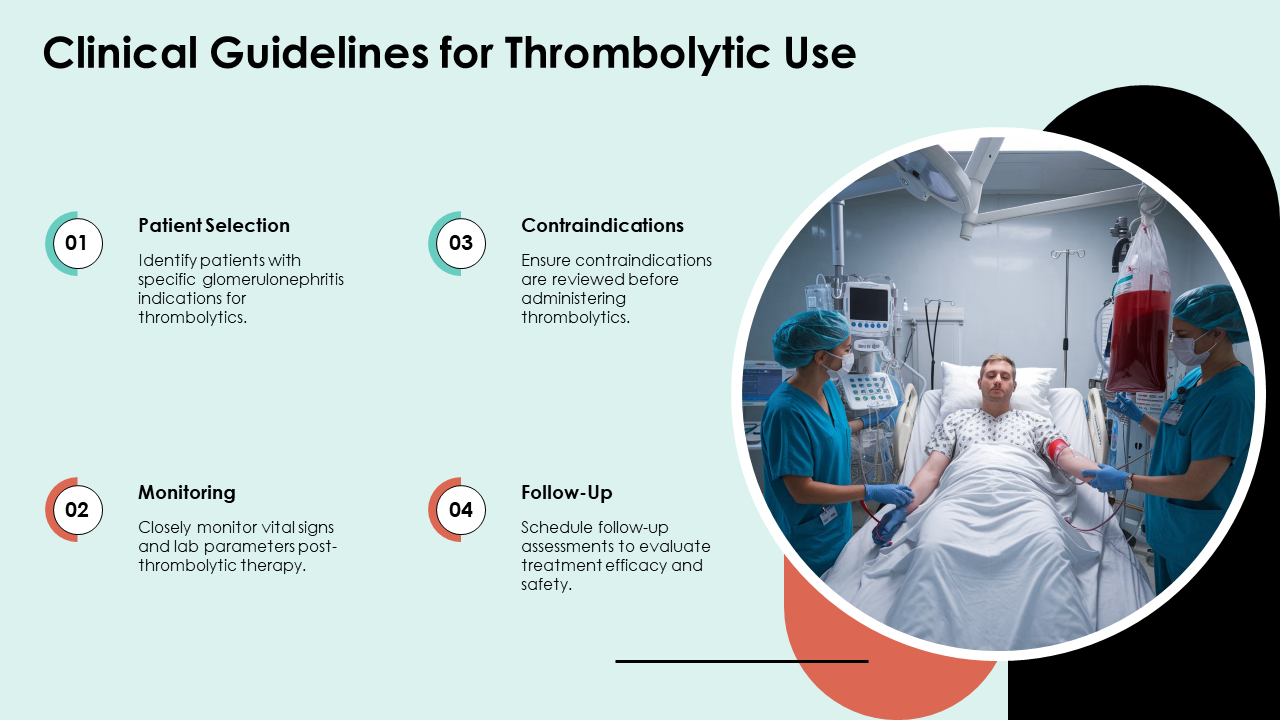
Template 8: Clinical Guidelines for Thrombolytic Use PowerPoint Slide
The correct implementation of thrombolytic therapy follows definite clinical protocols to protect patient safety and deliver optimum outcomes. The presentation breaks down its content into assessment criteria for selecting patients, monitoring procedures, and recognizing contraindications, as well as follow-up responsibilities. A critical patient selection process is essential, especially for those diagnosed with chronic kidney disease (CKD) combined with hypertension or proteinuria due to increased danger from thrombolytics in these conditions. Healthcare providers need to detect kidney inflammation together with glomerular strains during anticoagulation treatments so they can provide immediate assistance. Healthcare providers require a depth of expertise regarding contraindications to interrupt the development of conditions promoting accelerated renal failure. Disease recovery proceeds effectively through careful follow-up since it addresses all underlying health problems. The resource provides safer thrombolytic delivery through specific instructions that protect kidney health and improve medical staff performance.
Template 9: Patient Selection Criteria for Thrombolytics PPT Template
The selection of suitable patients for effective thrombolytic treatment becomes essential for those who show increased vulnerability to chronic kidney disease (CKD) or renal failure. The four-column table in this PPT contains critical information that highlights patient requirements for necessary precautions and contraindications among ideal patient characteristics. The table presents protective contraindications for patients who have damaged glomeruli or those using immunosuppressant drugs. The guidance used by healthcare personnel results in improved medical decisions that generate better health results for patients' kidneys.

Template 10: Risks and Benefits of Thrombolytic Therapy PPT Template
Emergency treatment, known as thrombolytic therapy, stands as a powerful option that requires complete patient knowledge about the benefits and risks of successful treatment design. This SWOT analysis template presentations provide complete views of strengths and weaknesses and opportunities and threats related to utilizing thrombolytic therapy. Fast clot-dissolving processes from thrombolytic therapy help medical personnel prevent CKD and renal failure from developing in emergency settings when treating patients experiencing ischemic strokes and pulmonary emboli is also depicted in this slide.

Your priority is to gain knowledge about glomerulonephritis as a condition. Your goal to develop medical knowledge requires additional knowledge about essential healthcare topics that will also improve your presentation abilities. For all of these, SlideTeam Templates are the best resource. Our collection of healthcare slides offer essential tools that enable professionals, educators, and students to enhance their ability to deliver better educational outcomes and patient care results.