


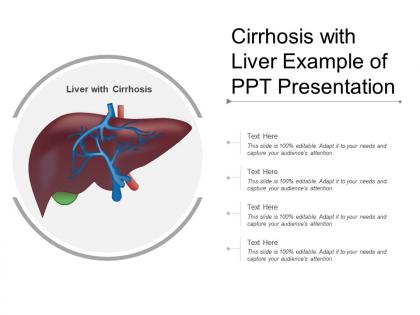
Cirrhosis with liver example of ppt presentation




Try Before you Buy Download Free Sample Product
 Impress Your
 Audience
 100%
100% Editable
 Save Hours
 of Time


Get under way with our Cirrhosis With Liver Example Of Ppt Presentation. Begin your endeavour with full faith.
People who downloaded this PowerPoint presentation also viewed the following :
Cirrhosis with liver example of ppt presentation with all 5 slides:
Increase the amount in your account with our Cirrhosis With Liver Example Of Ppt Presentation. You will go dancing to the bank.




FAQs for Cirrhosis with liver example
Cirrhosis primarily stems from chronic hepatitis B and C, alcohol-related liver disease, non-alcoholic fatty liver disease, and autoimmune conditions. Geographic variations are significant, with hepatitis B predominating in Asia and sub-Saharan Africa, alcohol-related cirrhosis more common in Eastern Europe and Russia, while non-alcoholic fatty liver disease increasingly affects Western nations with rising obesity rates.
Alcohol consumption accelerates cirrhosis development by causing chronic liver inflammation, cellular damage, and progressive scarring through toxic metabolite accumulation. Heavy drinkers experience faster disease progression compared to other cirrhosis causes, with many gastroenterology practices finding that early intervention and abstinence significantly slow advancement, ultimately enabling better patient outcomes and reduced healthcare complications.
Viral hepatitis infections, particularly hepatitis B and C, represent leading causes of cirrhosis by triggering chronic liver inflammation, progressive fibrosis, and cellular damage over years or decades. These persistent viral infections cause ongoing hepatocyte destruction and immune responses, with many healthcare systems finding that early antiviral interventions significantly reduce cirrhosis progression rates and improve patient outcomes.
Yes, NAFLD can progress to cirrhosis through non-alcoholic steatohepatitis (NASH), where liver inflammation and fibrosis gradually develop over years. This progression typically occurs when fat accumulation triggers inflammatory responses, cellular damage, and progressive scarring, with many patients in diabetic, obese, and metabolically compromised populations finding that early intervention significantly reduces cirrhosis risk.
Early signs of cirrhosis include fatigue, weakness, loss of appetite, nausea, abdominal pain, and unexplained weight loss, along with spider-like blood vessels on the skin and easy bruising. While these symptoms can be subtle initially, healthcare providers increasingly emphasize early detection through regular monitoring, with many patients finding that prompt recognition enables better treatment outcomes and enhanced quality of life management.
Cirrhosis is diagnosed through blood tests measuring liver enzymes and function, imaging studies like ultrasound or CT scans, and liver biopsy for definitive confirmation. These diagnostic approaches enable healthcare providers to assess liver damage severity, monitor disease progression, and determine treatment strategies, with many medical institutions finding that early detection through routine screening significantly enhances patient outcomes and treatment effectiveness.
Advanced cirrhosis complications include portal hypertension, ascites, hepatic encephalopathy, variceal bleeding, and hepatorenal syndrome. These conditions significantly impact patient outcomes by reducing liver function, increasing infection risk, and compromising quality of life, with many healthcare facilities finding that early intervention and comprehensive monitoring ultimately deliver better patient management and reduced hospitalization rates.
Cirrhosis severely impairs liver function by replacing healthy tissue with scar tissue, disrupting protein synthesis, detoxification, and bile production. This progressive damage leads to complications including portal hypertension, fluid retention, increased infection risk, and potential liver failure, ultimately requiring comprehensive medical management and lifestyle modifications to prevent further deterioration.
Lifestyle modifications include eliminating alcohol consumption, maintaining a balanced low-sodium diet, regular exercise, weight management, and avoiding hepatotoxic medications. These changes enhance liver function by reducing inflammation, minimizing fluid retention, and preventing further scarring, with many patients finding that consistent dietary adherence and exercise significantly slow disease progression while improving overall quality of life.
Cirrhosis significantly alters medication pharmacokinetics through reduced hepatic metabolism, decreased protein synthesis affecting drug binding, and impaired elimination pathways. This creates heightened toxicity risks and unpredictable drug responses, requiring careful dose adjustments and monitoring protocols, with healthcare providers increasingly implementing specialized pharmaceutical management strategies to ensure patient safety and therapeutic effectiveness.
Cirrhosis treatments include lifestyle modifications, antiviral therapies, immunosuppressive drugs, nutritional support, and liver transplantation, with approaches varying significantly by underlying cause. Alcohol-related cases require cessation programs and nutritional rehabilitation, while viral hepatitis responds to targeted antivirals, and autoimmune conditions benefit from immunosuppression, ultimately enabling disease stabilization and improved outcomes.
Liver transplant remains the definitive treatment for end-stage cirrhosis, though palliative care, symptom management, and bridging therapies can enhance quality of life while patients await transplantation. While medical centers increasingly utilize TIPS procedures, medication management, and dietary modifications to address complications, these approaches ultimately serve as supportive measures, with transplantation delivering the most comprehensive long-term outcomes for eligible patients.
Patients with cirrhosis can effectively manage their condition through medication adherence, dietary modifications, regular monitoring, alcohol cessation, and infection prevention strategies. These approaches streamline symptom control, minimize complications like portal hypertension and ascites, and enhance liver function, with many healthcare systems finding that comprehensive care coordination ultimately delivers improved patient outcomes and reduced hospitalizations.
**INPUT**: What is the prognosis for individuals diagnosed with cirrhosis, and what factors influence it? **OUTPUT**: Cirrhosis prognosis varies significantly based on disease stage, underlying cause, liver function scores, and patient compliance with treatment protocols. Early-stage patients with viral hepatitis or alcohol-related cirrhosis can achieve stable outcomes through medication adherence, lifestyle modifications, and regular monitoring, while advanced cases may require transplant evaluation, ultimately delivering improved quality of life when managed comprehensively.
Cirrhosis awareness varies significantly across populations, with higher-risk communities often having limited knowledge about prevention, symptoms, and treatment options. Educational efforts targeting specific demographics through culturally appropriate messaging, community health programs, and healthcare provider training can enhance understanding, while initiatives focusing on liver health literacy, early detection screening, and lifestyle modification guidance ultimately deliver improved patient outcomes and reduced disease progression rates.
-
Great quality product.
-
Great product with effective design. Helped a lot in our corporate presentations. Easy to edit and stunning visuals.