


![The Digestive System in 17 PowerPoint Templates [Free PDF Attached]](https://www.slideteam.net/wp/wp-content/uploads/2022/09/Digestive-System.jpg)


 0 Comment
 Customer Reviews

‘Energy and Food,’ so goes the title of a chapter in a Grade-5 textbook. Amidst the pictures of wonderful foods, the lesson plan's key aim was hidden. This was to help us become familiar with our digestive system. Cut to today, and millions of us, including top-notch business executives, will struggle to remember anything of consequence about the digestive system.
This blog will take you through those times and the route our food takes from the time we put it into our mouths.
First things first, however. It is the digestive system's job to ensure nutrients in the food we consume to get to where they are needed and in the form that they can be used; burning food to create energy is the most simple explanation.
The digestive system starts working as soon as you take that first bite and keeps on working as the food makes its way down to be broken down into forms that are palatable by your cells. What is not needed is removed from the body.
This blog offers 17 informative PowerPoint Templates to give you the best presentation on this vital human organ system.
This collection is relevant for any age group and for all segments of the population because the templates are:
- CONTENT-READY: You do not need to conduct any research; we have curated that for you.
- EDITABLE: Any information that catches your attention can be added to or deleted from these slides.
Each deck has several slides presenting the diagram with and without the labels and highlighting individual parts, making for an educational presentation experience for everyone!
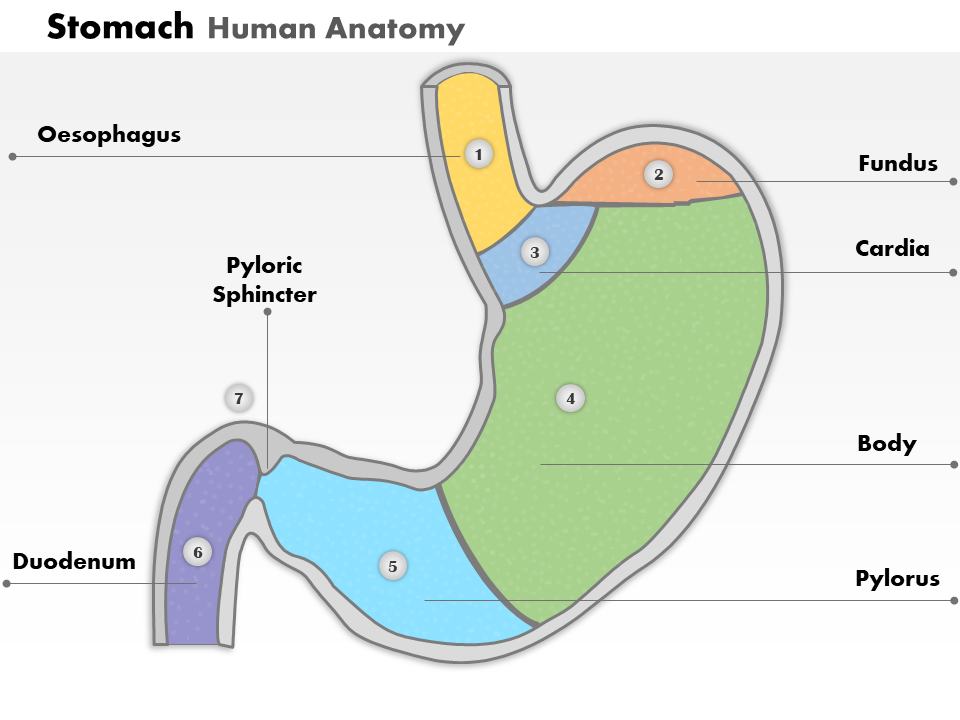
Template 1: Human Stomach Anatomy PowerPoint Slides
The human stomach is an amazing piece! With this PPT Deck, you'll be able to illustrate the parts and functions of the stomach in a clear and concise way. The images are color-coordinated to improve retention among the audience. Download this presentation template now.
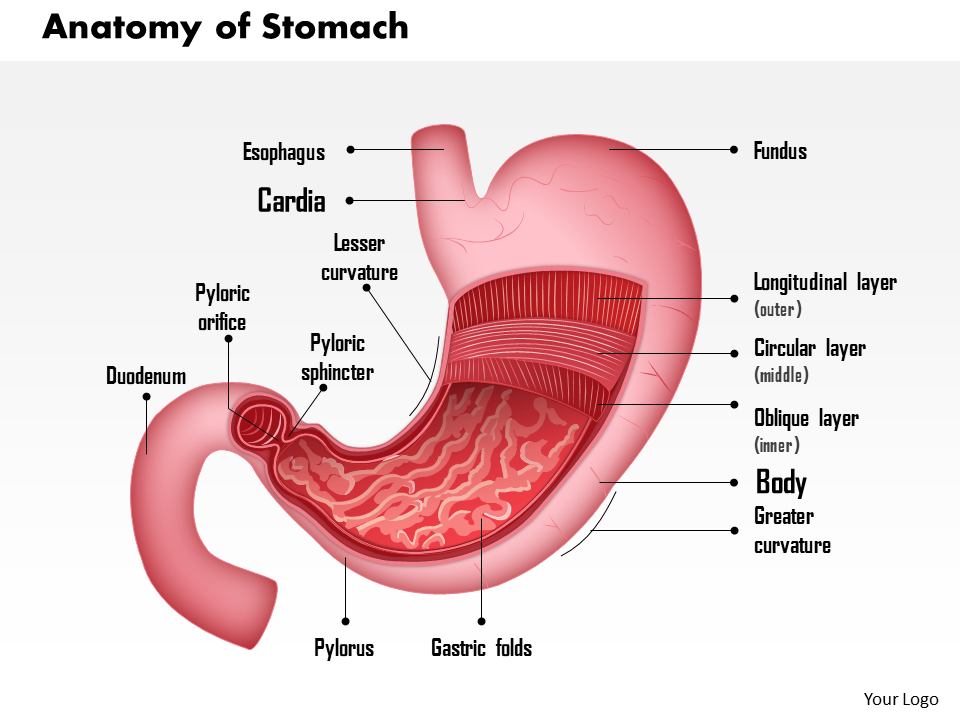
Template 2: Human Stomach Anatomy (Musculature) PPT Slides
This PowerPoint Set features detailed and labeled illustrations of the stomach and other important organs in the digestive system. It showcases the layers of the stomach that help it perform its functions. Get it now to present this important organ (which is also a part of the immune system).
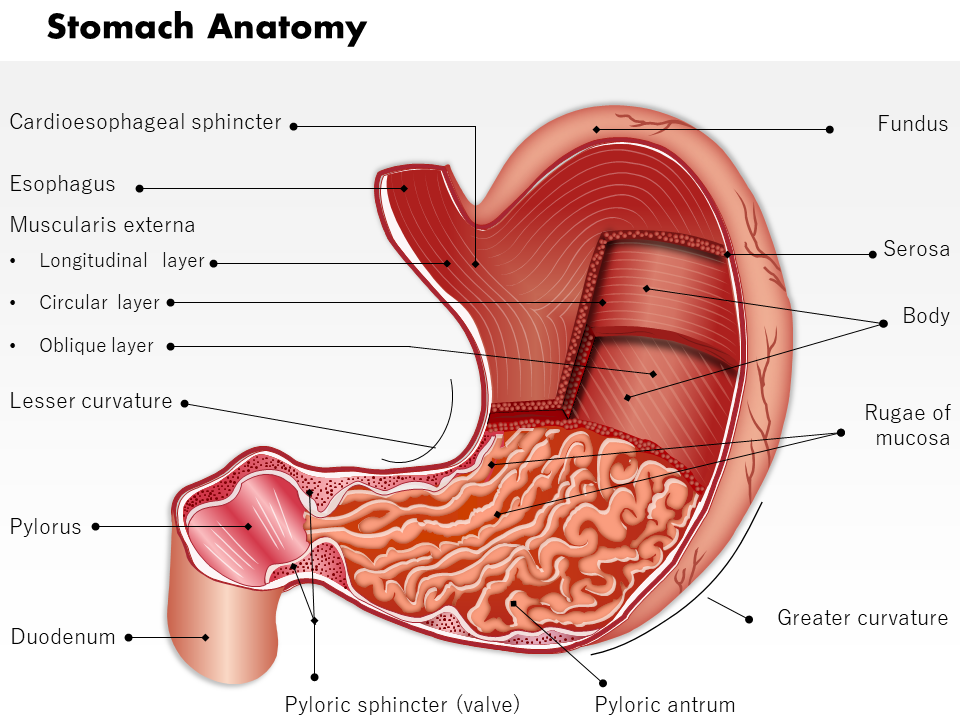
Template 3: Human Stomach Anatomy (Layered) PowerPoint Layout
The human stomach is connected to the rest of the digestive system. With this presentation template collection, you'll have everything you need to create an engaging presentation in the method of cross-sections. Employ it now to be perceived as a master educator!
Template 4: Biliary System PPT Deck
These PowerPoint Slides provide a wealth of information on the structure and function of the Biliary System. They are packed with illustrations that help bring the concepts to life. This presentation template covers the key information about the biliary system, including its anatomy and physiology. Employ it now.
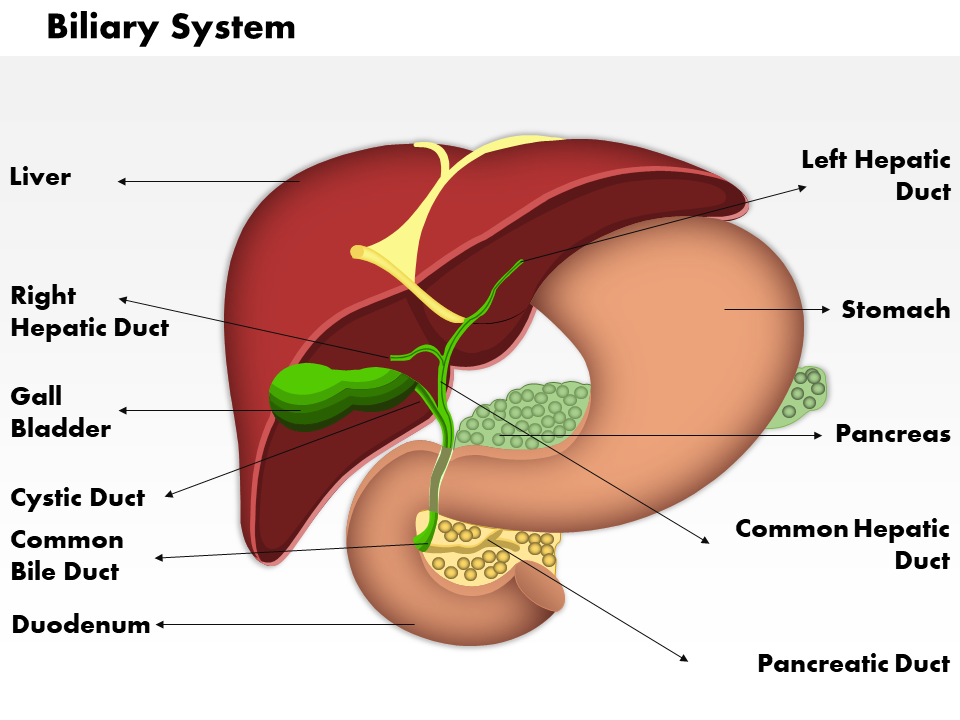
Template 5: Biliary System Within The Digestive System
This PPT Theme presents the Biliary System and how it fits with the rest of the digestive system. The illustrations are clear and easy to follow, making this an ideal resource. Get this presentation template right away!
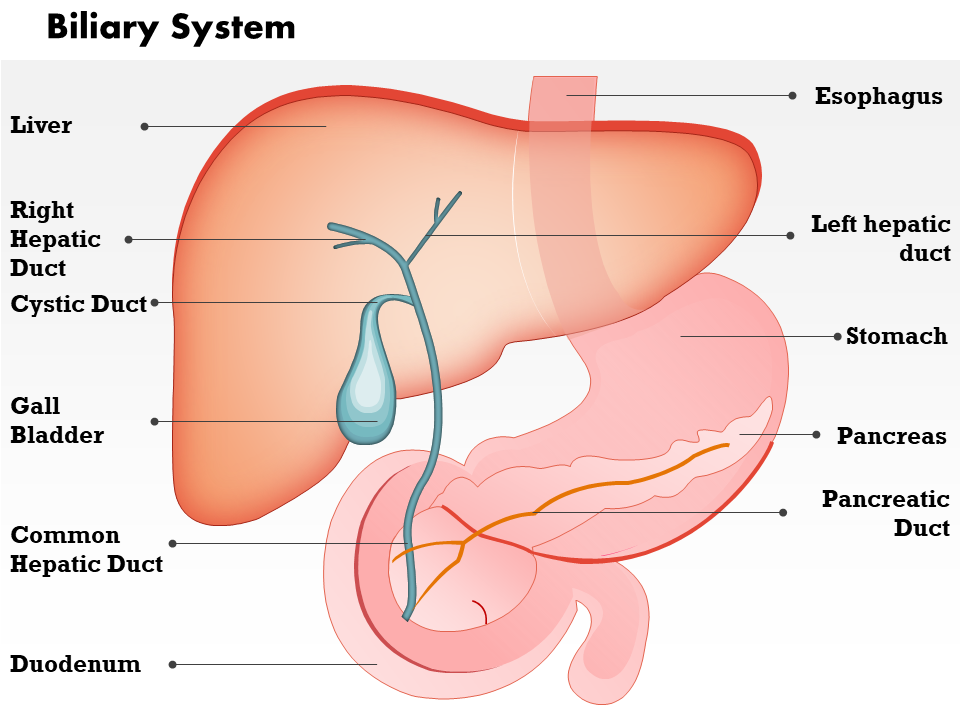
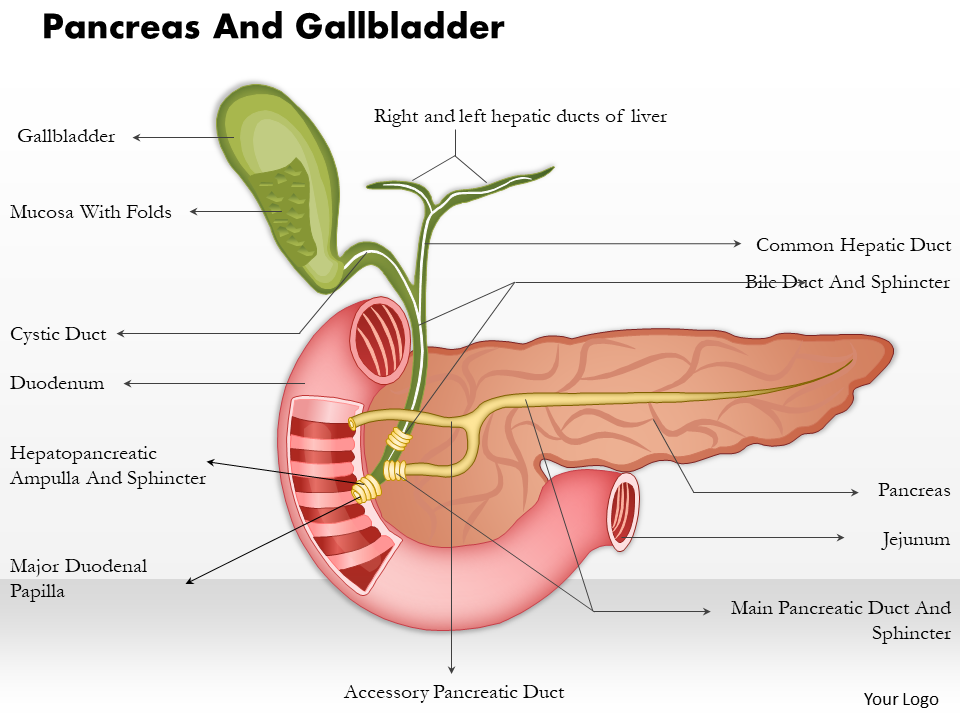
Template 6: Pancreas and Gallbladder PPT Theme
If you're looking for a way to spice up your next presentation on the human digestive system, look no further than our Pancreas and Gallbladder PowerPoint slides! These make for the juices in the stomach. Download it now to educate the audience.
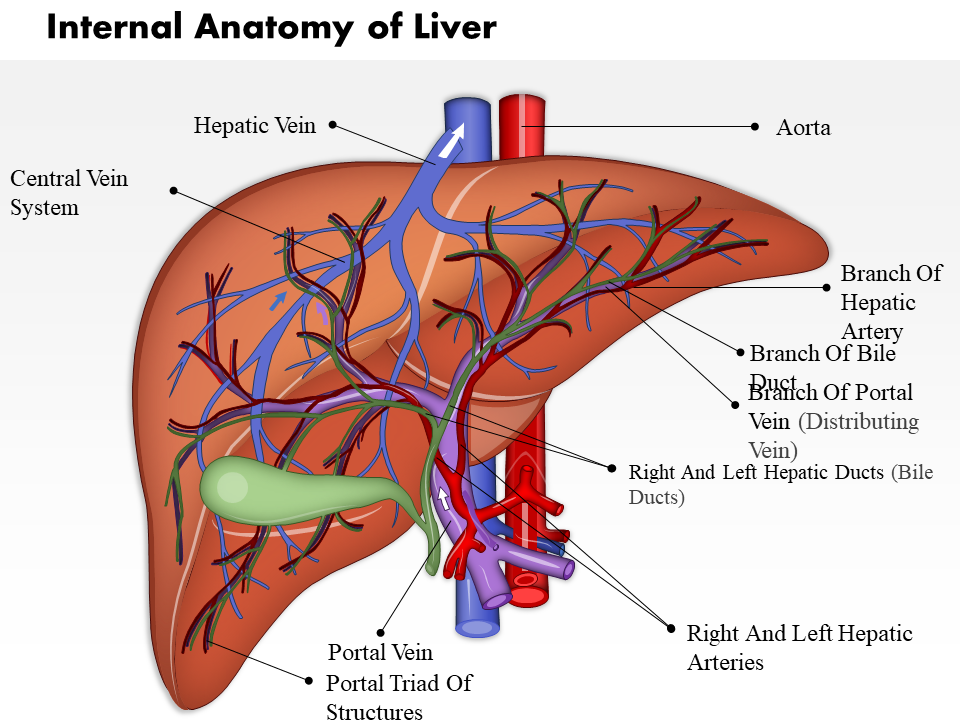
Template 7: Internal Anatomy of Liver PowerPoint Preset
The internal anatomy of the liver is a fascinating subject, and these PPT slides provide a detailed and intriguing look at this organ. These slides are perfect for anyone interested in learning about the internal anatomy of the liver, our storage house for sweetness. Download them now.
Template 8: External Anatomy of Liver PPT Set
As one of the most important organs in the body, the liver plays a vital role in digestion. Interestingly, the liver is also one of the few organs that can regenerate itself. Educate your audience on this amazing organ by downloading this PowerPoint Theme.
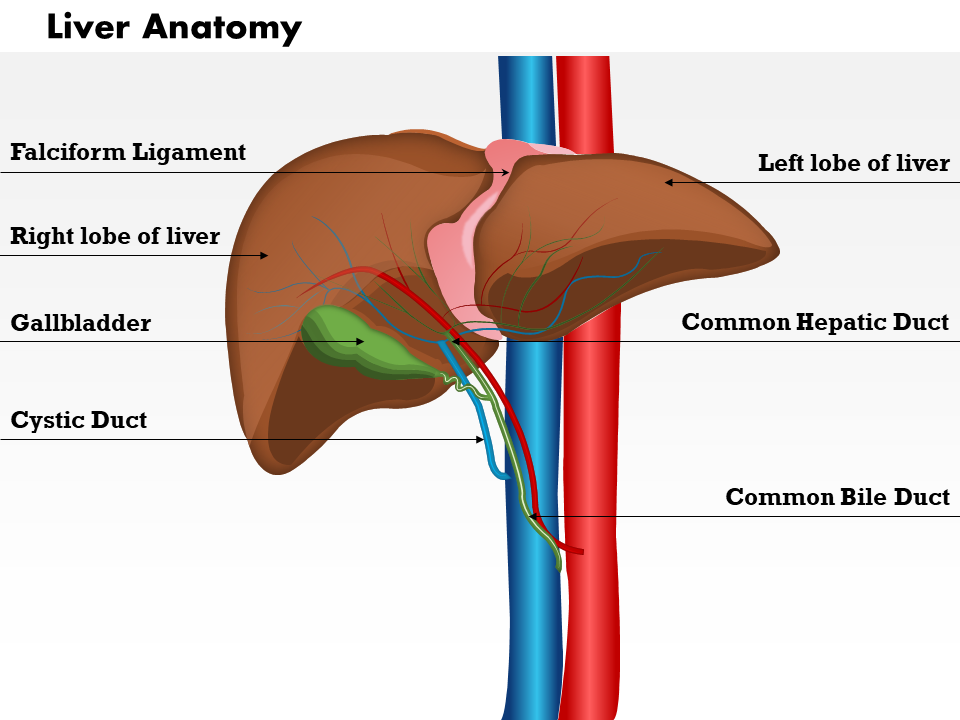
Template 9: Liver Cross-Section PowerPoint Bundle
The liver is a vital organ that plays a crucial role in the human body. It is responsible for filtering blood, producing bile, and storing nutrients. It is also a powerhouse of antioxidants and helps to protect the body from harmful toxins. Download this PPT Preset now.
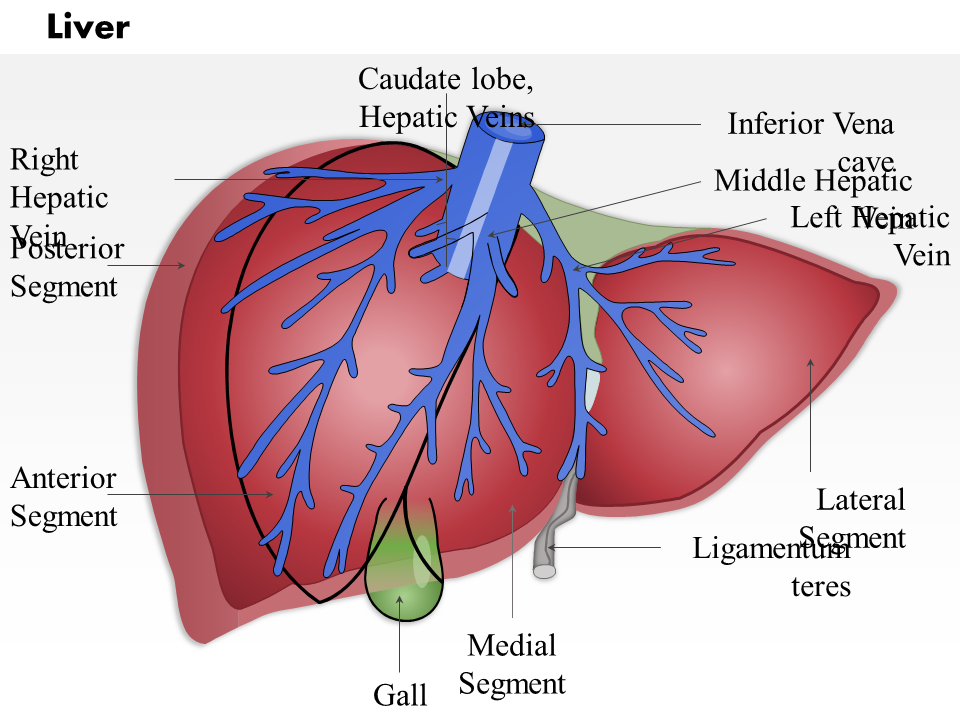
Template 10: Large and Small Intestine PPT Deck
The large and small intestines are two important organs, working together to digest food and absorb nutrients. The PowerPoint Slides provide detailed, labeled images of the internal anatomy of the intestines and helps an audience understand its structure and function. Download this PPT bundle now.
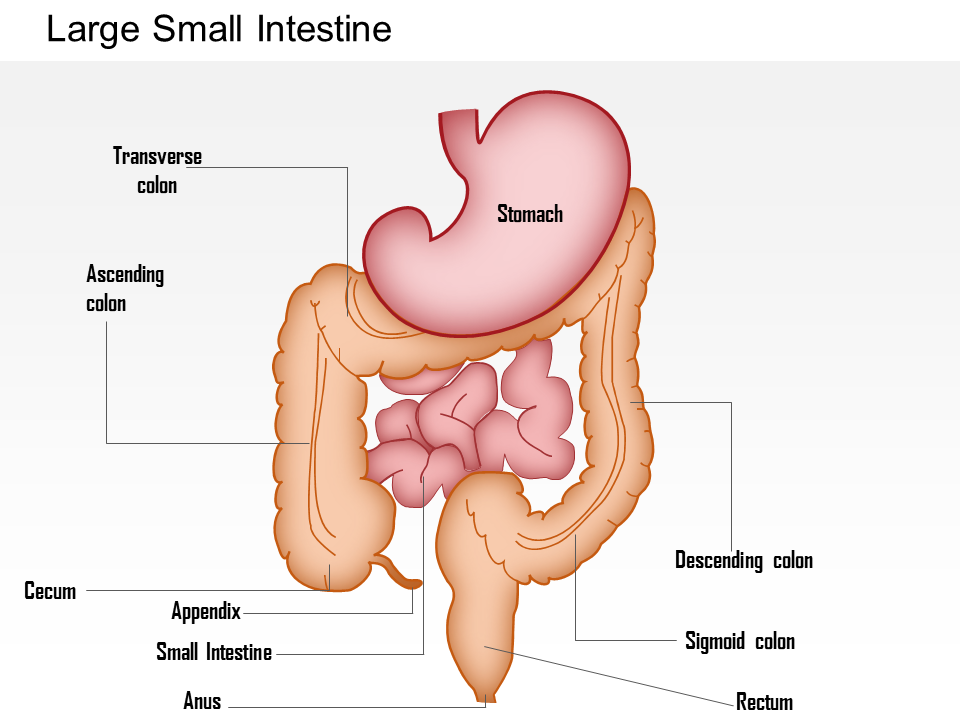
Template 11: Anatomy of Large Intestine PPT Theme
The large intestine is a remarkable organ that plays a crucial role in our health and well-being. Our PowerPoint Slides provide detailed information on parts of the large intestine. Get it now.
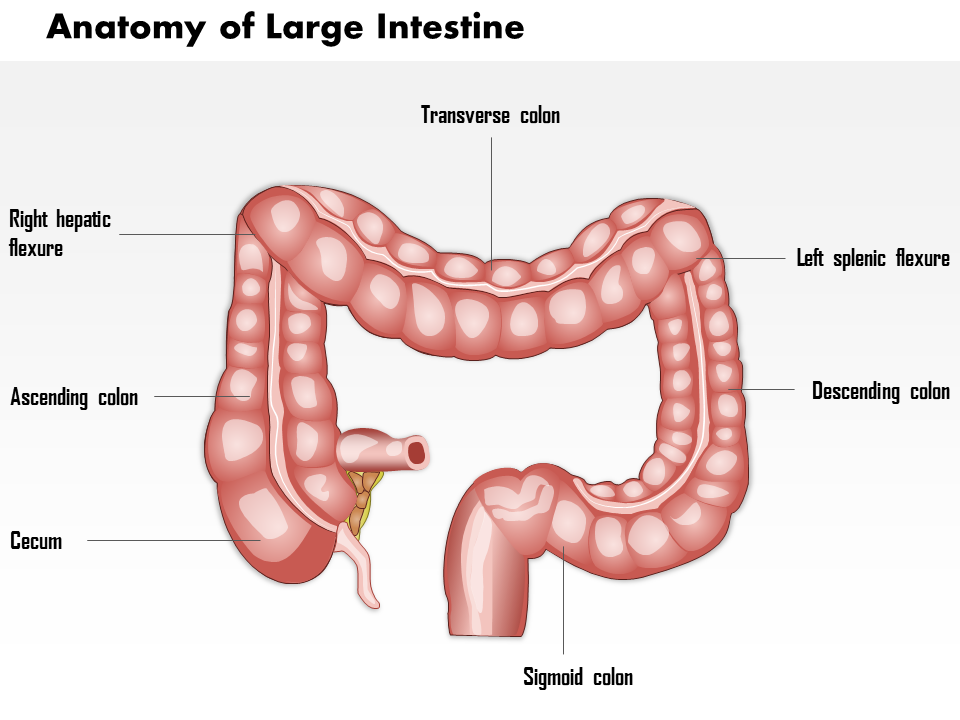
Template 12: Large Intestine PowerPoint Preset
If you're looking for an in-depth, informative PowerPoint Presentation on the large intestine, look no further! Our large intestine PowerPoint Slides provide a comprehensive overview of this vital organ, complete with colorful illustrations and detailed information. Download it now to master an academic topic of substantial value.
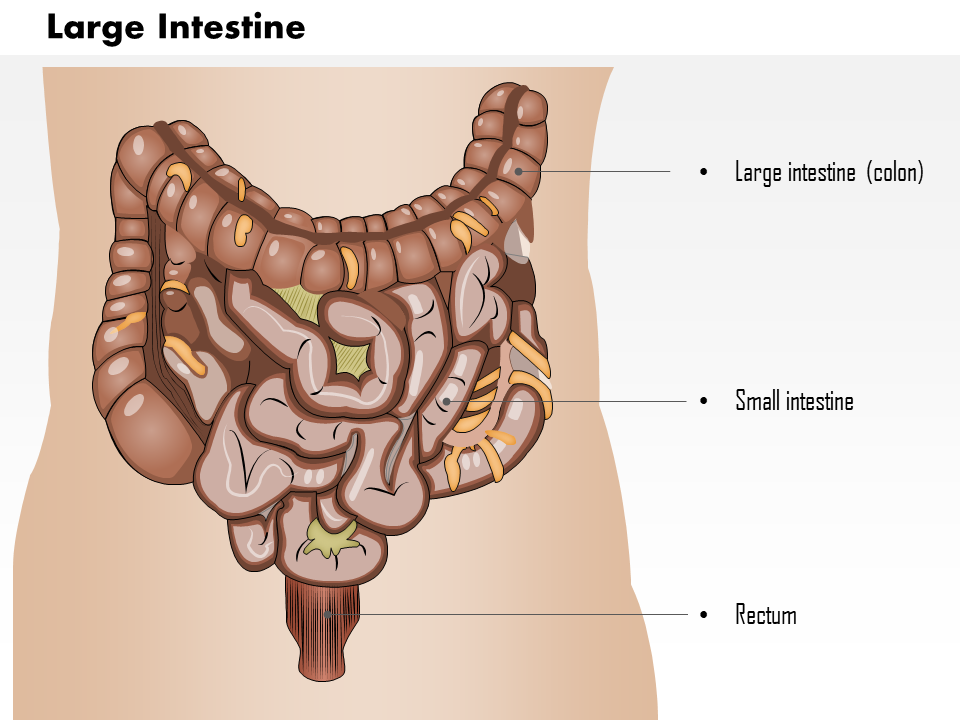
Template 13: Duodenum Anatomy PPT Slides
The duodenum is the first and shortest part of the small intestine. It has many functions, including breaking down food with digestive enzymes, absorbing nutrients from food, and secreting hormones that regulate digestion. Get this PowerPoint Theme now, and showcase how tiny can be BIG in digestion.
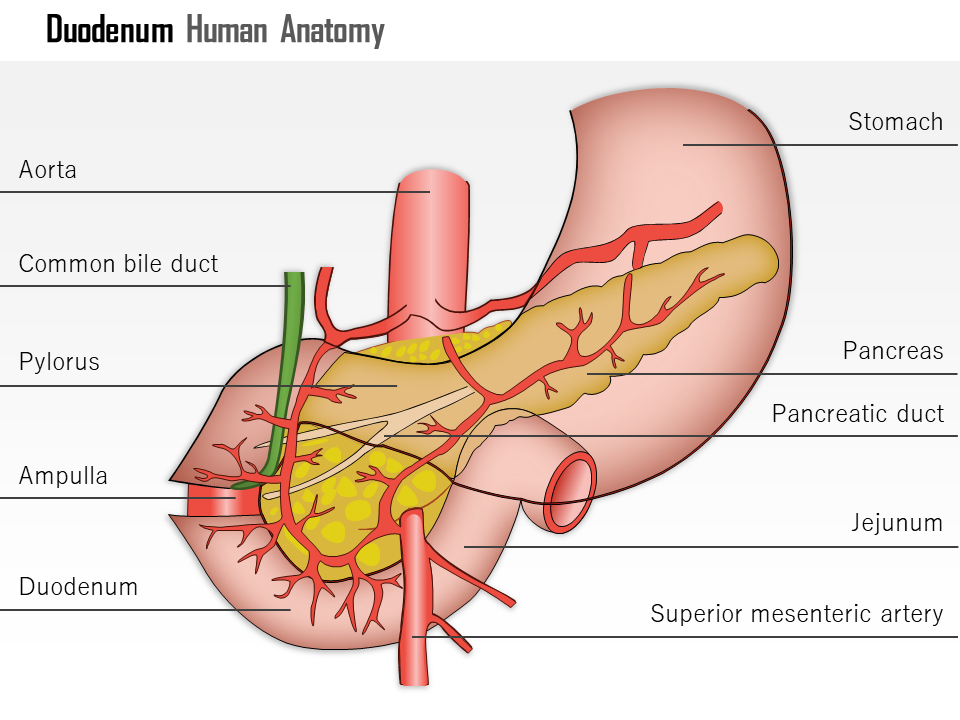
Template 14: Small Intestine Anatomy Slides
The small intestine PowerPoint Slides are packed with information about the small intestine, including its function, structure, and how it aids in digestion. Order your small intestine PPT Deck today and take your presentations to the next level!
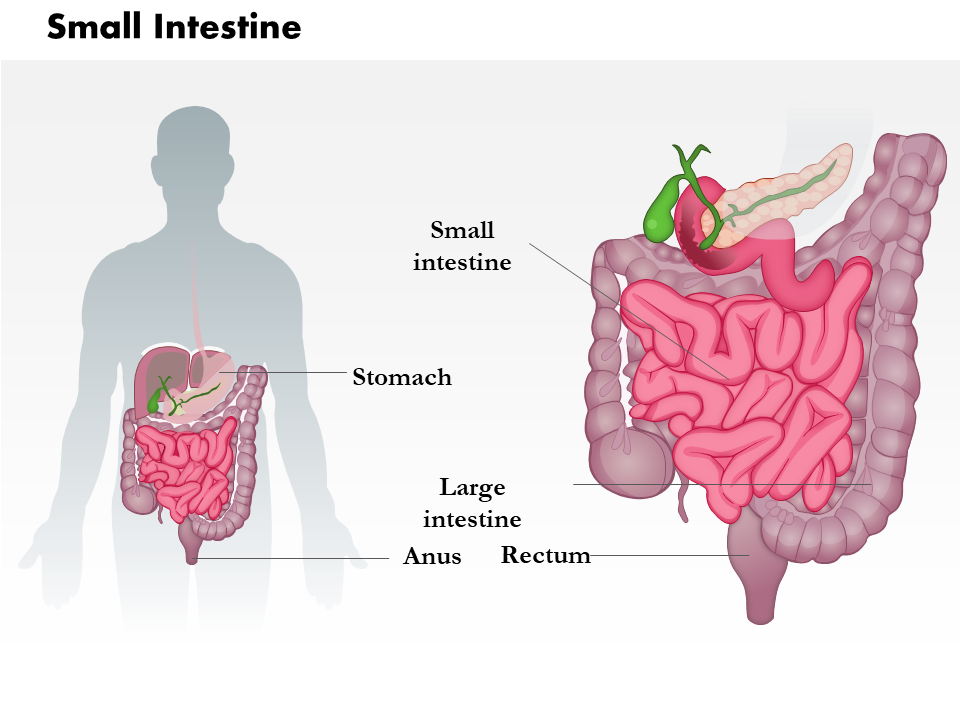
Template 15: Small Intestine Slides
The small intestine PowerPoint Bundle is the perfect way to learn about the human digestive system! This helpful resource provides detailed information and illustrations about the small intestine, including its function, structure, and clinical significance. Employ it now.
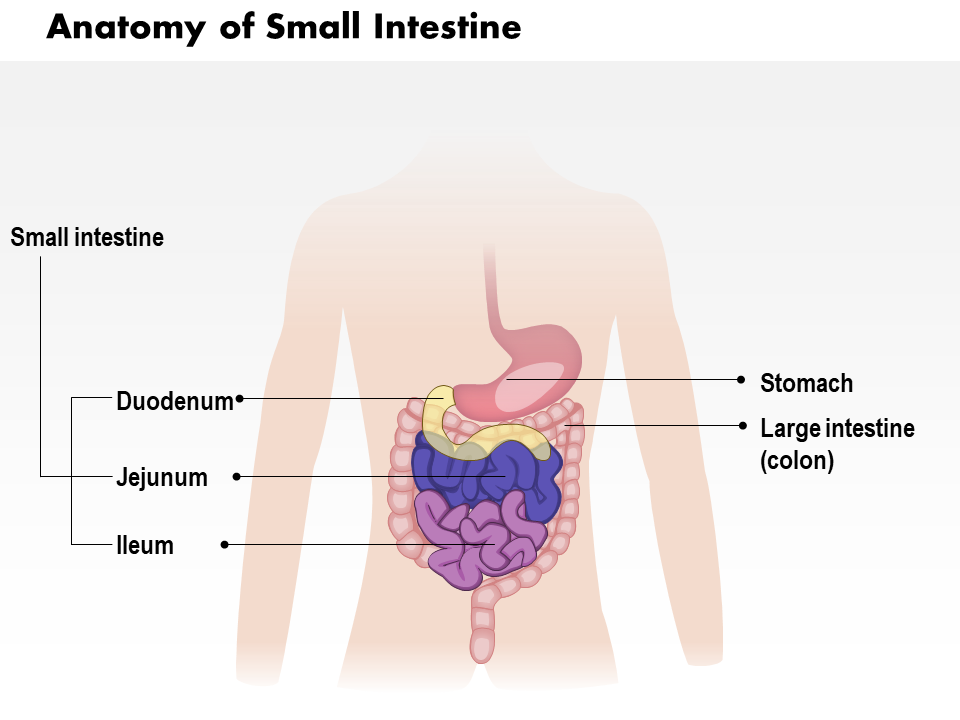
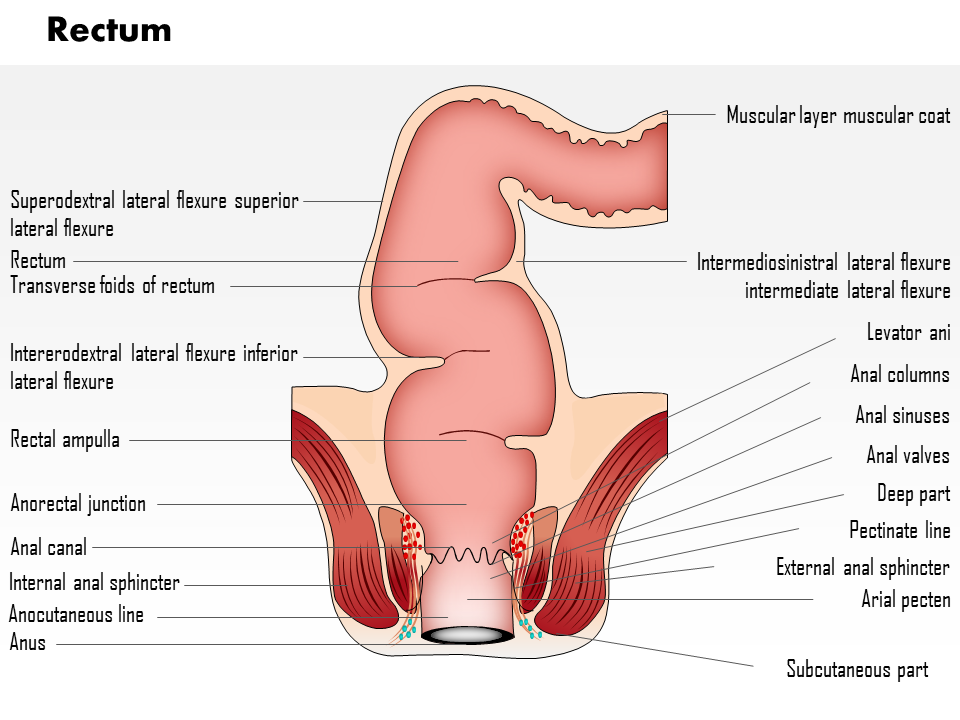
Template 16: Rectum PPT Deck
The rectum is like the automatic waste collector of the body. With these PPT Slides, you'll be able to teach your audience about the rectum in a way that is both engaging and informative. Download it now.
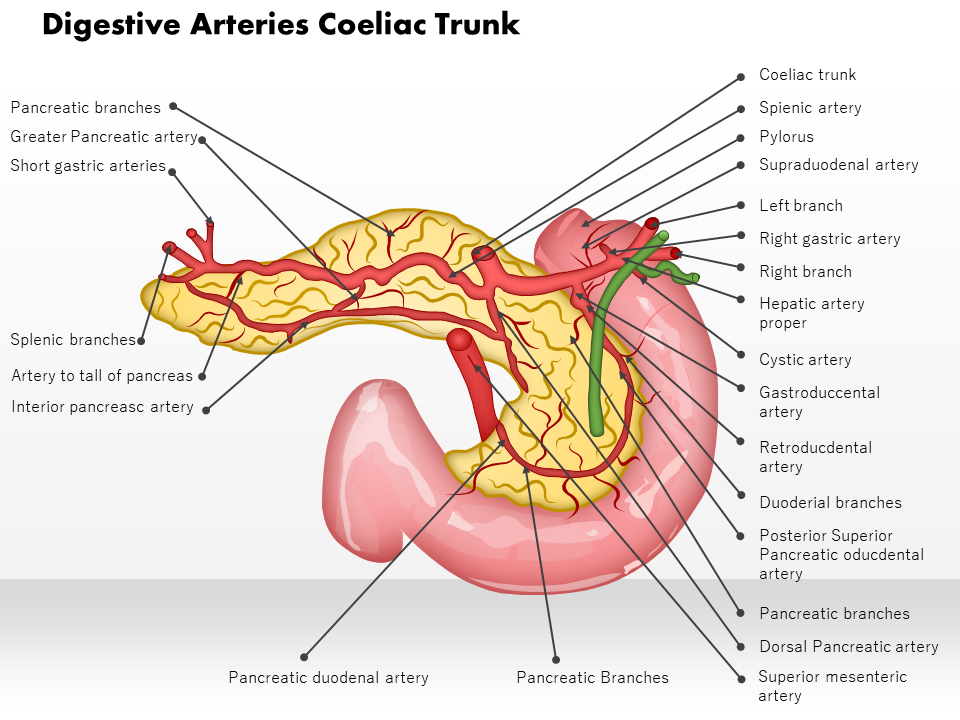
Template 17: Digestive Arteries and Celiac Trunk PPT Deck
The digestive arteries help improve circulation and oxygenation in the digestive tract, leading to better overall digestion and absorption of nutrients. The celiac trunk can help keep the digestive system functioning well. The PowerPoint Slides are easy to edit and customize, so you can make them your own. Download them now.
Bottom Line
The digestive system is an incredibly complex biological machinery that is much more than the sum of its parts. In physical appearance, parts that range from the microscopic to a few feet long! There is much left to be discovered about how our body interacts with nutrition but what we do know is amazing.
The Digestive System: A Refresher
Let’s go through a quick rundown of the digestive system!
The digestive system is responsible for breaking down food and turning it into energy that the body can use. The digestive system includes the mouth, esophagus, stomach, intestines, and anus.
The mouth is the first part of the digestive system. The teeth break down food into small pieces. The tongue mixes food with saliva, which contains enzymes that begin to break down food.
The esophagus is a tube that carries food from the mouth to the stomach. The stomach is a sac that stores food and mixes it with acids and enzymes that continue to break down food.
The small intestine is a long, coiled tube where most food digestion and absorption occur. The large intestine is a shorter tube that absorbs water and vitamins from the food that has not been digested. The rectum and anus are the last part of the digestive system. Waste material is stored in the rectum until it is passed through the anus as feces.
FAQs on The Digestive System
Which actions help keep your digestive system healthy?
There are a few key things you can do to keep your digestive system healthy and functioning properly. First, eat a healthy diet that includes plenty of fiber. This will help keep things moving along smoothly and prevent constipation. Second, stay hydrated by drinking plenty of water. This will also help keep things moving smoothly and prevent constipation. Third, exercise regularly. This helps to keep everything moving and prevents stagnation. Finally, pay attention to your body and listen to what it tells you. If you have any problems, such as pain, diarrhea, or constipation, be sure to see a doctor to rule out any serious underlying conditions.
How does the digestive system maintain homeostasis?
The digestive system is responsible for maintaining homeostasis in the body by breaking down food into nutrients that can be used by the cells and eliminating waste products from the body. This is a critical function without which we cannot function to the best of our ability. After all, the human body is a machine, though it speaks and moves on its own.
What are the three main jobs of the digestive system?
The digestive system is responsible for three main jobs: breaking down food, absorbing nutrients, and eliminating waste.
- Breaking down food: The digestive system breaks down food into smaller pieces so that the body can absorb them. This process begins in the mouth.
- Absorbing nutrients: The digestive system absorbs nutrients from food so that the body can use them. Nutrients are absorbed through the walls of the small intestine into the bloodstream and then circulated throughout the body.
- Eliminating waste: The digestive system eliminates waste from the body through feces. Feces are stored in the large intestine until they are ready to be eliminated through the rectum and anus.
What are the five steps of digestion?
The five steps of digestion are as follows:
- Ingestion: This is the first step in the digestive process, during which food is taken into the mouth and begins to be broken down by saliva.
- Propulsion: This second step involves moving the food through the rest of the digestive system via muscular contractions.
- Digestion: Food is further broken down by the stomach and small intestine enzymes during this third step.
- Absorption: In the fourth step of digestion, nutrients are absorbed from the food into the bloodstream through the walls of the small intestine.
- Defecation: The fifth and final step of digestion is the elimination of solid waste from the body through the process of defecation.
Download the free Digestive System PDF.




![Matters of the Cardiovascular System: Top 8 Templates to Know Its Mystery [Free PDF Attached]](https://www.slideteam.net/wp/wp-content/uploads/2022/08/1013x441no-button-8.jpg)