

0514 anatomy of small intestine medical images for powerpoint




Try Before you Buy Download Free Sample Product
 Impress Your
 Audience
 100%
100% Editable
 Save Hours
 of Time


Bring in the dawn with our 0514 Anatomy Of Small Intestine Medical Images For Powerpoint. Darkness gets blown away.
People who downloaded this PowerPoint presentation also viewed the following :
0514 anatomy of small intestine medical images for powerpoint with all 10 slides:
Experience the kaleidiscopic effect of our 0514 Anatomy Of Small Intestine Medical Images For Powerpoint. They will give your thoughts a composite form.

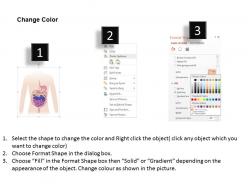

FAQs for 0514 anatomy of small intestine medical
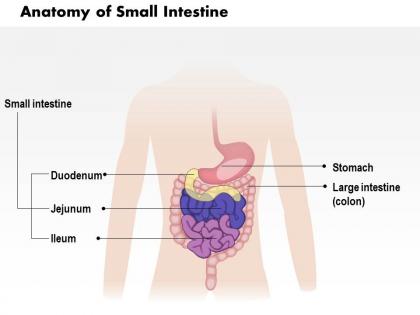
So your small intestine basically finishes digesting food and soaks up all the good stuff. The duodenum gets enzymes from your pancreas plus bile to break down fats and proteins. Then you've got the jejunum and ileum - which honestly do sound like weird planet names lol. Those parts are absorption machines thanks to all these tiny villi that create tons of surface area. By the time food's done traveling through there, you've grabbed like 90% of the nutrients. If something's off with absorption, that's definitely where I'd start looking.
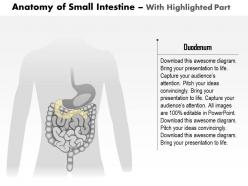
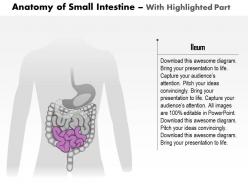
Okay so the small intestine has three parts you need to know. Duodenum's the short one - like 10 inches - right after your stomach where all the chemical breakdown happens with bile and stuff. Then there's the jejunum which is honestly where most of the real work gets done for absorbing nutrients. It's got these super thick walls that are just packed with blood vessels. The ileum's actually the longest section and it grabs whatever's left - B12, bile salts, you know. Oh and if you're cramming for a test, just think: duodenum = digestion, the other two = absorption.
So basically your small intestine has these tiny finger-like things called villi that stick out everywhere. Then there's even smaller ones called microvilli on top of those - it's like fingers with tiny brushes on them lol. The whole setup increases surface area by like 600 times compared to if your intestine was just a smooth tube. Pretty wild honestly. All that extra space means you can absorb way more nutrients from whatever you're eating. Without them you'd probably be malnourished even if you ate constantly.
Dude, your small intestine is insane - it's literally the size of a tennis court when you flatten it out! Like 200-250 square meters total. Your stomach? Only 0.1 square meters. Large intestine gets maybe 2 square meters max. How does all that even fit inside us lol? It's because of these tiny finger things called villi and microvilli that create tons of folds and surface area. That's why you absorb most nutrients there instead of your stomach or whatever. Honestly blows my mind every time I think about it.
So your small intestine makes enzymes in these brush border cells - peptidases that chop up proteins into amino acids, plus disaccharidases like lactase and sucrase for breaking down sugars. There's also lipases for fats. Honestly though, your pancreas does way more of the actual work here. These intestinal ones just handle the final steps. You've got aminopeptidases and dipeptidases working on protein bits, then maltase, lactase, and sucrase tackling different sugars. Think of it like a relay race - pancreatic enzymes start strong, then intestinal enzymes finish everything up so you can actually absorb the nutrients.
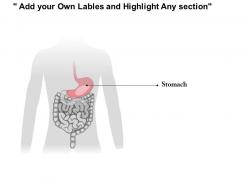
So your small intestine is basically where all the magic happens. Bile comes down from your liver through the bile duct, plus you've got digestive enzymes flowing in from your pancreas via the pancreatic duct. Both dump into the duodenum - that's the first section. Bile tackles the fats while pancreatic enzymes go after proteins and carbs. Then the small intestine soaks up all those nutrients through these tiny finger-like things called villi. Honestly, the whole system is wild when you think about it. Focus on the duodenum for your test since that's where most of the heavy chemical breakdown happens before everything gets absorbed.
So basically, all those folds and tiny projections in the small intestine are amazing for absorbing nutrients, but they're also perfect spots for Crohn's to wreak havoc. Chronic inflammation gets stuck in those tight spaces and creates scar tissue. That's when you get strictures and your gut can't absorb stuff properly anymore. Plus the small intestine is ridiculously long - like 20 feet or something crazy. Different sections get hit differently too. Some people get it in their ileum, others in the jejunum. Honestly, where the disease shows up totally determines what nutrients they'll struggle with and what symptoms you'll see.
So the ileocecal valve is like a bouncer between your small and large intestines. Stops all the nasty bacterial stuff in your colon from flowing backward into the small bowel, which needs to stay pretty clean. It's a one-way gate that also controls how fast food moves through - gives your body time to grab nutrients before everything becomes waste. Smart setup, honestly. Oh and if you're ever dealing with right lower belly pain or bowel issues, that junction gets inflamed pretty easily. It's where a lot of problems start since it's such a busy spot.
So the small intestine gets blood from the superior mesenteric artery - way more complex than stomach or colon supply. There are these arcade-like vessels branching through the mesentery that look pretty cool during surgery, honestly. Multiple collateral routes mean if one vessel fails, backups kick in. Jejunum's got fewer arcades but longer vasa recta, while ileum has more arcades with shorter vessels. This redundancy matters since small bowel needs tons of metabolic support. Oh, and when you're checking for bowel ischemia? Always hit the SMA first.
So basically your duodenum has to deal with all that acidic stuff from your stomach, right? Brunner's glands are these little things that shoot out alkaline mucus to neutralize everything - think of them as tiny fire extinguishers lol. Your pancreas and bile ducts also dump their alkaline stuff right there to help out. Oh and those circular folds? They actually slow things down so there's more time to fix the pH situation. Honestly it's pretty cool how it all works together - otherwise your digestive enzymes would be totally screwed downstream.
So basically your small intestine does these wave-like squeezes called peristalsis that push food through while mixing it with enzymes and bile. It's kind of like a conveyor belt that stops to churn things up sometimes. The whole thing takes about 3-5 hours, which honestly seems like forever but makes sense. These contractions keep food touching the intestinal walls long enough for your body to grab all the nutrients. They also break down particles more and stop bad bacteria from growing. If something messes with this process - like certain meds - you won't absorb nutrients properly.
So your gut bacteria literally reshape your small intestine - they control villus height, crypt depth, all that surface area stuff. Pretty crazy when you think about it. They're also maintaining your intestinal barrier and messing with immune responses. Even your enterocytes don't develop right without them! Plus they affect motility and enzyme production, which obviously hits nutrient absorption hard. I always tell people - if you're seeing malabsorption cases, don't just look at anatomy. Check their microbiome too, because those little bugs run way more of the show than most docs realize.
So the thing with small bowel resections - location really matters. Lose the terminal ileum and you're looking at B12 deficiency plus bile acid malabsorption since that's where those transporters hang out. Jejunal cuts? Usually not as bad because the ileum picks up the slack pretty well. Honestly, the small bowel is tougher than you'd think. It'll actually boost surface area and slow things down to compensate. Just watch out if they take more than half - that's when short bowel syndrome becomes your problem. Always check what's left and which segments got axed for your nutrition planning.
For small bowel stuff, you've got a few solid options. CT and MR enterography are your workhorses - great for seeing the bowel wall and what's around it. Capsule endoscopy is honestly pretty wild, patient just swallows this tiny camera and you get to see everything as it travels through. Still do barium studies sometimes but way less common these days. Oh and there's small bowel follow-through too. Really depends on what you're suspecting though - symptoms usually point you toward which test makes the most sense for that particular patient.
Hey! So basically as people get older, their small intestine gets worse at absorbing nutrients. The villi shrink down and you lose surface area - plus they make fewer digestive enzymes. Everything just moves slower through the gut too, which honestly sounds pretty miserable. That's why elderly folks end up deficient in stuff like B12, calcium, and iron even when they're eating okay. If you're dealing with older patients, definitely watch their nutrition levels. Maybe suggest enzyme supplements or push the really nutrient-packed foods to make up for it.
-
Very unique and reliable designs.
-
Great quality product.