


0514 anatomy of stomach medical images for powerpoint




Try Before you Buy Download Free Sample Product
 Impress Your
 Audience
 100%
100% Editable
 Save Hours
 of Time


Flash the facts with our 0514 Anatomy Of Stomach Medical Images For PowerPoint. Encourage them to avoid guesswork.
People who downloaded this PowerPoint presentation also viewed the following :
Content of this Powerpoint Presentation
The human stomach is a vital organ, responsible for streamlining a host of crucial bodily functions, from the stages of food breakdown, to the intricate digestive process. Working in the medical field would necessitate a thorough understanding of this organ, a core component in healthcare for both the work environment and students struggling to learn biology too.
If your business is in the medical domain, and you are seeking effective ways to master this domain, then using simple and competently made powerpoint slides can be a great means for the same. We present to you a concise PowerPoint Slide that emphasizes the stomach, with the added benefits of detail and specificity. This template can be a great asset for anyone studying human biology, be it a professional vying to refresh his knowledge, a medical student working to master his tests, or a mere layman fascinated by human anatomy.
If you’re interested in more slides that dissect human anatomy, then click here and access our liver anatomy template now.
Template 1
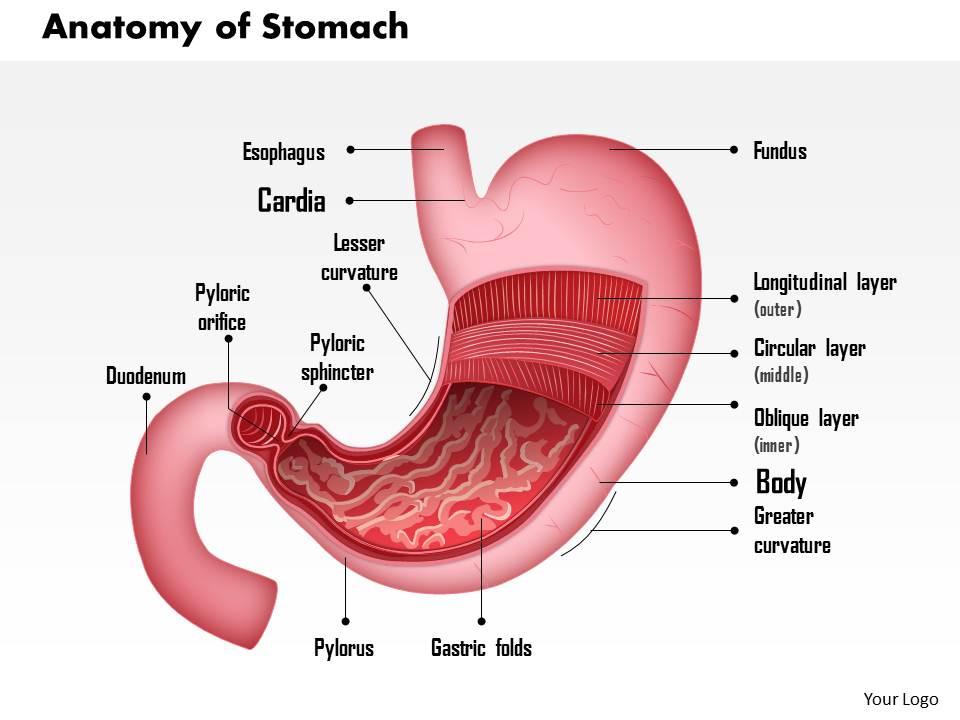
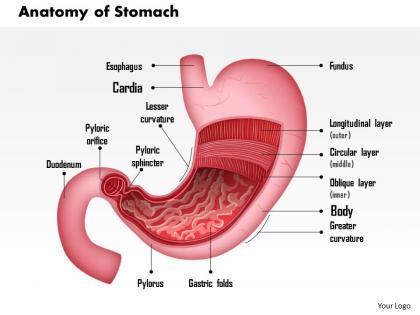
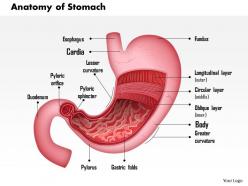
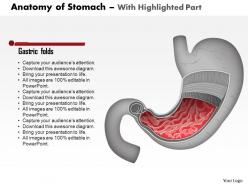
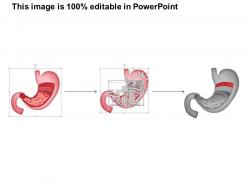
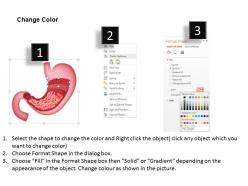
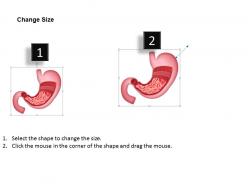
This PPT Template has been rendered with the goal of having visual accuracy and a strong medical relevance. If you’re in the healthcare business, using this one-page template offers powerful value, allowing you to educate and impress audiences and to cover critical areas of the stomach region during a presentation. The template includes a nicely drawn outline of the stomach and has also been tailored to specify components of this organ, including the esophagus, the cardia, the pylorus, the gastric folds, the pyloric sphincter, and more. Download this slide and deploy it within a medical environment to advance your own understanding of this organ and to embellish your presentations with a more professional aura.
If you’re seeking something similar to this, then click here and check out another stomach anatomy medical template now.
Knowledge of human biology helps everybody
Our simple one-page slide enables better learning and understanding for professionals and people from diverse backgrounds, providing a comprehensive layout of this essential organ. If you’re interested in getting to know more about biology for a range of purposes, then utilizing this one page slide could inject value into your operations. Download it now and use it to gather more intricate knowledge on human biology.
Are you searching for more detailed depictions of the digestive system as a whole? We’ve got you covered. Click here and check out another template from slideteam on this subject now.
0514 anatomy of stomach medical images for powerpoint with all 11 slides:
Get the best balance with our 0514 Anatomy Of Stomach Medical Images For PowerPoint. Display equilibrium in your thinking.

FAQs for 0514 anatomy of stomach medical
So your stomach has four main parts. The fundus at the top stores gas and stretches when you eat. Then there's the body - that's where most of your food hangs out. The antrum is like a grinding chamber that churns everything up (kinda gross but cool). Finally you've got the pylorus which controls what gets sent to your small intestine. Each part has different muscle fibers depending on what it needs to do. Like, the fundus relaxes to make room while the antrum does all that rhythmic contracting. It's actually pretty amazing how specialized each section is for its job.
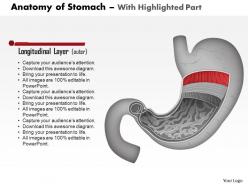
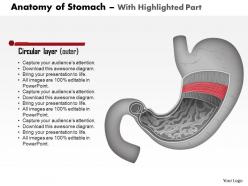
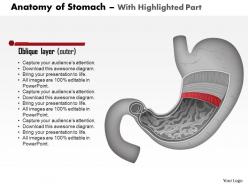
So the stomach's actually got three muscle layers - way more than the rest of your gut. You've got longitudinal, circular, and oblique muscles all working together. That oblique layer is what makes the difference though - it creates this twisting motion that really mashes everything up with the gastric juices. Honestly, it's pretty impressive how well-designed it is. The whole thing contracts every 15-25 seconds when you're digesting food. If you're teaching this stuff, definitely point out how much more effective this is than just the basic squeezing action you get elsewhere in the digestive tract.
So your stomach acid is basically like a chemical wrecking ball that breaks down proteins and turns pepsinogen into pepsin (which chops up proteins even more). It also kills most bacteria you accidentally eat - though some tough ones still get through, which is kinda gross if you think about it. The acid helps you absorb iron, B12, and calcium too by converting them into forms your intestines can handle. If you're having weird stomach problems that won't go away, might be worth checking if your acid levels are wonky. Both too much and too little can really screw with your digestion.
So your stomach has three main parts that all do different things. The fundus is basically a holding area - food just chills there before moving on. Your stomach's body section is where the real action happens with all that acid churning everything around. Then there's the antrum, which I think is honestly the coolest part because it grinds food down and controls how fast stuff moves to your small intestine. Different regions cause different symptoms when they're acting up, so you'll want to pay attention to where patients are having issues during exams.
So the pyloric sphincter is like a little valve that sits between your stomach and small intestine. Basically controls the flow of food moving through. When it's working right, it makes sure food doesn't rush out of your stomach too fast - gives everything time to get properly broken down by all that stomach acid. If it stops working well? That's when you get dumping syndrome and people feel awful after eating. Cramping, diarrhea, the works. I always tell people if they're having weird post-meal symptoms, could totally be a sphincter issue. Sounds gross but it's actually pretty common!
So basically your stomach makes this thick mucus that acts like a shield against all that acid. Pretty smart, right? The lining also replaces itself super fast - like every few days, which is honestly kind of amazing. There's also these things called prostaglandins that help control acid levels and boost mucus production. But when something messes with this system - usually H. pylori bacteria or too many ibuprofen-type meds - that's when you get ulcers. If you're dealing with patients who have stomach problems, I'd definitely look at what might be breaking down those natural defenses.
So your stomach muscles do these wave-like contractions that basically turn food into mush - kinda like a blender but way grosser lol. The churning breaks everything down into tiny particles and mixes it with digestive juices, which creates way more surface area for enzymes to do their thing. You need that soupy consistency (called chyme) for your small intestine to actually absorb nutrients properly. If your stomach motility sucks, bigger food chunks slip through that your intestines can't handle. Honestly, motility issues are behind so many digestion problems people don't even think about.
So gastrin is basically your stomach's alarm clock - tells it to start cranking out acid when you eat. G-cells release it, then it hits your parietal cells which pump out hydrochloric acid. Chief cells join the party too with pepsinogen. Oh, and it makes your stomach churn harder which is pretty neat. The smart part? When there's enough acid floating around, gastrin production just... stops. It's this whole feedback thing. Honestly works way better than most systems in our body. Perfect example of how digestion isn't just random chaos happening in there.
Hey! So the big ones you'll run into are peptic ulcers, gastric cancer, and gastritis. Ulcers basically create holes in your stomach lining - usually from H. pylori bacteria or too many NSAIDs, not stress like everyone assumes. Cancer often hits the antrum or body areas and can really mess up the whole structure. Gastritis inflames the stomach lining, which doesn't sound terrible but can get nasty if it becomes chronic. Oh, and hiatal hernias where your stomach pushes through the diaphragm - those are pretty common too. The thing is, catching any of these early makes treatment way easier.
So your stomach is basically like a mixer - it gets food from your esophagus and churns it up with acid and enzymes. Then it passes this mushy stuff (called chyme) to your small intestine through this little gatekeeper called the pyloric sphincter. Your pancreas releases more digestive enzymes to help out, and your liver makes bile that gets stored in your gallbladder to break down fats. The vagus nerve coordinates everything - it's honestly wild how well it all works together. But yeah, if one part gets messed up, the whole system feels it.
Your stomach lining is pretty amazing - it pumps out this thick mucus that neutralizes acid before it hits your stomach wall. Those cells regenerate crazy fast too, like every 3-5 days. They also make bicarbonate which acts like an antacid. When stuff like H. pylori bacteria or too much ibuprofen messes with this system, that's when you get ulcers. Honestly, stress doesn't help either - it can throw everything off. That's why keeping your gut bacteria happy and managing stress actually matters for protecting your stomach.
So basically as we get older, our stomach muscles get weaker and don't produce as much acid. Food sits there longer and doesn't break down proteins as well. The lining gets thinner too - kinda sucks honestly. Greasy stuff makes everything move slower, and spicy or acidic foods can really mess with you (though some people handle it way better than others). If you eat crap for years it'll cause inflammation and actually change your stomach structure. Smaller meals more often helps a ton. Oh and definitely watch how older folks are absorbing nutrients - it becomes a real issue.
Honestly, diet pretty much determines stomach structure - it's wild how predictable it is. Humans and most meat-eaters have basic single-chamber stomachs. Cows and other ruminants? Four chambers to handle all that grass. Birds can't chew so they've got this muscular gizzard thing going on instead. Fish stomachs are J-shaped and way more acidic than ours. Plant-eaters need bigger, complex stomachs with special bacteria for breaking down cellulose. Carnivores keep it simple - smaller and super acidic for protein. Start with what they eat and you'll guess their stomach setup like 90% of the time.
So your stomach is actually pretty smart - it literally reshapes itself based on what you eat regularly. Lots of fiber? The walls get thicker to handle all that breakdown work. Protein makes your stomach crank out way more acid and enzymes (honestly it's kind of impressive how efficient it gets). Fat slows everything down since it takes forever to digest, so your stomach just expands to deal with it. Even your gut bacteria mess with stomach pH and how fast things move through. Just give yourself like 2-3 weeks when switching diets - don't judge too quickly!
So there's actually a bunch of different ways researchers can study stomach stuff. Endoscopy lets them see directly inside, which is honestly pretty wild when you think about it. CT and MRI give really detailed pictures, while ultrasound shows what's happening in real time. There's also this thing called electrogastrography that tracks electrical activity - didn't even know stomachs had that going on. pH monitoring checks acid levels, and manometry measures all the pressure and contractions. They've got fancier options too like capsule endoscopy. If you're starting out though, I'd probably go with basic imaging first, then add functional tests depending on what you're actually trying to figure out.
-
Innovative and attractive designs.
-
Design layout is very impressive.