

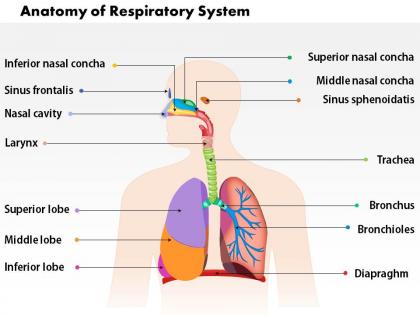
0514 anatomy of respiratory system medical images for powerpoint




Try Before you Buy Download Free Sample Product
 Impress Your
 Audience
 100%
100% Editable
 Save Hours
 of Time


Our 0514 Anatomy Of Respiratory System Medical Images For PowerPoint advance the art. They give credence to a fresh approach.
People who downloaded this PowerPoint presentation also viewed the following :
0514 anatomy of respiratory system medical images for powerpoint with all 11 slides:
Buoy up expectations with your ideas. Our 0514 Anatomy Of Respiratory System Medical Images For PowerPoint will keep them afloat.
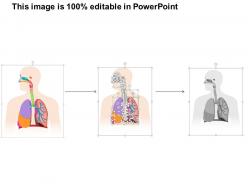

FAQs for 0514 anatomy of respiratory system medical
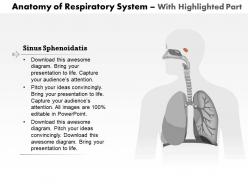
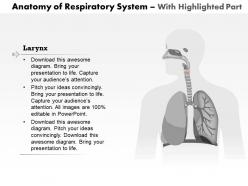
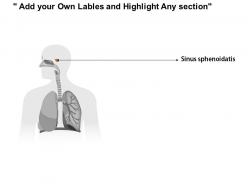
So basically you've got upper airways (nose, mouth, throat) and lower ones (trachea, bronchi, all those branching tubes). Then there's the alveoli - that's where the actual magic happens. Your diaphragm does most of the work, contracting to suck air in and relaxing to push it out. Oxygen gets swapped for carbon dioxide in your bloodstream through these tiny air sacs. It's honestly pretty wild when you think about it - you've got millions of these little alveoli creating this huge surface area for gas exchange. The whole thing's surprisingly efficient.
So basically your alveoli have these crazy thin walls - like 0.5 micrometers thin. Oxygen moves from your lungs into your blood because there's more O2 in the alveoli. CO2 does the reverse, going from blood back to your lungs so you can breathe it out. The whole thing works on simple diffusion - no fancy mechanisms needed. What's wild is you've got a tennis court's worth of surface area in there, which is why it works so well. Oh, and make your students hold their breath for 30 seconds when you teach this - they'll totally get why this process can't stop!
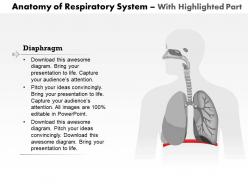
So your diaphragm and those intercostal muscles between your ribs are doing all the heavy lifting when you breathe. Diaphragm drops down and flattens out when you inhale. Meanwhile the intercostals pull your ribcage up and out. This whole thing expands your chest cavity and drops the pressure, so air just rushes right in. Pretty cool actually - like a built-in vacuum system. When you exhale, everything just relaxes and your lungs bounce back. Oh and those breathing exercises you do with patients? You're literally training these muscles to work better together.
So basically your lungs and heart are like a tag team. Oxygen gets into those tiny air sacs in your lungs, then squeezes through super thin walls into your blood. Your heart pumps that oxygen everywhere your body needs it. Meanwhile, carbon dioxide waste is hitching a ride back to your lungs to get breathed out. It's actually pretty cool how smooth the whole process is - I never really appreciated it until I had to teach it. Neither system works without the other though, so definitely emphasize that connection when you're explaining it.
So basically the upper respiratory tract is your nose down to vocal cords - nasal cavity, pharynx, larynx. Lower tract starts there and goes into your lungs with trachea, bronchi, and those tiny alveoli doing the actual gas exchange. Upper part filters and warms air (also where you get sick with sore throats, ugh). Lower part handles the real breathing work. This split actually matters when you're looking at diseases - most infections hit one area way harder than the other. Makes diagnosis easier I guess? Anyway, that's the basic breakdown.
So asthma hits when your airways get super inflamed and basically clamp down - makes breathing feel impossible during attacks. COPD's different though, more like long-term damage where your air sacs lose their bounce and you can't push air out right. That's why COPD patients get that barrel-shaped chest. Both mess with oxygen/CO2 exchange but in their own ways. My aunt has asthma and says the panic makes it way worse. The thing is, treatments work differently since they're targeting separate parts of your lungs, so doctors approach them pretty differently.
So basically, there's way less oxygen up there - the air pressure drops so you're getting fewer oxygen molecules with each breath. Your body freaks out and tries breathing faster, but it doesn't really help much since there's less pressure pushing oxygen into your blood. Even super fit people get completely gassed hiking at altitude, it's honestly pretty humbling. But your body's pretty smart - after a few days it starts cranking out more red blood cells and your lungs get better at the whole thing. Don't be that person who flies to Denver and immediately tries to climb a 14er though. Give yourself time to adjust first!
So basically when you breathe in pollutants, your lung cells freak out and start pumping out inflammatory stuff. Makes you produce way more mucus too - gross but true. The tiny hairs that usually sweep junk out of your lungs? They get trashed and can't do their job anymore. Worst part is those tiny particles actually get deep into your air sacs, causing cell damage and messing with your DNA. Your airways become super sensitive and twitchy. Keep breathing this crap long-term and you'll get permanent scarring. Honestly, get an air purifier if you can afford it.
So there are four main lung volumes you should know about. Tidal volume is just your regular breathing, nothing fancy. Then you've got inspiratory reserve - that's the extra air you can suck in after a normal breath. Expiratory reserve works the opposite way, it's how much more you can push out. Residual volume is kinda interesting though - it's the air that literally never leaves your lungs, even when you exhale completely. Doctors use spirometry tests to measure all this stuff, and honestly it tells them a ton about what's going wrong with someone's breathing.
So basically your body has these sensors called chemoreceptors that pick up on CO2 building up in your blood. They're ridiculously sensitive - like, scary good at their job. When you start exercising, your cells are burning through oxygen way faster and creating more waste CO2. Your brainstem (the medulla part) gets the memo and immediately cranks up your breathing rate and heart rate. It all happens before you even realize you're working hard. I remember noticing this during yoga class last week - my breathing shifted before I felt tired at all. Pretty wild how automatic it is.
Your body's got these chemical sensors called chemoreceptors that track oxygen and CO2 in your blood. There's two types - ones near your heart and neck that watch oxygen, and others in your brainstem that are crazy sensitive to CO2 changes. CO2 is actually what drives your breathing most of the time, which surprised me when I first learned it. When levels get off, they shoot signals to make you breathe faster or slower. It all happens automatically, thank god. That's why you start panting during a workout - your sensors pick up rising CO2 and tell your lungs to get to work.
Dude, smoking basically wrecks your lungs in every possible way. Those tiny hair things (cilia) that sweep junk out of your airways? They get paralyzed and die off, so all the nasty stuff just sits there breeding infections. Tar literally coats the air sacs where oxygen gets absorbed - it's honestly insane how fast one cigarette starts the damage. Your airways stay inflamed and narrow too, which is why smokers always sound wheezy. But here's the thing - even if you've smoked for decades, your cilia can actually grow back when you quit and the inflammation goes down.
So your respiratory tract has this crazy cool cleaning system called mucociliary clearance. Tiny hair-like cells beat constantly to push mucus up and out of your lungs - trapping bacteria, viruses, all that nasty stuff before it can cause infections. Works around the clock, which is wild if you think about it. But here's the thing - smoking or certain diseases totally mess it up. That's when people get stuck with chronic coughs and keep getting sick. If you're seeing patients with those symptoms, definitely check if their cleaning system's broken down.
So basically your airways get all inflamed and clogged up. With bronchitis, those tubes in your lungs swell up and start pumping out way too much mucus - makes it harder for air to get through. Pneumonia's worse though. It fills up those tiny air sacs with gross fluid and pus, which totally screws up how oxygen gets into your blood. Everything that's supposed to stay thin for breathing becomes thick and swampy instead. Your body's fighting the infection but all that swelling just makes breathing way harder. Honestly, if you're working harder to breathe, that's when you know something's up.
Honestly, the lung imaging stuff has gotten crazy good lately. CT scans catch things super early now, and AI reading chest X-rays? Sometimes it's better than actual doctors, which is kinda terrifying but cool. Those portable ultrasound machines are game-changers - you can check someone's lungs right there in bed instead of wheeling them around. Bronchoscopy can reach tiny spots they couldn't before for biopsies. Oh, and patients can do lung function tests at home now with telemedicine spirometry, which is pretty sweet. You should definitely see what new imaging tech your place has - it'll probably surprise you.
-
The Designed Graphic are very professional and classic.
-
Thanks for all your great templates they have saved me lots of time and accelerate my presentations. Great product, keep them up!