

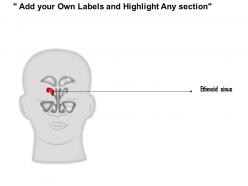
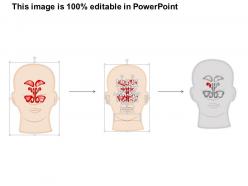
0714 nose anatomy medical images for powerpoint





Try Before you Buy Download Free Sample Product
 Impress Your
Audience
 100%
Editable
 Save Hours
of Time


In your presentations use 0714 Nose Anatomy Medical Images For Powerpoint to help get your message across. Our designers are working to make you look your best.
People who downloaded this PowerPoint presentation also viewed the following :
0714 nose anatomy medical images for powerpoint with all 10 slides:
Expose the essential excellence with our 0714 Nose Anatomy Medical Images For Powerpoint. Take folks behind the glass and concrete.

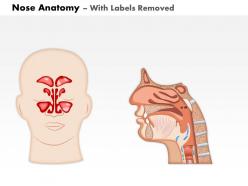
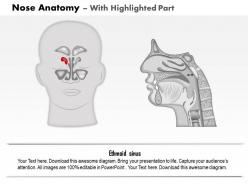
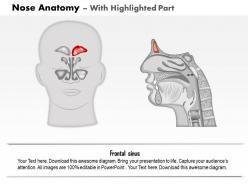
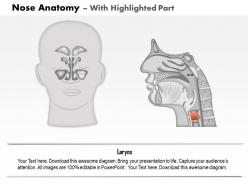



FAQs for 0714 nose anatomy medical
So basically your nose has the outer part that gives it shape, then inside there's the nasal cavity with this wall called the septum that splits everything in half. Those weird curved things called turbinates (they're like tiny shelves honestly) warm up and filter the air coming in. Your sinuses connect to all this too - they help with how your voice sounds. The upper part of your nasal cavity is where smell happens. It all works together to clean and humidify air before it hits your lungs. For your exam, I'd focus on how each piece helps with breathing and filtering stuff out.
So basically your nose is like this amazing air filter and smell detector all in one. Air flows through and hits these tiny receptors in the upper part that catch odor molecules. They're connected straight to your olfactory bulb right behind your nasal cavity. Those curved bones inside (turbinates) create little air swirls so more scent molecules hit the receptors - pretty clever design honestly. That's exactly why you can't smell anything when you're stuffed up. The swelling just blocks air from getting to those upper receptors where all the magic happens.
So your turbinates are like little curved shelves inside your nose that work as a natural air filter. They warm up the air and add moisture before it reaches your lungs. Pretty cool how they create turbulence to force air over more surface area - sounds counterintuitive but it works. Blood vessels and mucus trap all the gross stuff floating around. When you're super congested from allergies, that's them being inflamed and swollen. Honestly, if you're always stuffed up, maybe see an ENT? Chronic swelling can mess with your sleep big time.
So your septum is like a wall between your nostrils, right? When it's straight, air flows evenly. Mine's definitely not straight lol. If it's crooked - which happens to like 80% of people - one side gets blocked and the other has to compensate. Creates all this chaotic airflow instead of smooth breathing. You end up mouth-breathing, snoring, or constantly feeling stuffed up on one side. It's super annoying. If you're always struggling to breathe through your nose, maybe see an ENT doctor? They can actually fix it surgically if it's bad enough.
So the main culprits are deviated septum, nasal polyps, turbinate hypertrophy, and chronic sinusitis. Most people - like 80% - have some septum deviation, but not everyone needs fixing. Polyps are just benign growths that block airflow and kill your smell. Then there's turbinate hypertrophy where those shelf things in your nose swell up from allergies or whatever. Chronic sinusitis is basically when the inflammation decides it's moving in permanently, which sucks. Oh, and if you're dealing with patients who can't breathe or keep getting sinus issues, start with these four - they're usually the troublemakers.
So basically your nose is like a bouncer for germs. It filters out nasty stuff, warms up the air, and traps particles in mucus (I know, kinda gross). Those tiny hairs called cilia sweep all that contaminated gunk toward your throat so you swallow it. Wild but it works! Your nose also has immune cells hanging out in there producing antimicrobial stuff. The whole shape creates turbulent airflow too, which gives more time for filtering. Honestly, mouth-breathing is so overrated - your nose is doing way more heavy lifting than you think.
So basically our noses are pretty boring compared to other mammals lol. We only have three turbinates but dogs have up to seven - that's why they can smell everything. Most animals also have way longer nasal passages relative to their head size. Plus they've got that vomeronasal organ thing we pretty much lost over time. Elephants are wild though, their nasal setup connects totally differently for specialized stuff. If you're looking at this for your anatomy project, definitely focus on turbinate count and where the olfactory tissue spreads out - that's where you'll see the biggest differences between species.
Oh yeah, noses literally never stop growing - kind of wild when you think about it! The cartilage gets weaker over time, so the tip starts drooping and everything looks longer and wider. Skin gets thinner too, which makes all the underlying stuff more obvious. Sometimes the nasal bones shift around a bit, and the septum can get more crooked. Even the nostrils look bigger because of all these cartilage changes. Just something to remember when you're seeing older patients - it's all normal aging, not necessarily something wrong with them.
Your nose is basically a mini air conditioner - seriously! Blood vessels and mucus cells work together to warm up, clean, and add moisture to the air you breathe. Cold air gets heated to body temp, while that sticky mucus catches all the gross stuff like dust and germs before they reach your lungs. Without this system, your respiratory tract would get totally irritated. That's actually why people with chronic sinusitis or allergies get sick more often - their inflamed mucosa can't filter properly anymore. Pretty wild how much work your nose does without you even thinking about it.
So basically, your sinus anatomy can totally screw with drainage and that's when you get stuck with chronic problems. A deviated septum or swollen turbinates create these bottlenecks where mucus just sits there - bacteria love that stagnant mess. I see patients all the time who do everything right but still get recurring infections. The ostiomeatal complex is usually where things go wrong since it blocks so easily. Honestly, if you've tried everything and it's not working, push for a CT scan. Sometimes there's just a structural issue that meds can't fix, you know?
So basically, if your nose is messed up - like a deviated septum or swollen turbinates - it screws with your airflow while you sleep. Your nose can't filter air properly, so you end up mouth breathing all night, which sucks for sleep quality. The blocked airflow gets all turbulent and that's what causes the snoring sounds. Plus it can make sleep apnea way worse. I'd honestly see an ENT specialist first if you're having chronic issues - they can check if it's actually your nasal structure causing problems. Sometimes fixing the nose thing helps more than you'd think.
Yeah, they can basically change whatever you want - narrow the bridge, reshape the tip, make nostrils smaller, even add grafts to build up areas. The bone and cartilage are what they're working with. If your septum's crooked they'll fix that too while they're in there. What's crazy is how much they can alter while keeping your breathing normal. My cousin had hers done and you'd never know - looks totally natural. Just do your homework finding a surgeon though. Nose jobs are super technical and I've seen some... not great results when people go cheap.
CT and MRI are your main options - CT's amazing for bone stuff like septum issues and sinus structure. MRI handles soft tissue better. Endoscopy isn't technically "imaging" but you get real-time views inside, which is pretty cool. Cone beam CT is popping up more now, lower radiation and the resolution for ENT work is solid. There's also rhinomanometry if they want to check how air flows. Honestly, if you're looking at procedures or need detailed mapping, I'd push for cone beam CT. The image quality blew me away when I first saw it.
Your nose literally never stops changing - it's wild when you think about it. Babies have these tiny nasal passages, which is why they're always stuffy. Puberty hits and everything gets bigger, sinuses finish developing. Then gravity becomes your enemy. Cartilage gets weaker over the years so your nose starts drooping and looking longer. The tip spreads out too. It's just normal body stuff, not some tragic aging thing. Oh, and if you're working with different age groups - their actual nasal anatomy is completely different, so don't expect the same airflow or sinus capacity across the board.
Hey! So noses are super different across ethnic groups - mostly because of cartilage structure, bone width, and nostril shape. African descent folks usually have wider nasal bases and bigger nostrils. East Asians tend to have lower bridges and less projected tips. Europeans? Generally narrower and more projected, though honestly there's massive variation within every group anyway. It all comes down to evolution and climate adaptation stuff. The key thing is working with each person's natural anatomy instead of trying to force some cookie-cutter "ideal" nose, you know?
-
I discovered this website through a google search, the services matched my needs perfectly and the pricing was very reasonable. I was thrilled with the product and the customer service. I will definitely use their slides again for my presentations and recommend them to other colleagues.
-
Easily Editable.