

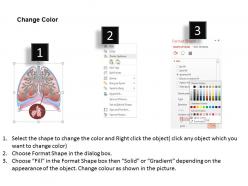
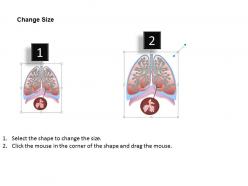
0514 anatomy of human lungs medical images for powerpoint




Try Before you Buy Download Free Sample Product
 Impress Your
 Audience
 100%
100% Editable
 Save Hours
 of Time


Bedazzle them with our brilliant 0514 Anatomy Of Human Lungs Medical Images For PowerPoint. You will certainly leave them gaping.
People who downloaded this PowerPoint presentation also viewed the following :
0514 anatomy of human lungs medical images for powerpoint with all 10 slides:
Chart out their development with our 0514 Anatomy Of Human Lungs Medical Images For PowerPoint. Communicate the great benefits that are bound to accrue.

FAQs for 0514 anatomy of human lungs medical
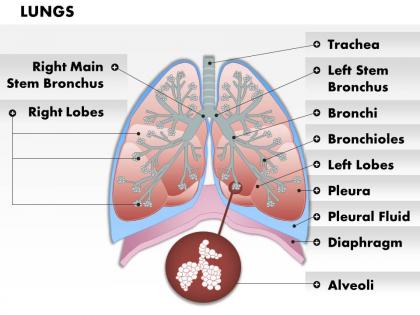
Your lungs are basically doing gas exchange - sucking oxygen from air into your bloodstream while dumping CO2 waste so you can breathe it out. They're like your body's air filter and delivery system combined. But there's more going on too. They actually help balance your blood's pH by controlling CO2 levels, plus they catch small blood clots and air bubbles before they cause issues. I never really thought about that last part until recently - kind of wild that they're multitasking like that. So yeah, way more complex than just air going in and out!
So your lungs are basically this insane air filter setup. Those tiny alveoli at the end of your airways? They pack about 70 square meters of surface area - literally the size of a tennis court crammed into your chest, which honestly blows my mind. The walls are crazy thin, just one cell layer, so oxygen and CO2 slip right through. Capillaries wrap around each little sac too. Oh, and when you're looking at those histology slides later, check out how perfectly positioned those blood vessels are. It's like seeing engineering in action.
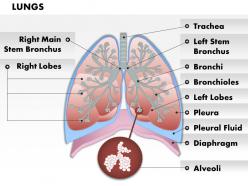
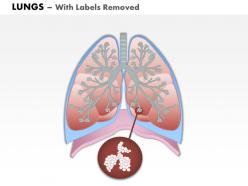
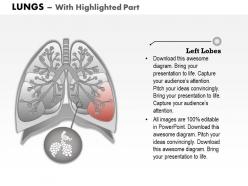
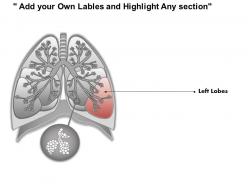
So basically your right lung has three lobes, left one only has two. Right lung's bigger and wider too, but the left is longer and narrower - it's gotta squeeze around your heart which is kinda inconvenient if you ask me. The right side has two fissures dividing up those lobes, left just has one. Oh and there's this cardiac notch thing on the left where your heart literally dents into it. That's why chest X-rays always look asymmetrical - the right side's just built different structurally.
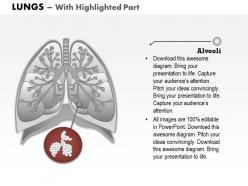
So alveoli are these tiny air sacs - you've got like 300 million of them crammed in there. They're shaped like little balloons and give you roughly a tennis court's worth of surface area, which honestly blows my mind every time I think about it. The walls are super thin, just one cell thick, so oxygen can zip right into your bloodstream while CO2 gets kicked out. Each one's surrounded by capillaries too. It's wild how efficient the whole setup is. When you're dealing with respiratory patients, any damage to these structures basically screws up that whole massive exchange system.
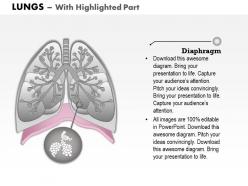
So your diaphragm is this dome-shaped muscle that does like 75% of your breathing work. When you breathe in, it flattens down and makes room for air to rush into your lungs. Then it relaxes back up to push the air out. Super simple but crazy important - if it's not working right, you'll feel winded all the time. I learned this in yoga class actually, but diaphragmatic breathing exercises can really help strengthen it. It's wild how much we depend on this one muscle without even thinking about it.
So basically your lungs have this whole branching system - air goes through the main bronchi (big tubes) then splits off into tiny bronchioles. It's kinda like tree branches getting smaller and smaller. The cool thing is bronchioles can actually tighten up or relax to control airflow, which is why asthma sucks so much when they clamp down. All that branching creates tons of surface area so air gets distributed everywhere it needs to go. Oh and that's where the actual gas exchange happens at the end - in these little sacs called alveoli. Pretty wild how it all works together honestly.
Your nose actually does a ton of work - it warms up the air and filters stuff out before it hits your lungs. Then you've got this mucus layer that traps particles and germs. Those tiny hair things (cilia, I think?) sweep all that gross stuff back up so you can cough it out. When your airways detect something nasty, they'll tighten up to keep it from going deeper. It's pretty smart how it all works together. But don't rely on it completely - heavy pollution or smoking will totally overwhelm this whole system.
So with emphysema, those tiny air sacs in your lungs basically get destroyed and merge into bigger, useless spaces - kinda like if you popped a bunch of bubble wrap bubbles together. You lose tons of surface area for breathing. Chronic bronchitis is different though - your airways get all inflamed and swollen, plus they make way too much mucus that just sits there clogging everything up. Both suck, honestly. The tricky part? Emphysema damage is permanent since those delicate structures can't grow back, but bronchitis can actually get better with treatment.
So the pleural cavity is basically this thin space between two membranes around your lungs. There's fluid in there that lets your lungs stick to your chest wall but still slide around smoothly - kinda like wet glass on a table. When your diaphragm drops, it creates negative pressure that sucks air in automatically. Pretty clever system honestly. If something punctures that space though (pneumothorax), your lung just collapses. That's why I always think about pleural problems when someone's having breathing issues - it's more common than you'd expect.
So basically your lungs are like the body's gas exchange station. Oxygen goes from the little air sacs (alveoli) straight into your blood through these tiny capillaries. Carbon dioxide does the opposite - blood to lungs, then you breathe it out. Your heart pumps the old, used blood to your lungs through pulmonary arteries, gets it all oxygenated, then sends the fresh stuff back out to the rest of your body. The whole system's pretty smooth honestly. Oh and if you ever get a chance to look at alveoli under a microscope, do it - the capillary networks look insane.
So babies only have like 50 million alveoli vs our 300 million - wild difference right? Their airways are tiny too, which is honestly terrifying because any little swelling becomes a big problem fast. The chest wall is way more flexible and cartilage-y, so you'll see those scary retractions when they're struggling. Their diaphragm sits higher and just doesn't work as efficiently either. I learned this the hard way during my peds rotation. Bottom line - what looks like minor breathing trouble in an adult can be serious business for infants because everything's just so much smaller and less developed.
So basically your body gets pretty good at dealing with thin air. You'll breathe faster right away, then over a few weeks you make more red blood cells to grab oxygen better. Your lung capacity actually improves too - more of those little air sacs and stronger breathing muscles. That's literally why Olympic runners go train in Colorado and stuff. But seriously, if you're hitting anything above 8,000 feet, give yourself at least 2-3 days to adjust or you'll feel like garbage. Altitude sickness sucks.
Dude, high-res CT scans are totally changing the game right now. You can literally watch lungs moving in 4D imaging - it's crazy cool. MRI with hyperpolarized gases shows ventilation down to individual alveoli, which blows my mind honestly. Digital tomosynthesis gives you those 3D views but with way less radiation exposure than regular CT. AI imaging is getting pretty good at auto-identifying structures too, though sometimes I wonder if we're getting too dependent on it. Anyway, if you're doing lung research you should definitely get familiar with these - they're becoming the new standard pretty fast.
Dude, smoking literally tears apart your lungs from the inside. All those chemicals cause inflammation and scarring in your airways. The tiny air sacs where you actually breathe get damaged and merge into bigger, crappier spaces - that's emphysema right there. Your lung tissue gets stiff too, so you can't even exhale properly anymore. What's really brutal is that most of this damage sticks around forever, even after you quit. That's why my uncle still wheezes sometimes and he stopped like 10 years ago. But hey, quitting now definitely stops things from getting worse.
So for surface anatomy, you'll mainly use the clavicle, scapular lines, and intercostal spaces. Midclavicular line is your best friend - super helpful for identifying lobes and checking diaphragm movement. The posterior scapular line helps with finding lower lung borders. Oh, and the 4th and 6th intercostal spaces are key for percussion mapping. I always mess up counting ribs at first, but whatever. Once you nail these reference points, everything clicks way easier. Try practicing on yourself before seeing patients - sounds weird but it actually helps a ton.
-
Visually stunning presentation, love the content.
-
Great experience, I would definitely use your services further.