


Brand Architecture Strategy For Multiple Brands Launch Branding CD V





Try Before you Buy Download Free Sample Product
 Impress Your
 Audience
 100%
100% Editable
 Save Hours
 of Time


Using a multi branding strategy, a company can introduce multiple goods or services into the same market segment. Grab our Brand Architecture Strategy for Multiple Brands Launch template. It is professionally curated to guarantee that its brands are marketed and positioned within the same market while addressing various target audiences. Our Brand Marketing deck can assist a business in developing additional cash flow options and gaining market dominance. It highlights the benefits and drawbacks of a multi branding approach and incorporates various brand designs. Our Multi Brand Promotion PPT aids a company in creating the brand architecture needed for a multi branding plan. Additionally, it demonstrates multiple marketing and advertising strategies to promote the multi branding campaign. Our Brand Campaign module also displays key performance indicators KPIs to assess the effectiveness of a multi branding system. Lastly, it exhibits dashboards that can aid in evaluating multi brand marketing campaigns. Download this 100 percentage editable presentation to gain access to our in depth research and expertly designed product.
People who downloaded this PowerPoint presentation also viewed the following :
Content of this Powerpoint Presentation
Slide 1: This slide introduces Brand Architecture Strategy for Multiple Brands Launch. Commence by stating Your Company Name.
Slide 2: This slide depicts the Agenda of the presentation.
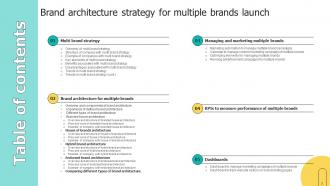
Slide 3: This slide incorporates the Table of contents.
Slide 4: This slide highlights the Title for the Topics to be covered further.
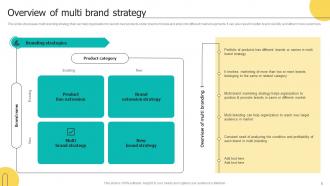
Slide 5: This slide showcases multi branding strategy that can help organization to launch new products under brand umbrella.
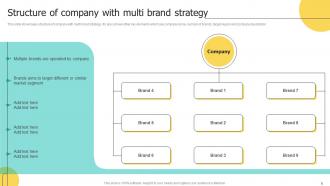
Slide 6: This slide states the Structure of company with multi brand strategy.
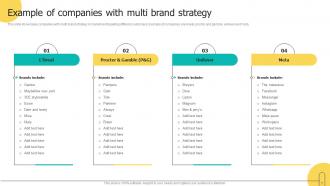
Slide 7: This slide displays the Example of companies with multi brand strategy.
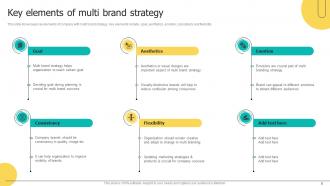
Slide 8: This slide highlights the Key elements of multi brand strategy.
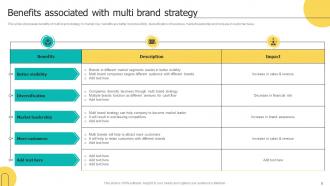
Slide 9: This slide exhibits the Benefits associated with multi brand strategy.
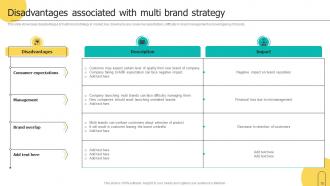
Slide 10: This slide portrays the Disadvantages associated with multi brand strategy.
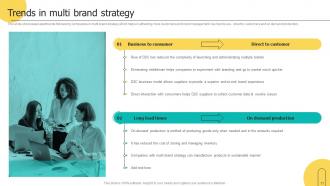
Slide 11: This slide elucidates the Trends in multi brand strategy.
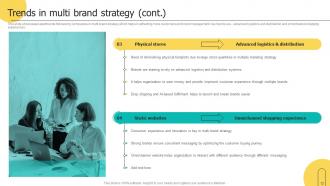
Slide 12: This slide continues the Trends in multi brand strategy.
Slide 13: This slide includes the Heading for the Contents to be discussed next.
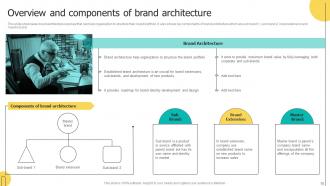
Slide 14: This slide showcases brand architecture overview that can help organization to structure their brand portfolio.
Slide 15: This slide reveals the Importance of defined brand architecture.
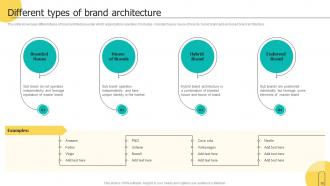
Slide 16: This slide lists the Different types of brand architecture.
Slide 17: This slide states the Title for the Ideas to be covered in the following template.
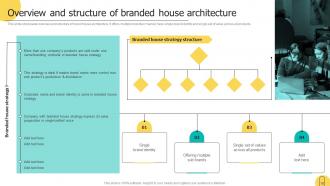
Slide 18: This slide presents the Overview and structure of branded house architecture.
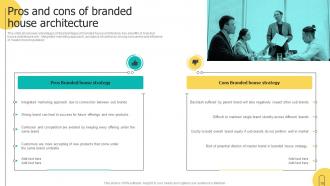
Slide 19: This slide shows the Pros and cons of branded house architecture.
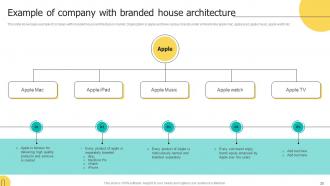
Slide 20: This slide elucidates the Example of company with branded house architecture.
Slide 21: This slide mentions the Heading for the Ideas to be discussed in the following template.
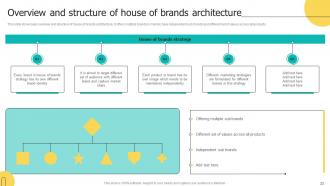
Slide 22: This slide indicates the Overview and structure of house of brands architecture.
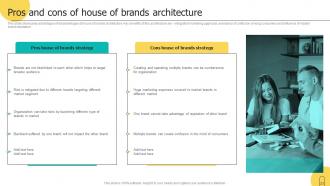
Slide 23: This slide lists the Pros and cons of house of brands architecture.
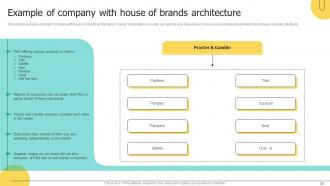
Slide 24: This slide showcases example of company with house of brands architecture in market.
Slide 25: This slide indicates the Title for the Components to be covered further.
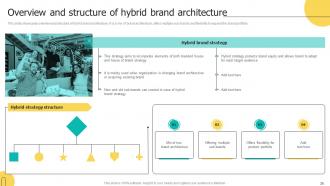
Slide 26: This slide depicts the Overview and structure of hybrid brand architecture.
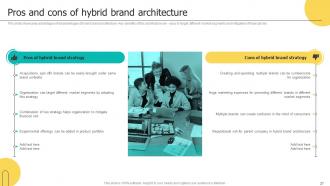
Slide 27: This slide highlights the Pros and cons of hybrid brand architecture.
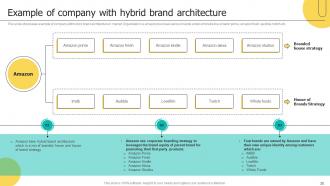
Slide 28: This slide shows the example of company with hybrid brand architecture in market.
Slide 29: This slide presents the Heading for the Topics to be discussed in the following template.
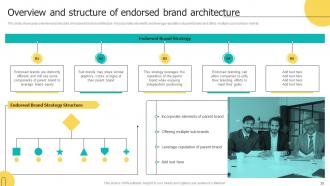
Slide 30: This slide presents the Overview and structure of endorsed brand architecture.
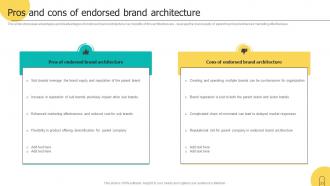
Slide 31: This slide exhibits the Pros and cons of endorsed brand architecture.
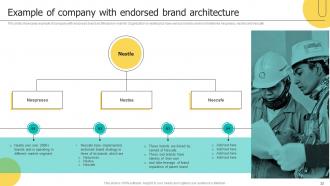
Slide 32: This slide reveals the Example of company with endorsed brand architecture.
Slide 33: This slide elucidates the Title for the Topics to be covered in the forth-coming template.
Slide 34: This slide showcases comparison of different types of brand architecture.
Slide 35: This slide displays the Heading for the Components to be discussed in the following template.
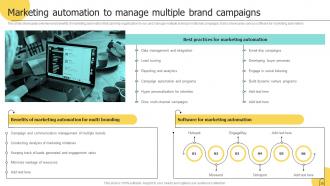
Slide 36: This slide exhibits the Marketing automation to manage multiple brand campaigns.
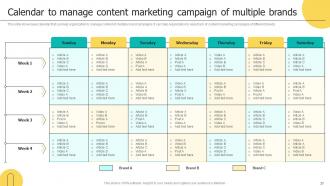
Slide 37: This slide reveals the Calendar to manage content marketing campaign of multiple brands.
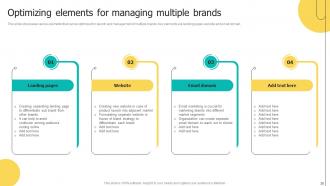
Slide 38: This slide deals with Optimizing elements for managing multiple brands.
Slide 39: This slide focuses on Running advertisement campaigns for multiple brands.
Slide 40: This slide presents the Title for the Ideas to be covered in the upcoming template.
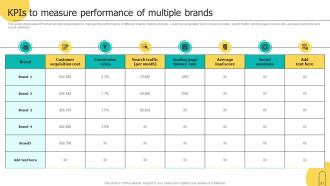
Slide 41: This slide reveals the KPIs to measure performance of multiple brands.
Slide 42: This slide mentions the Heading for the Components to be discussed further.
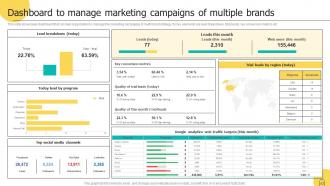
Slide 43: This slide highlights the Dashboard to manage marketing campaigns of multiple brands.
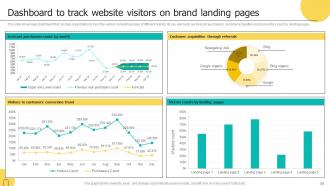
Slide 44: This slide elucidates the Dashboard to track website visitors on brand landing pages.
Slide 45: This is the Icons slide containing all the Icons used in the plan.
Slide 46: This slide is used for depicting Additional information.
Slide 47: This is the 30 60 90 days plan slide for effective planning.
Slide 48: This is the Venn diagram slide.
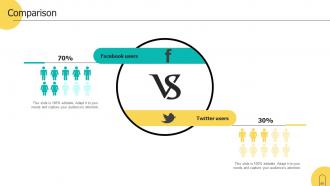
Slide 49: This slide is used for the purpose of Comparison.
Slide 50: This slide contains the Post it notes for reminders and deadlines.
Slide 51: This slide represents the SWOT analysis.
Slide 52: This is the Quotes slide for motivation.
Slide 53: This is the Thank you slide for acknowledgement.
Brand Architecture Strategy For Multiple Brands Launch Branding CD V with all 58 slides:
Use our Brand Architecture Strategy For Multiple Brands Launch Powerpoint Presentation Slides Branding CD to effectively help you save your valuable time. They are readymade to fit into any presentation structure.












FAQs for Brand Architecture Strategy For Multiple Brands Launch
You need three main things: brand hierarchy, naming strategy, and visual identity systems. First, figure out how your sub-brands connect to the main brand - are they endorsed, totally separate, or something in between? Naming is where most teams I know totally mess up, honestly. Also map out your current brand situation to spot any weird overlaps or gaps - that's usually eye-opening. Set up clear rules for when you create new brands vs. just extending what you have. Oh, and don't forget consistent visuals and messaging across everything. Start with that portfolio audit though.
Your brand setup totally controls how people move through your stuff. Clear structure means customers get which products fit their needs - Apple nails this with their iPhone/iPad/Mac thing. But mess it up? People just get confused and bail to your competitors instead of checking out what else you've got. Honestly, a solid brand family is huge for building trust since good experiences with one product carry over to others. I'd start by tracking where customers currently get lost jumping between your different brands - that'll show you exactly what needs fixing first.
So basically there's three ways to do this. Monolithic is when you slap your main brand on everything - like how Google owns Gmail, Maps, all that stuff. Then there's endorsed, where your big brand gives a thumbs up to smaller ones (Marriott does this with Courtyard). Freestanding means each brand lives separately without showing the connection. Honestly, monolithic is way easier to handle and builds one killer brand, but if something goes wrong it hits everything. Endorsed gives you options while still using your main brand's rep. With freestanding, each brand can go after completely different people - P&G's genius at this with Tide and Pampers. Just depends if your audiences are similar and whether your main brand actually helps or just gets in the way.
First thing - map out what you've got and be brutally honest about how connected your products actually are. Same customers, distribution, or value props? Go branded house like Google. Completely different markets? House of brands like P&G works better. Most companies screw up that messy middle ground by overthinking it honestly. Also check if your teams can actually work together or if they're better solo. Oh and don't roll everything out at once - pick one approach and test it first. Way less risky that way.
Think of brand equity as your compass for architecture choices. Got a powerhouse brand? Spread that strength around with a branded house approach. Your brands target completely different crowds though? Keep them separate - you don't want one messing up another's reputation. P&G nails this strategy, honestly. Map out which brands actually boost your portfolio and which ones are dead weight. Some short wins come from just auditing your current brand strength across different segments first. The whole point is using your winners to prop up weaker areas without creating confusion.
Look, you really need to map out what you've got first - like where all your current brands sit. Once you have that down, it becomes this super helpful decision-making tool. New product coming? You'll know whether it should live under your main brand, get its own sub-brand, or be totally separate. Way better than just making it up as you go. Plus you can actually use the good reputation you've already built instead of starting from scratch every time. And honestly? It protects your main brand if something new tanks. I learned this the hard way with a client who didn't think it through.
Oh man, the internal drama is brutal - people get SO attached to their brand identities and will fight you tooth and nail. Plus everyone's messaging gets completely out of sync. Marketing's saying one thing, sales team's going rogue with their own pitch, customer service is confused. It's chaos honestly. Then there's all the boring technical stuff - updating websites, redoing materials, the whole nine yards. My brother went through this at his company last year and said it was a mess. Start small though, get the bosses on board first, and don't try changing everything at once or you'll lose your mind.
Look at your revenue numbers first - that's the obvious stuff. Market share changes, how much you're spending on marketing, all that. But honestly? The money side doesn't tell you everything. Customer surveys are where you'll really see if people get your brand setup or if they're totally confused about how everything connects. I'd track awareness and perception quarterly - are customers actually understanding which brands do what? The confusion factor is huge here. If people can't figure out your brand relationships, your whole architecture is basically pointless. Set up some quick pulse surveys so you can catch problems early.
Honestly, digital stuff makes brand hierarchy way more complicated than it used to be. Your customers are hitting your brand from like ten different angles now - apps, social, random IoT devices, whatever. Each one either supports your main brand story or totally confuses people. There's no in-between anymore, which kinda sucks. The whole parent-brand-to-sub-brand thing gets weird when people discover your smaller brands first through digital channels instead of your main one. I'd start by just looking at where all your brands actually show up online right now - might surprise you.
Honestly, start by writing down everything you have now - logos, colors, fonts, messaging, all of it. Then figure out your biggest gaps. You'll want brand guidelines that actually get used, not just pretty PDFs nobody opens. Pick someone from each team to be your "brand police" (sounds dramatic but it works). They can catch weird inconsistencies before they spread everywhere. Oh, and make sure people get how your main brand connects to any sub-brands or product lines - that's where things usually get messy. Do regular check-ins to see what's working and what isn't.
Honestly, just start with a basic relationship map first - figure out what you've actually got before getting fancy. The Brand Relationship Spectrum is pretty much the go-to for mapping how your brands connect. Brand Architecture Canvas is clutch for presentations (saves so much time explaining things to stakeholders). Portfolio mapping and brand equity audits will show you which brands actually matter financially. House of Brands vs. Branded House framework helps decide your overall structure. Oh, and don't sleep on simple visualization - sometimes a messy whiteboard sketch tells you more than a perfect PowerPoint deck.
Here's the thing - consumer insights basically show you when your brand setup isn't working. People get confused between your sub-brands, or maybe one's accidentally stealing customers from another. The feedback can sting, honestly. Like finding out your "premium" line feels cheap to customers, or realizing competitors are crushing you in spots you didn't even notice. Look for the gap between how you've organized everything internally versus what actually makes sense to customers. Those disconnects are goldmines for fixing stuff before it gets worse.
Okay so basically you want to map out your brand portfolio early - like during due diligence, not after you've already signed everything. This helps you decide which brands to keep, which ones to ditch, and how they'll all work together without stepping on each other. Way better than just hoping it works out later! You can spot gaps or overlaps pretty quickly this way. Plus your team won't be as stressed if you actually have a clear plan to show them. I mean, nobody likes uncertainty during mergers. The whole thing just makes more sense when you've got that framework laid out upfront.
Start with the "why" before jumping into details - people need to get the business reasoning first. Make a simple before/after visual because nobody wants to wade through boring org chart descriptions. Different groups need different messaging, so your sales team approach won't work for the board. Face-to-face beats email every time for the important folks. Give people space to digest this stuff - it's a lot to take in honestly. Oh, and build in ways for feedback so you can catch problems early instead of dealing with drama later.
Every 2-3 years is the general rule, but don't wait that long if big stuff happens. Major changes like acquisitions or launching new products? Time for a review. I've watched companies drag their feet and end up with these weird, confusing brand messes that nobody understands. Your architecture should move with your strategy, not play catch-up later. Set yearly check-ins and deeper reviews every couple years. Honestly though - if you're wondering whether it's time, it probably is.
-
Their professional templates are very impressive, even my manager was curious about the source. I am very grateful.
-
Great product with highly impressive and engaging designs.