


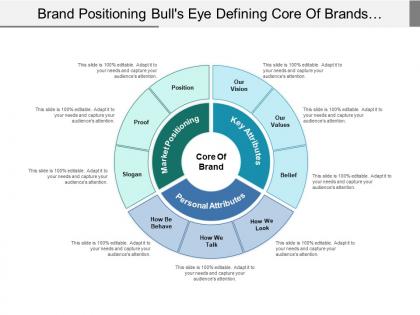
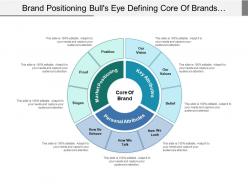
Brand positioning bull s eye defining core of brands include attribute operational activity and market value




Try Before you Buy Download Free Sample Product
 Impress Your
 Audience
 100%
100% Editable
 Save Hours
 of Time


Our Brand Positioning Bull S Eye Defining Core Of Brands Include Attribute Operational Activity And Market Value are instruments of change. Implement improvements as you go forward.
People who downloaded this PowerPoint presentation also viewed the following :
Brand positioning bull s eye defining core of brands include attribute operational activity and market value with all 5 slides:
In this cutthroat presentation environment putting your best foot forward is crucial. Make your presentations stand above the rest with full color Brand Positioning Bull S Eye Defining Core Of Brands Include Attribute Operational Activity And Market Value.


FAQs for Brand positioning bull s eye defining core of brands include attribute operational activity
Effective brand positioning includes target audience identification, competitive differentiation, unique value proposition, brand personality, and consistent messaging across all touchpoints. These elements work together by creating clear market distinction, building emotional connections with consumers, and establishing memorable brand associations, with many companies finding that strategic positioning ultimately drives customer loyalty, premium pricing power, and sustainable competitive advantage in increasingly crowded marketplaces.
Companies identify their target audience through comprehensive market research, customer data analysis, demographic and psychographic profiling, competitor analysis, and direct customer feedback collection. This strategic combination enables businesses to understand consumer behaviors, preferences, and pain points across different segments, with many organizations finding that detailed audience insights ultimately drive more effective positioning strategies and stronger market differentiation.
Competitor analysis plays a crucial role in brand positioning by identifying market gaps, differentiating factors, pricing strategies, messaging approaches, and untapped customer segments. Through comprehensive competitor research, businesses can position themselves strategically within their market landscape, avoid direct competition where disadvantageous, and capitalize on competitor weaknesses, ultimately delivering distinctive value propositions and sustainable competitive advantages.
Storytelling enhances brand positioning by creating emotional connections, differentiating core values, and building memorable narratives that resonate with target audiences. Through authentic brand stories, companies streamline customer engagement, establish trust, and communicate unique value propositions more effectively than competitors, with many organizations finding that compelling narratives ultimately deliver stronger market recognition and customer loyalty.
Common brand positioning pitfalls include trying to appeal to everyone, copying competitors, inconsistent messaging across channels, ignoring customer perceptions, and positioning without market research validation. These missteps often result in diluted brand identity, confused consumers, and weakened competitive advantage, with many businesses finding that focused, research-backed positioning delivers stronger market differentiation and customer loyalty.
Emotional connections significantly influence consumer perception by creating deeper brand loyalty, trust, and memorable experiences that transcend functional benefits. When brands successfully forge emotional bonds through storytelling, shared values, and personalized interactions, consumers increasingly view them as extensions of their identity, ultimately driving premium pricing acceptance, word-of-mouth advocacy, and sustained competitive advantage in crowded markets.
Brand positioning effectiveness metrics include brand awareness scores, customer perception surveys, market share growth, price premium analysis, and competitive differentiation measures. Through tracking tools like Net Promoter Score and brand equity studies, organizations can assess positioning impact on customer loyalty, purchase intent, and market positioning, with many companies finding that consistent measurement across these areas ultimately delivers stronger competitive advantage and revenue growth.
A brand can pivot its positioning strategy through comprehensive market research, repositioning messaging and visual identity, adjusting target audience focus, realigning product offerings, and strategic communication campaigns. Companies like Netflix transitioning from DVD rentals to streaming and McDonald's emphasizing healthier options demonstrate how effective pivots enable brands to stay relevant, capture new market segments, and maintain competitive advantage in evolving landscapes.
Digital marketing significantly enhances brand positioning by enabling targeted messaging, real-time audience engagement, and precise demographic reach through social media, content marketing, and SEO strategies. Through these digital channels, companies can consistently reinforce their brand values, monitor competitor positioning, and adapt messaging based on customer feedback, ultimately delivering stronger market differentiation and measurable brand awareness growth.
Businesses ensure brand positioning consistency through unified messaging frameworks, standardized visual guidelines, cross-channel content audits, centralized brand management systems, and regular team training. Through integrated marketing platforms, companies streamline communication across social media, websites, and traditional channels while maintaining core brand values, with many organizations finding that consistent positioning increases customer recognition and trust by up to 80%.
Brand positioning directly influences brand equity by establishing how consumers perceive, value, and differentiate a brand in the marketplace. Strategic positioning that emphasizes unique benefits, quality, and relevance builds stronger customer loyalty, premium pricing power, and market share, with companies like Apple and Tesla demonstrating how distinctive positioning ultimately delivers measurable brand equity and competitive advantage.
Startups can effectively position themselves against established competitors by identifying underserved market niches, emphasizing agility and personalized customer experiences, leveraging innovative technologies, and building authentic brand stories that resonate with target audiences. Through focused differentiation strategies, many emerging companies successfully capture market share by delivering faster service, specialized solutions, and more responsive customer support than larger competitors, ultimately establishing competitive advantages in specific segments.
Brands can leverage storytelling narratives, sensory branding experiences, unexpected partnerships, community-building initiatives, and purpose-driven messaging for memorable positioning. These creative approaches work by creating emotional connections, differentiating through authenticity, and building lasting relationships, with many companies finding that strategic storytelling ultimately delivers stronger brand recall and competitive advantage.
Audience segmentation enhances brand positioning precision by enabling targeted messaging, personalized value propositions, and strategic resource allocation across distinct consumer groups. Through demographic, psychographic, and behavioral analysis, companies deliver more relevant brand experiences, reduce marketing waste, and strengthen competitive differentiation, with many organizations finding that segmented positioning strategies significantly improve customer engagement and market penetration.
Successful brand repositioning campaigns include McDonald's shift toward healthier options, Old Spice's transformation from outdated to trendy, Netflix's evolution from DVD rentals to streaming leader, and Apple's reinvention from computers to lifestyle technology. These campaigns demonstrate that strategic repositioning requires authentic product changes, targeted messaging, and consistent execution across touchpoints, with many brands finding that bold reinvention often delivers greater market relevance and competitive advantage than incremental adjustments.
-
Attractive design and informative presentation.
-
Great experience, I would definitely use your services further.