


Brand strength powerpoint presentation slides





Try Before you Buy Download Free Sample Product
 Impress Your
 Audience
 100%
100% Editable
 Save Hours
 of Time


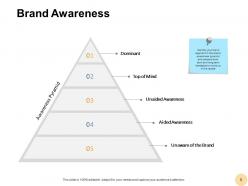
Showcase the competence of your business with this Brand Strength PowerPoint Presentation Slides PPT deck. These brand competence PowerPoint layouts comprise brand equity, brand awareness, brand quality, product positioning elements, brand loyalty, brand association, etc. Take advantage of these business competence PowerPoint templates to show the components of brand equity including perceived quality, brand associations amongst others. Further, you can depict the indicators and future performance of the same. Illustrate the brand awareness pyramid which consists of dominant, top of mind, unaided awareness, aided awareness, and brand unawareness using these brand analysis PowerPoint slides. Take the assistance of this brand personality PPT slideshow to reveal the phases of brand development including the development stage, survey measures, and strategic emphasis. Utilize this competency management PPT to answer various questions pertaining to product positioning such as feeling about a brand, utility of a product amongst others. Download these amazing brand identity PPT visuals to create a wonderful impression on your stakeholders.
People who downloaded this PowerPoint presentation also viewed the following :
Content of this Powerpoint Presentation
Slide 1: This slide introduces Brand Strength. State Your Company Name and begin.
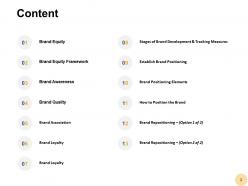
Slide 2: This slide shows Content of the presentation.
Slide 3: This slide presents Brand Equity describing- Brand Awareness, Perceived Quality, Brand Loyalty, Brand Association.
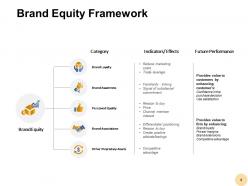
Slide 4: This slide displays Brand Equity Framework with categories as- Brand Awareness, Perceived Quality, Brand Loyalty, Brand Association, Other Proprietary Assets.
Slide 5: This slide represents Brand Awareness with help of a pyramid.
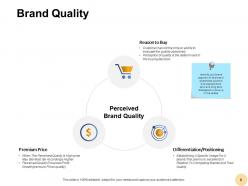
Slide 6: This slide showcases Brand Quality describing- Reason to Buy, Premium Price, Differentiation/Positioning.
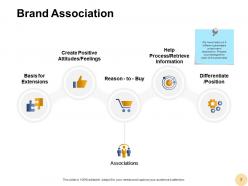
Slide 7: This slide shows Brand Association describing- Differentiate/Position, Reason - to - Buy, Create Positive Attitudes/Feelings, Help Process/Retrieve Information, Basis for Extensions.
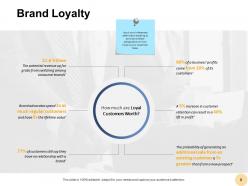
Slide 8: This slide presents Brand Loyalty to provide a better perspective on how loyal is your customer base.
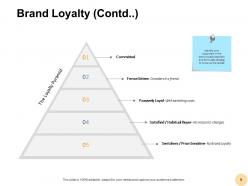
Slide 9: This is another slide continuing Brand Loyalty.
Slide 10: This slide displays Stages of Brand Development & Tracking Measures.
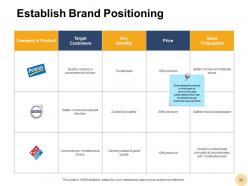
Slide 11: This slide represents Establish Brand Positioning in tabular form.
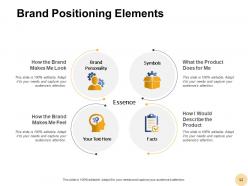
Slide 12: This slide showcases Brand Positioning Elements as- Essence, Facts, Symbols, etc.
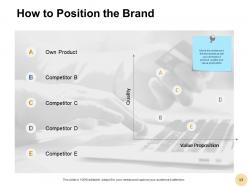
Slide 13: This slide explains How to Position the Brand.
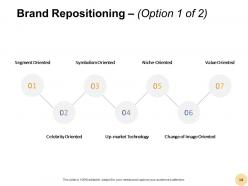
Slide 14: This slide shows Brand Repositioning describing- Segment Oriented, Celebrity Oriented, Symbolism Oriented, Up-market Technology, Niche-Oriented, Change of Image Oriented, Value Oriented.
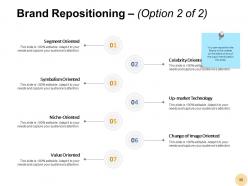
Slide 15: This is an optional slide on Brand Repositioning.
Slide 16: This slide displays Brand Strength Icons.
Slide 17: This slide is titled as Additional Slidesfor moving forward.
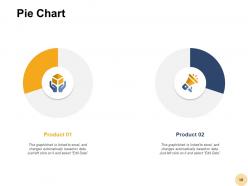
Slide 18: This slide shows Pie Chart with two products comparison.
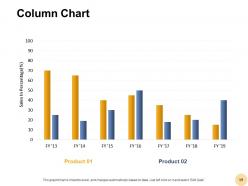
Slide 19: This slide presents Column Chart with two products comparison.
Slide 20: This slide displays Area Chart with two products comparison.
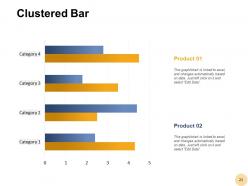
Slide 21: This slide showcases Clustered Bar chart. You can edit and change data as per needs.
Slide 22: This is Our Mission slide with related imagery and text.
Slide 23: This is Our Team slide with names and designation.
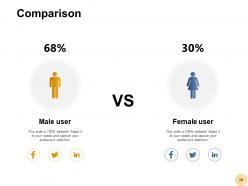
Slide 24: This is a Comparison slide to state comparison between commodities, entities etc.
Slide 25: This is Our Goal slide. Show your firm's goals here.
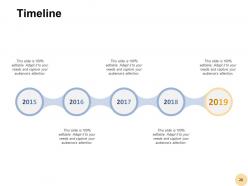
Slide 26: This is a Timeline slide to show information related with time period.
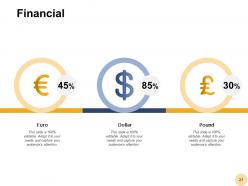
Slide 27: This is a Financial slide. Show your finance related stuff here.
Slide 28: This slide is titled as Post It. Post your important notes here.
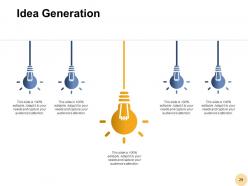
Slide 29: This is an Idea Generation slide to state a new idea or highlight information, specifications etc.
Slide 30: This is a Thank You slide with address, contact numbers and email address.
Brand strength powerpoint presentation slides with all 30 slides:
Use our Brand Strength Powerpoint Presentation Slides to effectively help you save your valuable time. They are readymade to fit into any presentation structure.










FAQs for Brand strength
Key indicators of brand strength include customer loyalty metrics, market share growth, brand recognition rates, premium pricing ability, and social media engagement levels. These indicators work together by measuring consumer attachment, competitive positioning, and financial performance, with many companies finding that strong brands command higher profit margins, attract top talent, and weather market volatility more effectively.
Brand strength significantly influences consumer loyalty by creating emotional connections, establishing trust through consistent experiences, and differentiating products from competitors. Strong brands like Apple or Nike demonstrate how reliable quality, clear messaging, and authentic values foster repeat purchases, reduce price sensitivity, and generate word-of-mouth advocacy, ultimately delivering higher customer lifetime value and sustainable competitive advantage in increasingly crowded markets.
Emotional connection drives brand strength by fostering customer loyalty, increasing purchase frequency, and creating powerful word-of-mouth advocacy that transcends price competition. Through consistent storytelling, personalized experiences, and shared values alignment, brands like Apple and Nike build deep emotional bonds with consumers, ultimately delivering higher customer lifetime value, premium pricing power, and sustained competitive advantage in increasingly crowded markets.
Brands can measure their strength against competitors through market share analysis, brand awareness surveys, customer loyalty metrics, social media engagement rates, and Net Promoter Scores. These assessment tools enable organizations to benchmark performance across retail, technology, and financial services sectors, while identifying competitive gaps and strategic opportunities, ultimately delivering data-driven insights for enhanced market positioning.
Brand consistency across platforms significantly strengthens brand recognition, trust, and perceived professionalism by creating cohesive visual identity, messaging alignment, and customer experience uniformity. This strategic approach enables companies to build stronger emotional connections with audiences, reduce marketing confusion, and ultimately deliver enhanced customer loyalty and competitive advantage, with many organizations finding that consistent branding increases revenue by up to 23%.
Social media metrics correlate with brand strength through engagement rates, follower growth, sentiment analysis, share volume, and brand mention frequency. These indicators reflect customer loyalty, market reach, and brand perception, with companies like Nike and Starbucks finding that higher engagement and positive sentiment translate into stronger market positioning, increased customer retention, and ultimately enhanced competitive advantage.
Storytelling enhances brand strength by creating emotional connections, building trust, differentiating from competitors, and making brands more memorable and relatable to audiences. Through authentic narratives, companies like Nike and Patagonia forge deeper customer relationships, increase loyalty, and ultimately deliver stronger market positioning and competitive advantage in increasingly crowded marketplaces.
Emerging brands can build strength through consistent visual identity, strategic social media engagement, influencer partnerships, customer experience optimization, and targeted content marketing. These approaches accelerate brand recognition by establishing credibility, fostering authentic connections, and delivering memorable experiences, with many startups finding that focused storytelling and community building ultimately create sustainable competitive advantages in crowded markets.
Strong brand strength enables premium pricing strategies by establishing customer trust, emotional connection, and quality perception that justifies higher costs compared to competitors. Companies with robust brand equity, like Apple in technology or Nike in athletic wear, consistently command price premiums while maintaining market share, as consumers associate their brands with superior value, reliability, and status.
Common pitfalls that weaken brand strength include inconsistent messaging across channels, poor customer service experiences, failing to adapt to market changes, neglecting brand monitoring, and overextending into unrelated product categories. These missteps undermine consumer trust and recognition by creating confusion, diluting brand identity, and reducing perceived value, with many companies finding that consistent brand management and strategic focus ultimately deliver stronger market positioning and customer loyalty.
Brand partnerships and collaborations enhance brand strength by expanding market reach, accessing new customer segments, and leveraging complementary brand equity through strategic alliances. Through co-marketing initiatives and joint ventures, organizations share resources, reduce marketing costs, and create enhanced customer experiences, with many companies finding that well-aligned partnerships ultimately deliver increased brand credibility and competitive advantage.
Customer feedback provides insights into brand perception, product satisfaction, service quality, customer loyalty drivers, and competitive positioning relative to market alternatives. Through systematic analysis of reviews, surveys, and social media sentiment, organizations enhance their value propositions, address pain points, and strengthen customer relationships, ultimately delivering improved brand equity and sustained competitive advantage.
Corporate social responsibility significantly enhances brand perception by building consumer trust, demonstrating authentic values, improving stakeholder relationships, and differentiating companies in competitive markets. Through strategic CSR initiatives, organizations strengthen brand loyalty, attract socially conscious consumers, and create sustainable competitive advantages, with many companies finding that genuine community engagement and environmental stewardship ultimately deliver measurable brand equity and long-term customer retention.
Visual identity significantly affects brand strength by enhancing recognition, building emotional connections, conveying brand values, differentiating from competitors, and establishing trust through consistency. Through strategic design choices, companies like Apple and Coca-Cola create memorable brand experiences that drive customer loyalty, increase perceived value, and ultimately deliver competitive advantage, with many organizations finding that cohesive visual identity directly correlates with stronger market positioning.
Businesses leverage data analytics to enhance brand strength by tracking customer sentiment, analyzing competitor positioning, monitoring social media engagement, and measuring campaign effectiveness across channels. Through predictive analytics and real-time insights, companies streamline marketing strategies, personalize customer experiences, and optimize resource allocation, ultimately delivering stronger market positioning and competitive advantage in increasingly data-driven markets.
-
Colors used are bright and distinctive.
-
Awesome presentation, really professional and easy to edit.