


Building digital strategy roadmap for digital transformation customer experience mapping




Try Before you Buy Download Free Sample Product
 Impress Your
 Audience
 100%
100% Editable
 Save Hours
 of Time


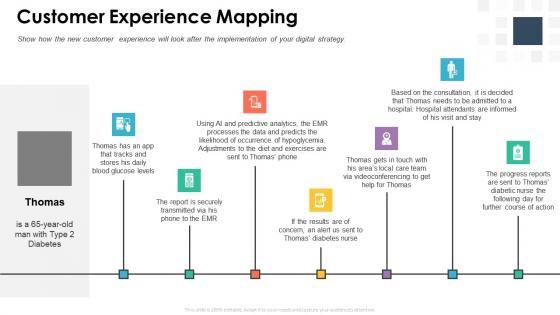
Show how the new customer experience will look after the implementation of your digital strategy.
People who downloaded this PowerPoint presentation also viewed the following :
Building digital strategy roadmap for digital transformation customer experience mapping with all 9 slides:
Use our Building Digital Strategy Roadmap For Digital Transformation Customer Experience Mapping to effectively help you save your valuable time. They are readymade to fit into any presentation structure.








FAQs for Building digital strategy roadmap for digital transformation
Key components include strategic vision alignment, technology infrastructure modernization, data analytics capabilities, customer experience enhancement, and workforce digital skills development. These elements work together by streamlining operations, enabling data-driven decisions, and improving service delivery, with many organizations finding that this strategic combination ultimately delivers competitive advantage and operational efficiency in an increasingly digital marketplace.
Organizations assess digital maturity through comprehensive audits evaluating technology infrastructure, data capabilities, workforce skills, customer experience touchpoints, and operational processes. These assessments typically involve stakeholder interviews, system inventories, and benchmarking against industry standards, with many companies finding that third-party digital maturity frameworks provide objective baselines for strategic planning and investment prioritization.
Leadership plays a pivotal role in driving digital transformation by establishing clear vision, securing necessary resources, fostering cultural change, and championing innovation across organizations. Effective leaders navigate resistance to change while building cross-functional teams, with many companies finding that executive commitment and strategic communication ultimately determine transformation success, enabling faster adaptation and competitive advantage in increasingly digital markets.
Companies can measure digital transformation success through key performance indicators like operational efficiency metrics, customer satisfaction scores, revenue growth from digital channels, employee productivity rates, and cost reduction percentages. These measurements enable organizations to track tangible outcomes across departments, with many enterprises finding that combining quantitative data with qualitative feedback delivers comprehensive insights into transformation effectiveness and competitive positioning.
Common digital transformation challenges include resistance to change, legacy system integration complexities, skills gaps, budget constraints, and unclear strategic alignment. These obstacles often manifest in organizations through employee pushback against new technologies, difficulties connecting outdated infrastructure with modern solutions, and insufficient digital expertise, ultimately requiring comprehensive change management and strategic resource allocation to achieve sustainable transformation.
Customer feedback enhances digital transformation strategy by identifying pain points, validating technology investments, prioritizing feature development, and guiding user experience design. Through surveys, analytics, and direct input, organizations streamline processes, reduce implementation risks, and ensure solutions meet actual needs, with many retail and financial services companies finding that customer-driven transformations deliver higher adoption rates and competitive advantage.
Data analytics is crucial for digital transformation roadmaps, enabling organizations to identify operational inefficiencies, predict customer behaviors, and prioritize technology investments based on measurable impact. Through advanced analytics platforms, companies streamline decision-making processes, optimize resource allocation, and accelerate implementation timelines, with many enterprises finding that data-driven strategies deliver significantly higher ROI and competitive advantage.
Cloud computing, artificial intelligence, IoT, data analytics, and automation platforms are most pivotal in facilitating digital transformation across industries. These technologies streamline operations by enhancing scalability, improving decision-making, and automating processes, with many organizations finding that strategic integration ultimately delivers competitive advantage and operational efficiency.
Organizations can prioritize digital transformation by assessing processes based on customer impact, operational complexity, cost reduction potential, and strategic value to business objectives. Through data-driven evaluation frameworks, companies in sectors like banking, healthcare, and retail streamline high-volume transactions, automate repetitive tasks, and enhance customer-facing operations first, ultimately delivering faster services and competitive advantage while minimizing transformation risks.
Organizations can foster a digital-first culture through comprehensive training programs, leadership modeling of digital behaviors, cross-functional collaboration initiatives, employee empowerment in digital decision-making, and strategic recognition systems that reward innovation. These approaches streamline cultural transformation by embedding digital mindsets across all levels, enhancing operational agility, and ultimately delivering improved efficiency and competitive advantage in an increasingly digital business landscape.
Employee training and upskilling are fundamental to digital transformation success, enabling workforce adaptation, technology adoption, and operational efficiency improvements. Organizations invest in comprehensive training programs, certification courses, and hands-on workshops to bridge skill gaps, with companies like banks and manufacturing firms finding that well-trained employees accelerate transformation timelines and maximize technology investments.
Digital transformation revolutionizes customer experience through personalized interactions, omnichannel accessibility, real-time support, and data-driven insights that anticipate customer needs. Through AI-powered chatbots and mobile platforms, businesses deliver faster service resolution, seamless purchasing journeys, and tailored recommendations, with retail and banking sectors finding that these enhancements significantly boost customer satisfaction and loyalty.
Companies leverage partnerships through strategic alliances with technology vendors, consulting firms, system integrators, and industry specialists to accelerate transformation initiatives. These collaborations enable organizations to access specialized expertise, reduce implementation risks, and share development costs, with many enterprises finding that partnerships deliver faster time-to-market and enhanced competitive positioning.
Digital transformation risks include cybersecurity vulnerabilities, employee resistance, integration complexities, budget overruns, and operational disruptions during implementation phases. These challenges can be mitigated through comprehensive security protocols, strategic change management programs, and phased rollouts, with many organizations finding that thorough planning, stakeholder engagement, and continuous monitoring ultimately deliver smoother transitions and sustainable competitive advantages.
An agile approach significantly enhances digital transformation success by enabling rapid iteration, continuous feedback integration, and adaptive planning that responds to evolving business needs and market conditions. Through shorter development cycles and cross-functional collaboration, organizations streamline implementation timelines, minimize risk exposure, and deliver measurable improvements faster, with many enterprises finding that agile methodologies ultimately accelerate their competitive advantage.
-
Excellent Designs.
-
Unique design & color.
-
Colors used are bright and distinctive.