


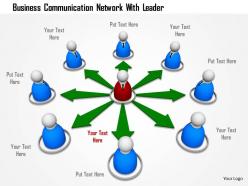
Business communication network with leader image graphics for powerpoint





Try Before you Buy Download Free Sample Product
 Impress Your
 Audience
 100%
100% Editable
 Save Hours
 of Time


Enable them to benefit from the cloud with our Business Communication Network With Leader Image Graphics For Powerpoint. Educate them on extracting data.
People who downloaded this PowerPoint presentation also viewed the following :
Business communication network with leader image graphics for powerpoint with all 3 slides:
Our Business Communication Network With Leader Image Graphics For Powerpoint get everyone in good cheer. They never allow hackles to rise.

FAQs for Business communication network with leader image
Key components of an effective business communication network include unified messaging platforms, video conferencing systems, collaborative workspaces, secure file sharing, and real-time feedback channels. These technologies streamline organizational connectivity by eliminating communication silos, accelerating decision-making processes, and enhancing cross-departmental collaboration, with many enterprises finding that integrated networks ultimately deliver improved productivity and stronger stakeholder relationships.
Technology enhances business communication within organizations by enabling instant messaging, video conferencing, cloud-based collaboration platforms, and unified communication systems that streamline information sharing across departments. Through tools like Slack, Microsoft Teams, and enterprise social networks, companies reduce email overload, accelerate decision-making, and improve project coordination, ultimately delivering faster response times and enhanced operational efficiency.
Feedback serves as the cornerstone of effective communication networks by enabling continuous improvement, validating message clarity, ensuring understanding accuracy, and fostering collaborative dialogue among stakeholders. Through structured feedback mechanisms, organizations streamline decision-making processes, enhance operational efficiency, and build stronger relationships, with many businesses finding that regular feedback loops ultimately deliver improved project outcomes and competitive advantage.
Internal communication strategies improve employee engagement by establishing transparent feedback channels, implementing regular team updates, creating collaborative platforms, and fostering open dialogue between management and staff. These approaches streamline information flow, enhance workplace transparency, and build trust, with many organizations finding that consistent, two-way communication ultimately delivers higher productivity, reduced turnover, and stronger organizational culture.
Cross-departmental communication faces challenges including information silos, conflicting priorities, varied communication styles, inconsistent terminology, and misaligned timelines. These barriers often result in duplicated efforts, delayed project delivery, and reduced operational efficiency, with many organizations finding that strategic communication frameworks and collaborative technologies help streamline interdepartmental workflows and enhance overall business performance.
Cultural differences significantly impact business communication networks through varying communication styles, hierarchy expectations, decision-making processes, and relationship-building approaches across global teams. These differences can create both challenges and opportunities, with many multinational organizations finding that embracing cultural diversity ultimately enhances innovation, market understanding, and competitive advantage in increasingly interconnected business environments.
Modern business communication requires email platforms like Outlook and Gmail, instant messaging tools such as Slack and Microsoft Teams, video conferencing solutions including Zoom and WebEx, and project management systems like Asana. These platforms streamline collaboration by enabling real-time messaging, seamless file sharing, and integrated workflow management, with many organizations finding that strategic combinations ultimately deliver enhanced productivity and stronger team connectivity.
Businesses can measure communication effectiveness through employee engagement surveys, response rates to internal communications, feedback collection systems, and performance metrics alignment. These measurement approaches enable organizations to track message clarity, audience reach, and behavioral changes, with many companies finding that regular assessment streamlines communication strategies, enhances employee satisfaction, and ultimately delivers improved organizational productivity and stronger stakeholder relationships.
Crisis communication best practices include establishing clear command structures, preparing pre-approved messaging templates, maintaining transparent stakeholder updates, designating authorized spokespersons, and implementing multi-channel communication strategies. These approaches streamline response times by centralizing decision-making, ensuring consistent messaging, and enabling rapid information dissemination, with many organizations finding that proactive crisis protocols ultimately deliver enhanced stakeholder trust and organizational resilience.
Remote work transforms communication networks by shifting from informal, physical interactions to structured digital channels, requiring companies to implement collaborative platforms, video conferencing tools, and project management systems. While this presents both challenges and opportunities, many organizations find that strategic technology adoption streamlines workflows, enhances documentation, and enables global talent integration, ultimately delivering improved operational efficiency and competitive advantage.
Strategies include regular team meetings, collaborative platforms, feedback sessions, transparent leadership communication, and cross-functional projects. These approaches enhance trust by encouraging dialogue, breaking down silos, and creating structured channels for information sharing, with many organizations finding that consistent implementation ultimately delivers improved collaboration, faster problem-solving, and stronger team cohesion.
Social media channels revolutionize external communication by enabling real-time engagement, personalized messaging, transparent dialogue, and direct feedback collection from clients and stakeholders. These platforms streamline relationship building through immediate responses, targeted content delivery, and community building, with many organizations finding that strategic social media presence enhances brand trust, accelerates customer service, and delivers competitive advantage in stakeholder engagement.
Visual communication enhances presentations and reports by simplifying complex data, increasing audience engagement, and improving information retention rates. Through charts, infographics, and diagrams, organizations streamline decision-making processes, reduce misunderstandings, and accelerate stakeholder buy-in, with many finding that visual elements deliver faster approvals and more compelling business cases.
Businesses can ensure inclusive communication by implementing universal design principles, multilingual support, accessibility technologies, cultural sensitivity training, and diverse feedback mechanisms. Through strategic combinations of closed captioning, screen reader compatibility, plain language protocols, and representative imagery, organizations streamline engagement across different abilities and backgrounds, ultimately delivering broader market reach and enhanced stakeholder relationships.
Data security implications on business communication include compliance requirements, encryption protocols, access controls, audit trails, and breach prevention measures. These safeguards enhance organizational trust and operational efficiency by protecting sensitive information, ensuring regulatory adherence, and maintaining customer confidence, with many financial services and healthcare institutions finding that robust security frameworks ultimately deliver competitive advantage and streamlined communication processes.
-
Content of slide is easy to understand and edit.
-
Great quality product.