


Business goals and objectives ppt template
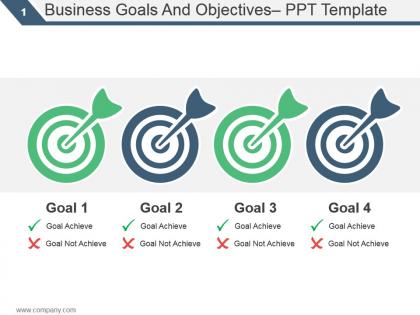




Try Before you Buy Download Free Sample Product
 Impress Your
 Audience
 100%
100% Editable
 Save Hours
 of Time


Enhance the degree of assuredness existing with our Business Goals And Objectives Ppt Template. Be able to grapple with insecurities.
People who downloaded this PowerPoint presentation also viewed the following :
Business goals and objectives ppt template with all 5 slides:
Insist in being ethical with our Business Goals And Objectives Ppt Template. Discredit any dishonest attempts.


FAQs for Business goals and
So basically, goals are your big picture stuff - like "make customers happier." Pretty vague, right? Objectives are where you get specific: "cut response times to under 2 hours" or "hit 90% positive reviews by end of Q3." Goals inspire you and show direction. Objectives? They're your actual game plan with real deadlines you can measure. I usually tell people to pick 2-3 main goals first, then break each one into maybe 3-5 concrete objectives. Way less overwhelming that way, and you'll actually know if you're making progress or just spinning your wheels.
Oh, SMART goals are a game changer! Basically you make them Specific, Measurable, Achievable, Relevant, and Time-bound. Like instead of "increase sales" you'd say "boost Q4 sales 15% from existing customers by Dec 31st." Way better, right? The measurable part is clutch - you need actual numbers to track. Don't set yourself up to fail though. Make sure it's realistic for your timeline and resources. I learned this the hard way lol. Just grab one goal you have now and rewrite it using all five pieces. You'll see the difference immediately.
Honestly, the biggest thing is people actually get *why* they're doing the work - not just what needs done. Your team stops working in these weird silos and starts making calls that help the whole company win. It's kinda like... everyone's finally rowing toward the same shore instead of just splashing around randomly. Collaboration gets way better between departments. Problems get solved faster. People feel more invested because they see how their stuff connects to the bigger picture. Oh, and here's what actually works - kick off every team meeting by tying your current projects back to those main company goals. Game changer.
Honestly? Stick to stuff that keeps you close to customers and cash flow. When markets move fast, people's needs change constantly - so go for goals that help you stay flexible. Think better feedback systems, faster product cycles, operations that can actually bend without breaking. COVID taught me this lesson brutally when our yearly plans became completely worthless in like two weeks. I'd rank everything by how much it helps you pivot, not just whether you hit some number. Also - review monthly instead of quarterly. Gives you way more chances to course-correct before you're totally screwed.
Honestly, market research is like a reality check before you commit to anything big. You don't want to be that person who launches something nobody actually wants, right? I'd start with basic stuff - survey some potential customers, check out what your competitors are doing. It helps you figure out if your goals are realistic or if you're being way too optimistic (guilty of this myself). You'll spot problems early instead of months down the road when it's expensive to fix. Plus it gives you actual data to work with when setting timelines. Way better than just winging it and hoping for the best.
Honestly, quarterly is the sweet spot for deep dives into your business goals. Markets change way too fast for those old-school annual reviews - they're basically useless now. I'd throw in monthly check-ins too, but keep those light. Just quick pulse checks on what's moving and what needs tweaking. The quarterly ones though? Go all out. What's crushing it, what's flopping, external stuff that might shake things up. Don't wait for disaster to strike before you schedule this stuff. Block the time now or it'll never happen - trust me on that one.
Honestly, it depends on what you're trying to accomplish, but you'll want both leading and lagging indicators. Leading ones predict what's coming (website traffic, pipeline stuff) while lagging shows what already went down - revenue, retention rates, profit margins. Don't get sucked into vanity metrics that just look pretty but won't actually move the needle. Pick maybe 3-5 key numbers that connect directly to your goals and stick with tracking those consistently. Oh, and work backwards from what success looks like for you specifically - that's usually the easiest way to figure out which metrics actually matter.
Okay so basically you gotta break down your big goals for each team level. Skip the corporate BS though - just talk like a normal person when explaining stuff. Do the whole-company meetings, smaller team chats, maybe throw up some dashboards people actually look at. Here's the thing - most people forget this part - you need to keep explaining how everyone's daily work ties back to the main company goals. Repetition is annoying but it works. And don't just talk at people, ask them questions too. Otherwise you'll think they get it when they're totally lost.
Honestly, don't just dump new objectives on people - that's a recipe for disaster. You need to loop your team into the "why" first. What's the bigger picture here? How does this actually help them? Get everyone in a room for real discussion. Questions, pushback, whatever - let it happen. Find those one or two people who seem excited about the changes and get them onboard early. They'll do half your work for you. Here's the thing though - give people actual ownership over pieces of the plan. When they help build it, they'll actually care about making it succeed. Way better than the top-down approach most managers try.
So long-term goals are basically your 3-5 year vision - like becoming the market leader or going international. Short-term objectives? Those are your concrete quarterly steps to actually get there. Here's what I've learned though - if your short-term stuff doesn't connect to the bigger picture, you're basically just busy for no reason. The long-term goals give you that north star direction. Short-term ones keep you moving. I'd start with maybe 2-3 big goals, then just break each one down into quarterly chunks with real numbers you can track. Makes everything way less overwhelming honestly.
Honestly, tracking goals is so much easier now with all the automated stuff - dashboards, real-time analytics, alerts that ping you when things change. No more spreadsheet nightmares. There's project management software, KPI tools, even AI that spots trends before you do. The annoying part? Way too many options to choose from lol. Pick something that plays nice with what you're already using and gives you actual useful data, not just fancy graphs that look impressive but tell you nothing. I'd start with maybe two tools max and add more later if you need them.
So basically, your team needs to know what they're actually working toward - otherwise they're just wandering around confused. When people can see how their daily grind connects to the bigger picture, they actually care about the results. Nobody wants to feel like they're doing busy work, you know? I'd break those massive goals into smaller chunks so people can feel like they're winning sometimes. That keeps everyone from burning out. The trick is being specific enough that they can track whether they're making progress or just treading water. Trust me, celebrating those little milestones along the way makes a huge difference.
Honestly, you really need that outside perspective. Your customers and employees see stuff you're completely missing from the inside bubble. I've watched companies create these elaborate plans that totally missed the mark because they never asked anyone what they actually wanted. Kind of embarrassing when you think about it. The feedback shows you if your goals make sense in the real world. Short surveys work great - just ask your key people what they think. When they help build the objectives, they'll actually care about hitting them instead of just going through the motions.
Honestly, failures are just showing you where your expectations didn't match reality. When you miss something, figure out why - bad timing? Not enough resources? Market stuff you missed? I get wanting to just move forward, but that's actually where all the good info is hiding. Those insights help you set way better targets next time. Figure out which assumptions were totally off and maybe build in some extra time or backup plans going forward. The whole point is making those painful moments actually useful - turn them into smarter planning and goals that don't set you up to fail again.
Honestly, the worst thing you can do is be vague - like just saying "make more money" instead of "increase revenue by 15% this quarter." Also don't pile on like 10 goals at once because your team will be all over the place. I've seen this happen so many times. Break big stuff into smaller chunks so you can actually see progress happening. And please explain WHY each goal matters - people work way harder when they get the bigger picture. Start with maybe 3-4 solid goals that are super specific and measurable. Make sure everyone knows how their daily work ties into hitting those targets.
-
Topic best represented with attractive design.
-
Visually stunning presentation, love the content.