


Business productivity management software pitch deck ppt template




Try Before you Buy Download Free Sample Product
 Impress Your
 Audience
 100%
100% Editable
 Save Hours
 of Time


Business productivity management software allows employees to manage notes, tasks, project management, and databases. It focuses on enhancing employee engagement and productivity with customers progress beyond virtualization. Check out our efficiently designed pitch deck on Business Productivity Management Software that will serve as an effective tool in attracting investors by distilling the company in condensed and marketable messages for potential investors. It caters to slides about platform overview, critical issues limiting user experience, identified concerns existing, solutions provided by platform in terms of integrated workspace, and platform features. The pitch deck covers slides about consolidation of essentials at a single platform, demo depicting platform working, enterprise benefits associated with the platform in terms of complete data ownership, dedicated CSM, limitless workspace, etc. The deck will capture investors attention by showcasing the progressive evolution of the platform, the growth potential of the business productivity management software market, competitive assessment of significant players existing, profitable business model, clients associated, key people involved, and board of directors associated. Book a free demo with our research team and customize the pitch deck based on your business needs. Download it now.
People who downloaded this PowerPoint presentation also viewed the following :
Content of this Powerpoint Presentation
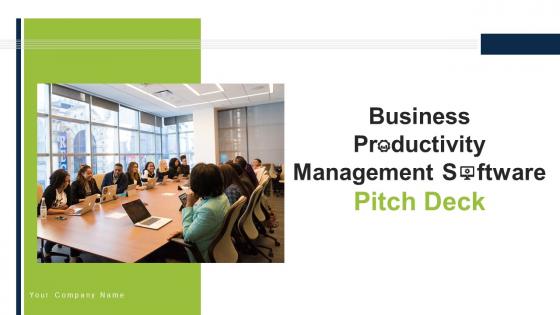
Slide 1: This slide displays a title 'Business Productivity Management Software Pitch Deck'.
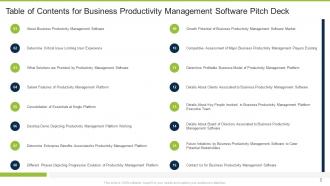
Slide 2: This slide displays the table of Contents for Pitch Deck.
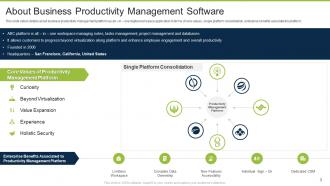
Slide 3: This slide caters to details about business productivity management platform as all – in – one digital workspace application.
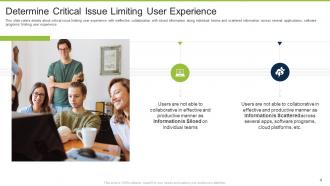
Slide 4: This slide caters to details about critical issue limiting user experience.
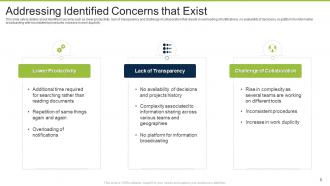
Slide 5: This slide caters to details about identified concerns such as lower productivity, lack of transparency etc.
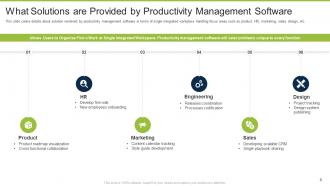
Slide 6: This slide caters to details about solution rendered by productivity management software.
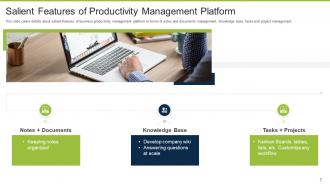
Slide 7: This slide caters to details about salient features of business productivity management platform in terms of notes and documents management etc.
Slide 8: This slide caters to details about consolidation of essentials and developing single platform of every document, application and software program.
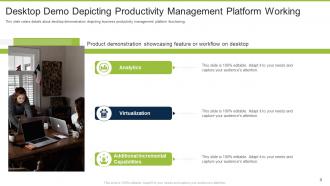
Slide 9: This slide caters to details about desktop demonstration depicting business productivity management platform functioning.
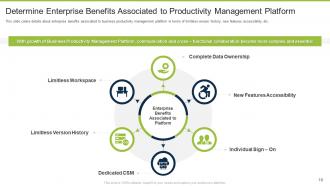
Slide 10: This slide caters to details about enterprise benefits associated to business productivity management platform.
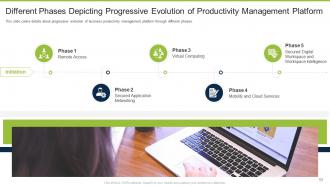
Slide 11: This slide caters to details about progressive evolution of business productivity management platform through different phases.
Slide 12: This slide caters to details about growth potential of business productivity management software market.
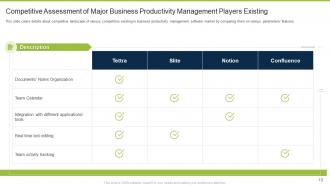
Slide 13: This slide caters to details about competitive landscape of various competitors existing in business productivity management software market.
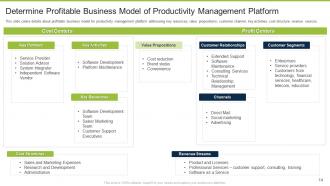
Slide 14: This slide caters to details about profitable business model for productivity management platform addressing key resources etc.
Slide 15: This slide caters to details about clients associated with business productivity management software platform.
Slide 16: This slide caters to details about key people associated with business productivity management platform executive team.
Slide 17: This slide caters to details about board of directors associated with business productivity management software platform.
Slide 18: This slide caters to details about future initiatives by productivity management platform.
Slide 19: This slide displays the Contact Us details for Business Productivity Management Software.
Slide 20: This slide presents the title additional Slides.
Slide 21: This is an icons Slide.
Slide 22: This slide presents company's target.
Slide 23: This slide shows the roadmap for Process Flow.
Slide 24: This slide shows post it Notes.
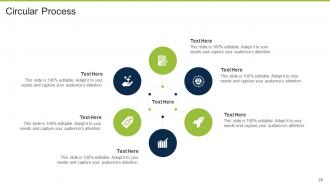
Slide 25: This slide presents a circular process.
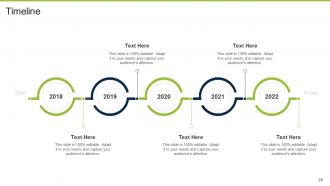
Slide 26: This slide presents a timeline over four years starting from 2018.
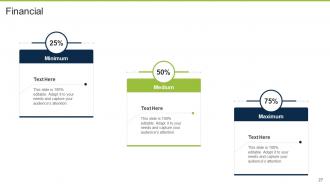
Slide 27: This slide shocases the company's financials.
Slide 28: This slide exhibits a Mind Map.
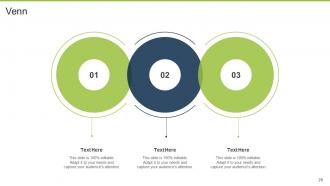
Slide 29: This slide displays a Venn.
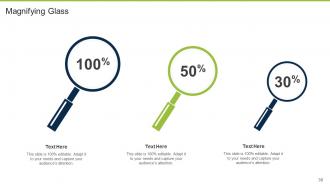
Slide 30: This slide shows a Magnifying Glass.
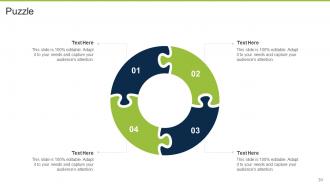
Slide 31: This slide displays a puzzle.
Slide 32: This is a 'Thank You' slide with address, phone numbe ec.
Business productivity management software pitch deck ppt template with all 32 slides:
Use our Business Productivity Management Software Pitch Deck Ppt Template to effectively help you save your valuable time. They are readymade to fit into any presentation structure.





FAQs for Business productivity management software pitch
Businesses should look for features like task management, team collaboration tools, file sharing capabilities, integration with existing systems, and robust reporting analytics. These functionalities streamline operations by centralizing workflows, enhancing communication, and automating routine processes, with many organizations finding that strategic software selection ultimately delivers improved efficiency and competitive advantage across departments.
Business productivity software enhances team collaboration through real-time document sharing, instant messaging, video conferencing, project management dashboards, and centralized file storage systems. These integrated platforms streamline workflows by eliminating email bottlenecks, enabling simultaneous editing, and providing transparent project visibility, with many organizations finding that unified communication tools reduce meeting time while accelerating decision-making processes.
Automation streamlines repetitive tasks, reduces manual errors, and accelerates workflows by handling data entry, scheduling, report generation, and routine communications. Through intelligent software solutions, organizations enhance operational efficiency, minimize resource allocation to mundane activities, and enable employees to focus on strategic initiatives, ultimately delivering faster turnaround times and improved competitive advantage.
Different industries benefit from specialized business productivity tools through tailored workflows, industry-specific compliance features, and customized reporting capabilities that address unique operational challenges. Healthcare organizations streamline patient management and regulatory compliance, financial services enhance risk assessment and client tracking, while manufacturing optimizes supply chain coordination and quality control, ultimately delivering improved efficiency and competitive advantage across sectors.
Organizations face challenges including employee resistance to change, integration complexities with existing systems, inadequate training programs, data migration issues, and insufficient customization for specific workflows. While these implementation hurdles can initially slow adoption, many companies find that strategic planning, comprehensive training, and phased rollouts ultimately deliver enhanced efficiency, streamlined operations, and significant competitive advantages.
Businesses can measure productivity software ROI through metrics like time savings, cost reduction, error minimization, and employee efficiency gains, typically tracking before-and-after performance indicators. Many organizations find that comprehensive analytics dashboards, user adoption rates, and process automation outcomes deliver quantifiable results within 6-12 months, ultimately demonstrating competitive advantage through streamlined operations.
Mobile access significantly enhances productivity software effectiveness by enabling real-time collaboration, seamless workflow continuity, and instant decision-making capabilities across distributed teams. This mobility empowers sales teams to update CRM data on-site, allows project managers to approve requests instantly, and enables executives to access critical dashboards anywhere, ultimately delivering faster response times and competitive advantage.
Productivity software integrates with existing business systems through APIs, cloud-based platforms, single sign-on authentication, data synchronization protocols, and enterprise resource planning connections. These integrations streamline workflows by eliminating data silos, automating task transfers between applications, and enabling real-time information sharing, with many organizations finding significantly enhanced operational efficiency and reduced manual processes.
Best practices for training employees on new productivity tools include creating role-specific training modules, providing hands-on practice sessions, establishing peer mentorship programs, offering ongoing support resources, and implementing gradual rollout phases. These approaches enhance adoption rates by addressing diverse learning styles, minimizing workflow disruption, and building confidence, with many organizations finding that structured training programs increase productivity tool utilization by 60-80% while reducing implementation resistance.
User-friendly interfaces significantly accelerate productivity software adoption by reducing training time, minimizing user resistance, and enabling faster implementation across organizations. When employees can navigate tools intuitively, companies experience higher engagement rates, reduced support costs, and quicker return on investment, with many organizations finding that intuitive design ultimately drives sustainable usage and competitive advantage.
Businesses should consider data encryption standards, user access controls, compliance certifications, backup protocols, and vendor security track records when selecting productivity software. These security measures protect sensitive information through multi-factor authentication, regular security updates, and data breach protection, with many organizations finding that robust security frameworks ultimately enhance operational confidence while maintaining competitive advantage.
Analytics within productivity software provide insights by tracking task completion rates, identifying workflow bottlenecks, measuring team collaboration patterns, and monitoring resource allocation efficiency. These data-driven insights enable organizations to streamline processes, optimize team performance, and reduce operational costs, with many companies finding that continuous monitoring ultimately delivers enhanced productivity and competitive advantage.
**INPUT**: What future trends in business productivity software should companies be aware of? **OUTPUT**: Future trends in business productivity software include AI-powered automation, collaborative workspaces, integration platforms, predictive analytics, and mobile-first design. These technologies streamline operations by reducing manual tasks, enhancing team collaboration, and delivering real-time insights, with many organizations finding that strategic adoption ultimately drives competitive advantage and operational efficiency. **Word count: 52 words**
Cloud-based productivity software offers greater flexibility, automatic updates, remote accessibility, and lower upfront costs, while on-premise solutions provide enhanced data control, customization options, and security oversight. Many organizations find that cloud solutions streamline collaboration and reduce IT maintenance burdens, though enterprises with strict compliance requirements often prefer on-premise deployments for strategic data governance.
User feedback drives productivity software development by identifying pain points, workflow inefficiencies, feature gaps, usability challenges, and integration needs that developers might overlook. Through surveys, beta testing, and usage analytics, software companies can prioritize enhancements that streamline operations, reduce manual tasks, and improve user adoption rates, with many organizations finding that feedback-driven features ultimately deliver measurable productivity gains and stronger competitive positioning.
-
Best way of representation of the topic.