


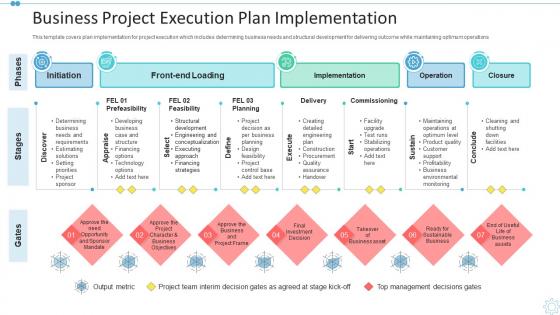
Business project execution plan implementation




Try Before you Buy Download Free Sample Product
 Impress Your
 Audience
 100%
100% Editable
 Save Hours
 of Time


Our Business Project Execution Plan Implementation are topically designed to provide an attractive backdrop to any subject. Use them to look like a presentation pro.
People who downloaded this PowerPoint presentation also viewed the following :
Business project execution plan implementation with all 2 slides:
Use our Business Project Execution Plan Implementation to effectively help you save your valuable time. They are readymade to fit into any presentation structure.
FAQs for Business project
Start with project scope and timeline - that's your foundation. Budget and team roles come next, plus figure out what tools you'll need. Honestly, the risk assessment part is where most people slack off, but it'll save your butt later. Set up clear communication rules so nobody's confused about updates. Success metrics are huge - define those early or you'll be scrambling to prove ROI at the end. Don't forget change management because clients always want "just one small addition" that derails everything. A simple template works fine, just tweak it for whatever you're actually building.
Honestly, having a good execution plan saves you so much headache. No more confusion about who's supposed to do what or when things are due. Your stakeholders can actually see what's happening and when they need to jump in - makes them way more helpful instead of just pestering you for updates. Status reports basically write themselves when everything's laid out clearly. The trick is keeping it somewhere everyone can find it and actually updating the damn thing regularly. Otherwise you're just creating fancy documentation that nobody looks at (been there!).
Look, risk management is just having a backup plan so your project doesn't completely fall apart. During planning, figure out what might go wrong - money issues, team conflicts, missed deadlines. Then actually build solutions into your timeline and budget from the start. I've watched so many projects explode because people didn't think ahead. Being proactive beats scrambling later, trust me. Do a quick risk check early on, then bake those contingencies right into everything. Way better than crossing your fingers and hoping nothing breaks.
So here's the thing - tie your milestones to actual deliverables, not just random calendar dates. Think "requirements locked down" or "prototype demo ready." I learned this the hard way on my last project lol. Make them super specific too, none of that "we're halfway done" garbage that means nothing. Space them out every 2-4 weeks max. That way if stuff starts going wrong, you'll catch it early. Each one should trigger a quick team huddle to check where you're at. The best part? Connect milestone hits to budget approvals or moving to the next phase. Suddenly everyone cares way more about actually finishing things.
Communication is everything - people need to know what they're doing AND why it actually matters. Those regular check-ins? Make them about action, not just boring status updates. Here's what really works: get your team involved in the planning from the start. Trust me, they'll care way more than if you just tell them what to do. Keep decisions documented somewhere everyone can see. Oh, and create space for feedback - like, actual feedback where people won't feel like they're being annoying. Honestly, most managers skip this part and wonder why things fall apart. Think of alignment as an ongoing thing, not something you announce once and forget about.
Honestly, you've gotta nail down what "success" actually means before you even start - otherwise you're just guessing later. I always track the basics: budget, timeline, quality, and whether people are happy with what we delivered. A simple red/yellow/green dashboard works wonders for catching problems early. Regular team check-ins are clutch too. Don't wait until the project's almost done to realize you're off track - that's when panic sets in and everything goes sideways. The whole thing falls apart if you try defining success halfway through when deadlines are breathing down your neck.
Honestly, Asana or Monday.com are probably your best bet for tracking projects. Microsoft Project works too but it's kinda overkill unless you're doing something massive. Don't overthink the tool choice though - I've literally seen teams waste weeks debating software when they could've just used Google Sheets. Pick whatever your team will actually open and update regularly. Gantt charts are clutch for timeline stuff, but if your workflow changes a lot, go with Kanban boards instead. Start with something that plays nice with whatever you're already using. You can always switch later once you figure out what you actually need.
Honestly, the trick is breaking everything into specific work packages with real milestones - don't just wing it with round numbers like most people do. Track your actual spend against what you planned every week, not just at month-end when it's too late. Get detailed with labor, materials, overhead costs upfront. Weekly budget reviews at each phase will catch problems early. For complex projects, earned value management is clutch because it shows if you're both behind schedule AND over budget at the same time. Oh, and set up alerts when you hit 80% of any budget line - that way you're not scrambling later.
Oh man, the timeline thing gets everyone - we're all terrible at estimating how long stuff actually takes. Map out your dependencies first though, that's huge. I've watched so many projects blow up because someone forgot to check what relies on what. Risk assessment sounds boring but skip it and you're screwed. Also define what "done" means for each piece (I know, I know, but people really don't do this). Getting everyone on board upfront saves you from scope creep hell later. Honestly? Just add buffer time to everything. Future you will be grateful.
Don't treat change management like something you tack on at the end - that's honestly where I've seen most projects crash and burn. Figure out who's getting hit by these changes upfront. Then build your communication and training right into the timeline from day one. You've gotta map out where people will push back (and trust me, they will). Make change activities actual deliverables with real owners and deadlines, same as any other task. Budget extra time for all the inevitable questions and resistance - people hate change, even good change.
Honestly, just get your people in the room early and have them break down what they'll actually be doing. They know all the messy details you don't. I can't tell you how many times I've watched plans blow up because someone thought a task would take 2 hours when it's really a 2-day nightmare. Let them estimate their own stuff and call out what they need from other teams. Those collaborative sessions where everyone flags potential issues? Pure gold. The folks doing the actual work always spot problems you'd never think of, so why not use that from the start?
So you want both the hard numbers and the softer stuff. Start with your big four: hitting milestones, budget variance, scope creep, and quality of what you're delivering. Resource utilization is huge too - honestly, most PMs sleep on this one. Team velocity tells you way more than you'd think. Then throw in stakeholder satisfaction and how well you're handling risks. Don't go crazy though, pick like 5-7 metrics that actually matter for YOUR project specifically. I'd set up some basic dashboard you can check weekly with the team. Way better than drowning in data you'll never use.
Okay so timeline management - it's literally what keeps your whole project from falling apart. Break everything down into smaller chunks with some extra time padded in (trust me on this). You'll catch problems early and your team won't want to murder you when crunch time hits. Weekly check-ins are clutch for spotting when things start going sideways. Stakeholders love knowing what to expect and when. I learned this the hard way on a project that went completely off the rails. Buffer time is your best friend - seriously, double whatever you think you need.
Ugh, that's rough. First thing - take a hard look at your timeline and budget to see what's actually doable now. Write down what went sideways and why (trust me, you'll forget the details later and repeat the same mistakes). Focus on deliverables that'll have the biggest business impact, not just the quick wins. I know it sucks, but tell your stakeholders ASAP even if you're still figuring things out. People hate surprises way more than bad news delivered early. Then update your risk planning so this doesn't blindside you again next time.
Build those check-ins right into your timeline from day one - weekly retros, milestone reviews, quick stakeholder pulse checks. Create easy ways for people to give feedback: simple surveys, one-on-ones, or just a shared doc where they can dump thoughts whenever. Schedule everything upfront before execution starts, otherwise it'll never happen when deadlines hit. Here's the thing though - you absolutely have to act on what people tell you. If you collect feedback but don't do anything with it, people will stop bothering to share and your whole system falls apart.
-
Appreciate the research and its presentable format.
-
Unique design & color.
-
Enough space for editing and adding your own content.