


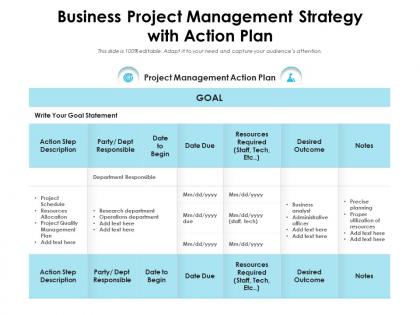
Business project management strategy with action plan




Try Before you Buy Download Free Sample Product
 Impress Your
 Audience
 100%
100% Editable
 Save Hours
 of Time


Our Business Project Management Strategy With Action Plan are topically designed to provide an attractive backdrop to any subject. Use them to look like a presentation pro.
People who downloaded this PowerPoint presentation also viewed the following :
Business project management strategy with action plan with all 2 slides:
Use our Business Project Management Strategy With Action Plan to effectively help you save your valuable time. They are readymade to fit into any presentation structure.
FAQs for Business project management strategy
Honestly? Focus on initiation, planning, and monitoring - those three will make or break everything. Initiation is where you nail down scope and get everyone on board. Planning's huge too - map out your timeline, figure out resources, think through what could go wrong. Then you've gotta monitor constantly during execution or things drift off course fast. Yeah, closing matters for capturing lessons learned and all that. But real talk, most projects crash and burn way before that point. My biggest tip is don't rush the planning phase, even when people are breathing down your neck to start. Trust me, you'll thank yourself later.
Your methodology basically sets the whole vibe for your project. Waterfall's great when you need predictable timelines and those clear checkboxes stakeholders love. But honestly? If requirements shift halfway through, you're screwed and have to backtrack. Agile's the opposite - super flexible, you can pivot fast and show progress regularly. Downside is it feels messy when people want concrete deadlines. I've watched Waterfall crush it on regulatory stuff where scope can't budge. Agile works better for new products where you're learning as you go. Really depends on how much uncertainty you're dealing with.
Honestly, just pick one tool for each thing and don't overthink it. Slack's great for daily chat, though Teams works too if you're already using Microsoft stuff. Project tracking - Asana, Monday, Trello, whatever. The key is getting everyone to actually stick with it (good luck with that lol). You definitely need Zoom or Teams for video calls. Google Workspace is solid for shared docs, or SharePoint if you're in the Microsoft ecosystem. I'd start simple with maybe 2-3 tools max. You can always add more later once people get used to the workflow.
Look, you've gotta build risk planning into your project from the very start - can't just wing it and hope for the best. During your initial planning, list out what could go wrong and rate each risk by how likely it is and how bad it'd be. The big scary ones? Plan for them now and pad your timeline accordingly. I swear, half the projects I've watched fail could've been saved with just this basic step. Keep updating that risk list as things change too. Oh, and throw in a quick 10-minute risk chat during your regular team meetings. Trust me on this one.
Dude, stakeholder engagement can totally make or break your project. You want these people on your side, not working against you. Map out who's got influence early on - figure out who actually cares about this thing succeeding. Keep them in the loop with regular updates because they'll catch stuff you missed. Trust me on this one. When stakeholders feel left out, that's when you get scope creep and budget drama. They'll start pushing back on everything. But if you've got them bought in from the start? Way smoother sailing. Create some kind of communication plan so nobody feels blindsided later.
Focus on the basics first - budget variance, schedule, and scope completion. Dashboards are your friend here, real-time data beats guessing every time. Earned value management sounds intimidating but it's actually pretty straightforward - just comparing planned vs actual spending against work done. Oh, and don't forget stakeholder feedback through quick surveys or casual check-ins. Honestly, catching problems early is way better than scrambling at the end. Pick maybe 3-5 metrics that actually matter for your project and stick with them religiously.
Definitely overcommunicate - like way more than feels normal. Daily check-ins help but don't just do boring status stuff, actually ask how people are feeling. Slack or whatever tool works for keeping everyone looped in. The isolation thing is brutal honestly. Try virtual coffee breaks or random team hangouts when you can swing it. Be super clear about deadlines and who's doing what. Write everything down because people forget conversations (I do this constantly). Oh and those weekly one-on-ones? Game changer for catching issues early.
Document everything upfront - scope, deliverables, all of it. Stakeholders will definitely ask for "quick additions" later. Don't just say yes to make them happy though. Each request needs evaluation: does it fit your goals? What's the timeline impact? Budget hit? Present options to your sponsor with real numbers. Get written approval before moving forward - seriously, this saves your butt later. Oh, and create some kind of change request form. Sounds boring but you'll actually use it for anything beyond the original deal. Catching scope creep early beats scrambling at the end.
Check your old similar projects first - that data is pure gold. Three-point estimates help too (best case, worst case, realistic). Breaking everything down into smaller chunks is a pain but crazy accurate. Honestly, get your team involved since they're doing the actual work and spot things you'll miss. Bottom-up estimating takes forever but it's worth it. Oh, and start tracking your estimated vs actual costs now - you'll be so glad you did later. Historical data really is your best friend here.
Honestly, company culture can totally tank your project before it even starts. Those old-school hierarchical places? Good luck getting a decision - it'll sit on someone's desk for weeks. Way different when teams actually talk to each other and aren't scared to try new things. I've watched solid plans crash because departments wouldn't share resources or info. Matrix setups help since you can grab what you need faster. Here's what works: figure out who actually calls the shots (not just the org chart) and how news travels around. Then build your approach around that mess instead of fighting it.
Honestly, communication is probably the biggest one - you're constantly explaining stuff and mediating between people who don't get along. Time management's critical too since you're always juggling like five different deadlines. I'd also work on risk assessment because problems will absolutely try to torpedo your project (learned that the hard way lol). Leadership skills matter even when you're not technically anyone's boss, which is weird but true. Oh, and stakeholder management - basically keeping everyone happy without losing your mind. I'd pick whatever you suck at most right now and focus there first.
Honestly, just make a basic template - what worked, what sucked, and what you'd do differently. Write this stuff down RIGHT after hitting milestones because I swear you'll forget everything important within a week. Put it somewhere your team actually uses, not some random shared drive that's basically a digital graveyard. Make it searchable by project type or whatever challenge you faced. Then - and here's the part most people skip - actually spend 10-15 minutes before new projects reading through similar situations you've dealt with before. Sounds obvious but it's crazy how often we repeat the exact same screwups.
Honestly, communication is everything - set up daily check-ins or whatever works for your team. Make sure people actually know what they're supposed to be doing and how it fits with everyone else's stuff. I swear by tools like Trello for keeping things visible (probably sounds basic but it works). The bigger thing though? People need to feel safe speaking up without getting shut down. Run retrospectives regularly so you can fix problems fast. Oh, and don't just talk about transparency - actually do it and listen when your team tells you something.
Look, first thing - figure out what the company actually wants to accomplish, not just what's in your project brief. Set up regular check-ins with stakeholders so you don't go off track. I've watched too many projects nail the technical stuff but completely whiff on strategy, which honestly sucks for everyone involved. Map your deliverables straight to business outcomes and KPIs. When scope creep hits (it always does), weigh those changes against company goals, not your precious timeline. Keep asking yourself "does this actually matter to the business?" Pretty simple but most people skip it.
Honestly? Scope creep will kill you every time - clients always want "just one tiny addition" then act shocked when deadlines slip. Also unrealistic timelines and crappy communication between everyone involved. Here's what actually works: get the project scope locked down first, then make any changes go through proper approval (I learned this the hard way). Always pad your timeline because stuff takes longer than you think. Way longer sometimes. Check in with people constantly rather than assuming everyone's on the same page. Oh, and pick one project tool that people will actually use - not some overcomplicated thing that sits there gathering dust.
-
Great product with effective design. Helped a lot in our corporate presentations. Easy to edit and stunning visuals.
-
Awesome presentation, really professional and easy to edit.