


Business strategic planning powerpoint presentation slides
Our Business Strategic Planning Powerpoint Presentation Slides are topically designed to provide an attractive backdrop to any subject. Use them to look like a presentation pro.


























-

- Google Slides is a new FREE Presentation software from Google.
- All our content is 100% compatible with Google Slides.
- Just download our designs, and upload them to Google Slides and they will work automatically.
- Amaze your audience with SlideTeam and Google Slides.
-

Want Changes to This PPT Slide? Check out our Presentation Design Services
-

- WideScreen Aspect ratio is becoming a very popular format. When you download this product, the downloaded ZIP will contain this product in both standard and widescreen format.
-

- Some older products that we have may only be in standard format, but they can easily be converted to widescreen.
- To do this, please open the SlideTeam product in Powerpoint, and go to
- Design ( On the top bar) -> Page Setup -> and select "On-screen Show (16:9)” in the drop down for "Slides Sized for".
- The slide or theme will change to widescreen, and all graphics will adjust automatically. You can similarly convert our content to any other desired screen aspect ratio.
Compatible With Google Slides

Get This In WideScreen
You must be logged in to download this presentation.


Do you want to remove this product from your favourites?
PowerPoint presentation slides
Presenting our Business Strategic Planning PowerPoint Presentation Slides. The template is fully editable in PowerPoint and compatible with Google Slides as well. You can adapt the slideshow according to your unique business requirements. Add your text, image, or icon with ease. The template can be converted into different formats such as JPG, PDF, etc. without any hassle. High-quality graphics ensure an attention-grabbing presentation. Additionally, it is available in both 4:3 and 16:9 aspect ratios.

People who downloaded this PowerPoint presentation also viewed the following :
Content of this Powerpoint Presentation
Slide 1: This is the cover slide of Business Strategic Planning PowerPoint Presentation.
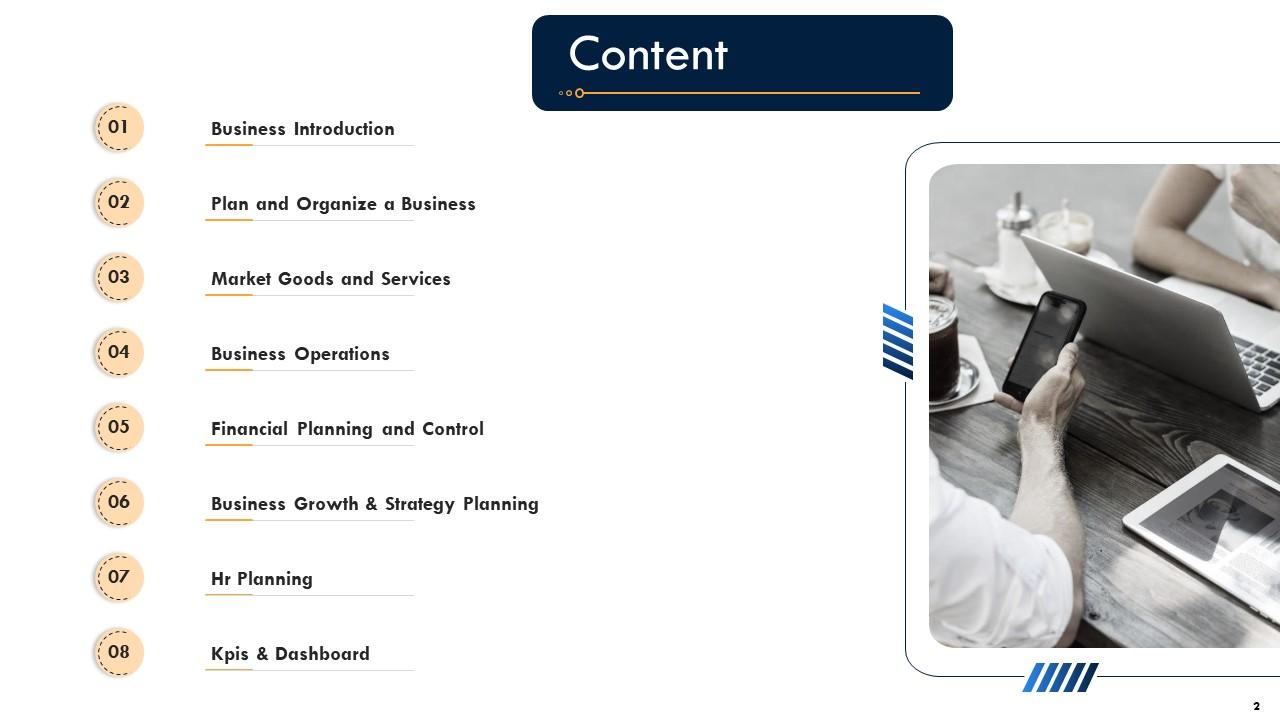
Slide 2: This is the Table of Contents slide that lists out all the essential elements covered in the deck.
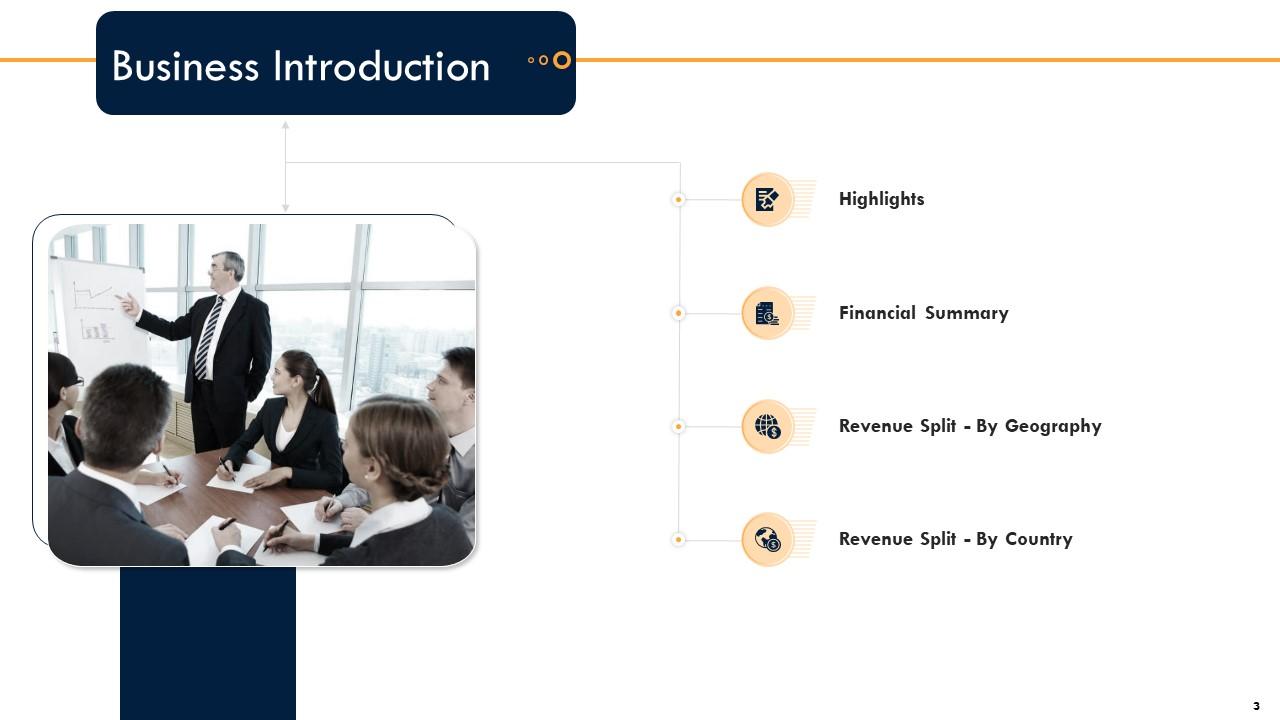
Slide 3: This slide provides Business Introduction.
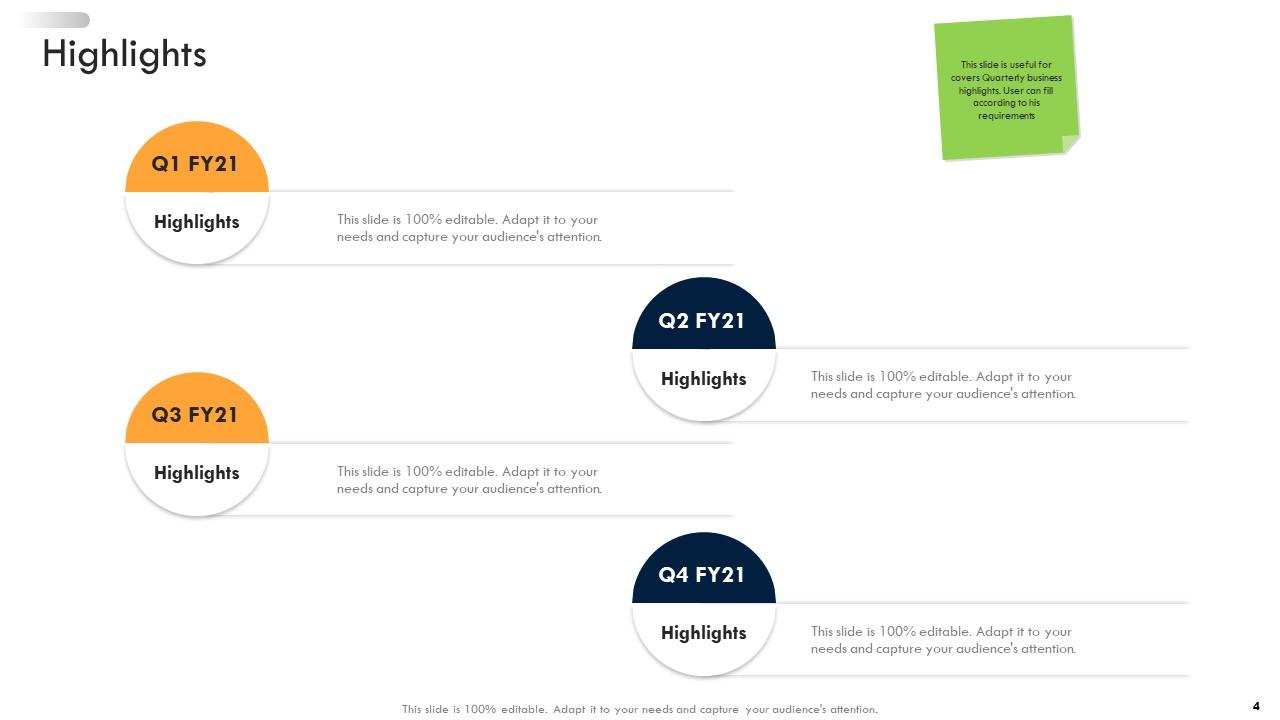
Slide 4: This slide is useful for covers Quarterly business highlights. User can fill according to his requirements
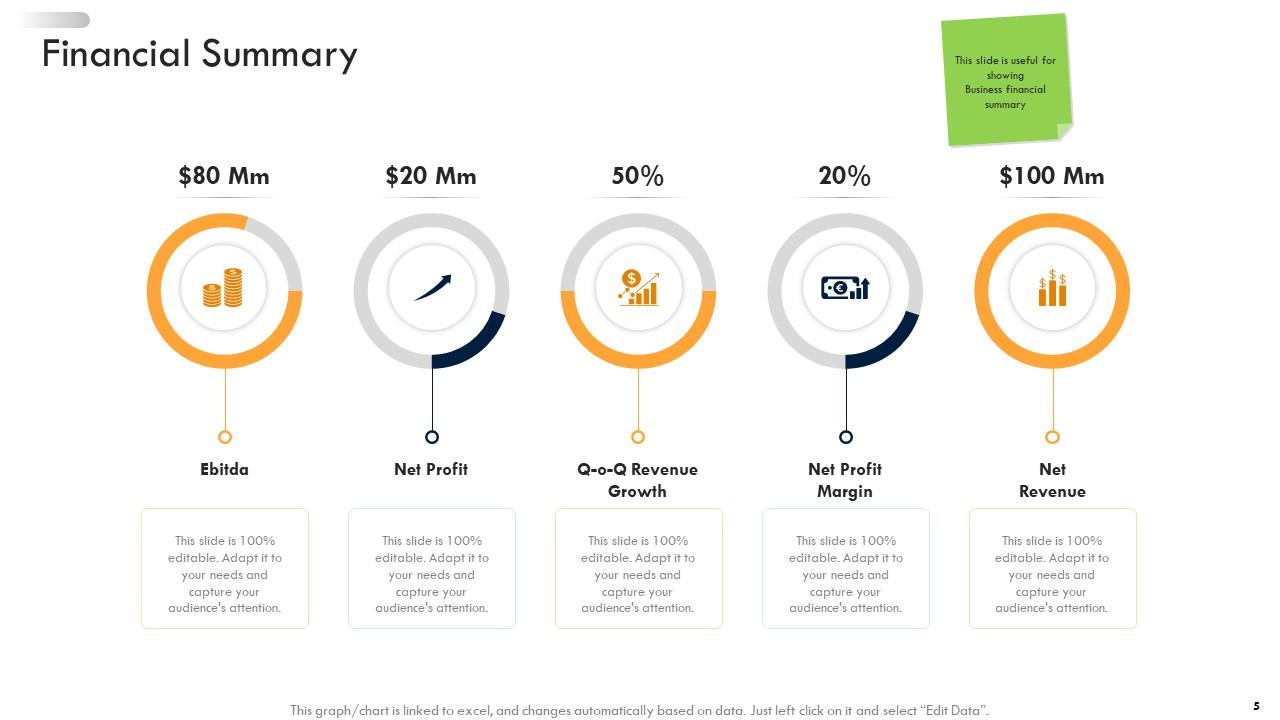
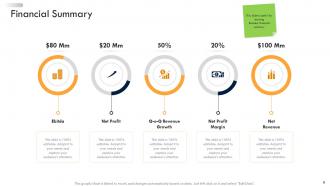
Slide 5: This slide is useful for showing Business financial summary.
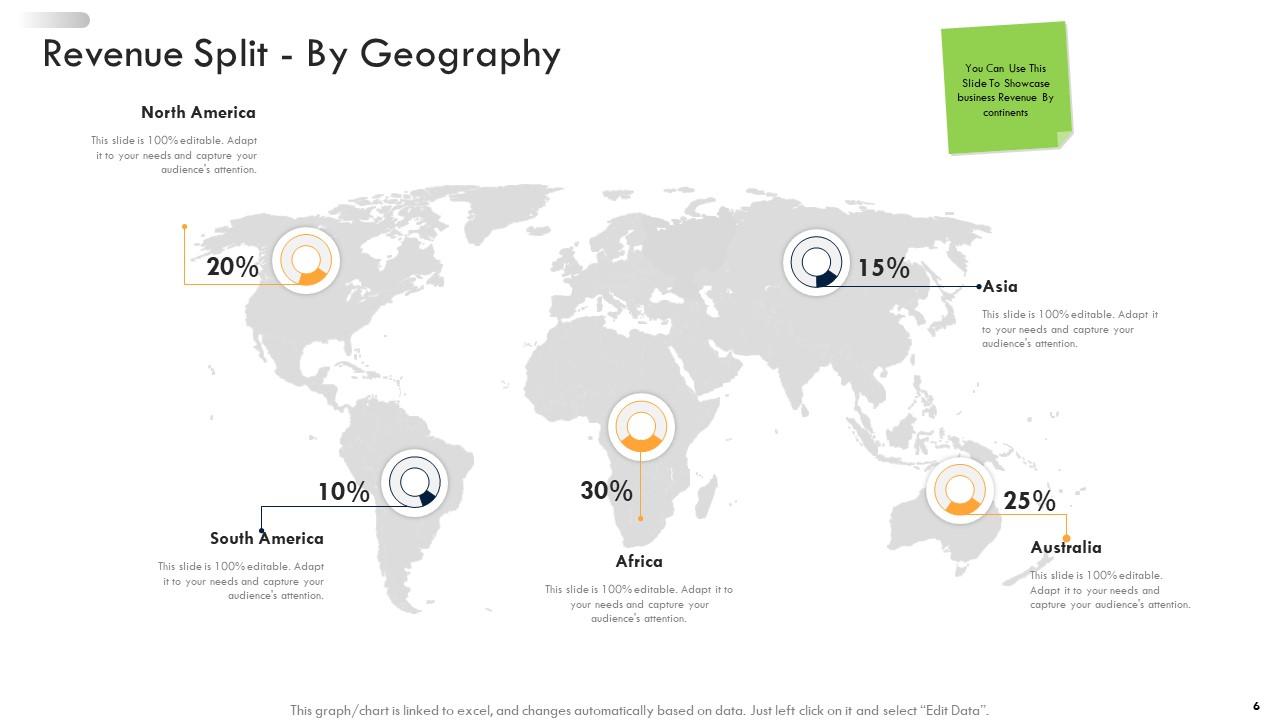
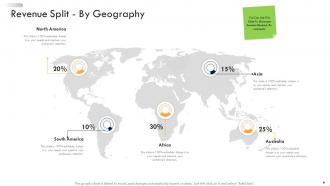
Slide 6: This Slide can be used to Showcase business Revenue By continents.
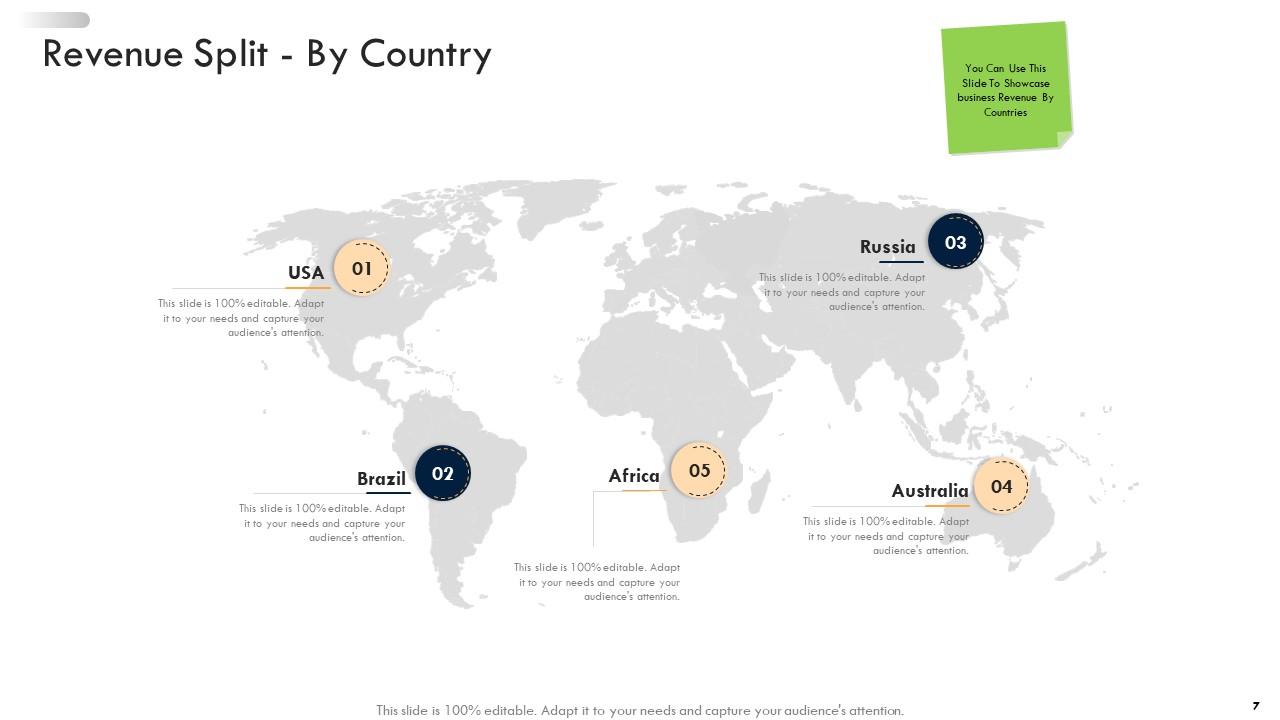
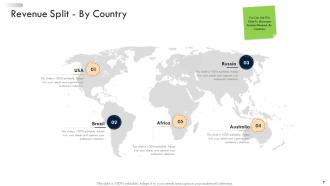
Slide 7: This slide can be used to Showcase business Revenue By Countries.
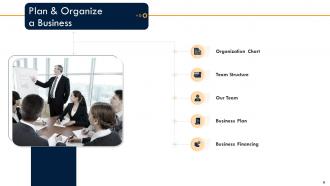
Slide 8: This slide presents Planning & Organize a Business.
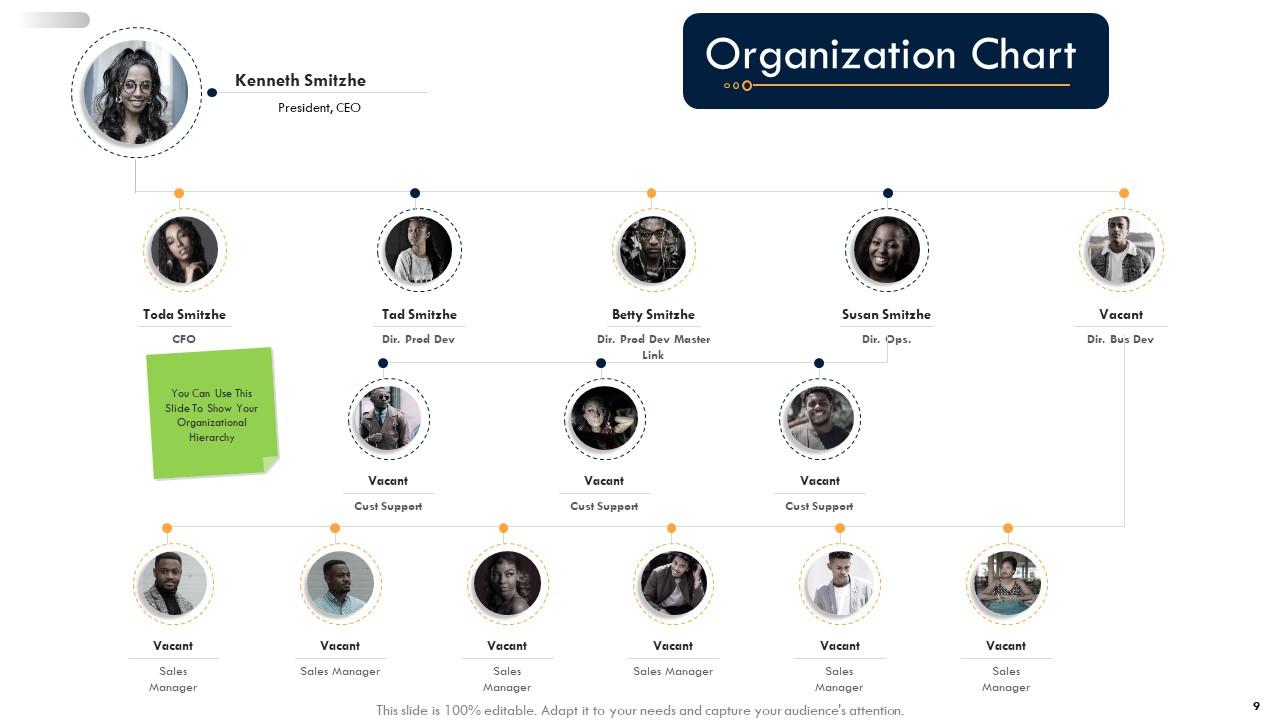
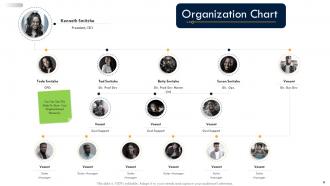
Slide 9: This Slide can be used to Show Your Organizational Hierarchy.
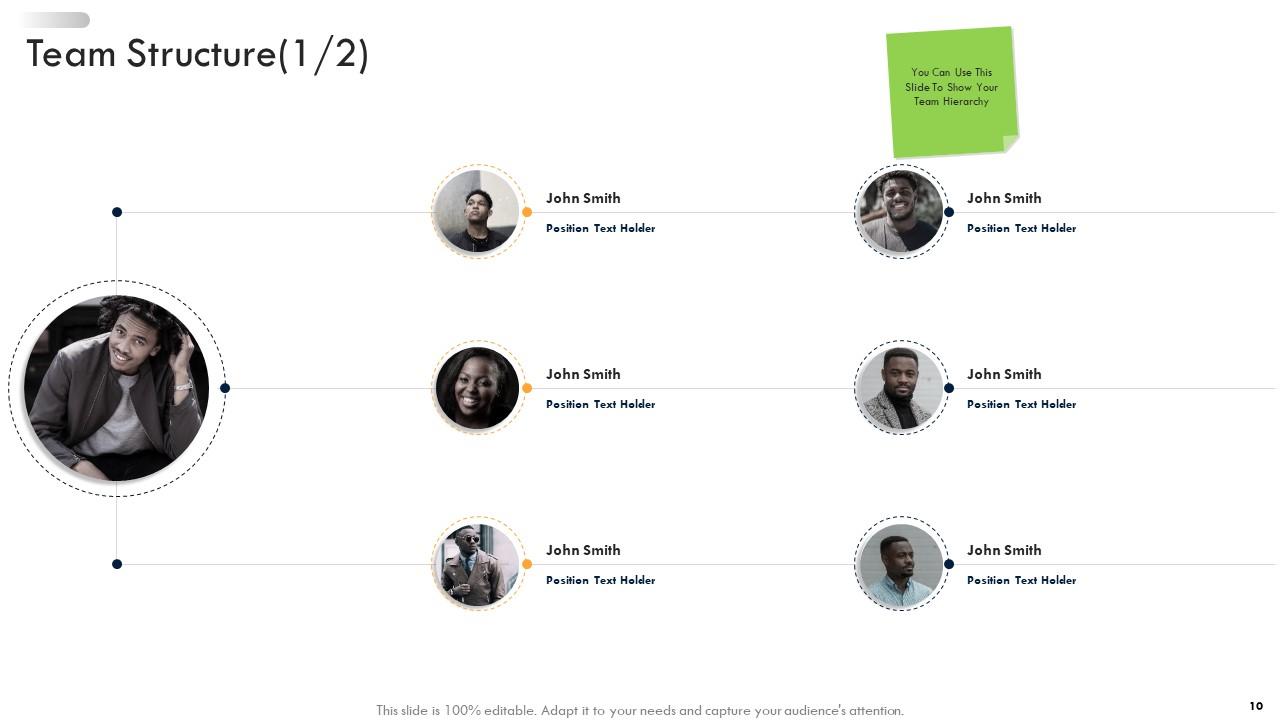
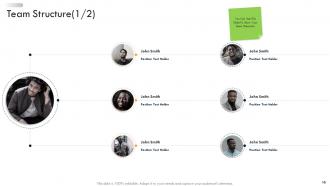
Slide 10: This slide can be used to Show Your Team Hierarchy.
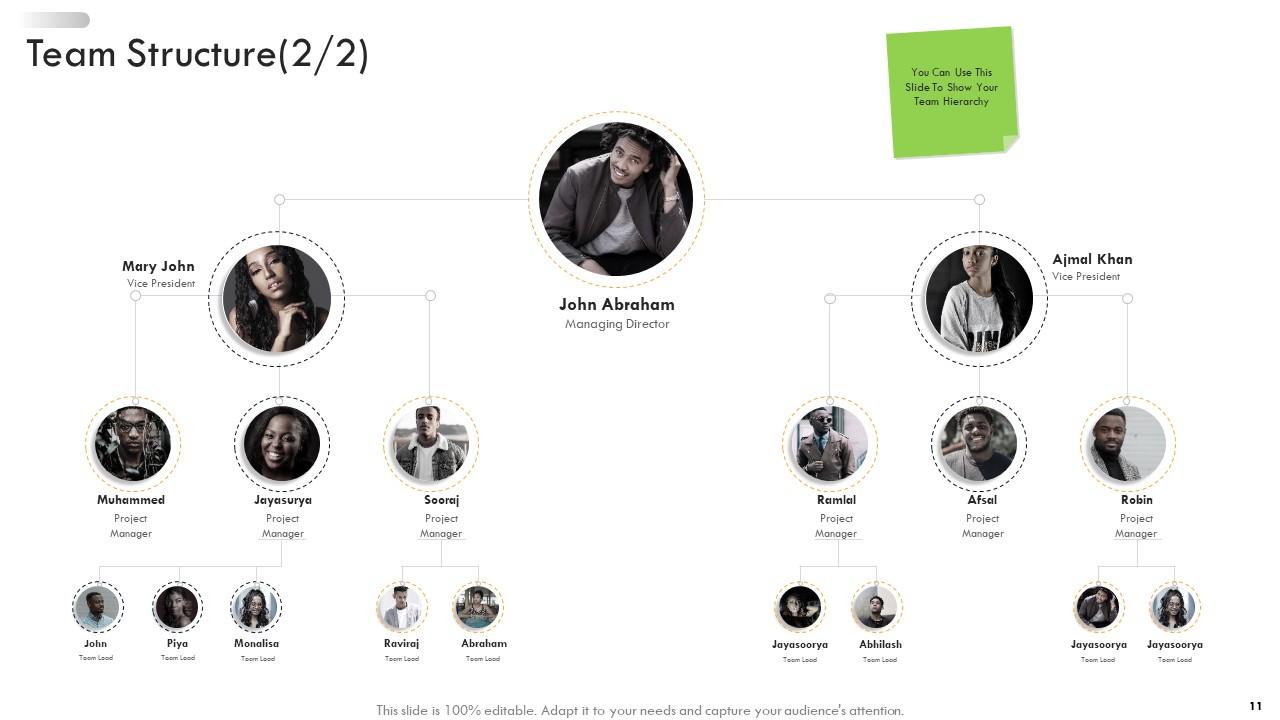
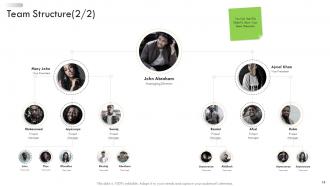
Slide 11: This slide can be used to Show Your Team Hierarchy.
Slide 12: This Slide Is Used To Introduce Your Team.
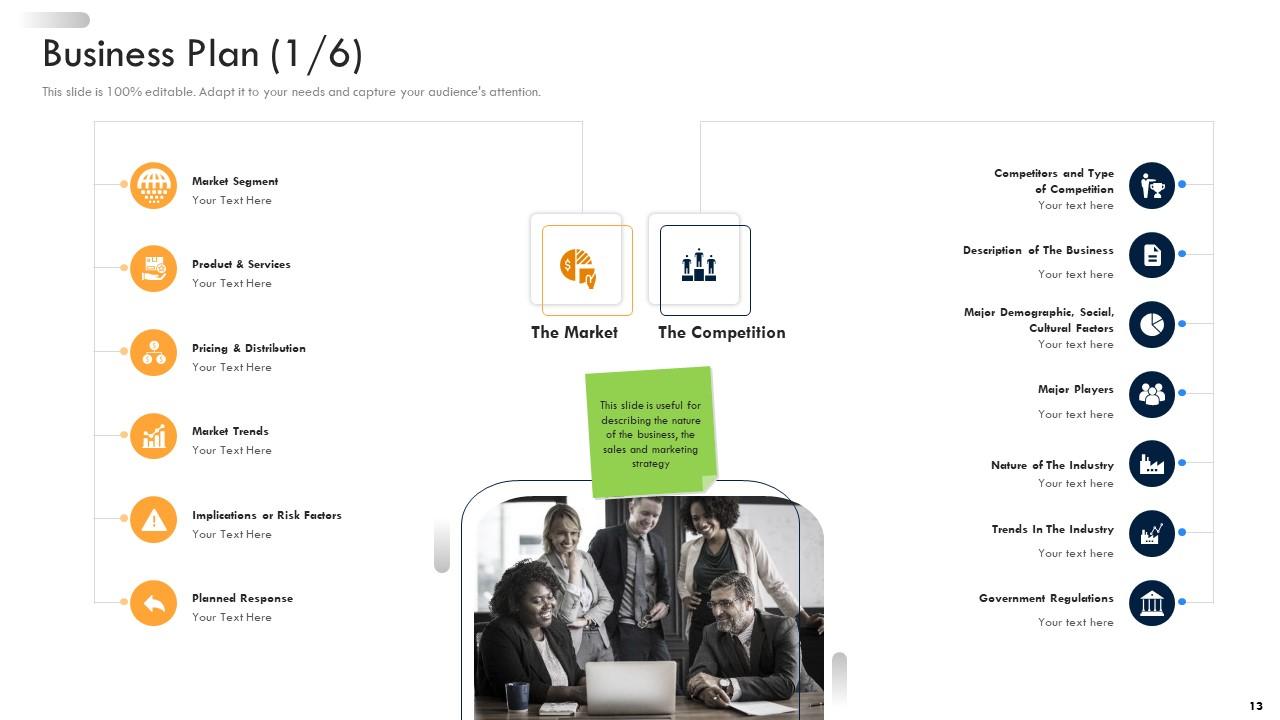
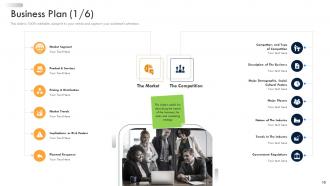
Slide 13: This slide is useful for describing the nature of the business, the sales and marketing strategy
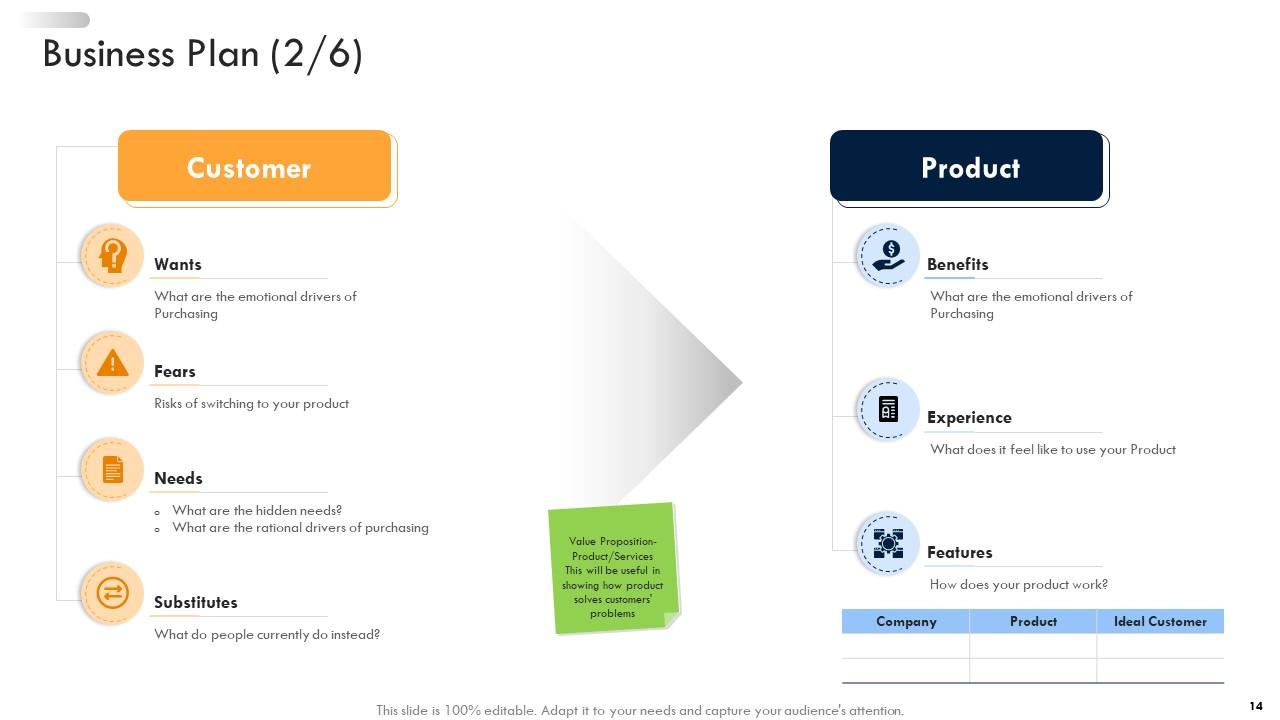
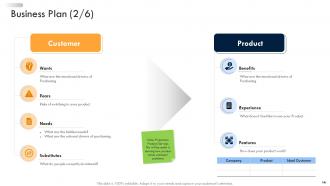
Slide 14: This slide will be useful in showing how product solves customers' problems
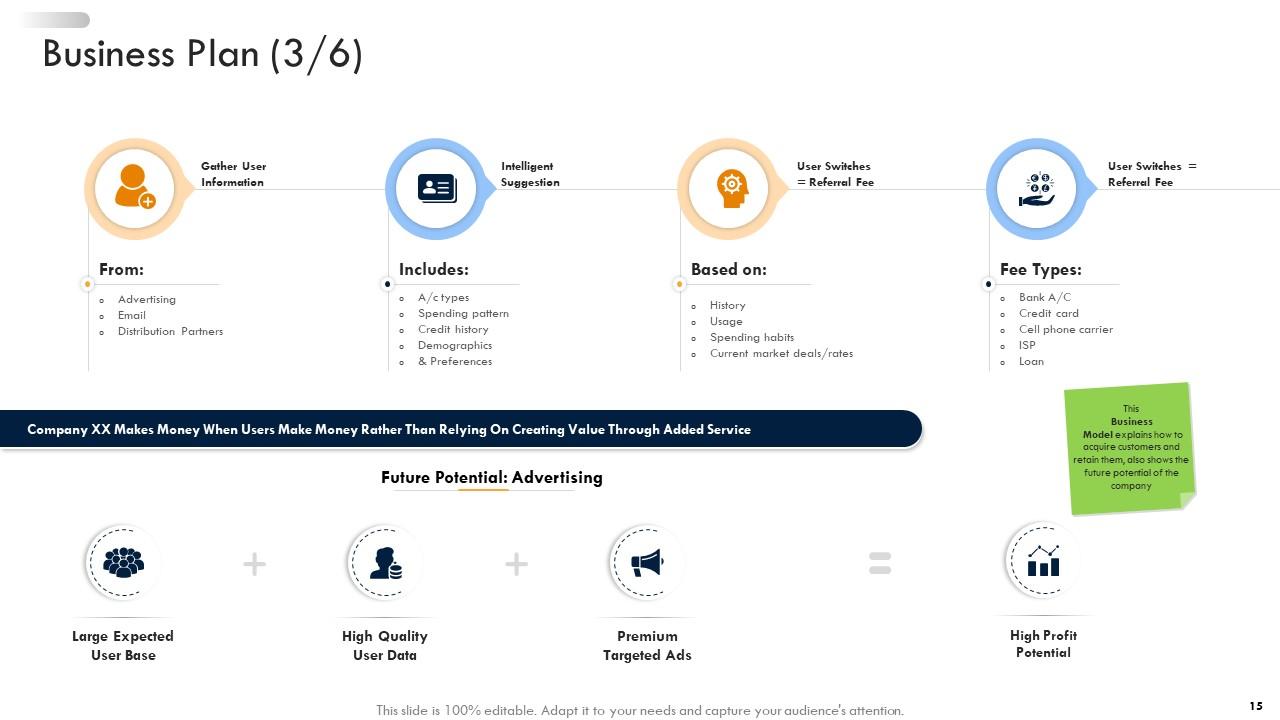
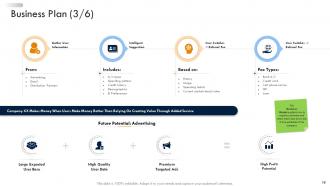
Slide 15: This slide includes a Model that explains how to acquire customers and retain them, also shows the future potential of the company.
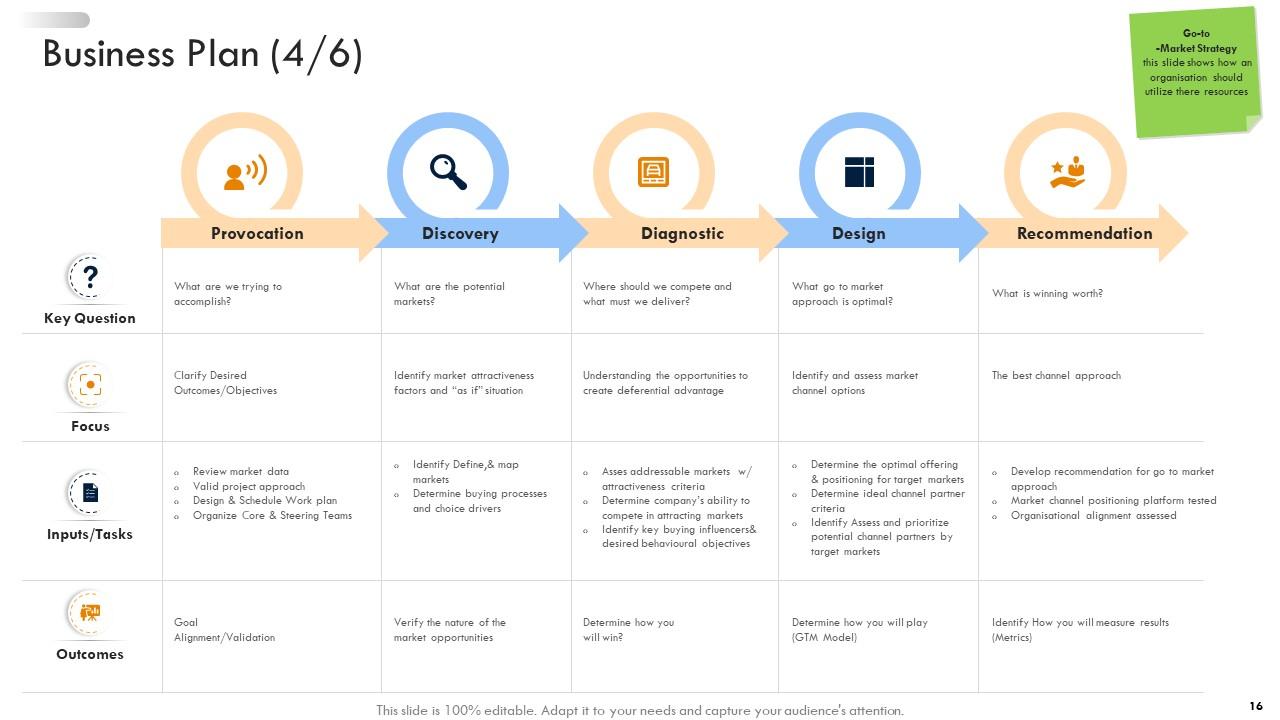
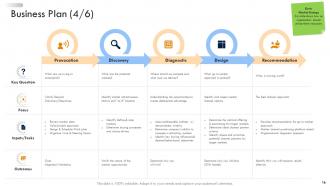
Slide 16: This slide shows how an organisation should utilize there resources.
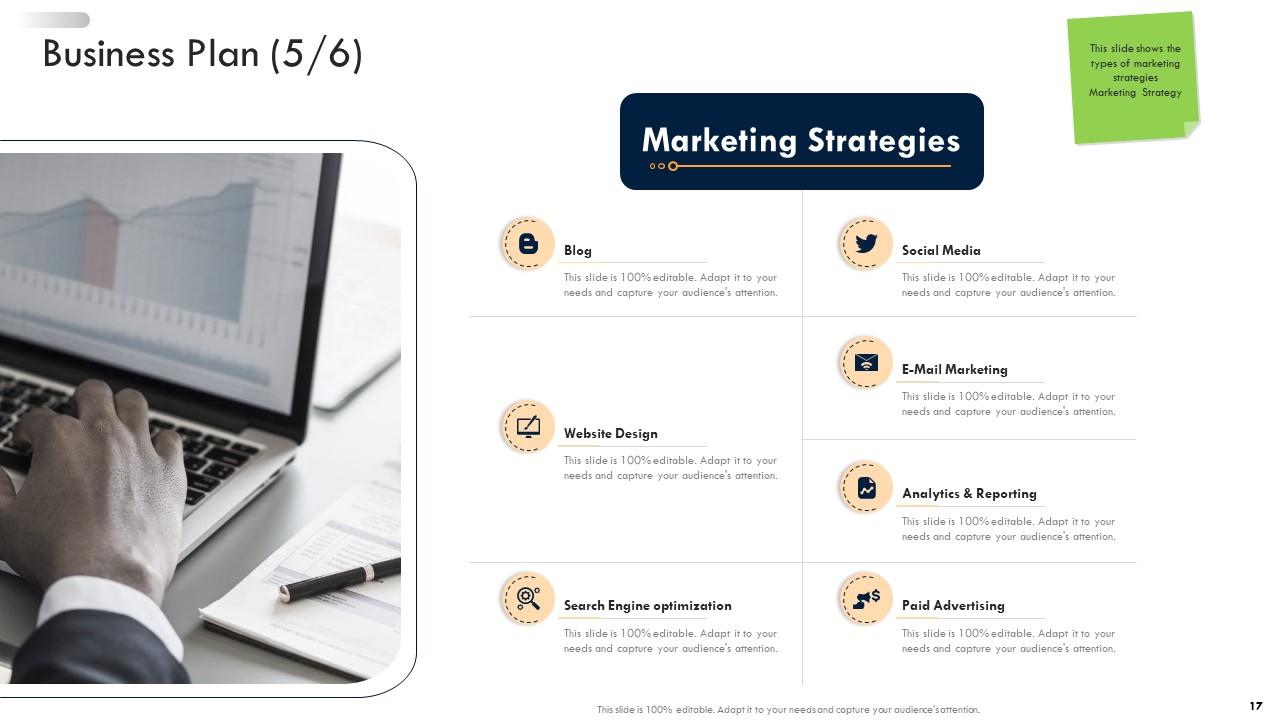
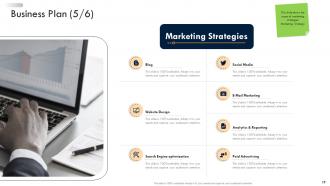
Slide 17: This slide presents types of marketing strategies.
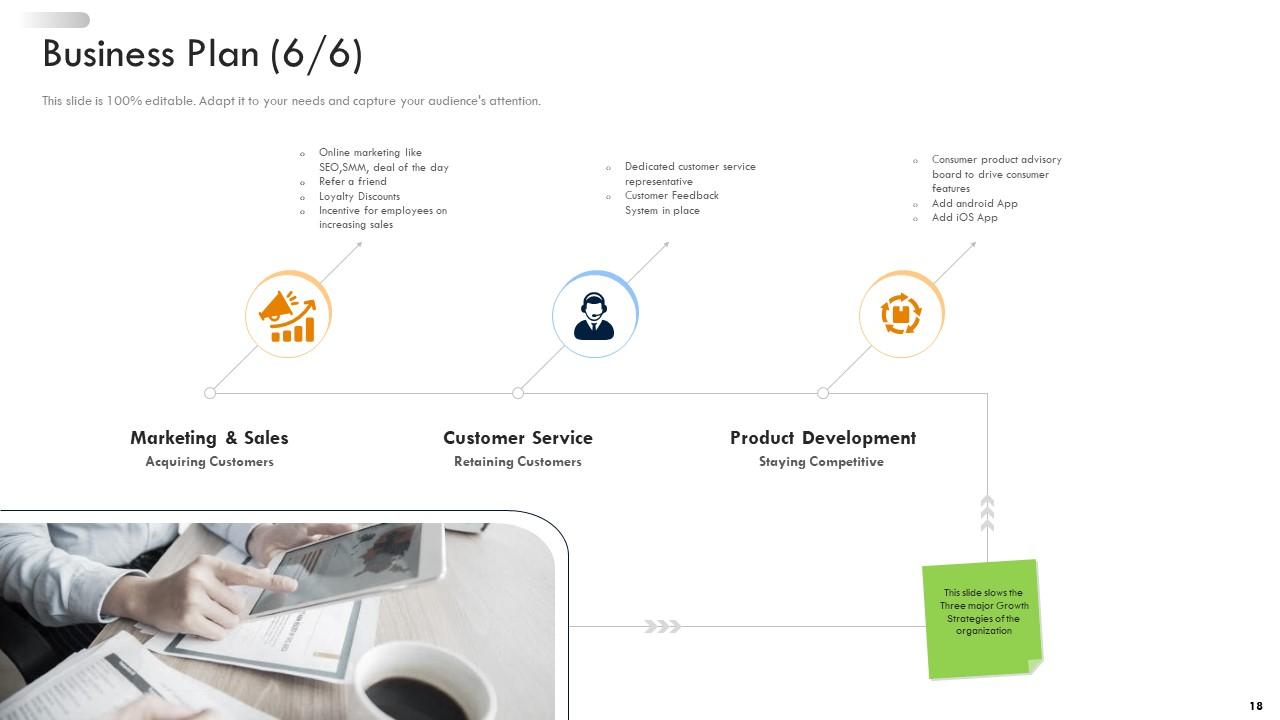
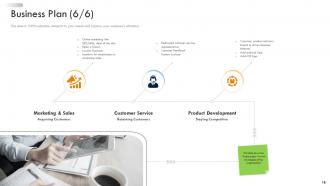
Slide 18: This slide slows the three major Growth Strategies of the organization.
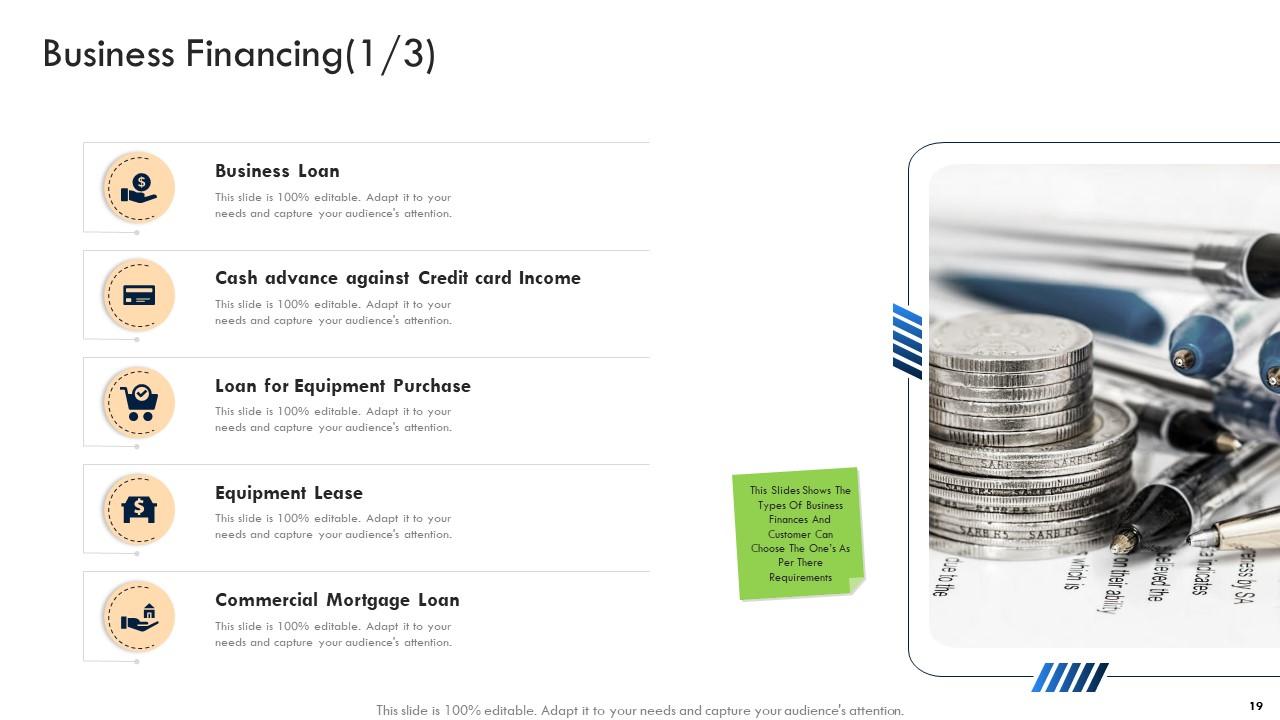
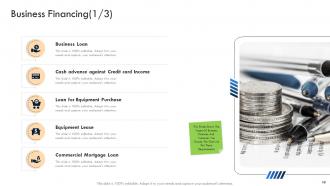
Slide 19: This Slides Shows The Types Of Business Finances And Customer Can Choose The One’s As Per There Requirements.
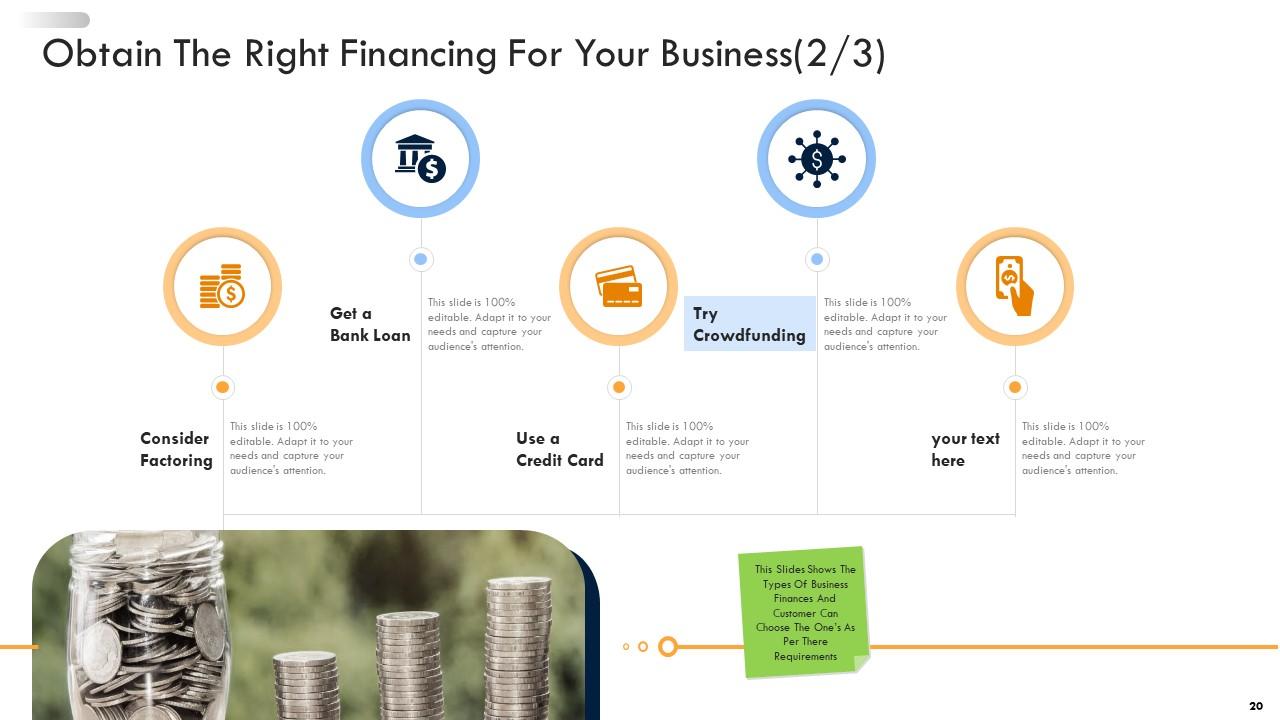
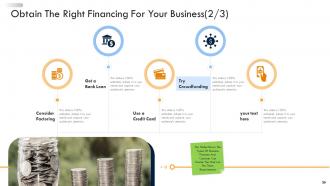
Slide 20: This Slides Shows The Types Of Business Finances And Customer Can Choose The One’s As Per There Requirements
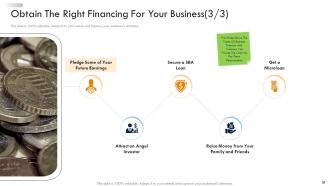
Slide 21: This Slides Shows The Types Of Business Finances And Customer Can Choose The One’s As Per There Requirements
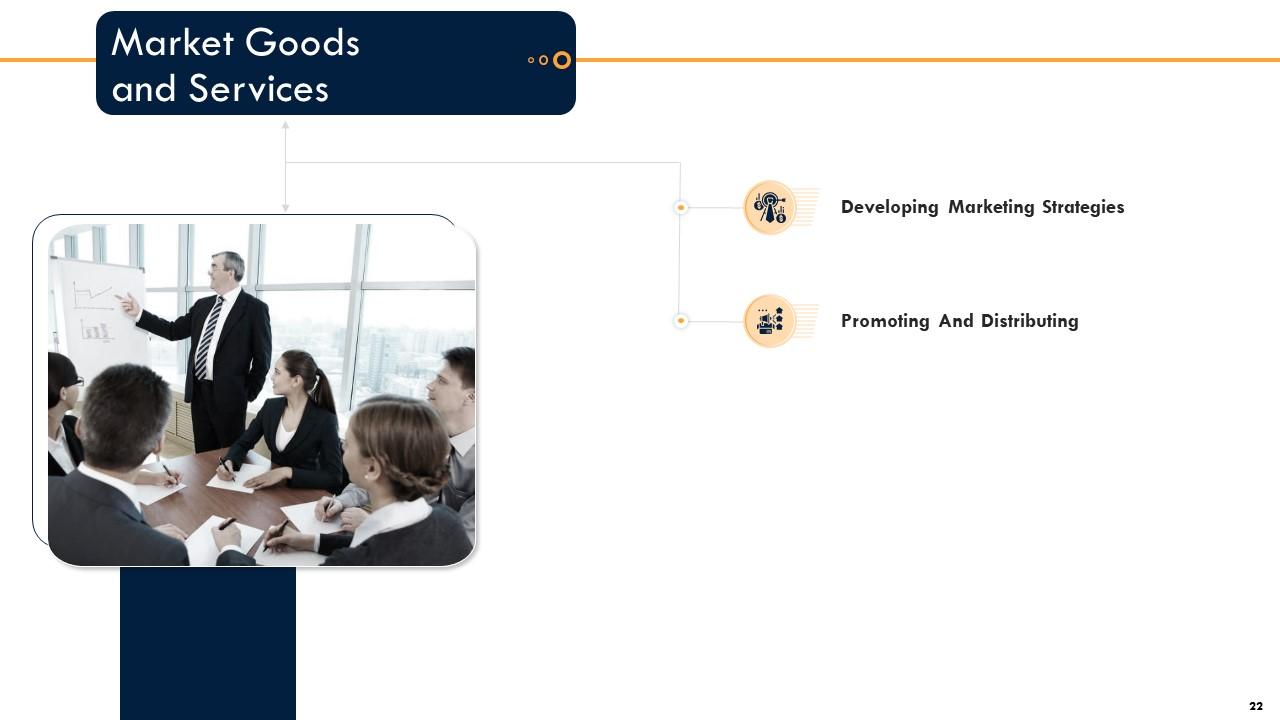
Slide 22: This slide presents Market Goods and Services.
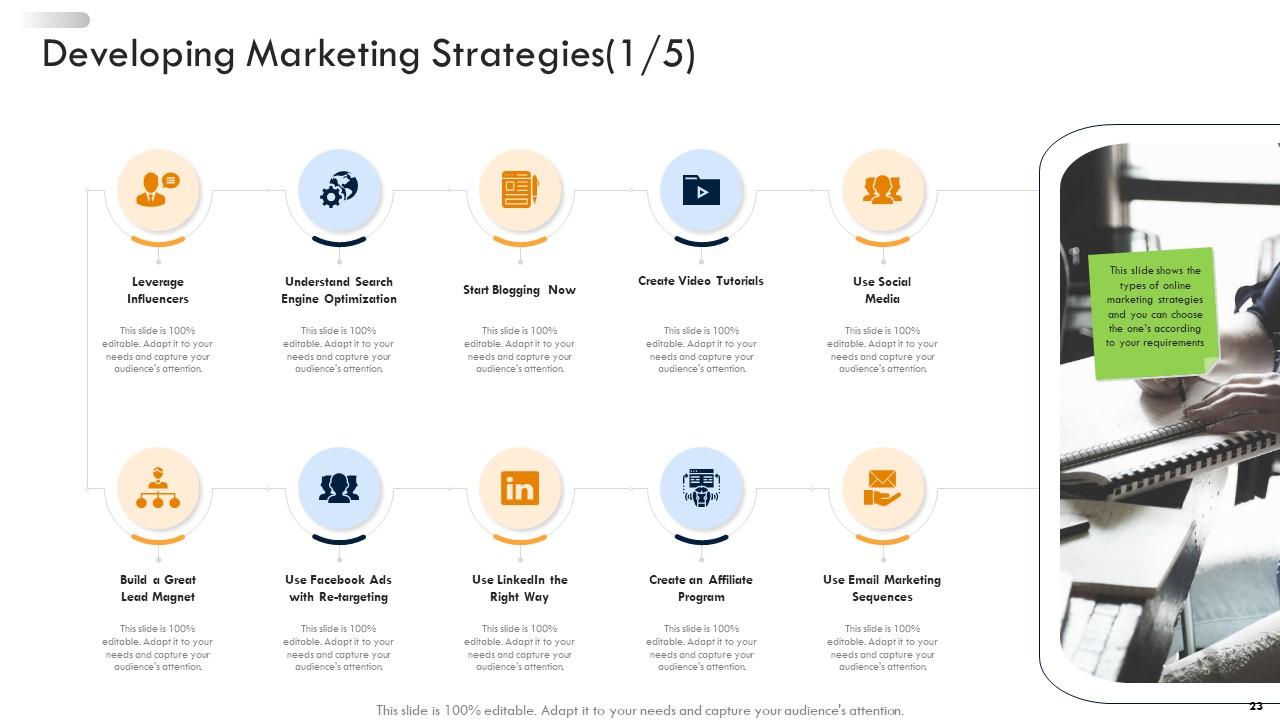
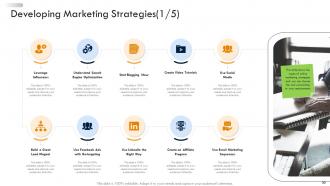
Slide 23: This slide shows the types of online marketing strategies and you can choose the one’s according to your requirements
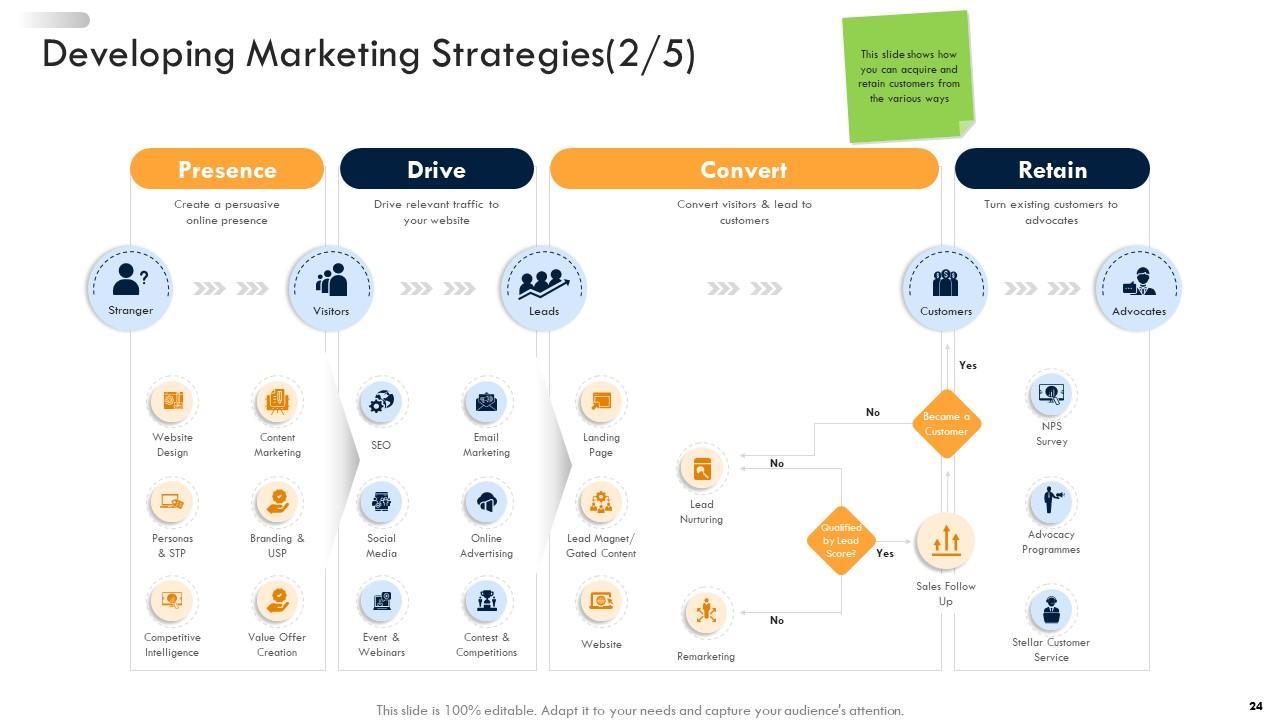
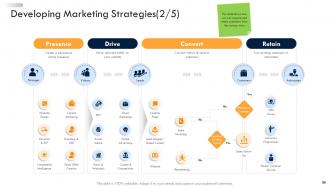
Slide 24: This slide shows how you can acquire and retain customers from the various ways
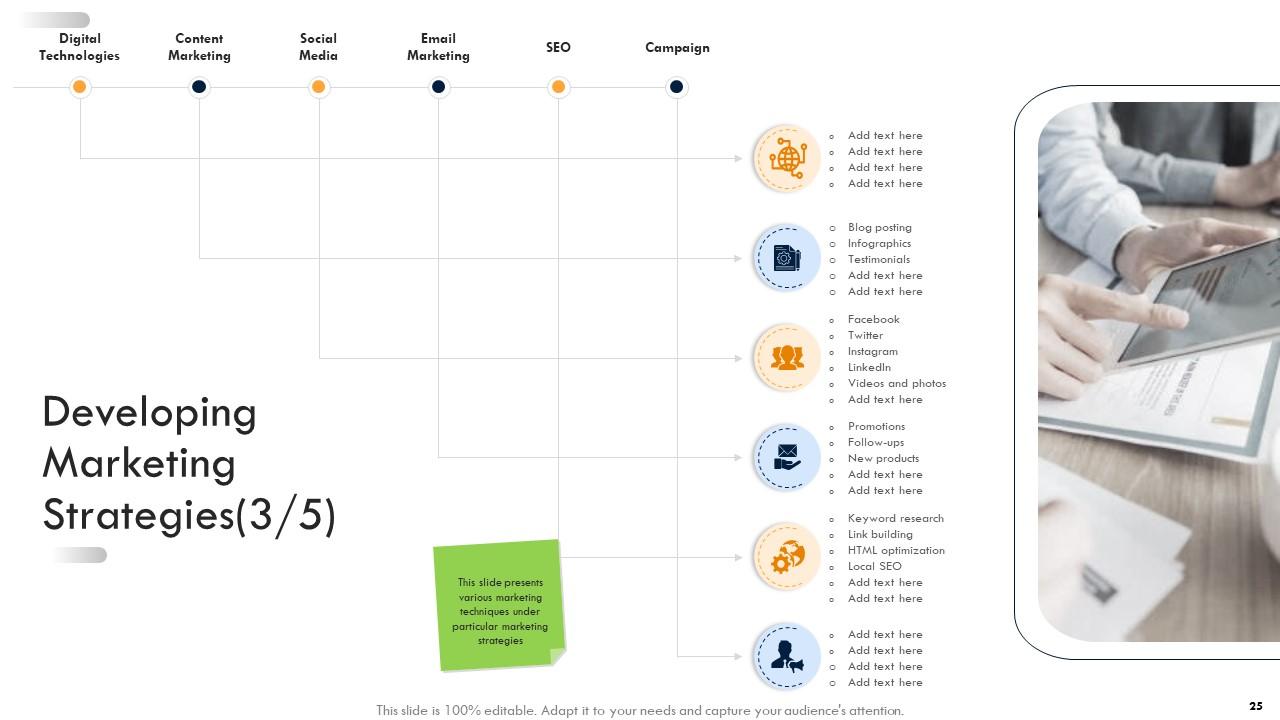
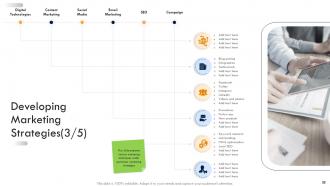
Slide 25: This slide presents various marketing techniques under particular marketing strategies
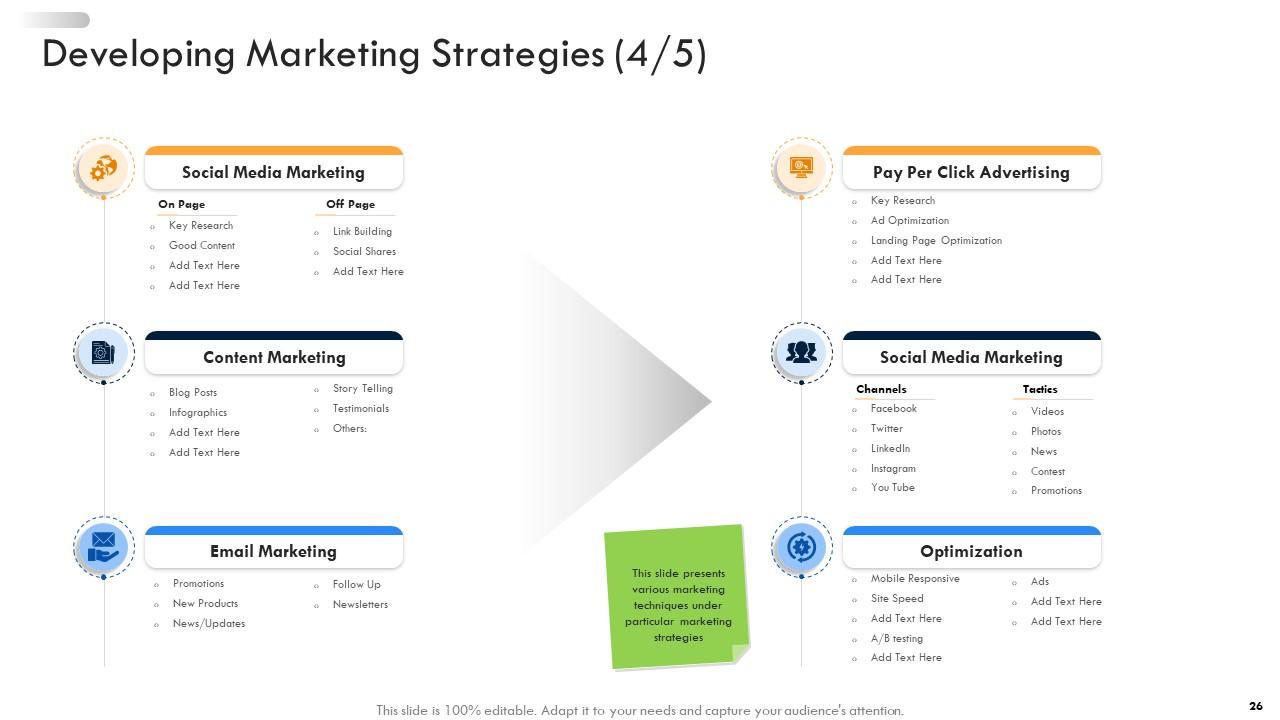
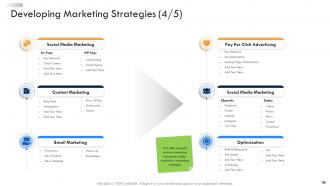
Slide 26: This slide presents various marketing techniques under particular marketing strategies
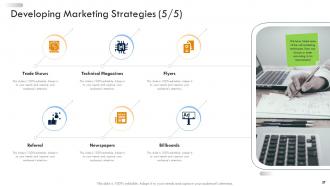
Slide 27: This slide presents some of the old marketing techniques. User can choose or enter according to his requirements.
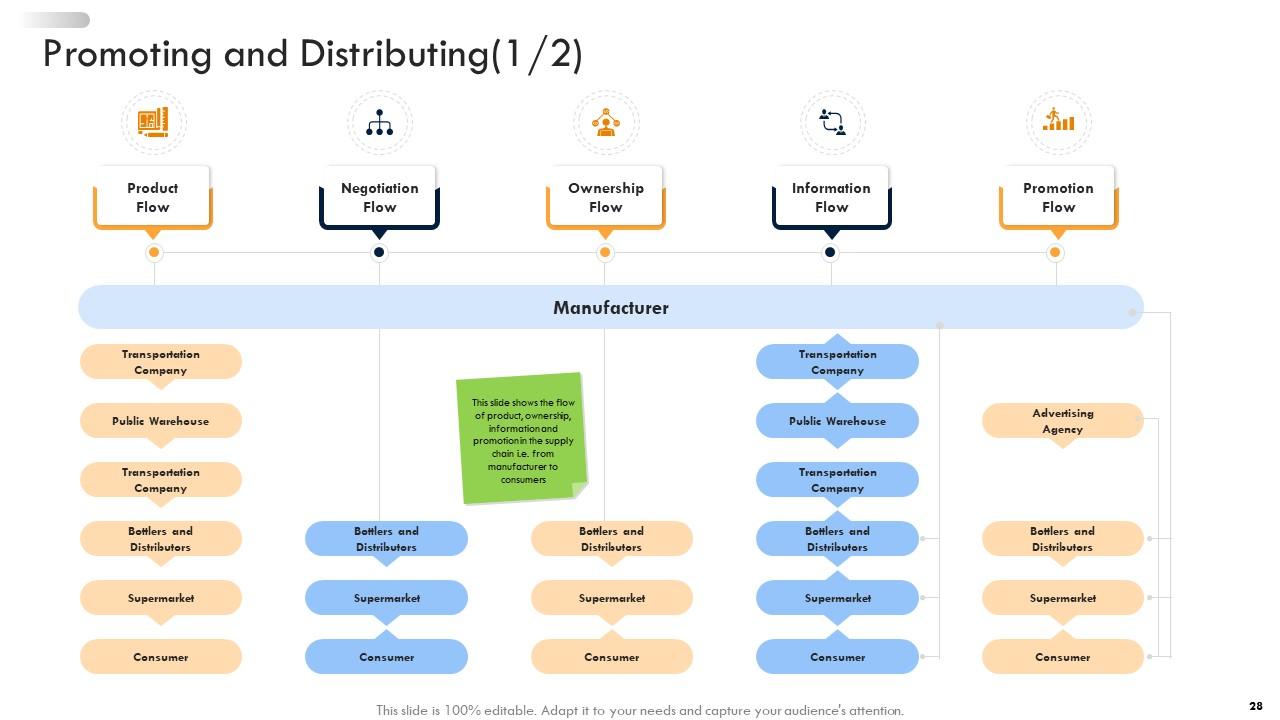
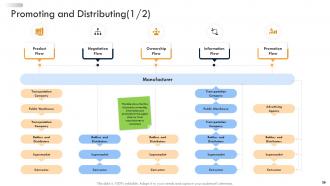
Slide 28: This slide shows the flow of product, ownership, information and promotion in the supply chain i.e. from manufacturer to consumers
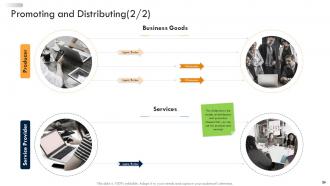
Slide 29: This slides shows the modes of distribution and promotion channel that you can use for products and services
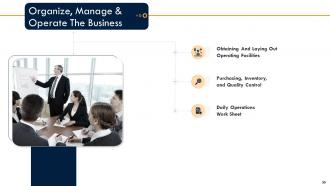
Slide 30: This slide talks about Organizing, Managing & Operating the Business.
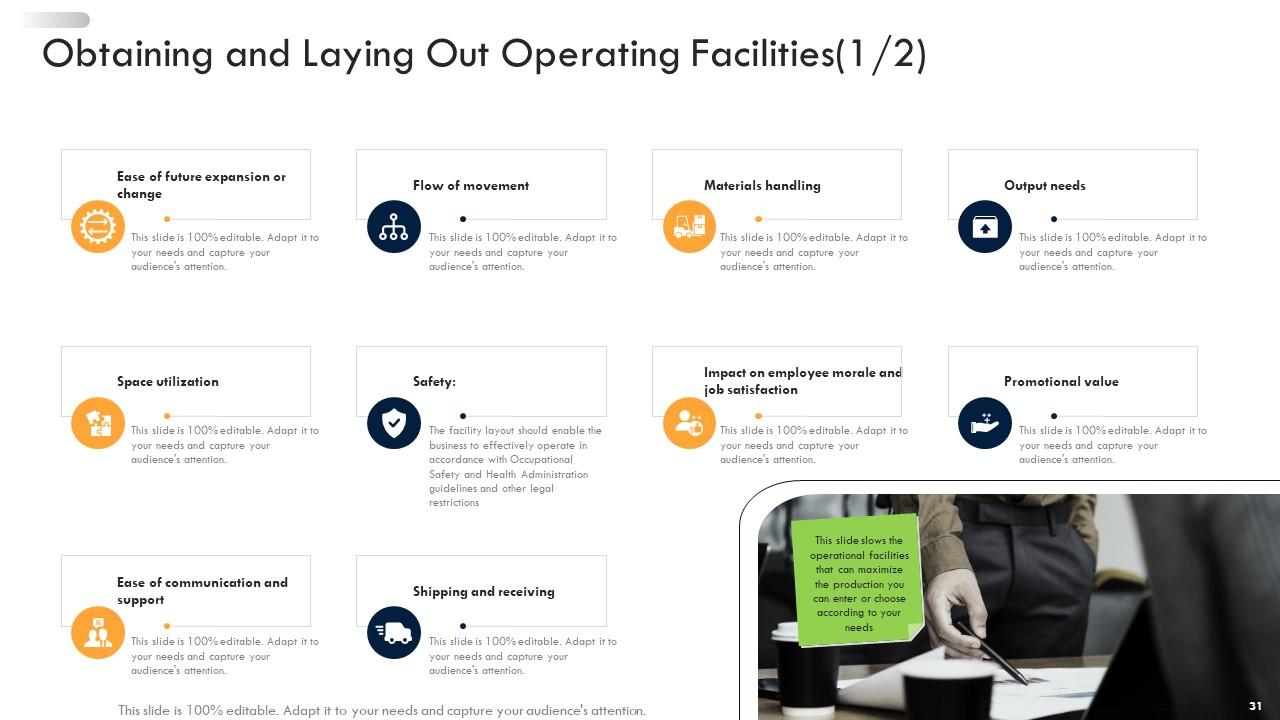
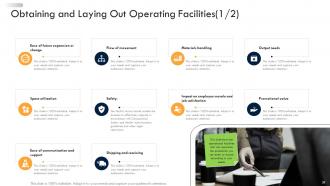
Slide 31: This slide slows the operational facilities that can maximize the production you can enter or choose according to your needs
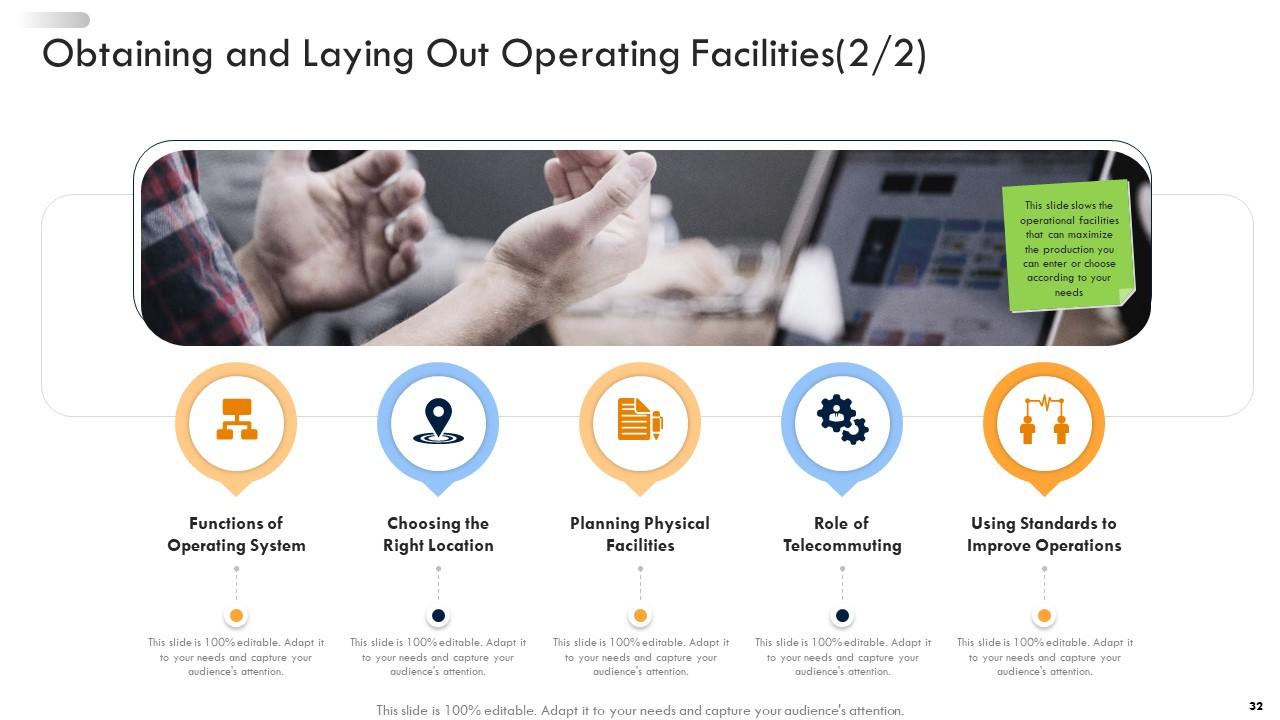
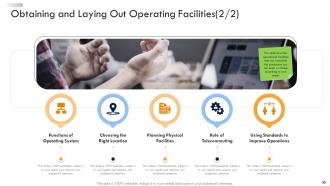
Slide 32: This slide slows the operational facilities that can maximize the production you can enter or choose according to your needs
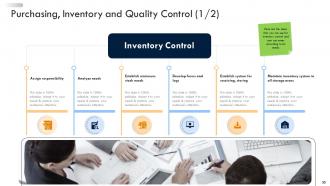
Slide 33: This slide presents the steps that you can use for inventory control and user can enter according to his needs.
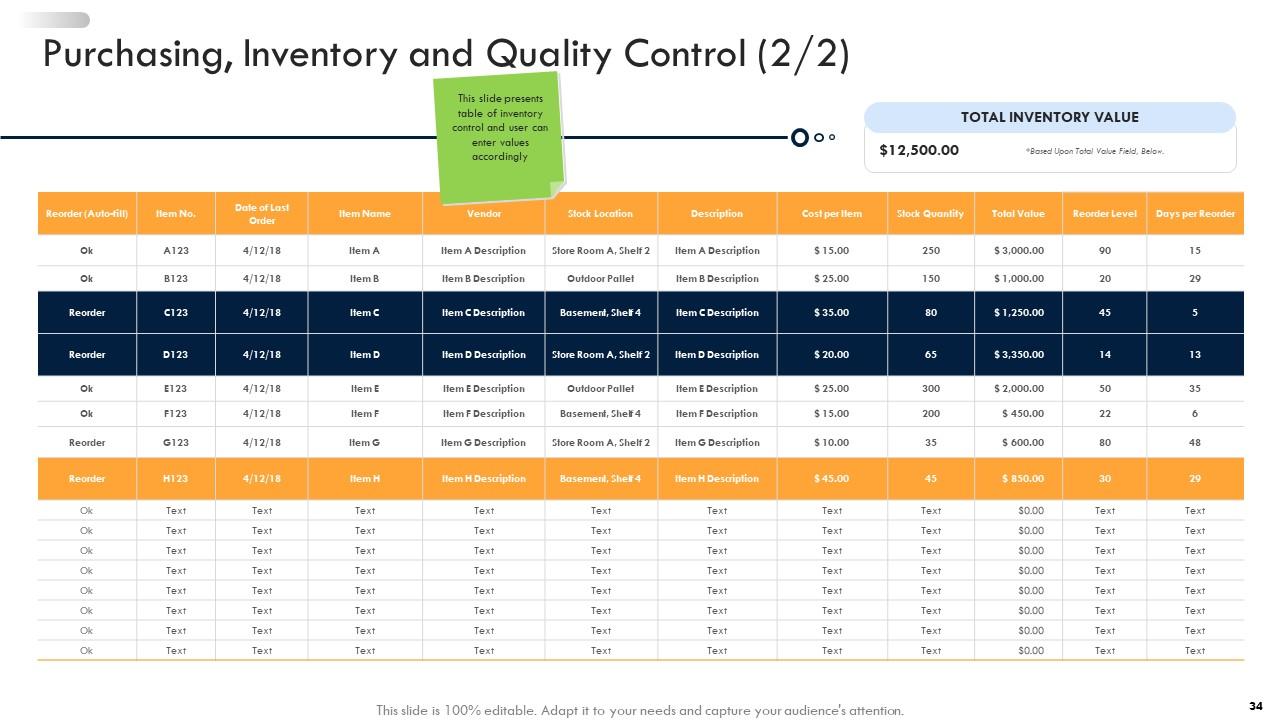
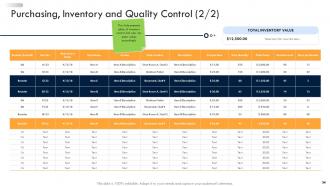
Slide 34: This slide presents table of inventory control and user can enter values accordingly
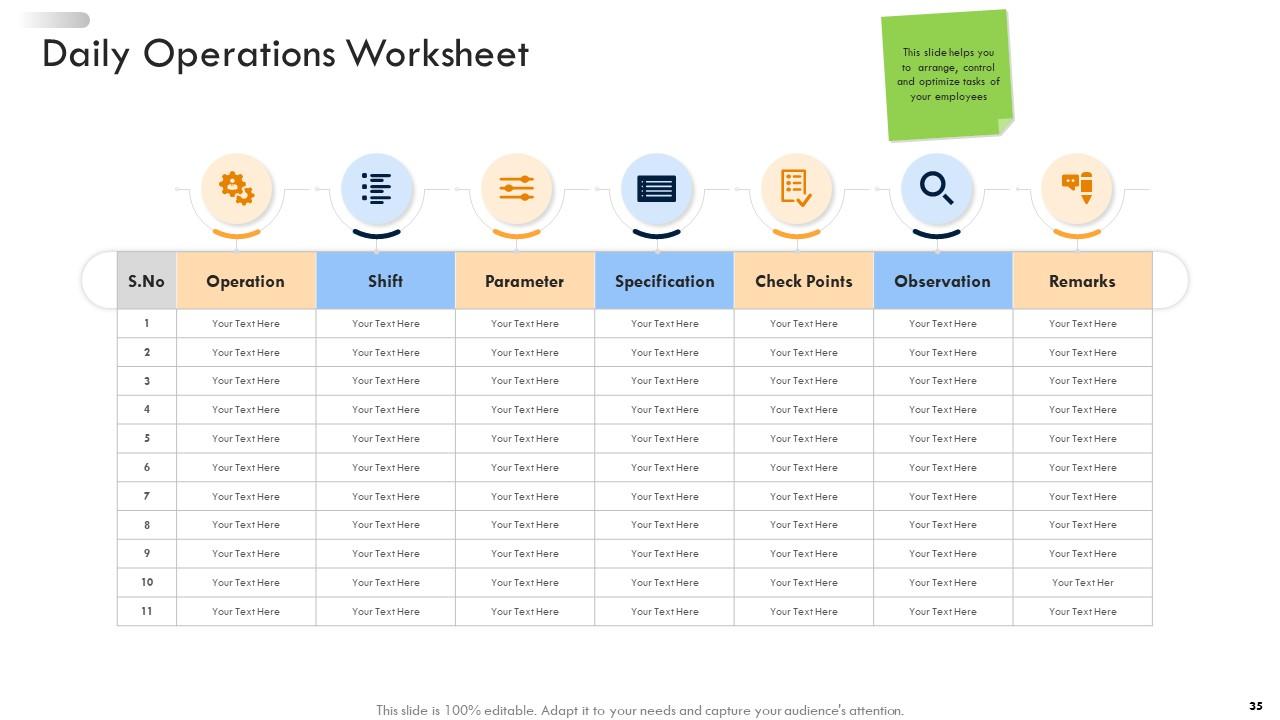
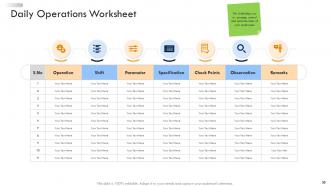
Slide 35: This slide helps you to arrange, control and optimize tasks of your employees
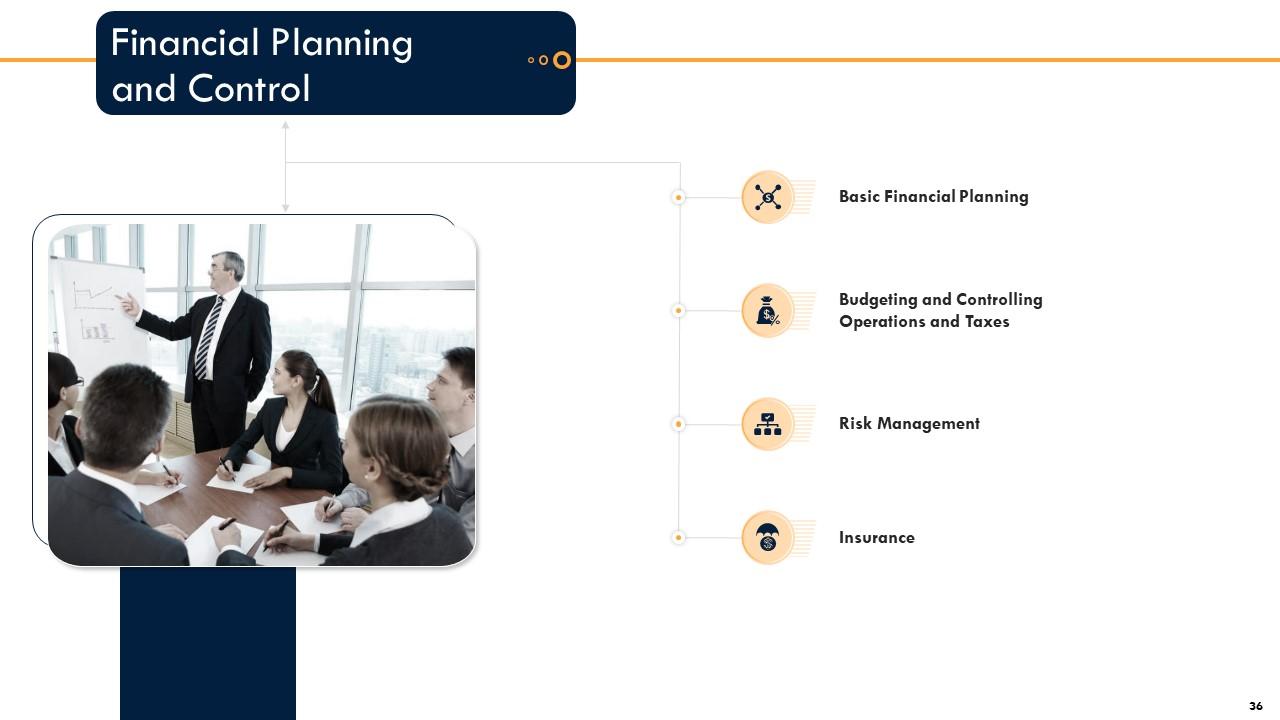
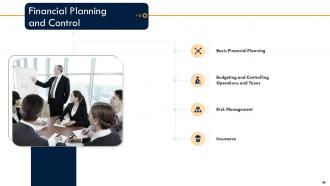
Slide 36: This slide talks about Financial Planning and Control.
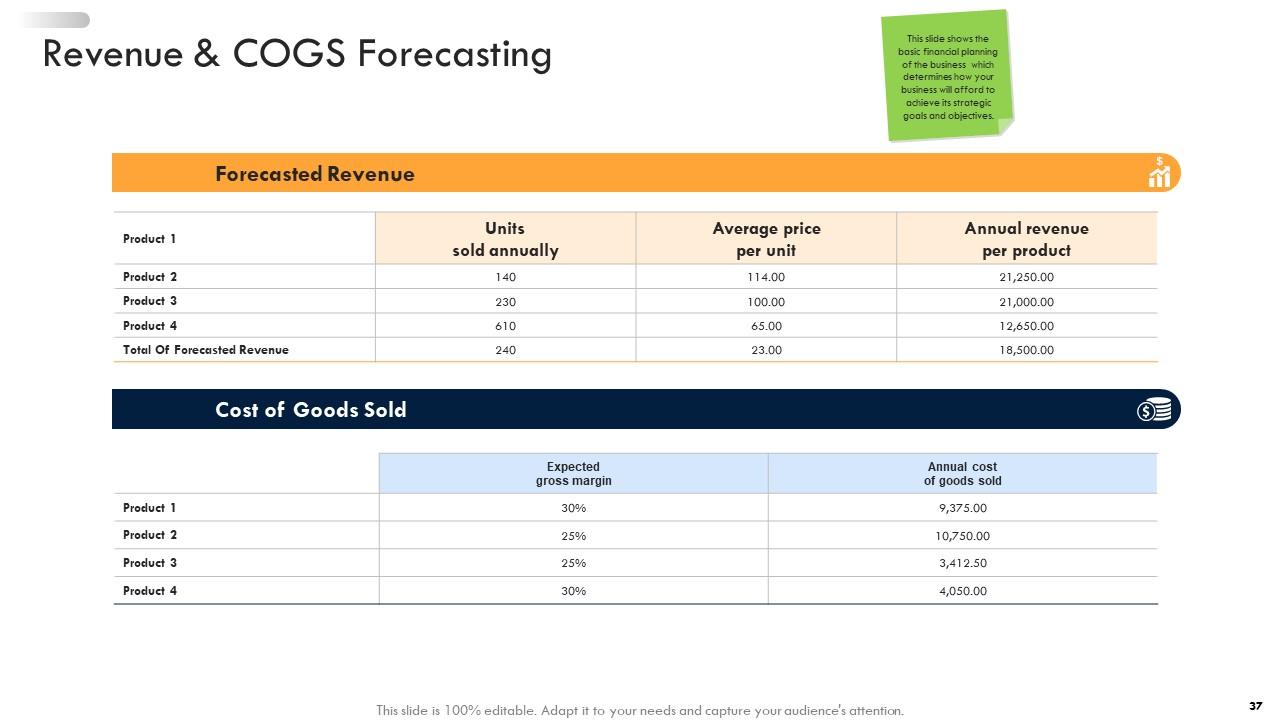
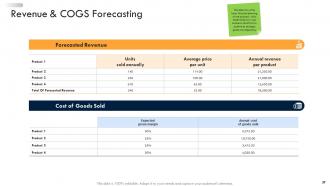
Slide 37: This slide shows the basic financial planning of the business which determines how your business will afford to achieve its strategic goals and objectives.
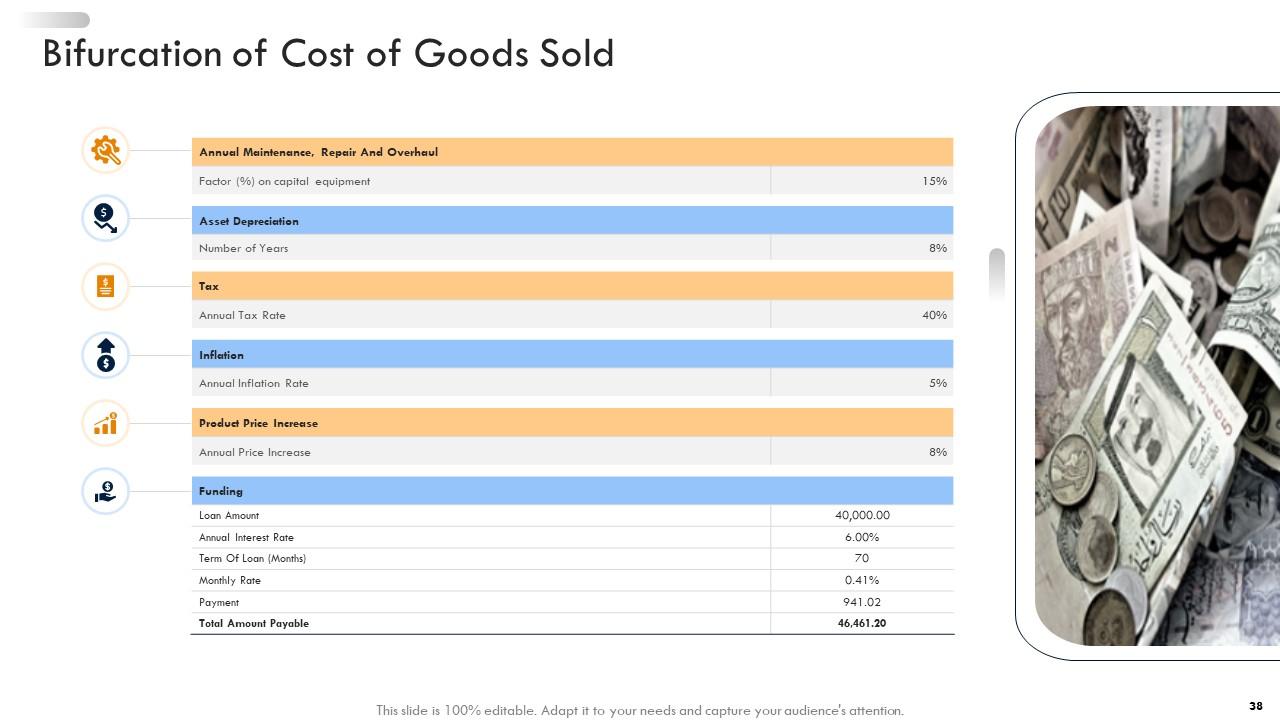
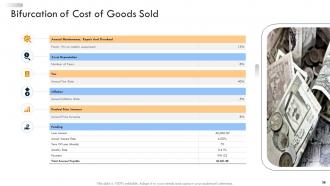
Slide 38: This slide talks about Bifurcation of Cost of Goods Sold.
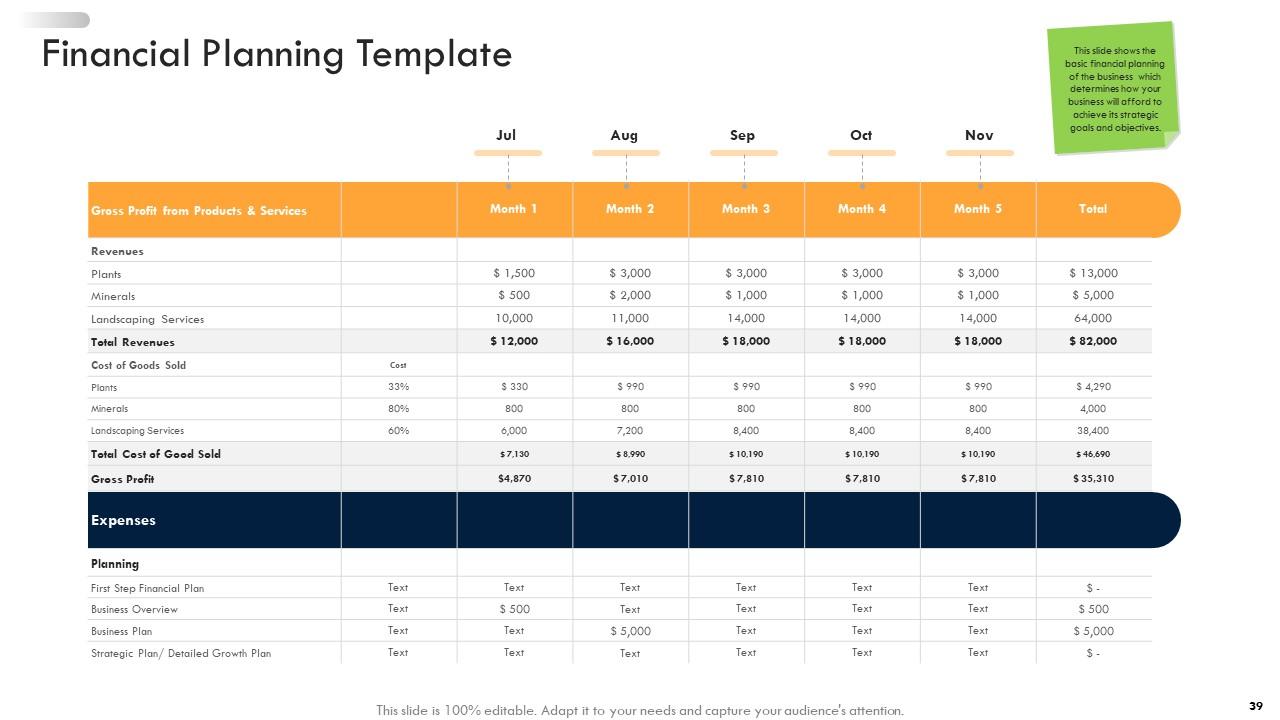
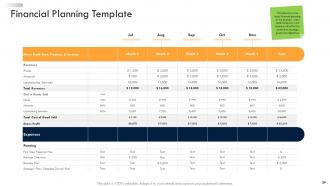
Slide 39: This slide shows the basic financial planning of the business which determines how your business will afford to achieve its strategic goals and objectives.
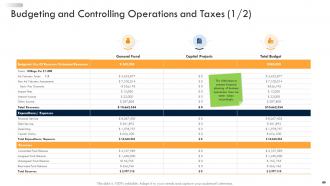
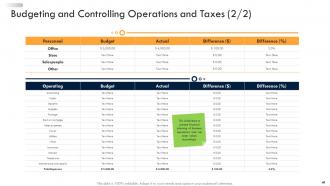
Slide 40: This slide helps to present financial planning of business operations. User can enter values accordingly
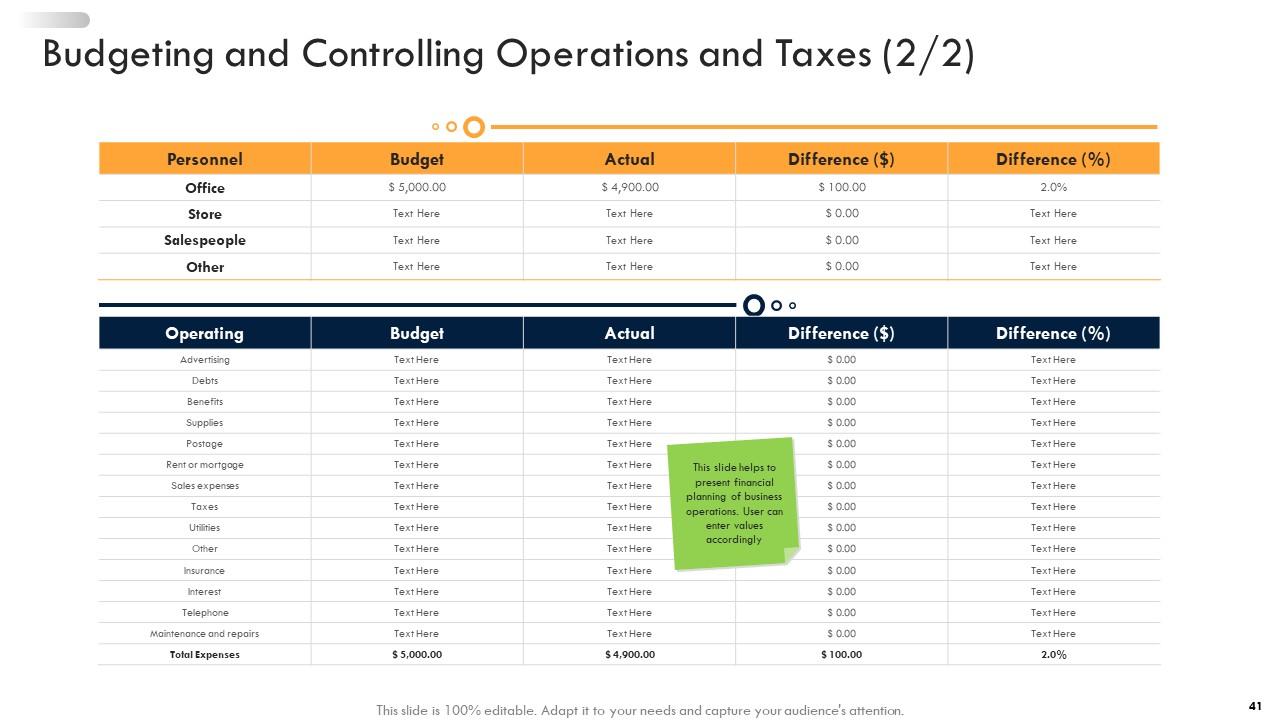
Slide 41: This slide helps to present financial planning of business operations. User can enter values accordingly
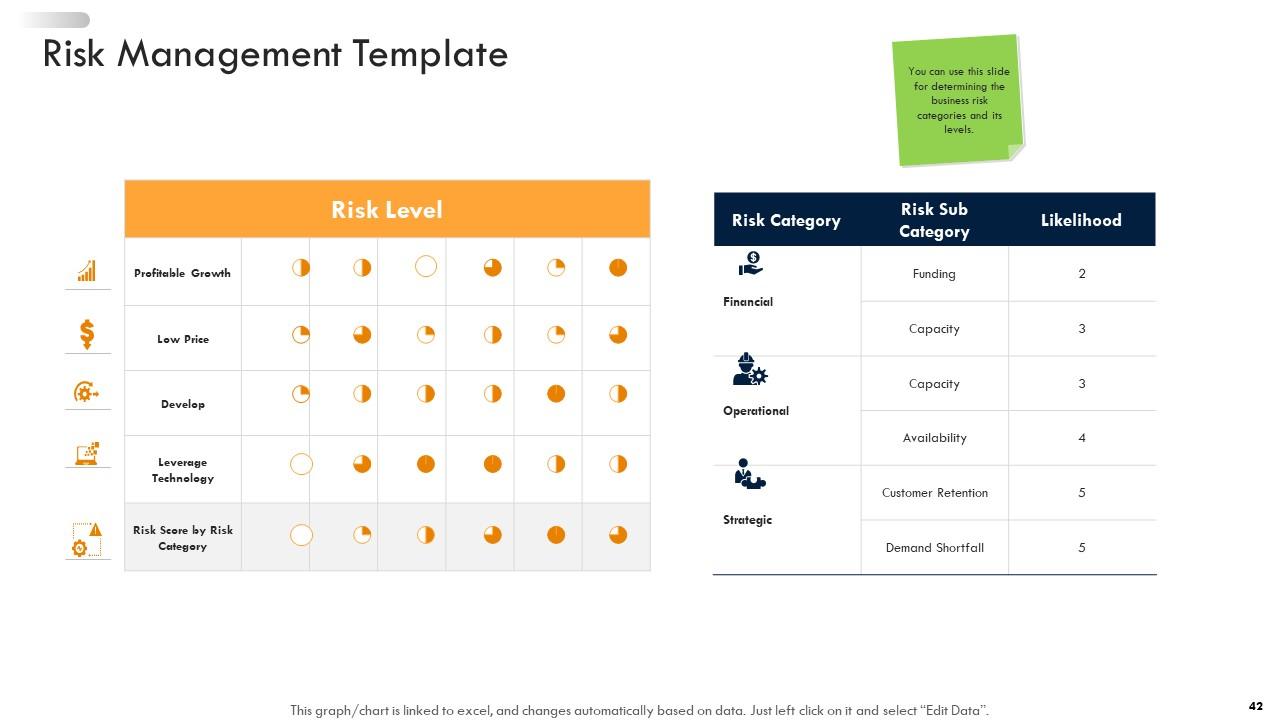
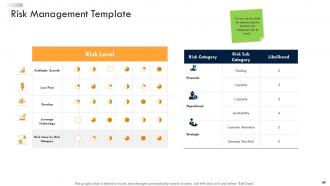
Slide 42: This slide can be used for determining the business risk categories and its levels.
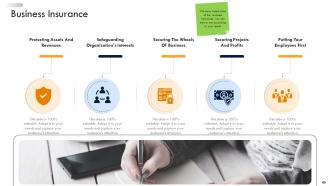
Slide 43: This slide presents Business Insurance.
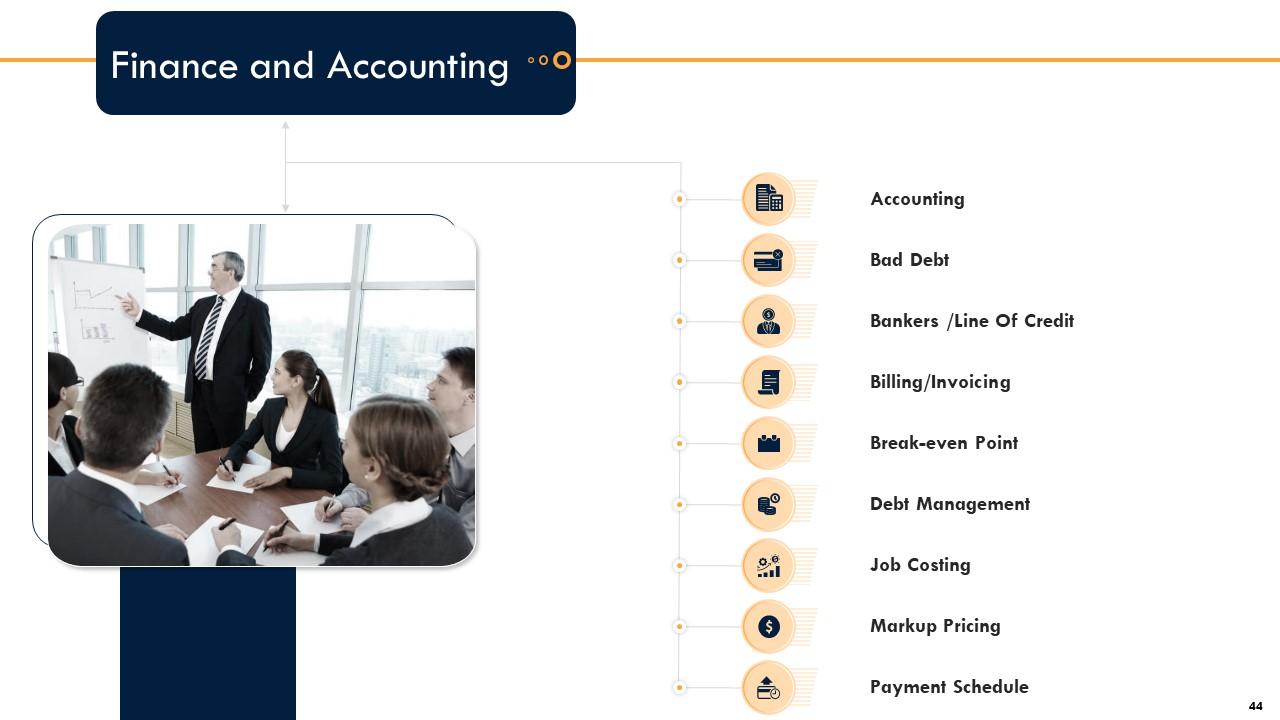
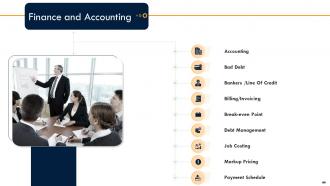
Slide 44: This slide presents Finance and Accounting.
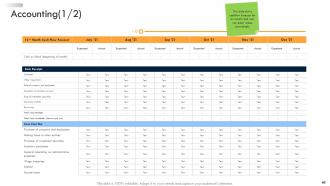
Slide 45: This slide shows cashflow forecast for six months and user can enter values accordingly.
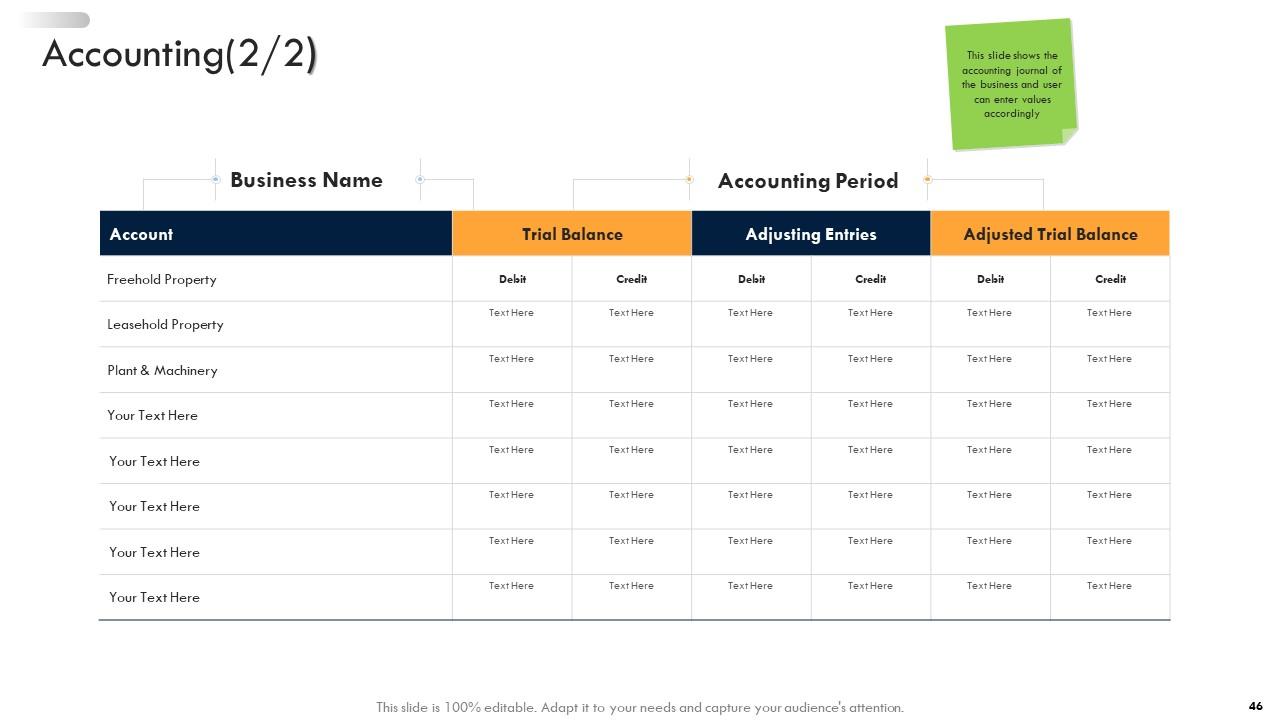
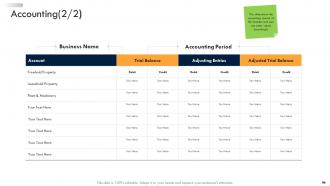
Slide 46: This slide shows the accounting journal of the business and user can enter values accordingly.
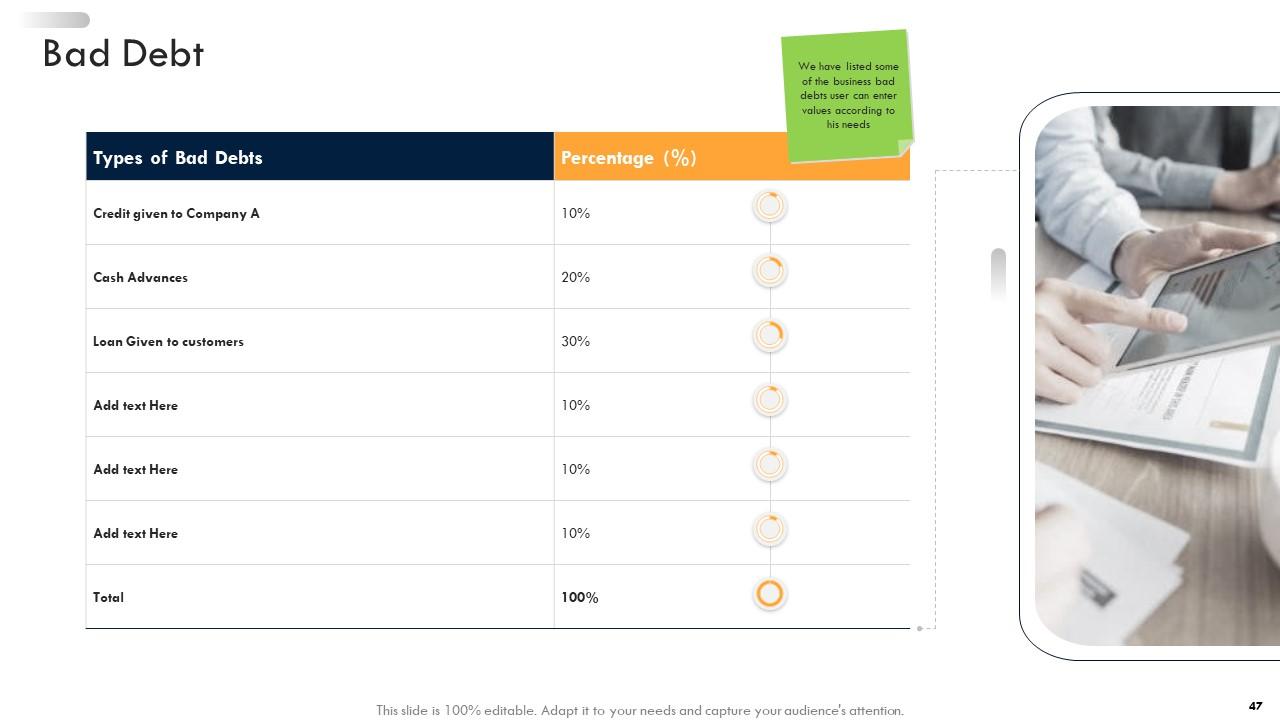
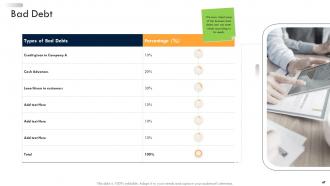
Slide 47: This slide presents some of the business bad debts user can enter values according to his needs.
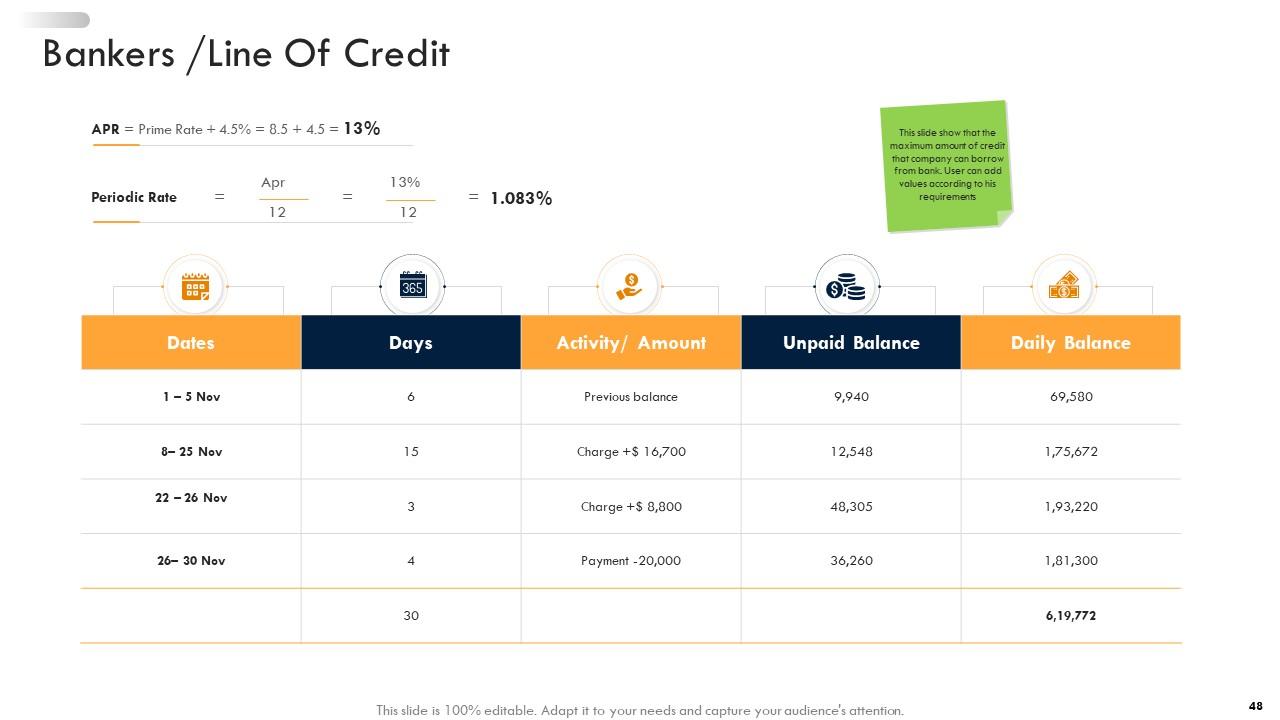
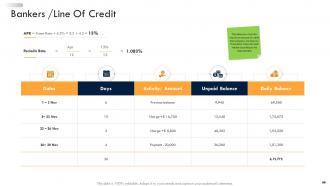
Slide 48: This slide show that the maximum amount of credit that company can borrow from bank. User can add values according to his requirements
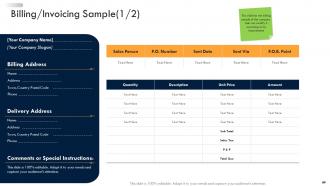
Slide 49: This slide has the billing sample of the company. User can modify it according to his requirements
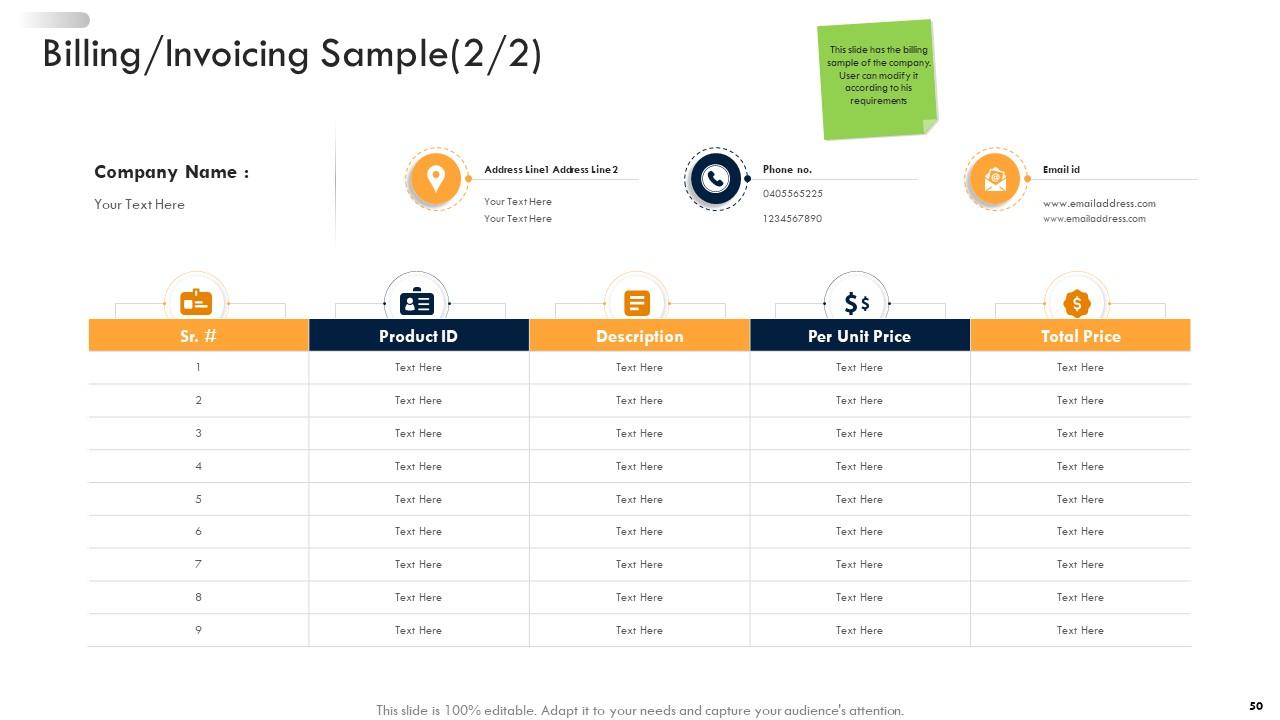
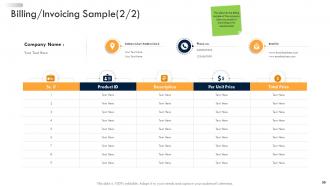
Slide 50: This slide has the billing sample of the company. User can modify it according to his requirements
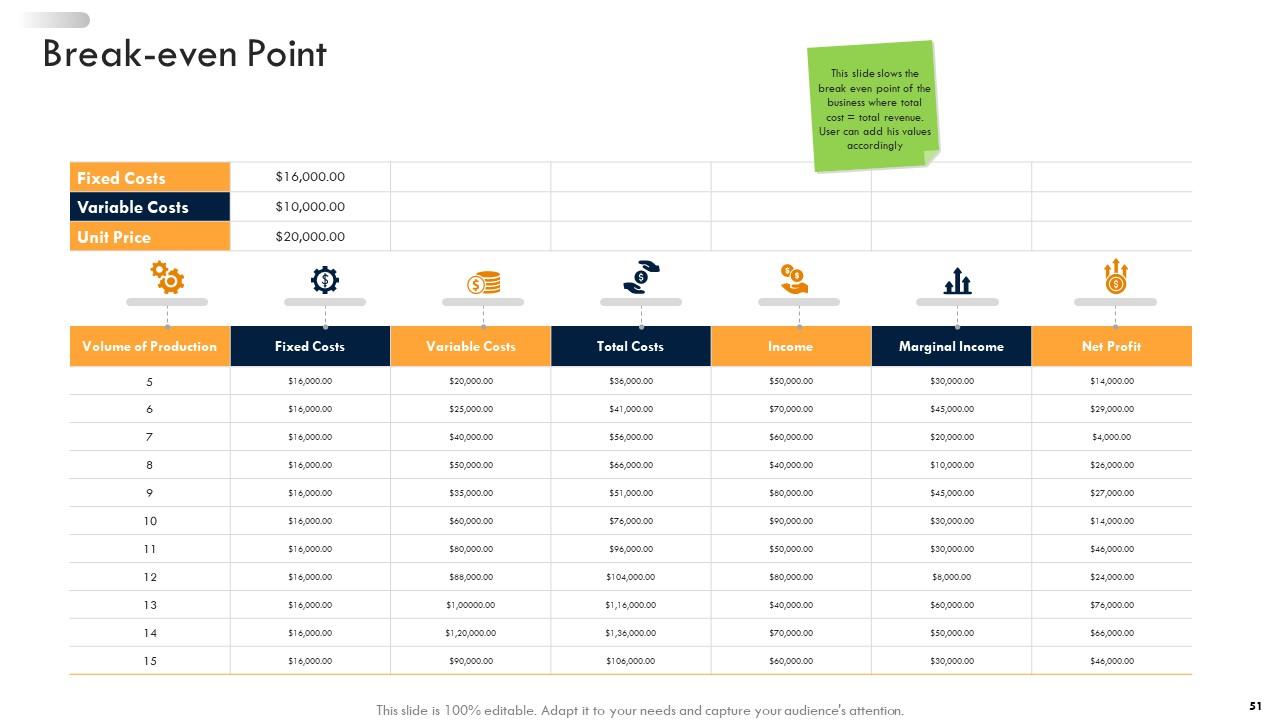
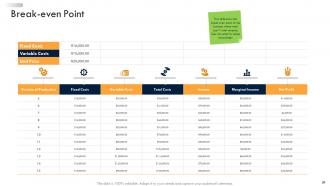
Slide 51: This slide slows the break even point of the business where total cost = total revenue. User can add his values accordingly
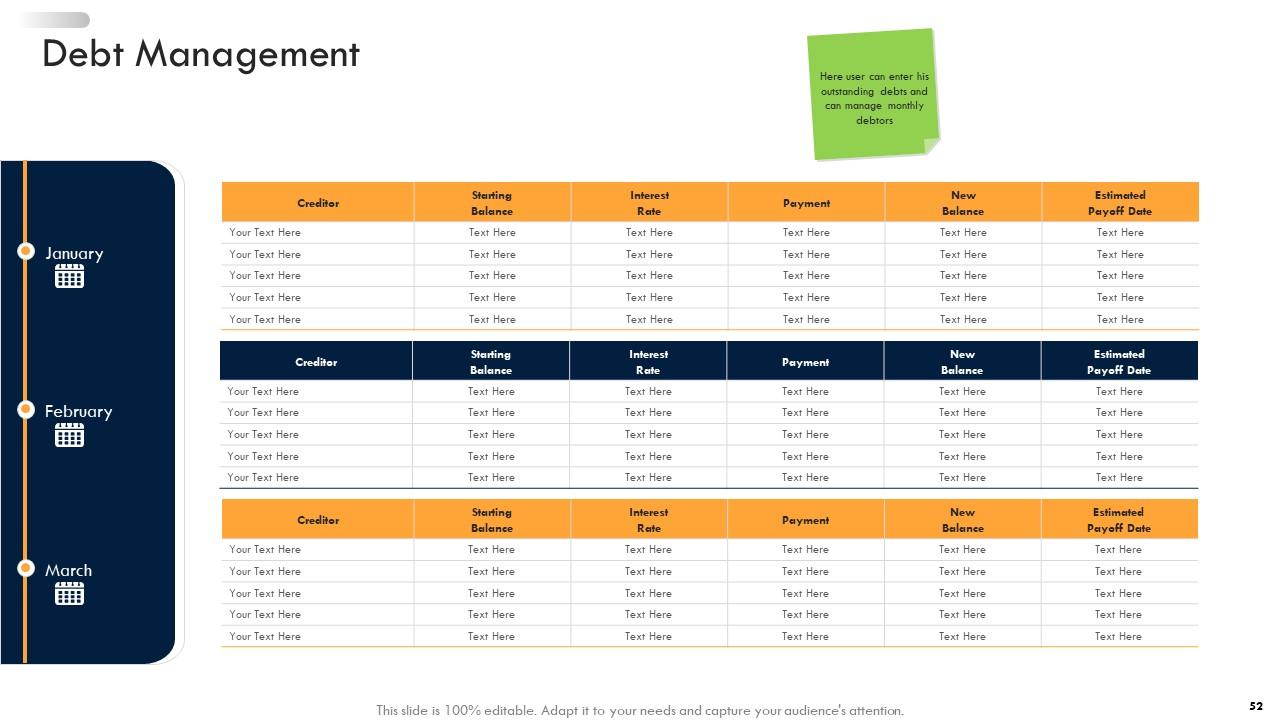
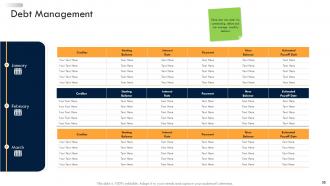
Slide 52: This slide can be used to enter his outstanding debts and can manage monthly debtors.
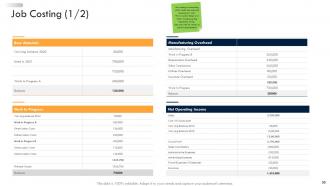
Slide 53: This slide presents Job Costing (1/2)
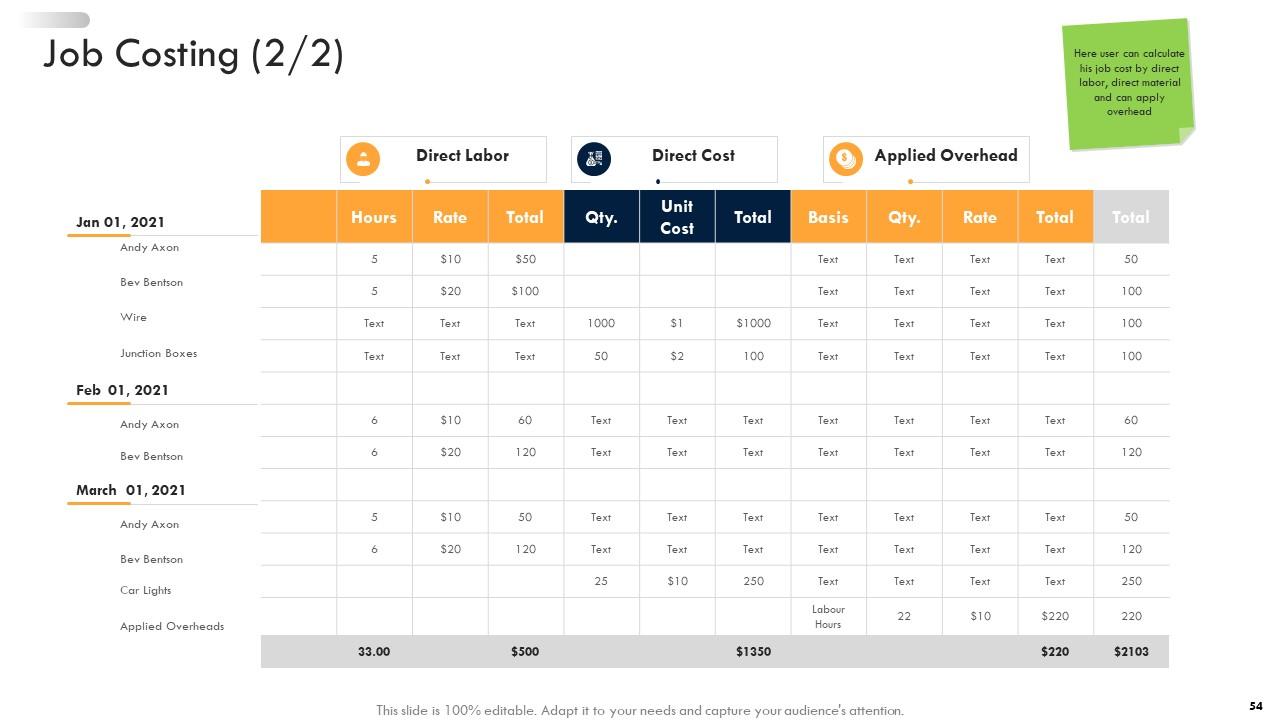
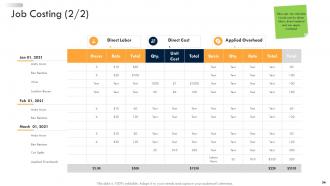
Slide 54: This slide can be used to calculate his job cost by direct labor, direct material and can apply overhead
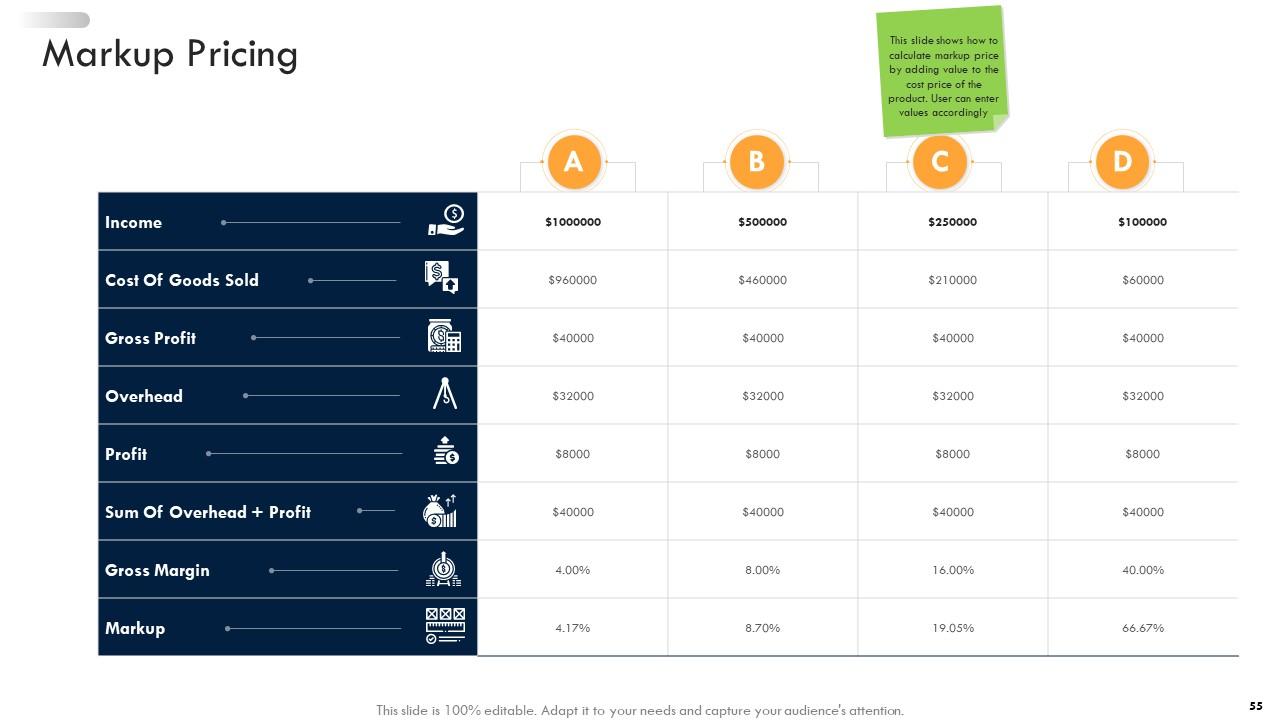
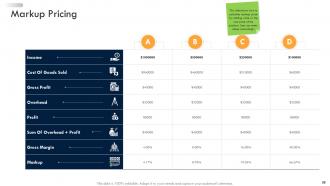
Slide 55: This slide shows how to calculate markup price by adding value to the cost price of the product.
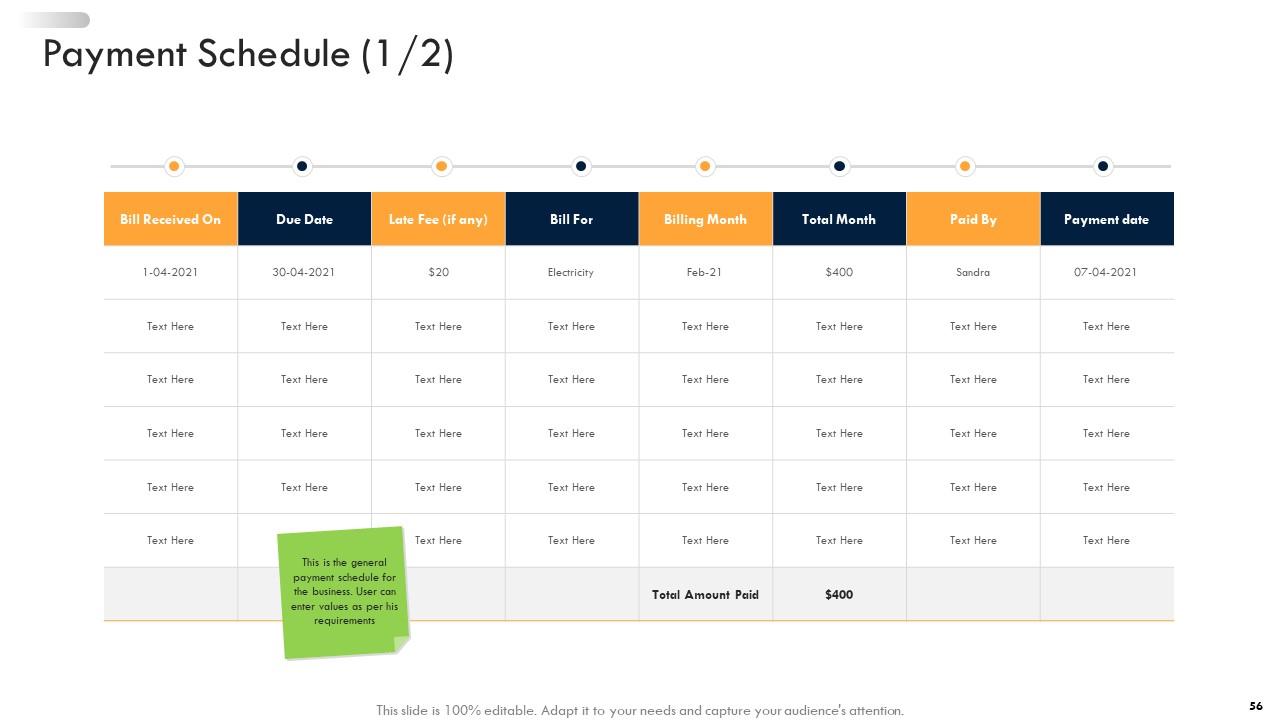
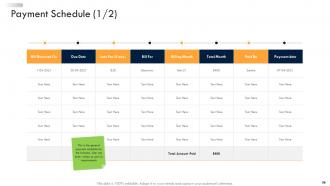
Slide 56: This slide presents the general payment schedule for the business.
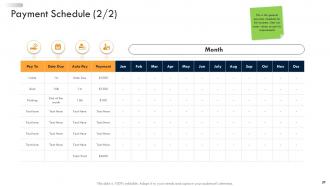
Slide 57: This slide presents the general payment schedule for the business.
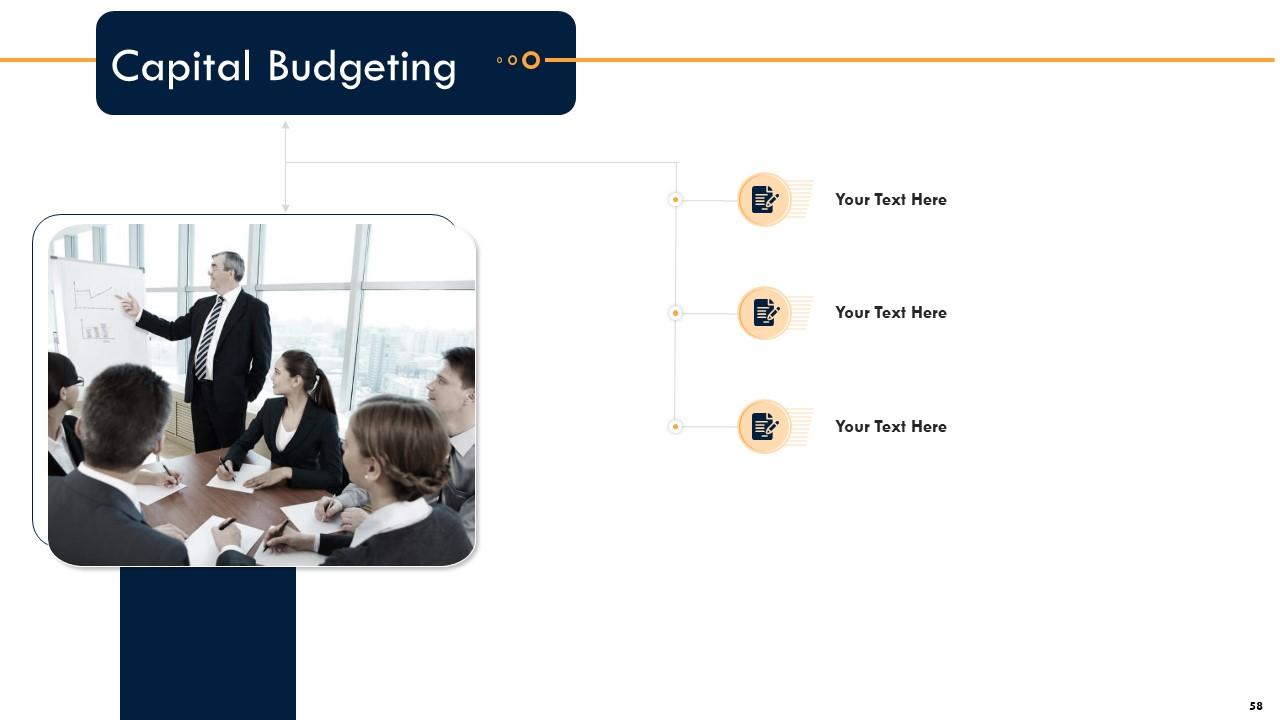
Slide 58: This slide presents Capital Budgeting.
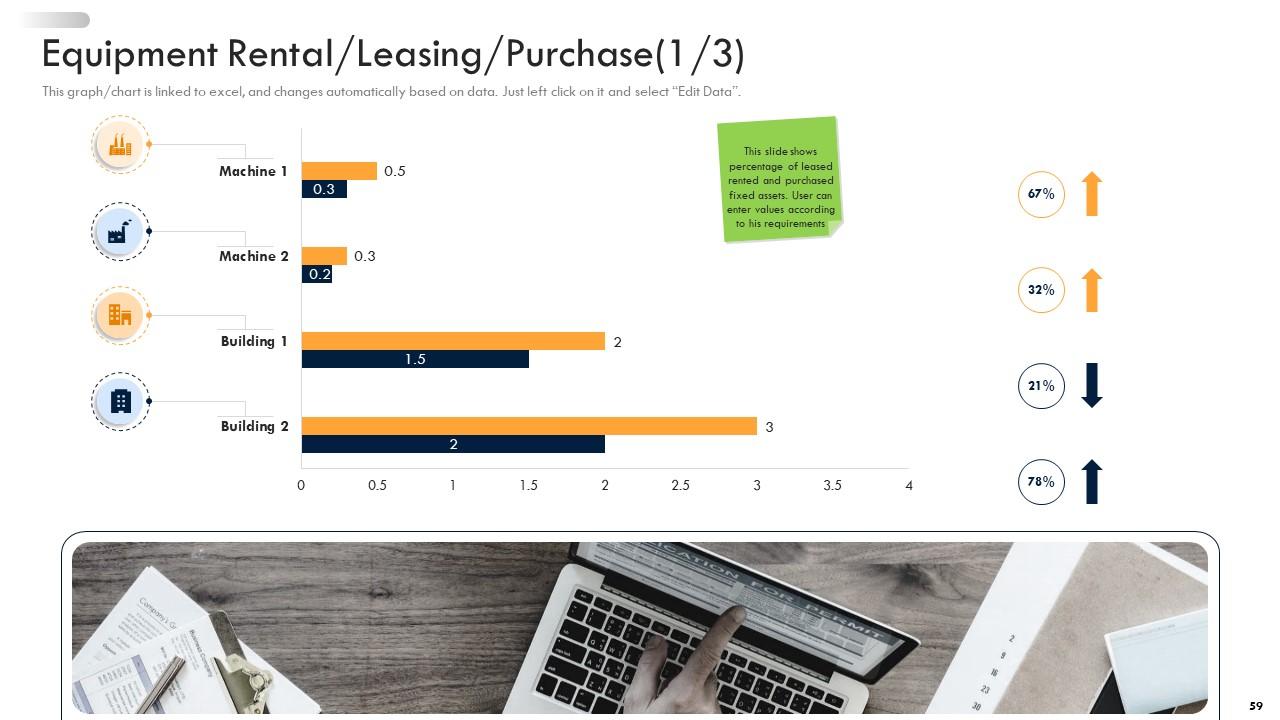
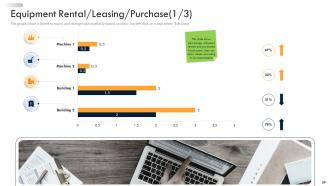
Slide 59: This slide shows percentage of leased rented and purchased fixed assets. User can enter values according to his requirements
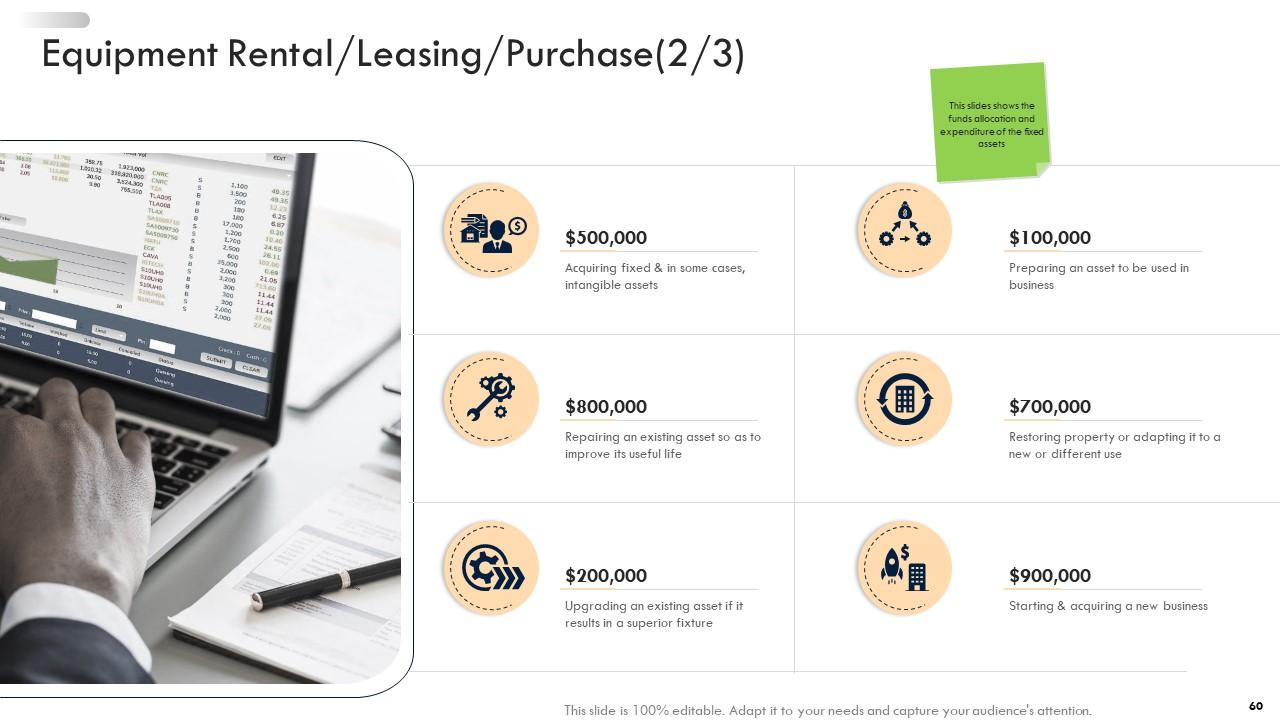
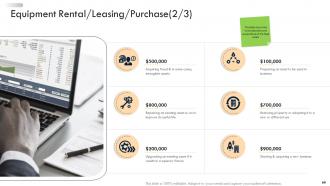
Slide 60: This slides shows the funds allocation and expenditure of the fixed assets.
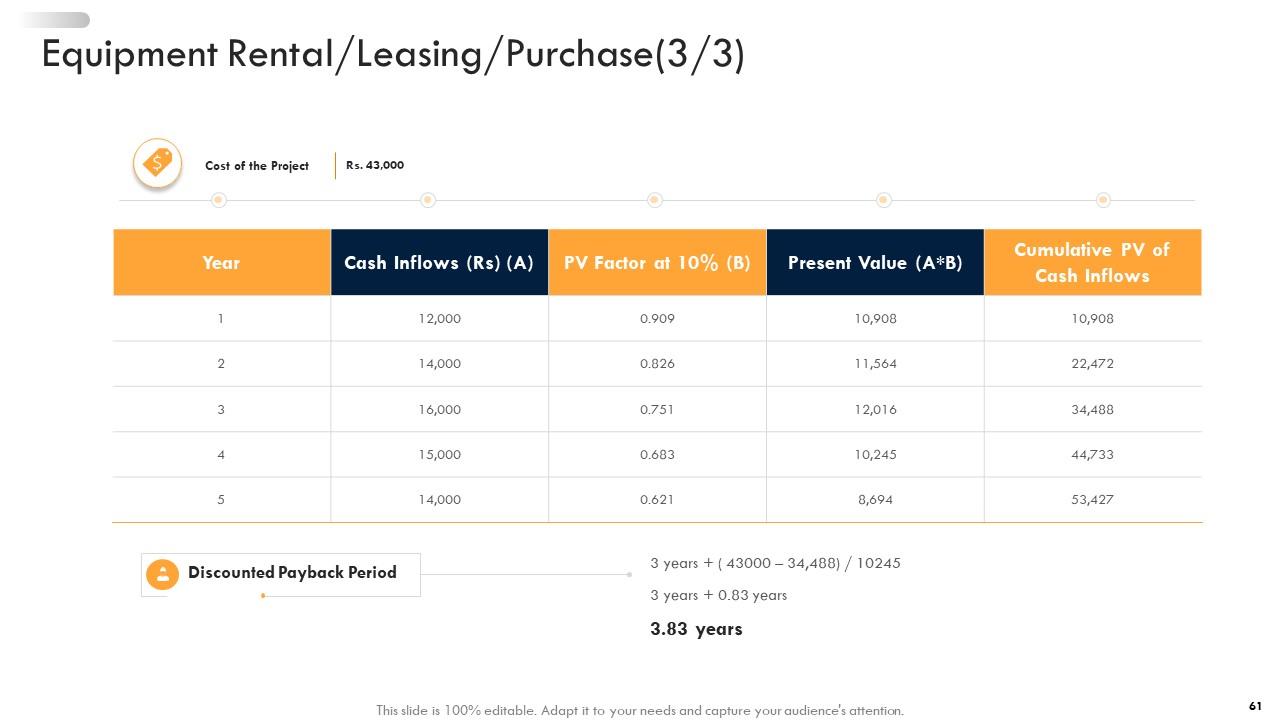
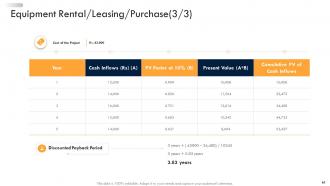
Slide 61: This slide presents Equipment Rental/Leasing/Purchase.
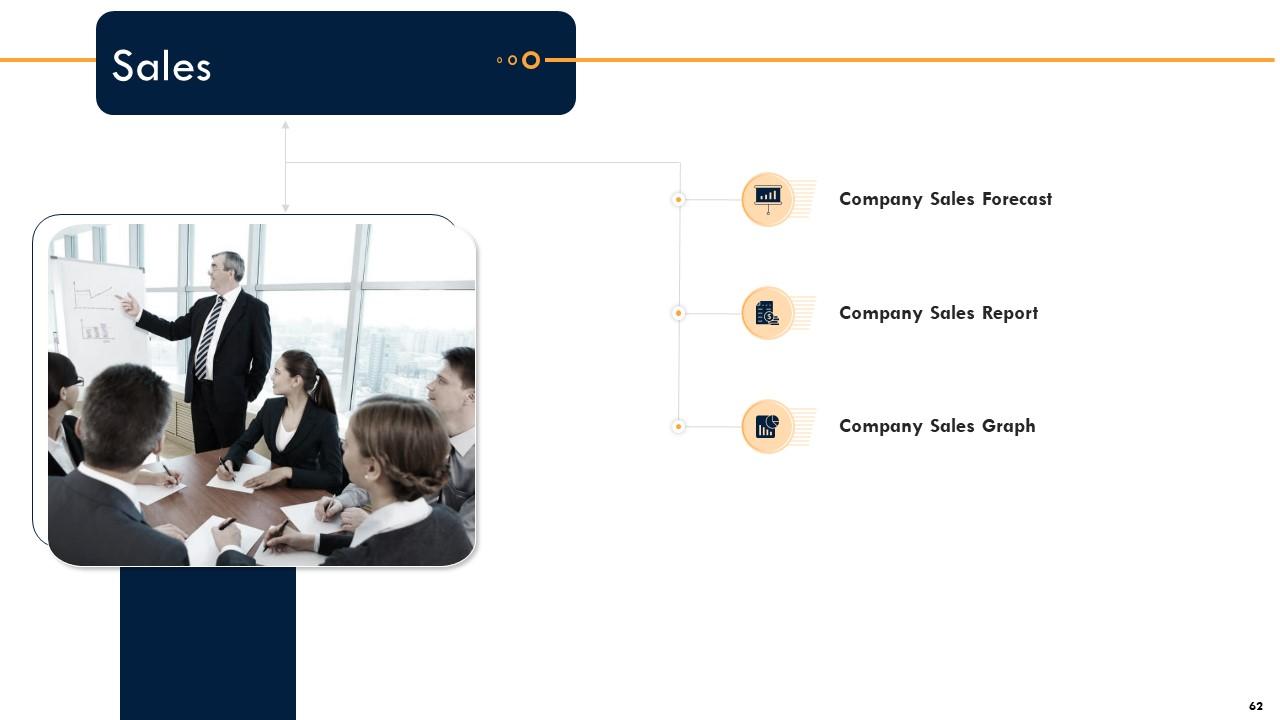
Slide 62: This slide presents Company Sales Report.
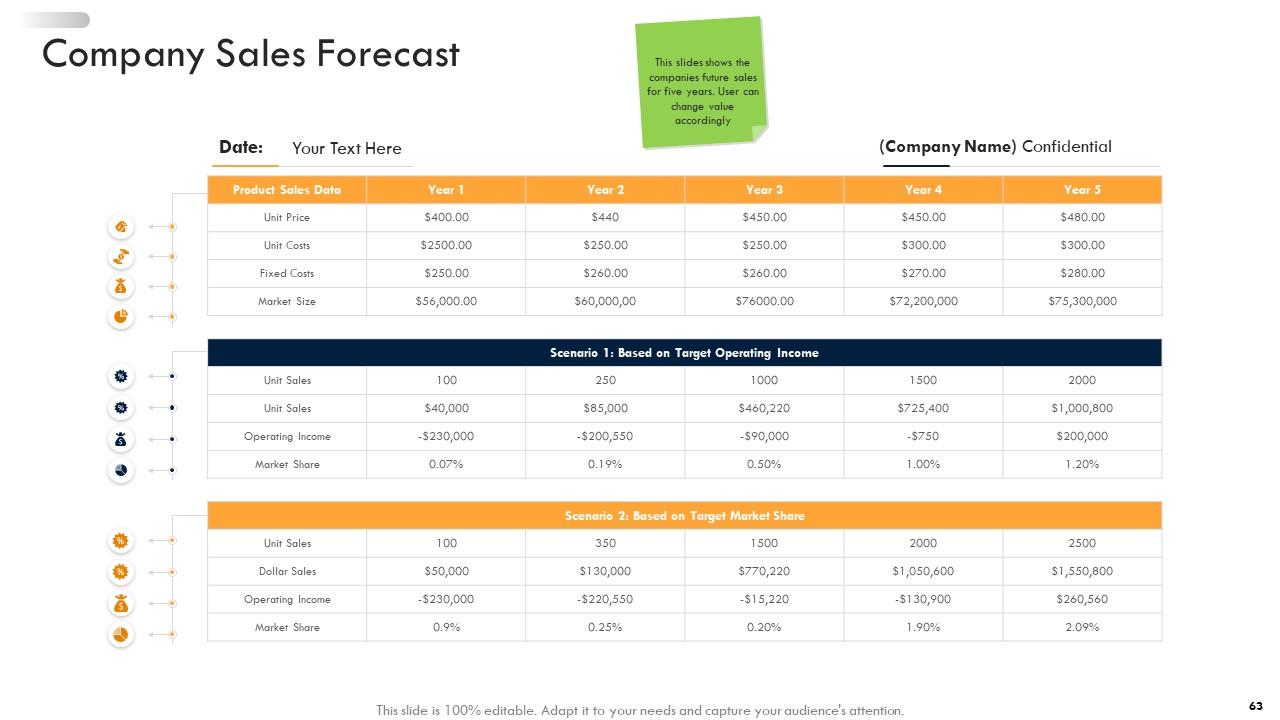
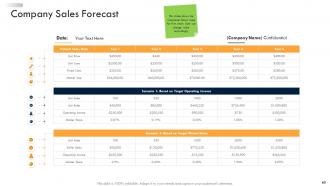
Slide 63: This slides shows the companies future sales for five years. User can change value accordingly.
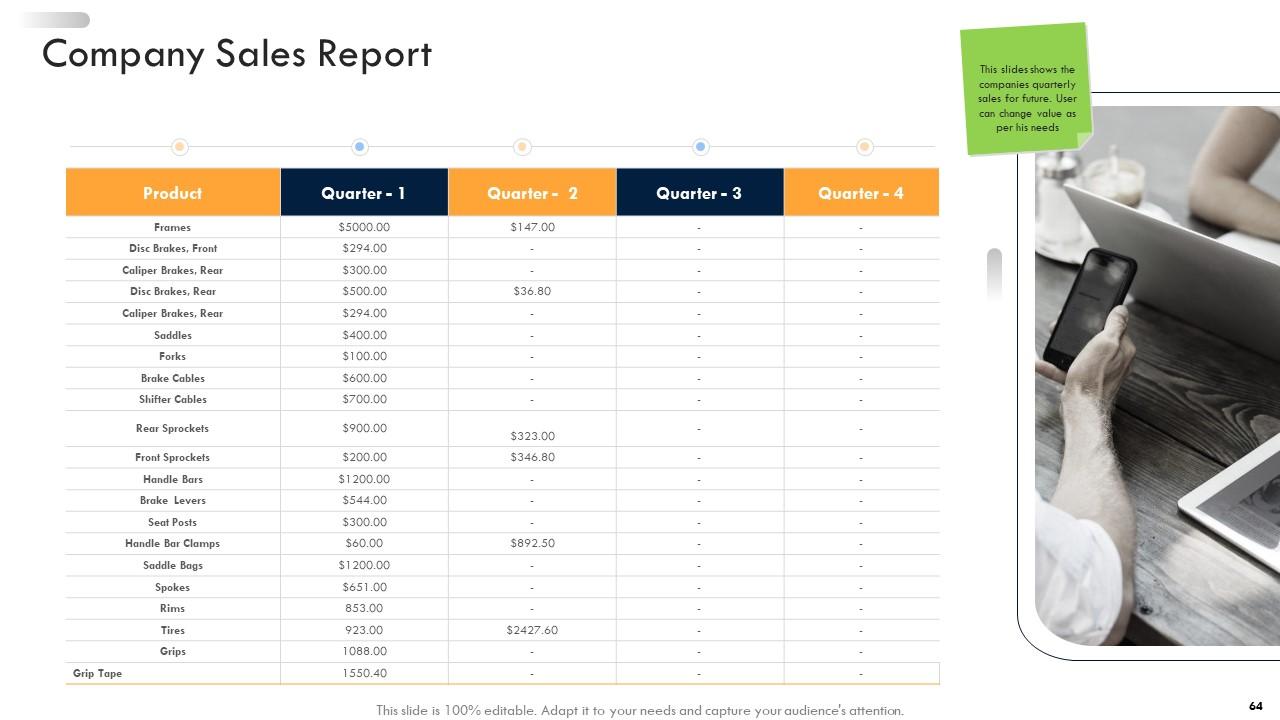
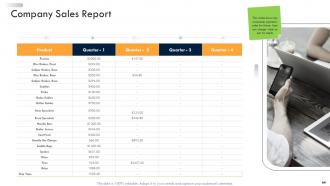
Slide 64: This slides shows the companies quarterly sales for future. User can change value as per his needs.
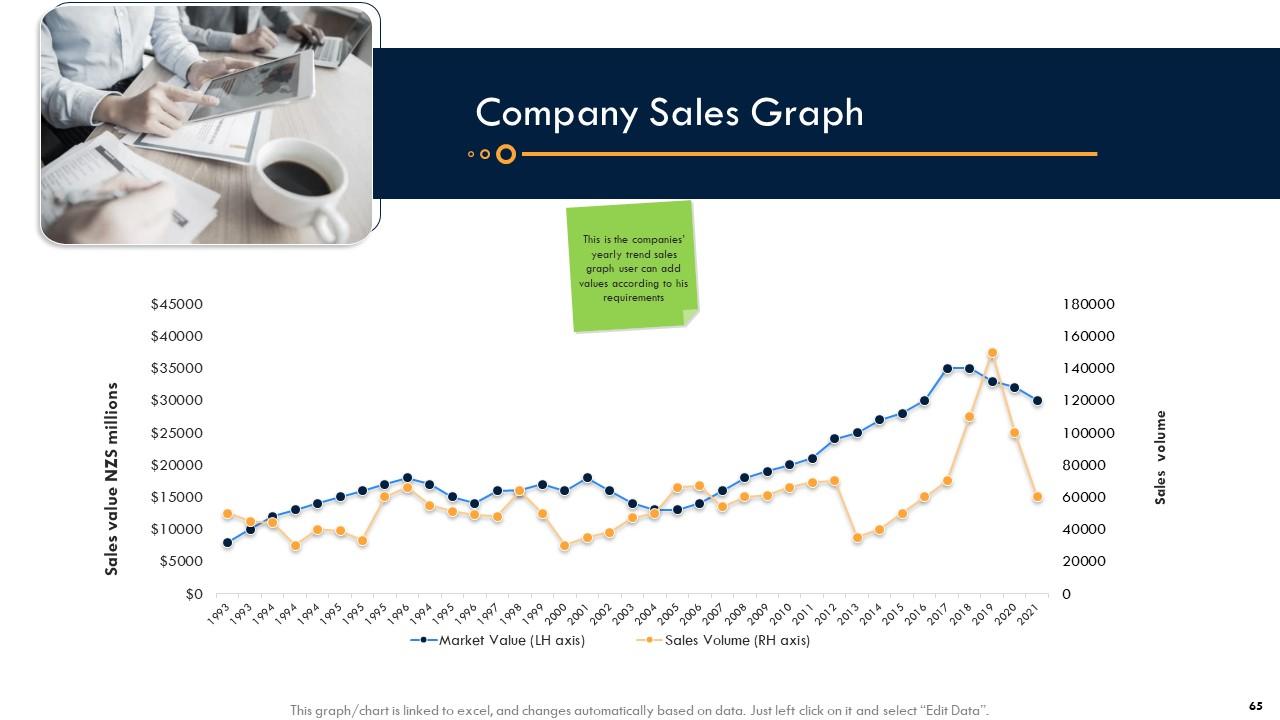
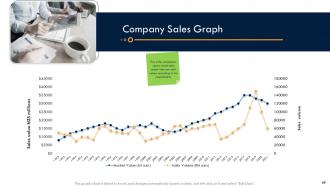
Slide 65: This slide presents the companies’ yearly trend sales graph user can add values according to his requirements.
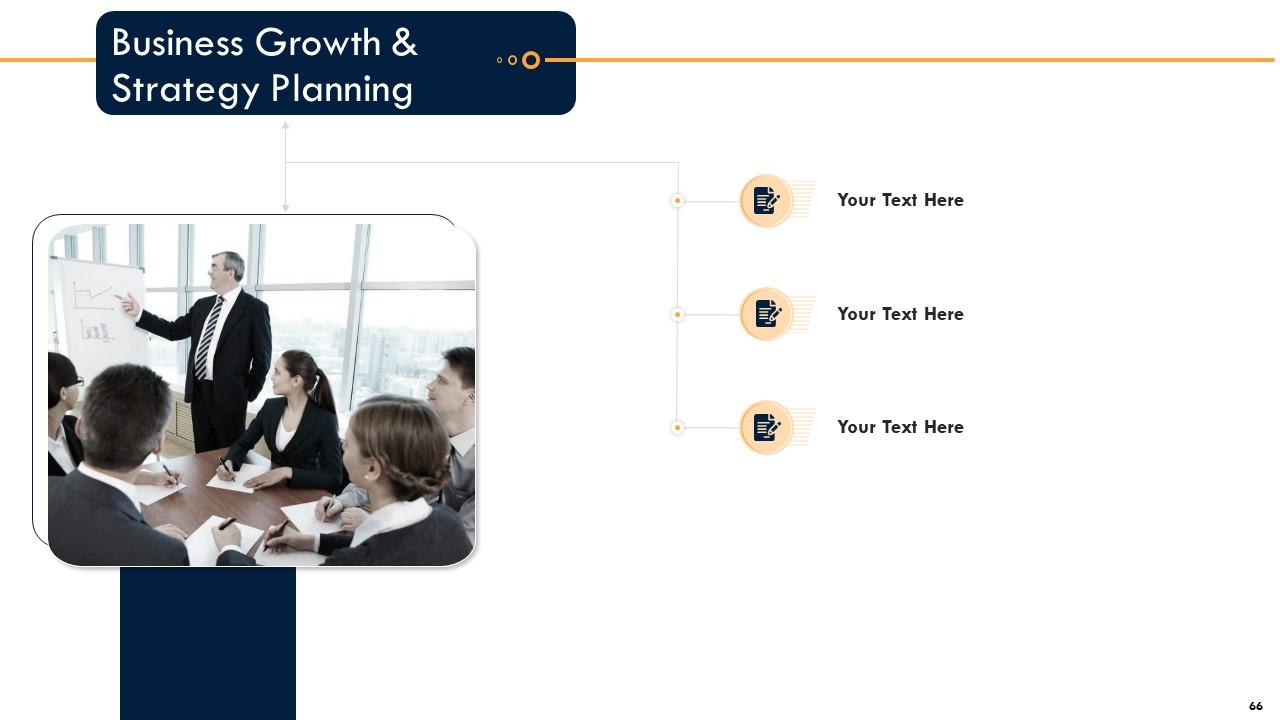
Slide 66: This slide presents Business Growth & Strategy Planning.
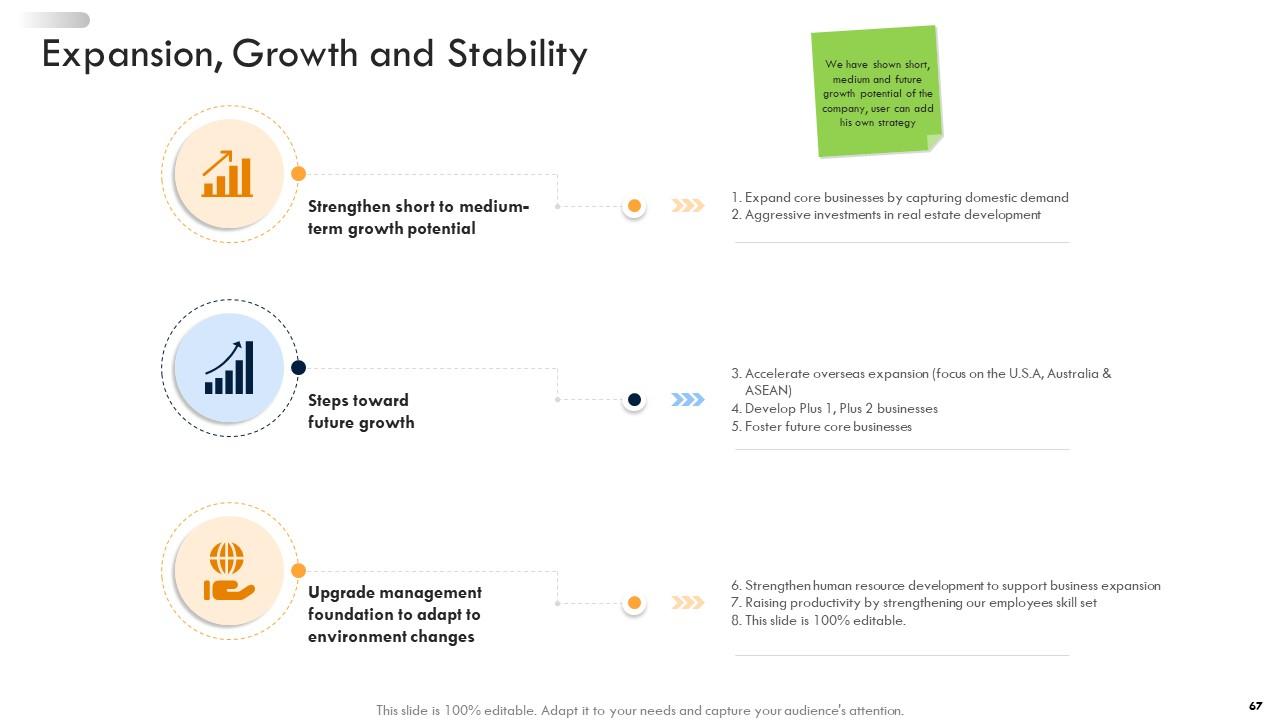
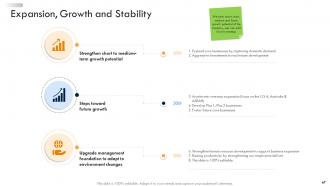
Slide 67: This slide presents Expansion, Growth and Stability.
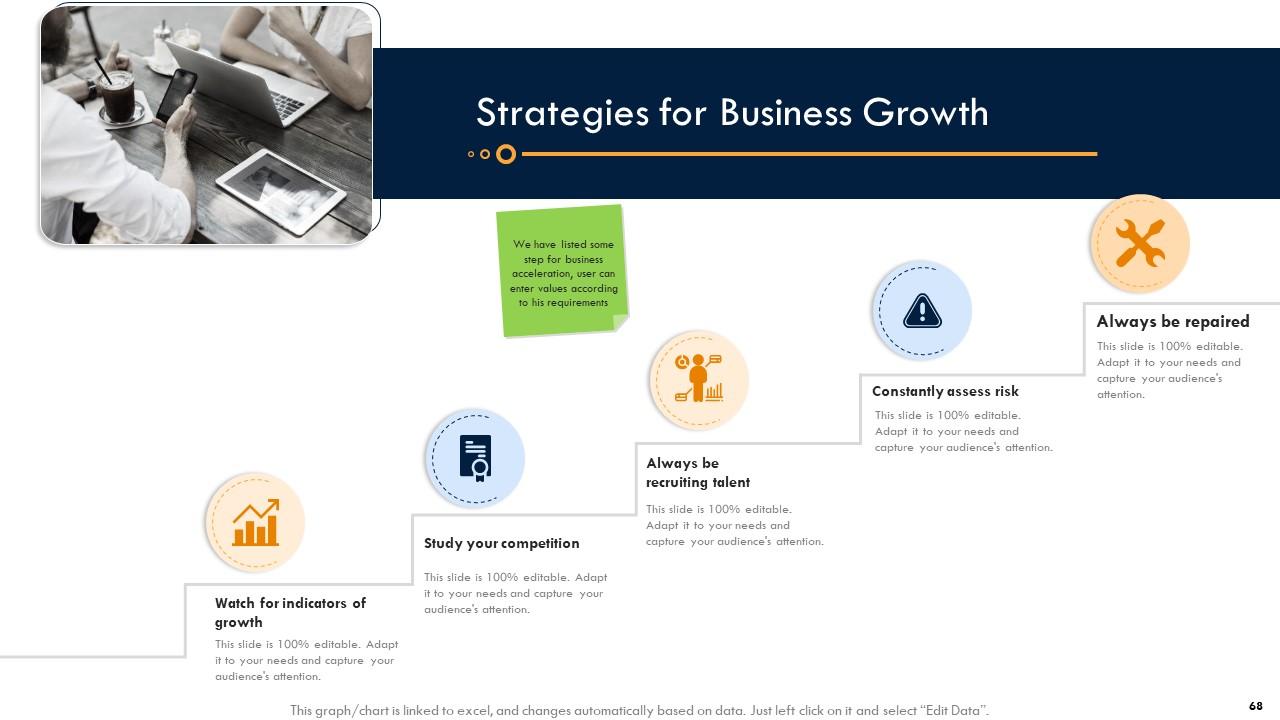
Slide 68: This slide presents some step for business acceleration, user can enter values according to his requirements.
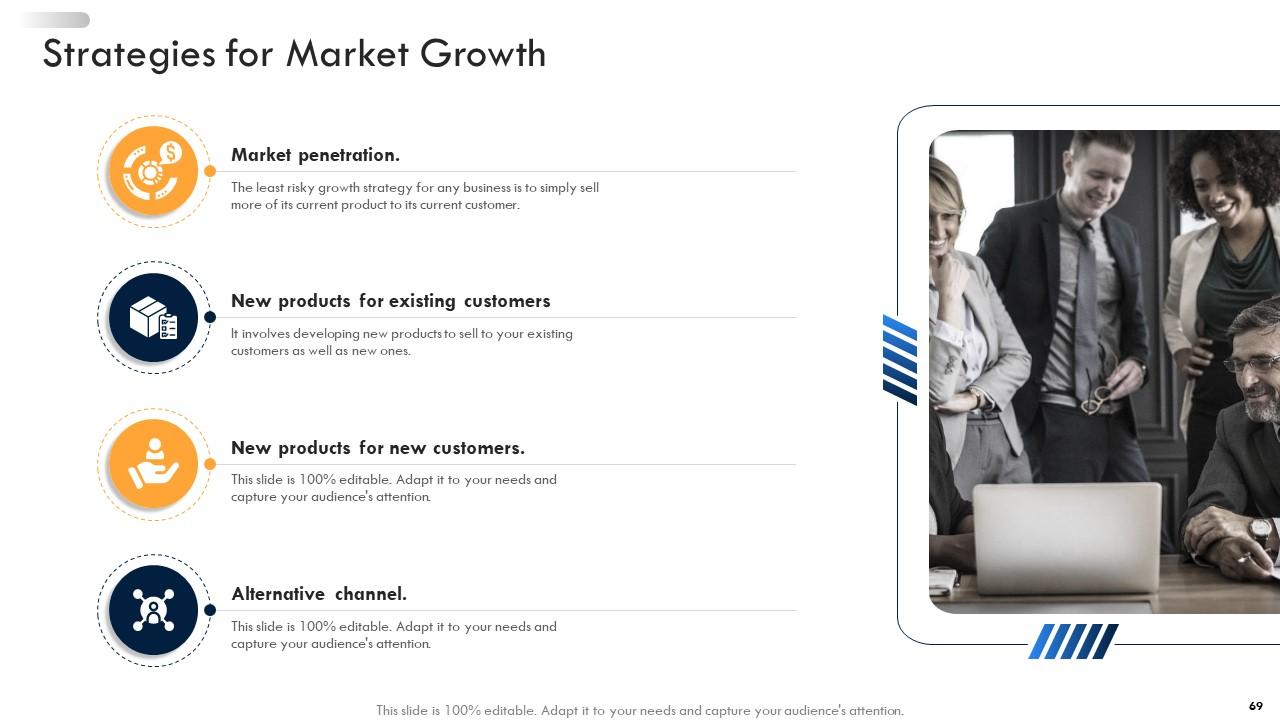
Slide 69: This slide presents Strategies for Market Growth.
Slide 70: This slide presents HR Planning.
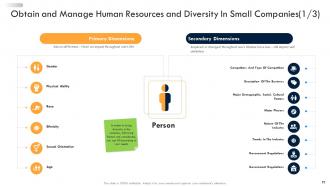
Slide 71: This slide talks about Obtaining and Managing Human Resources and Diversity In Small Companies.
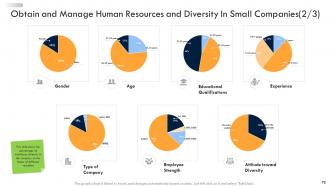
Slide 72: This slide shows the percentage of workforce diversity in the company on the bases of different variables
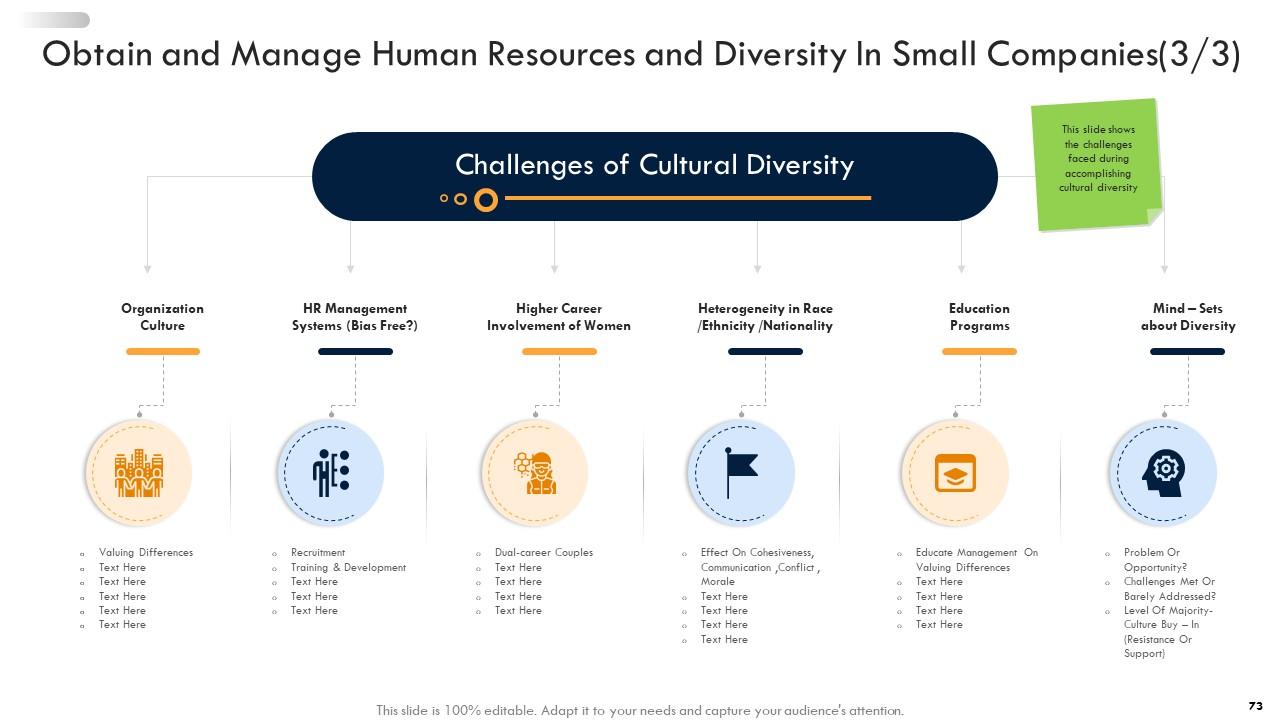
Slide 73: This slide shows the challenges faced during accomplishing cultural diversity
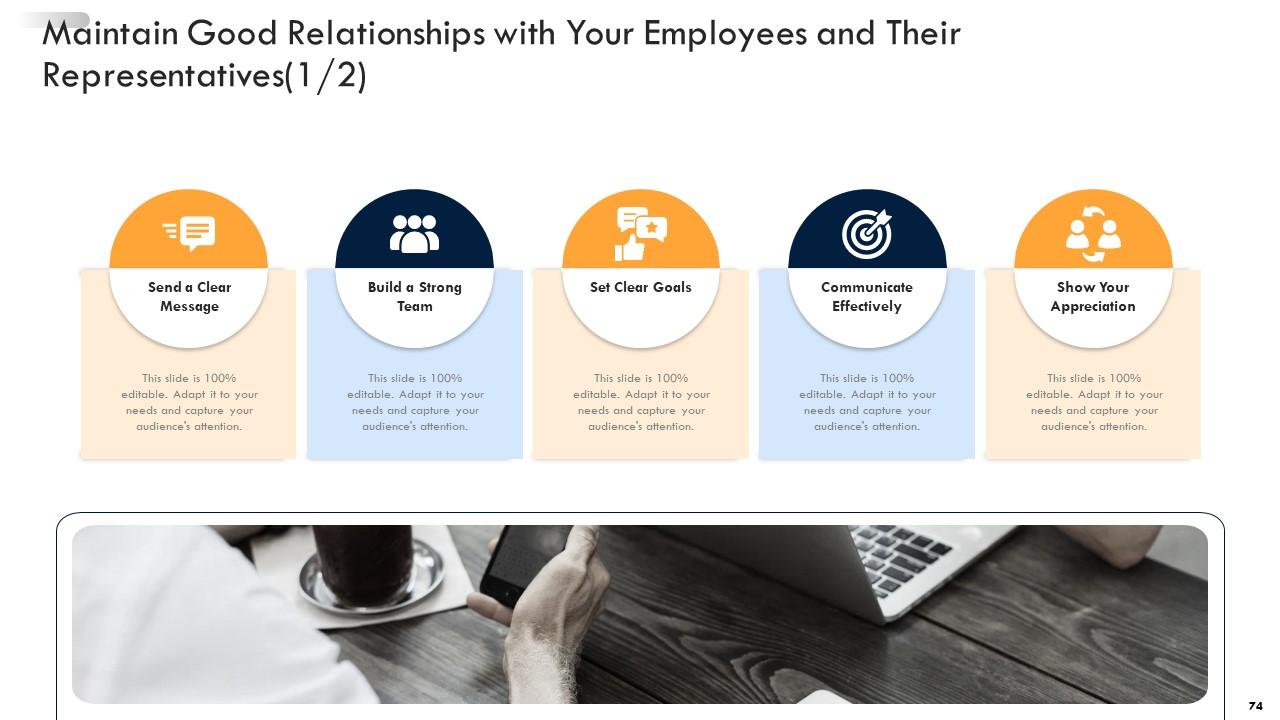
Slide 74: This slide talks about Maintaining Good Relationships with Your Employees and Their Representatives.
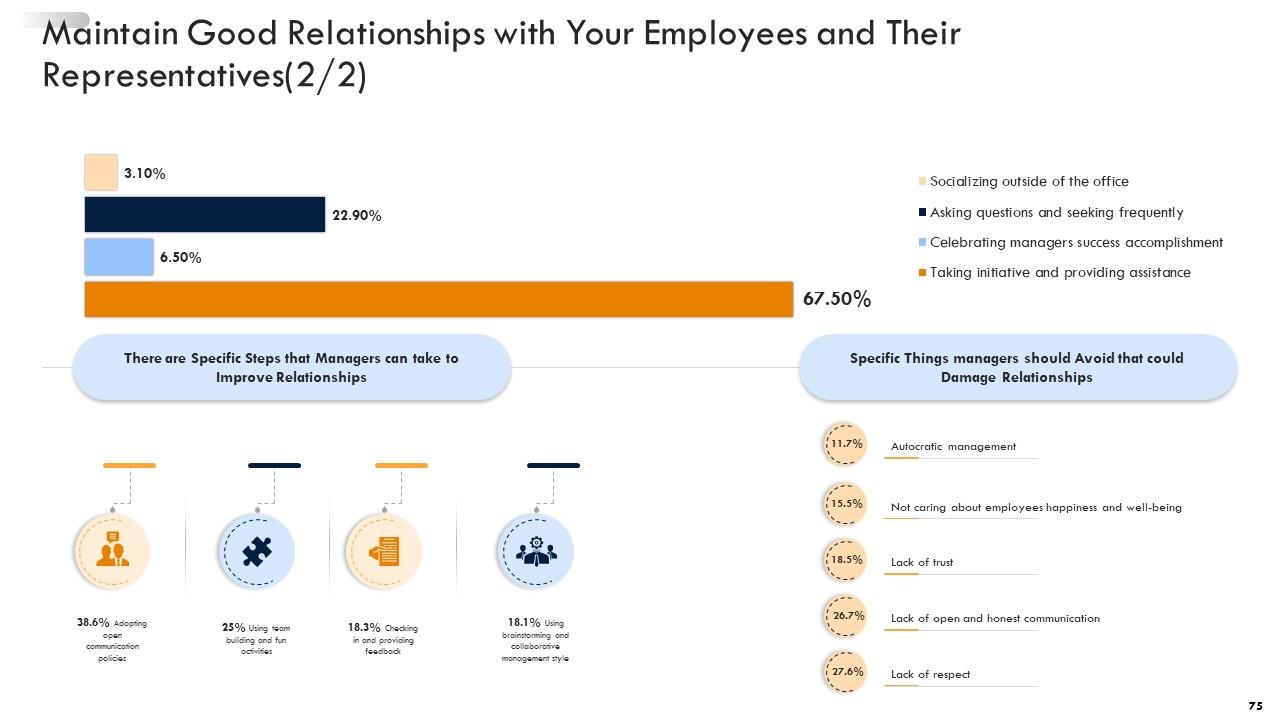
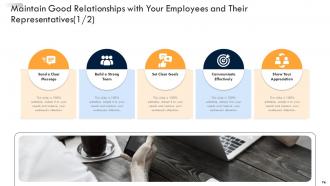
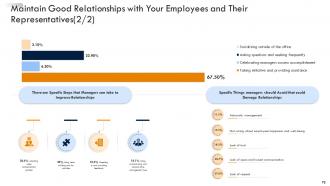
Slide 75: This slide talks about Maintaining Good Relationships with Your Employees and Their Representatives.
Slide 76: This slide presents Business Management KPIs & Dashboard.
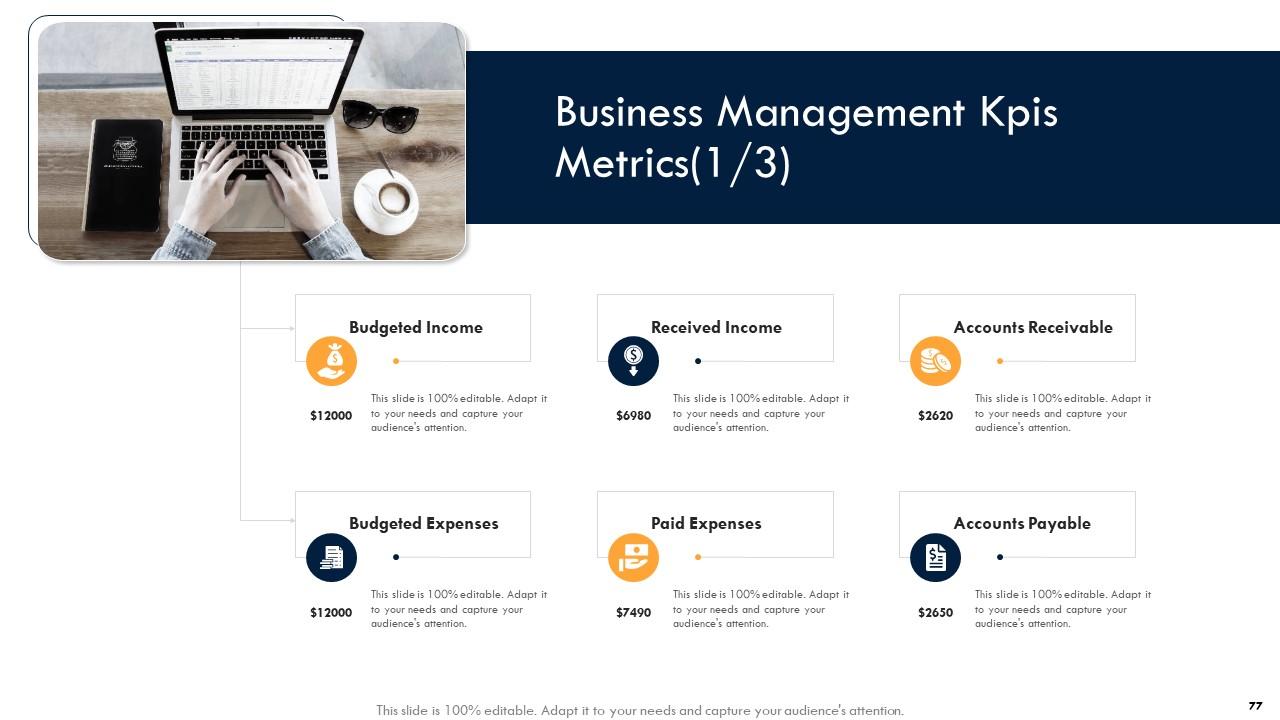
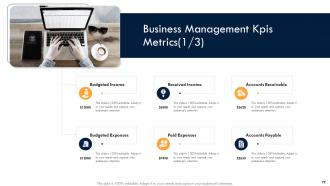
Slide 77: This slide presents Business Management KPIs Metrics.
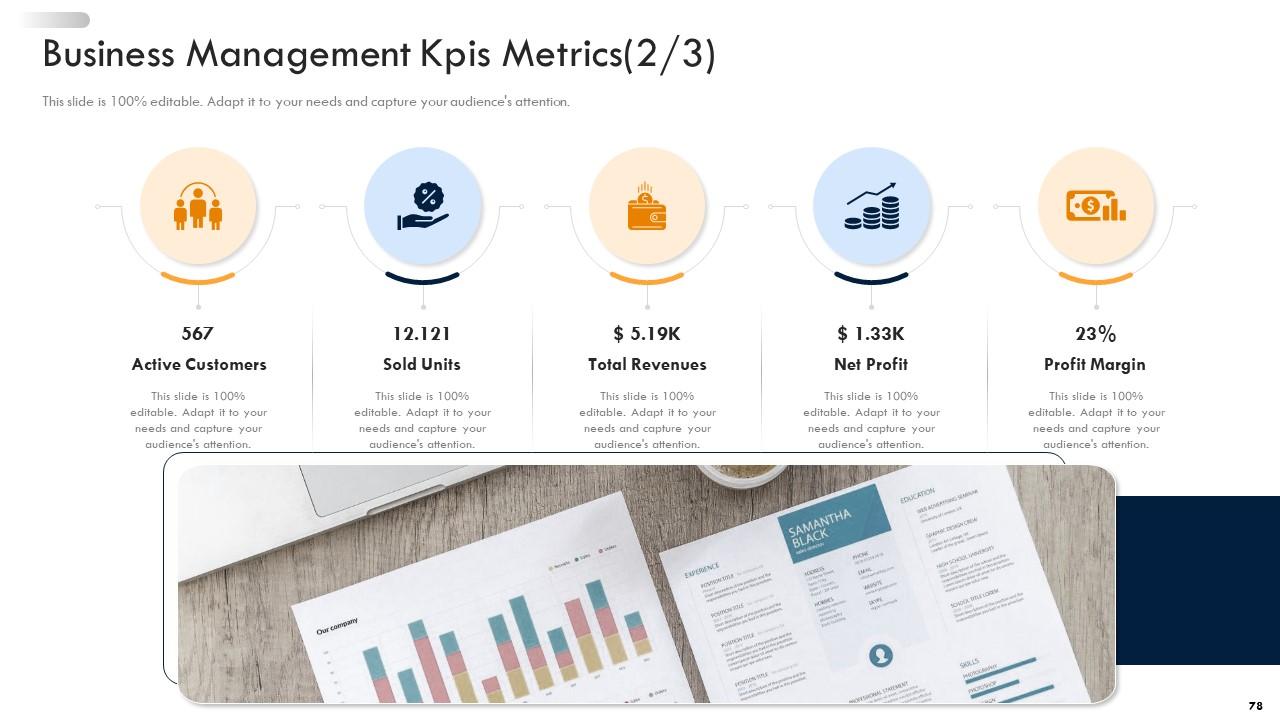
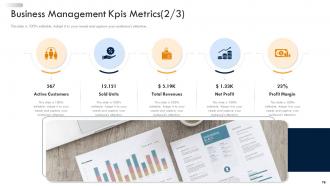
Slide 78: This slide presents Business Management KPIs Metrics.
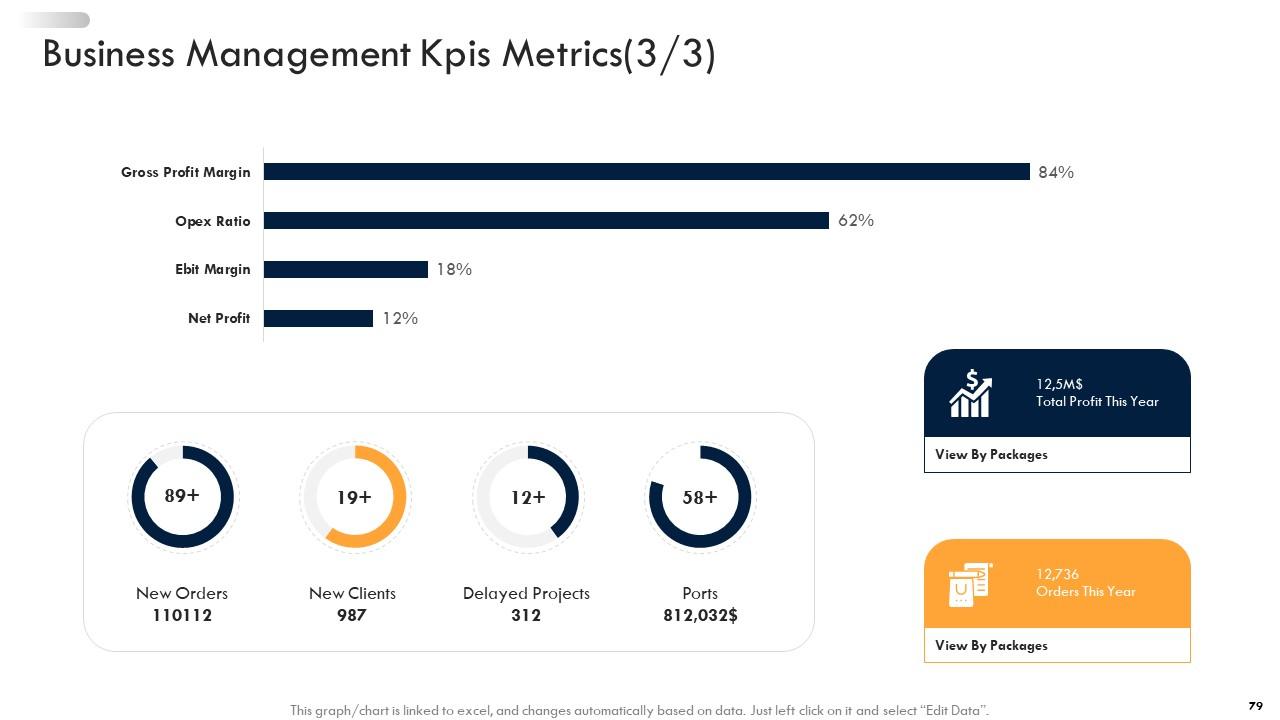
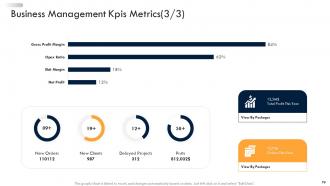
Slide 79: This slide presents Business Management KPIs Metrics
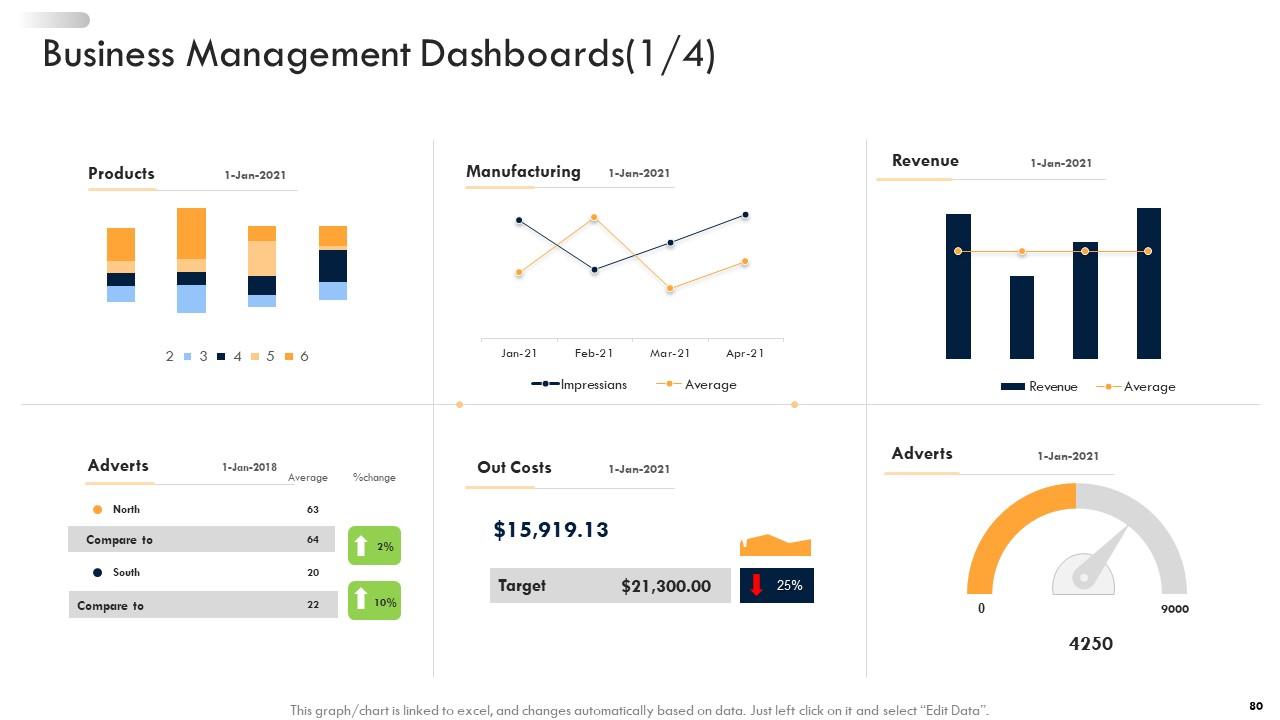
Slide 80: This slide presents Business Management Dashboards.
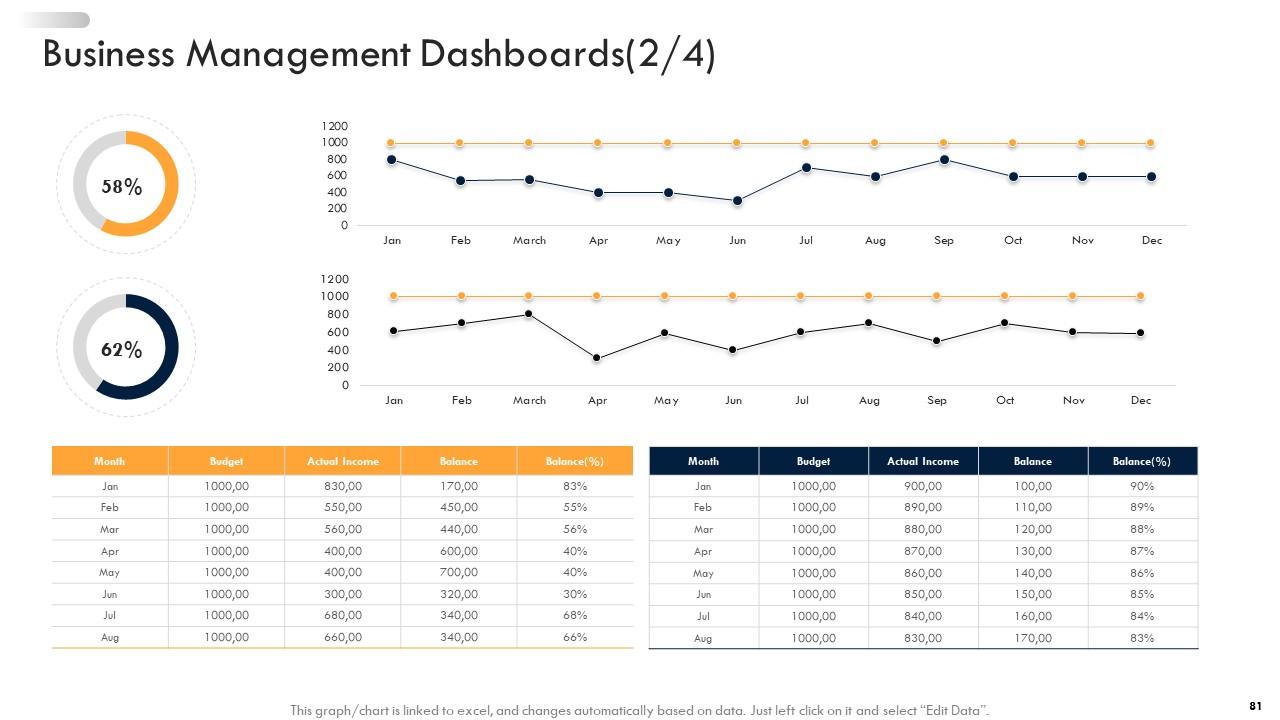
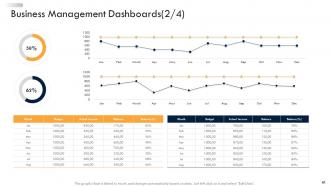
Slide 81: This slide presents Business Management Dashboards.
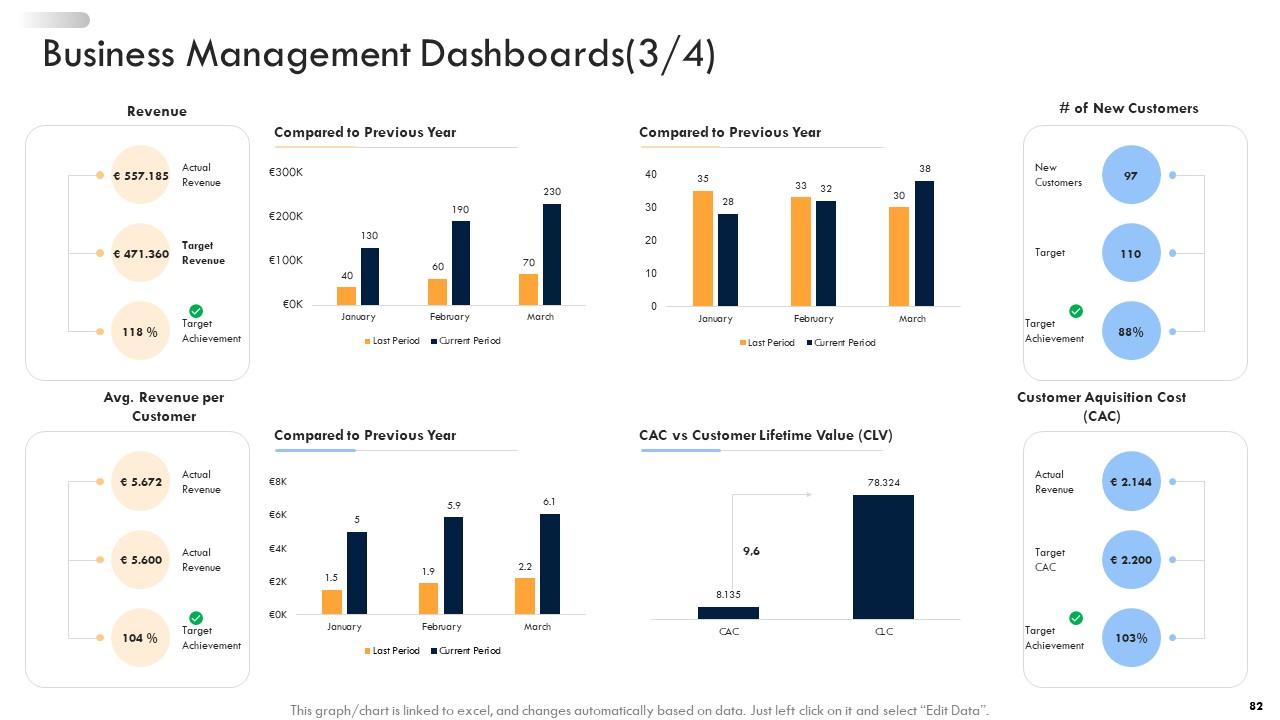
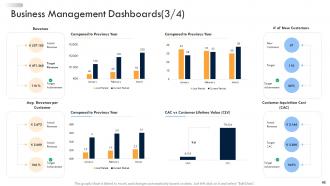
Slide 82: This slide presents Business Management Dashboards.
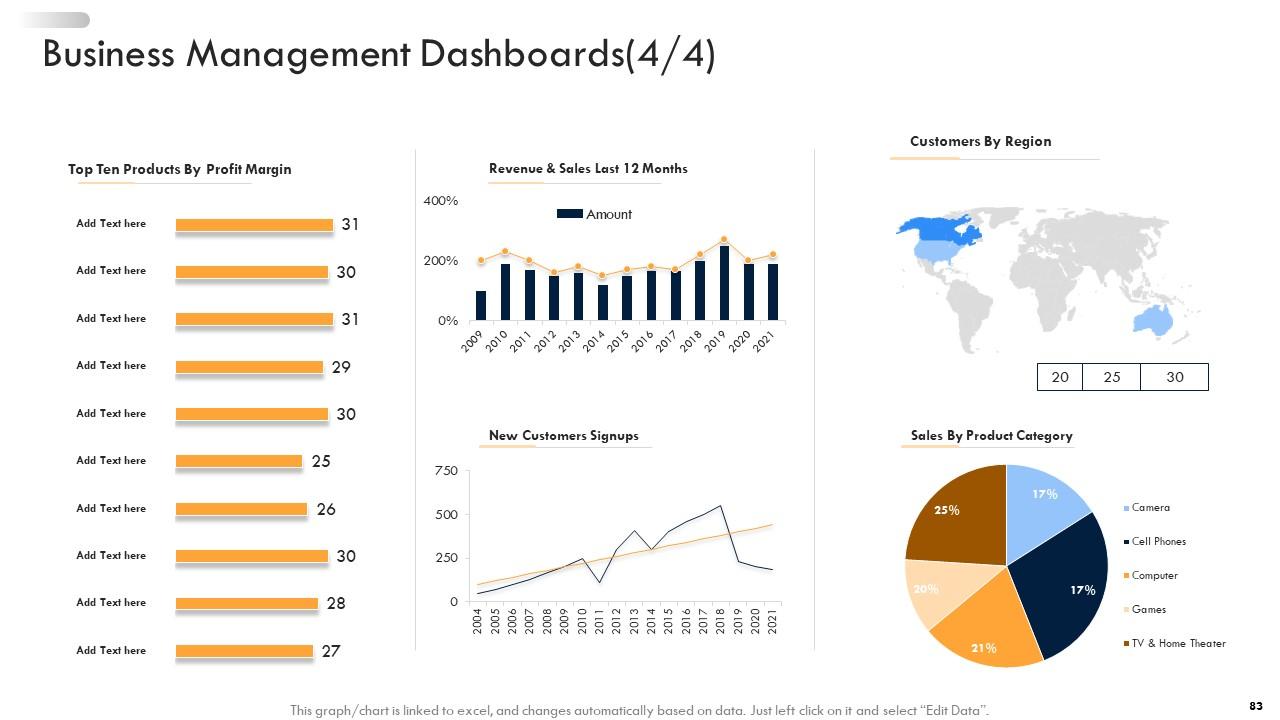
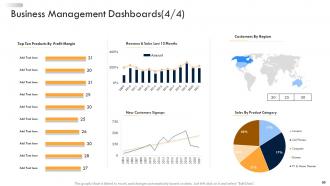
Slide 83: This slide presents Business Management Dashboards.
Slide 84: This is Icon Slide with various icons. Use as per need and requirement.
Slide 85: This is an About Us slide. State company/team specifications etc. here.
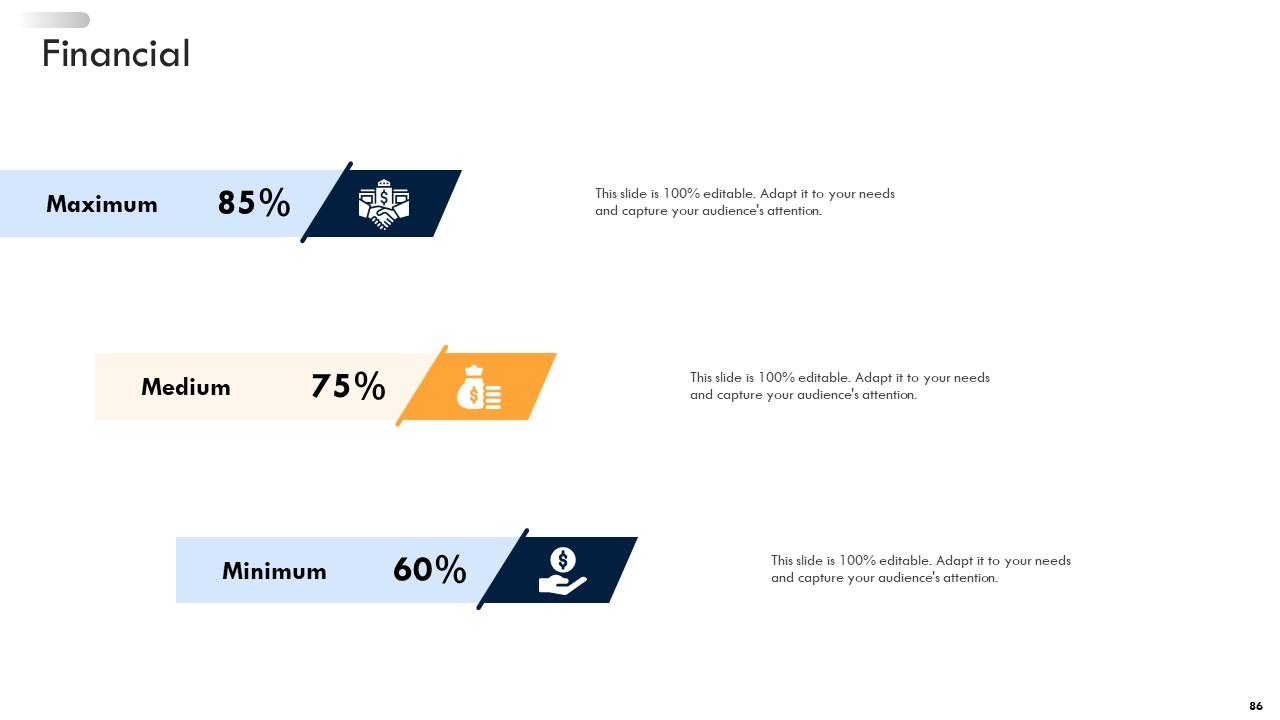
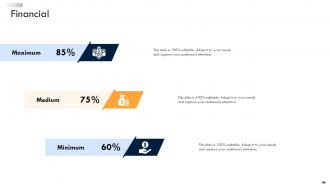
Slide 86: This is Financial scores slide. State your financial aspects etc. here.
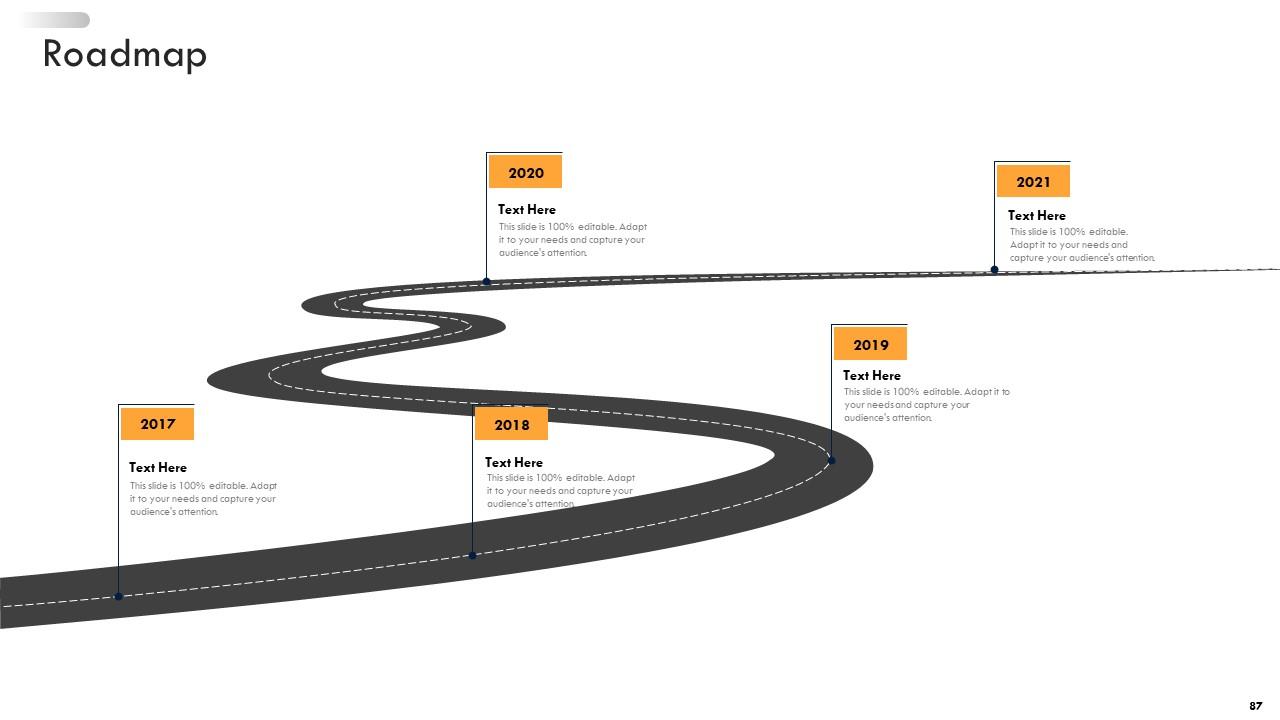
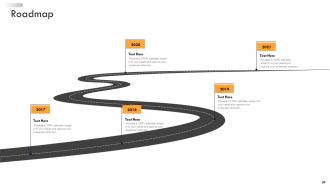
Slide 87: This is a Roadmap slide that can be used to present chronological sequence of events.
Slide 88: This is a Thank You slide for acknowledgement.
Business strategic planning powerpoint presentation slides with all 88 slides:
Use our Business Strategic Planning Powerpoint Presentation Slides to effectively help you save your valuable time. They are readymade to fit into any presentation structure.
-
Excellent template with unique design.
-
Colors used are bright and distinctive.
-
Innovative and Colorful designs.
-
Easy to edit slides with easy to understand instructions.
-
Topic best represented with attractive design.
-
Illustrative design with editable content. Exceptional value for money. Highly pleased with the product.
-
Unique and attractive product design.
