


Business Promotion Methods And Advertising Powerpoint Presentation Slides




Try Before you Buy Download Free Sample Product
 Impress Your
 Audience
 100%
100% Editable
 Save Hours
 of Time


Communicate detailed information with our business promotion methods and advertising PowerPoint presentation slides. This work boosting PPT design sets an effective agenda that includes- business focus, competitive landscape, strategic positioning, budgeting, promotional strategies, and a lot more. This PowerPoint template showcases the audience how all the work is based on high trust and low value. The slides in this profession progress creative PPT set places emphasis on the products and the services that the company is planning to offer to its shareholders/customers. Along with presenting the need for new commodities, the field boosting PowerPoint layout presents a competitive analysis based on strengths and weaknesses of the organization. This merchandising stimulation PPT bundle assists you in developing the comparison wherever relevant based on revenue, profit, market share, main activity, number of employees, and product quality. Making you aware about the enterprise’s long-term vision, downloading it instantly will make you standout in your business.
People who downloaded this PowerPoint presentation also viewed the following :
Content of this Powerpoint Presentation
Slide 1: This slide introduces Business Promotion Methods And Advertising. State Your Company Name and begin.
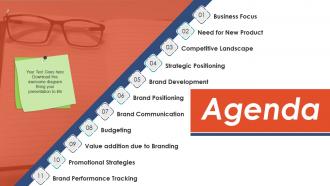
Slide 2: This slide presents Agenda points that you can use it-Bring your presentation to life, Business Focus, Need for New Product, Competitive Landscape, Strategic Positioning, Brand Development, Brand Positioning, Brand Communication, Budgeting, Value addition due to Branding, Promotional Strategies, Brand Performance Tracking.
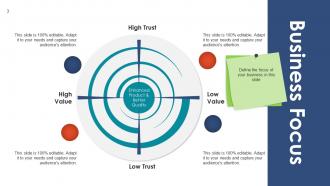
Slide 3: This slide presents Business Focus which further showcases Enhanced Product & Better Quality High Value, Low Value, Low Trust, High Trust, Define the focus of your business in this slide.
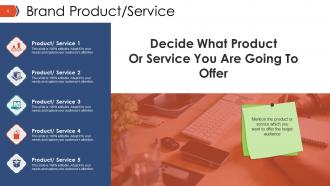
Slide 4: This slide shows Brand Product/Service in which we have Mention the product or service which you want to offer the target audience.
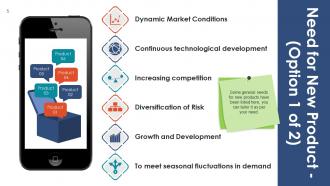
Slide 5: This slide presents Need for New Product - (Option 1 of 2) with these of the parameters- Growth and Development, Diversification of Risk, Increasing competition, Dynamic Market Conditions, Continuous technological development, To meet seasonal fluctuations in demand, Some general needs for new products have been listed here, you can tailor it as per your need.
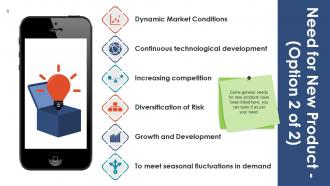
Slide 6: This slide presents Need for New Product - (Option 2 of 2) with these of the six parameters- Growth and Development, Diversification of Risk, Increasing competition, Dynamic Market Conditions, Continuous technological development, To meet seasonal fluctuations in demand, Some general needs for new products have been listed here, you can tailor it as per your need.
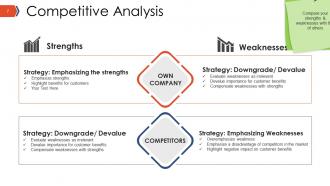
Slide 7: This slide showcases Competitive Analysis. Compare your strengths & weaknesses with that of others
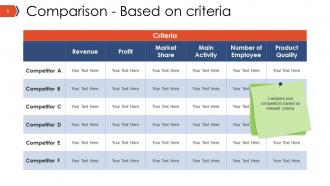
Slide 8: This slide presents Comparison - Based on criteria. Compare your competitors based on relevant criteria
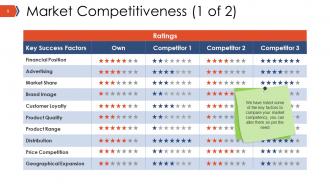
Slide 9: This slide showcases Market Competitiveness (1 of 2). We have listed some of the key factors to compare your market competency, you can alter them as per the need
Slide 10: This slide presents Market Competitiveness (2 of 2). We have listed some of the key factors to compare your market competency, you can alter them as per the need
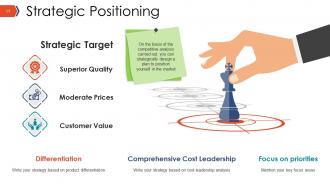
Slide 11: This slide showcases Strategic Positioning with these of the parameters- Superior Quality, Moderate Prices, Customer Value, Comprehensive Cost Leadership, On the basis of the competitive analysis carried out, you can strategically design a plan to position yourself in the market
Slide 12: This slide shows Brand Mission Statement. Mention the Brand mission in this slide indicating the Brand’s purpose
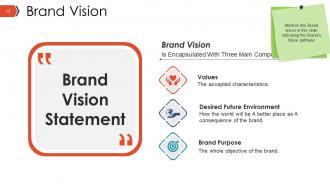
Slide 13: This slide presents Brand Vision Statement. Mention the Brand vision in this slide indicating the Brand’s future pathway
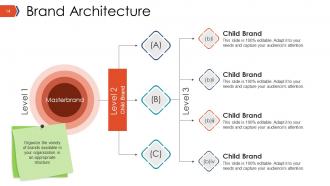
Slide 14: This slide showcases Brand Architecture. Organize the variety of brands available in your organization in an appropriate structure
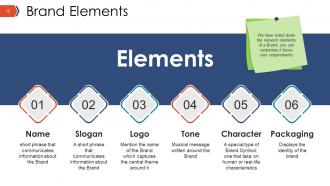
Slide 15: This slide presents Brand Elements with these six we have listed- Name, Logo, Slogan, Tone, Character, Packaging, Elements, We have listed down the relevant elements of a Brand, you can customize it basis your requirements
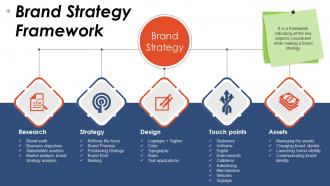
Slide 16: This slide showcases Brand Strategy Framework. It is a framework indicating all the key aspects considered while making a brand strategy
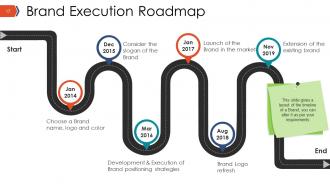
Slide 17: This slide presents Brand Execution Roadmap. This slide gives a layout of the timeline of a Brand, you can alter it as per your requirements
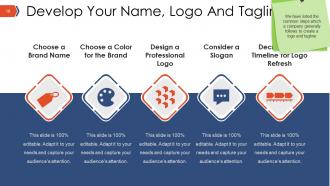
Slide 18: This slide showcases Develop Your Name, Logo And Tagline with these of the following parameter- Choose a Brand Name, Choose a Color for the Brand, Design a Professional Logo, Consider a Slogan, Decide On a Timeline for Logo Refresh, We have listed the common steps which a company generally follows to create a logo and tagline
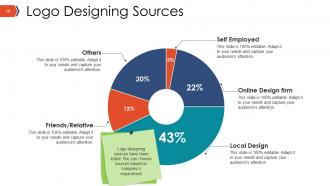
Slide 19: This slide presents Logo Designing Sources Self Employed, Online Design firm, Local Design, Others, Friends/Relative, Logo designing sources have been listed. You can choose sources based on company’s requirement
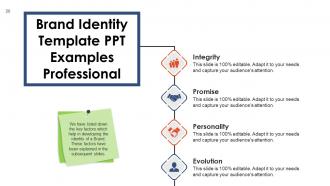
Slide 20: This slide showcases Brand Identity Template PPT Examples Professional Integrity, Promise, Personality, Evolution, We have listed down the key factors which help in developing the identity of a Brand. These factors have been explained in the subsequent slides.
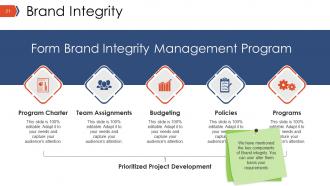
Slide 21: This slide shows Brand Integrity with these of the five factors- Program Charter, Team Assignments, Budgeting, Policies, Programs, We have mentioned the key components of Brand integrity. You can use/ alter them basis your requirements
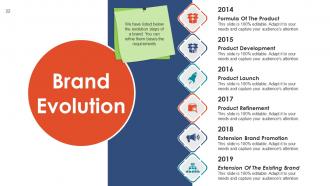
Slide 22: This slide presents Brand Evolution with these six of the factors- Formula Of The Product, Product Launch, Extension Brand Promotion, Extension Of The Existing Brand, Product Refinement, Product Development, We have listed below the evolution steps of a brand. You can refine them bases the requirements
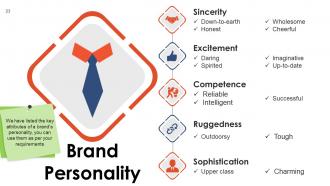
Slide 23: This slide presents Brand Personality with these of the points- Sincerity, Competence, Ruggedness, Sophistication, We have listed the key attributes of a brand’s personality, you can use them as per your requirements
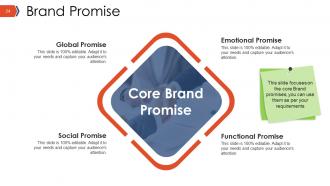
Slide 24: This slide presents Brand Promise with these four parameters- Emotional Promise, Functional Promise, Global Promise, Social Promise, Core Brand Promise.
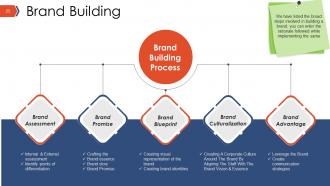
Slide 25: This slide Brand Building. We have listed the broad steps involved in building a brand, you can enter the rationale followed while implementing the same
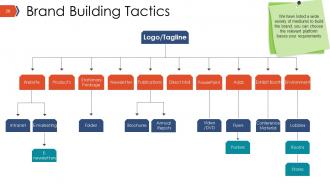
Slide 26: This slide showcases Brand Building Tactics. We have listed a wide variety of mediums to build the brand, you can choose the relevant platform bases your requirements
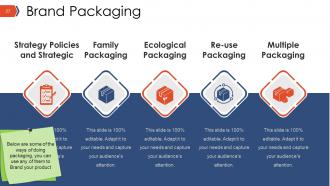
Slide 27: This slide presents Brand Packaging with these five ways - Strategy Policies and Strategic, Family Packaging, Ecological Packaging, Re-use Packaging, Multiple Packaging, Below are some of the ways of doing packaging, you can use any of them to Brand your product
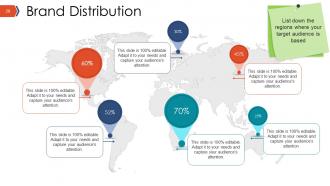
Slide 28: This slide presents Brand Distribution. List down the regions where your target audience is based
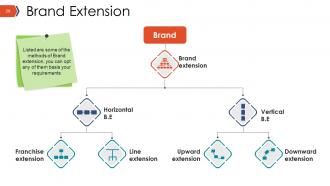
Slide 29: This slide showcases Brand Extension with these of the hierarchy- Brand, Brand extension, Horizontal B.E, Vertical B.E, Franchise extension, Line extension, Upward extension, Downward extension, Listed are some of the methods of Brand extension, you can opt any of them basis your requirements
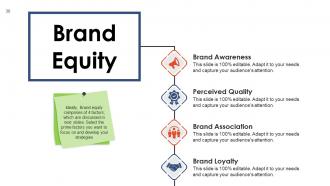
Slide 30: This slide presents Brand Equity with these four factors- Brand Awareness, Perceived Quality, Brand Association, Brand Loyalty, Ideally, Brand equity comprises of 4 factors; which are discussed in next slides. Select the prime factors you want to focus on and develop your strategies
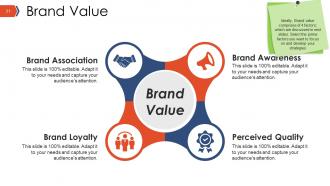
Slide 31: This slide shows Brand Value with these four of the factors- Brand Value, Perceived Quality, Brand Awareness, Brand Association, Brand Loyalty, Ideally, Brand value comprises of 4 factors; which are discussed in next slides. Select the prime factors you want to focus on and develop your strategies
Slide 32: This slide showcases Brand Awareness with these five of the points- Dominant, Top of Mind, Unaided Awareness, Aided Awareness, Unaware of the Brand, Awareness Pyramid, Identify your brand segment in this brand awareness pyramid and prepare short term and long term strategies to move up in the ladder
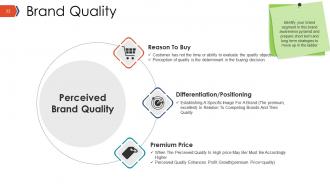
Slide 33: This slide presents Brand Quality with these three main criterias- Perceived Brand Quality, Reason To Buy, Premium Price, Identify your brand segment in this brand awareness pyramid and prepare short term and long term strategies to move up in the ladder
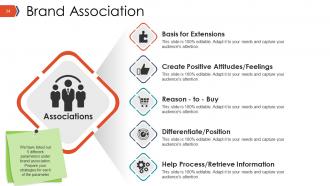
Slide 34: This slide presents Brand Association with these of the parameters- Associations, Basis for Extensions, Create Positive Attitudes/Feelings, Reason - to - Buy, Differentiate/Position, Help Process/Retrieve Information, We have listed out 5 different parameters under brand association. Prepare your strategies for each of the parameter
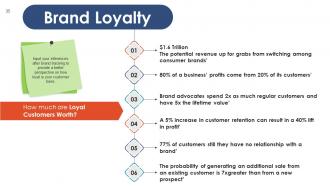
Slide 35: This slide presents Brand Loyalty. Input your inferences after brand tracking to provide a better perspective on how loyal is your customer base.
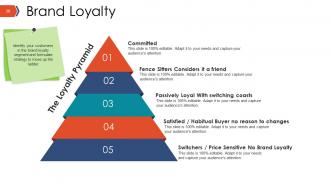
Slide 36: This slide showcases Brand Loyalty with these parameters- Passively Loyal With switching coasts, Fence Sitters Considers it a friend, Switchers / Price Sensitive No Brand Loyalty, Committed, Satisfied / Habitual Buyer no reason to changes, Identify your customers in the brand loyalty segment and formulate strategy to move up the ladder
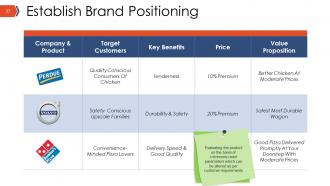
Slide 37: This slide showcases Establish Brand Positioning. Evaluating the product on the basis of commonly used parameters which can be altered as per customer requirements
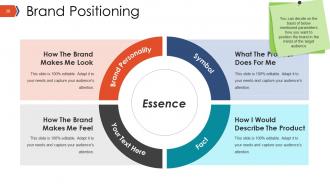
Slide 38: This slide presents Brand Positioning with these of the four parameters- How The Brand Makes Me Look, What The Product Does For Me, How The Brand Makes Me Feel, How I Would Describe The Product, You can decide on the basis of below mentioned parameters how you want to position the brand in the minds of the target audience
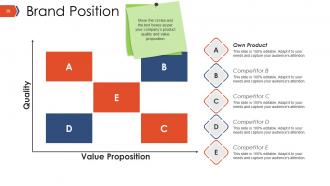
Slide 39: This slide showcases Brand Position with these parameters- Quality, Value Proposition, Own Product.
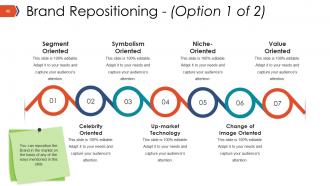
Slide 40: This slide shows Brand Repositioning - (Option 1 of 2) with these of the factors- Segment Oriented, Symbolism Oriented, Niche-Oriented, Value Oriented, Celebrity Oriented, Up-market Technology, Change of Image Oriented, You can reposition the Brand in the market on the basis of any of the ways mentioned in this slide
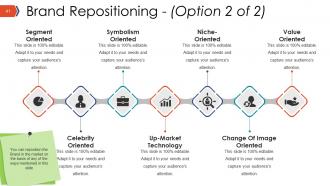
Slide 41: This slide showcases Brand Repositioning - (Option 2 of 2) with these of the seven factors- Segment Oriented, Symbolism Oriented, Niche-Oriented, Value Oriented, Celebrity Oriented, Up-Market Technology, Change Of Image Oriented, You can reposition the Brand in the market on the basis of any of the ways mentioned in this slide
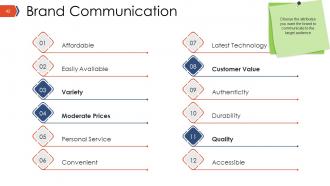
Slide 42: This slide Brand Communication with theses twelve parameters- Affordable, Easily Available, Variety, Moderate Prices, Personal Service, Convenient, Latest Technology, Customer Value, Authenticity, Durability, Quality, Accessible, Choose the attributes you want the brand to communicate to the target audience
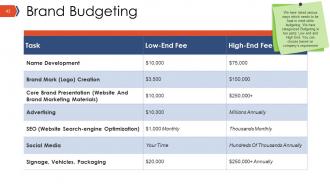
Slide 43: This slide presents Brand Budgeting. We have listed various ways which needs to be kept in mind while budgeting. We have categorized Budgeting in two parts: Low end and High End. You can choose based on company’s requirement
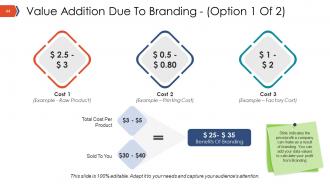
Slide 44: This slide showcases Value Addition Due To Branding - (Option 1 Of 2).
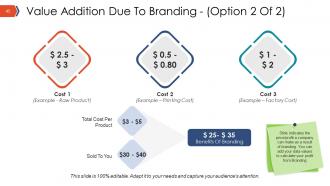
Slide 45: This slide presents Value Addition Due To Branding - (Option 2 Of 2). Add Benefits Of Branding
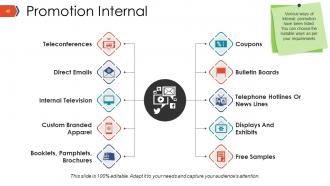
Slide 46: This slide showcases Promotion Internal with these of the parameters- Teleconferences, Direct Emails, Internal Television, Custom Branded Apparel, Booklets, Pamphlets, Brochures, Coupons, Bulletin Boards, Telephone Hotlines Or News Lines, Displays And Exhibits, Free Samples, Various ways of Internal promotion have been listed. You can choose the suitable ways as per your requirements
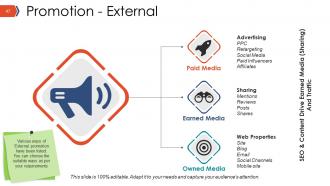
Slide 47: This slide presents Promotion - External. Various ways of External promotion have been listed. You can choose the suitable ways as per your requirements
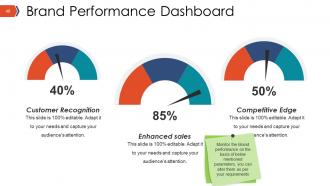
Slide 48: This slide showcases Brand Performance Dashboard with these of the three parameters- Enhanced sales, Customer Recognition, Competitive Edge, Monitor the Brand performance on the basis of below mentioned parameters, you can alter them as per your requirements
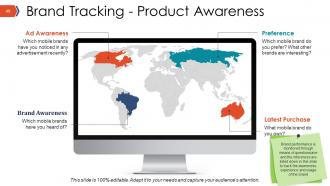
Slide 49: This slide presents Brand Tracking - Product Awareness with these of the four parameters- Preference, Latest Purchase, Brand Awareness, Ad Awareness, Brand performance is monitored through means of questionnaire and the inferences are listed down in this slide to track the awareness, experience and usage of the brand
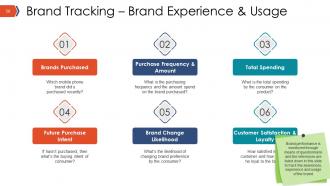
Slide 50: This slide showcases Brand Tracking – Brand Experience & Usage which further- Brands Purchased, Purchase Frequency & Amount, Total Spending, Future Purchase Intent, Brand Change Likelihood, Customer Satisfaction & Loyalty, Brand performance is monitored through means of questionnaire and the inferences are listed down in this slide to track the awareness, experience and usage of the brand
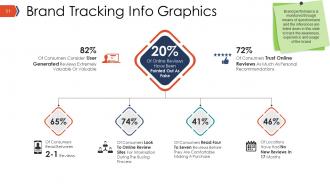
Slide 51: This slide presents Brand Tracking Info Graphics. Brand performance is monitored through means of questionnaire and the inferences are listed down in this slide to track the awareness, experience and usage of the brand
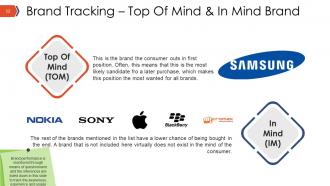
Slide 52: This slide showcases Brand Tracking – Top Of Mind & In Mind Brand. Brand performance is monitored through means of questionnaire and the inferences are listed down in this slide to track the awareness, experience and usage of the brand.
Slide 53: This slide shows Business Promotion Methods And Advertising Icon Slide.
Slide 54: This slide showcases Business Promotion Methods And Advertising Icon Slide
Slide 55: This slide shows Coffee Break image.
Slide 56: This slide displays the title Charts & Graphs.
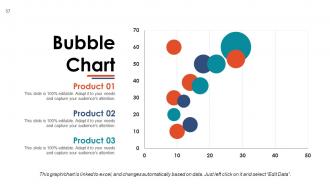
Slide 57: This slide shows a Bubble Chart for two product comparison.
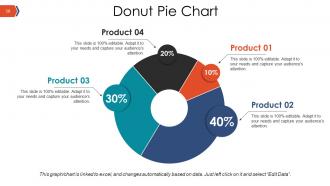
Slide 58: This slide showcases Donut Pie Chart.
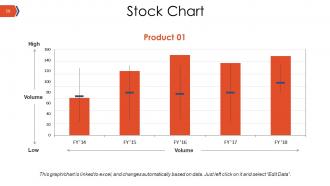
Slide 59: This slide displays a Stock Chart with volume as parameter in terms of high and low, open and close.
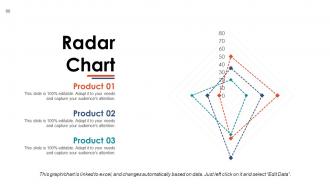
Slide 60: This slide Radar Chart. You can compare the products and use accordingly.
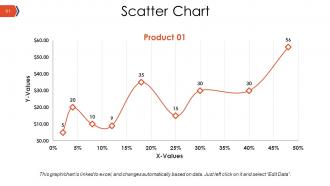
Slide 61: This slide showcases Scatter Chart with which you can use for comparing.
Slide 62: This slide is titled Additional slides.
Slide 63: This slide contains Our Mission with text boxes
Slide 64: This slide helps depict Our Team with text boxes.
Slide 65: This slide helps show- About Our Company. The sub headings include- Creative Design, Customer Care, Expand Company.
Slide 66: This slide shows Our Goals for your company.
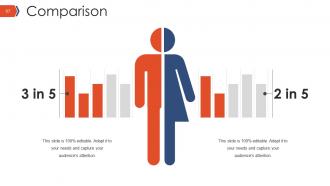
Slide 67: This slide shows Comparison of Positive Factors v/s Negative Factors with thumbsup and thumb down imagery.
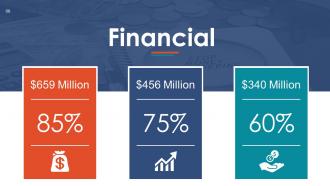
Slide 68: This is a Financial Score slide to show financial aspects here.
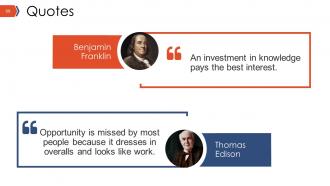
Slide 69: This is a Quotes slide to convey message, beliefs etc.
Slide 70: This slide showcases a Puzzle with imagery.
Slide 71: This slide shows Target image with text boxes.
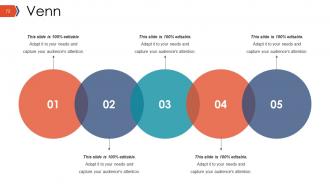
Slide 72: This is a Venn diagram slide to show information etc.
Slide 73: This slide presents a Mind map with text boxes.
Slide 74: This is a Bulb/idea image slide to show information, ideas, innovation specific stuff etc
Slide 75: This is a Thank You slide with Address# street number, city, state, Contact Numbers, Email Address.
Business Promotion Methods And Advertising Powerpoint Presentation Slides with all 75 slides:
Find all the choices you can imagine with our Business Promotion Methods And Advertising Powerpoint Presentation Slides. You will discover infinite alternatives.







FAQs for Business Promotion Methods And Advertising
The most effective digital marketing techniques for small businesses include social media marketing, search engine optimization, email campaigns, content marketing, and pay-per-click advertising. These strategies enhance visibility and customer engagement by targeting specific audiences, building brand awareness, and driving conversions, with many small businesses finding that strategic combinations ultimately deliver measurable growth and competitive advantage.
Social media platforms enable brand promotion through targeted advertising, influencer partnerships, content marketing, community engagement, and customer service interactions. These channels streamline brand visibility by reaching specific demographics, building authentic relationships, and facilitating real-time feedback, with many companies finding that consistent social presence ultimately delivers increased brand awareness, customer loyalty, and measurable sales growth.
Influencer marketing enables businesses to reach targeted audiences through trusted voices, leveraging social proof, authentic storytelling, and niche expertise to drive brand awareness and conversions. Through strategic partnerships with micro and macro-influencers, companies across retail, beauty, and technology sectors enhance credibility, expand market reach, and generate measurable ROI, ultimately delivering competitive advantage in increasingly crowded digital marketplaces.
Email marketing campaigns significantly enhance customer engagement through personalized content, automated workflows, targeted segmentation, and interactive elements like surveys or exclusive offers. These strategies enable businesses to maintain consistent communication with customers, deliver relevant product recommendations, and build long-term relationships, with many retailers and service providers finding that regular email touchpoints increase repeat purchases and reduce customer churn rates.
SEO delivers enhanced online visibility, increased organic traffic, cost-effective lead generation, improved brand credibility, and sustained long-term results. Through strategic keyword optimization and quality content creation, businesses across retail, healthcare, and financial services streamline customer acquisition while reducing advertising costs, ultimately establishing competitive advantage in an increasingly digital marketplace.
Content marketing can be tailored through audience segmentation, personalized messaging, platform-specific content formats, demographic analysis, and behavioral targeting strategies. By leveraging data analytics and customer insights, businesses across retail, healthcare, and financial services create customized campaigns that resonate with distinct audience segments, ultimately delivering higher engagement rates and improved conversion outcomes.
Video marketing enhances brand visibility through higher engagement rates, improved SEO rankings, increased social media reach, emotional storytelling capabilities, and memorable visual content. These dynamic presentations streamline complex messaging while building authentic connections, with many businesses finding that video content delivers significantly more shares, longer website visits, and stronger customer relationships than traditional marketing approaches.
Traditional advertising methods like print, radio, and television offer broad reach and established credibility, while modern digital strategies provide precise targeting, real-time analytics, and cost-effective engagement through social media, search marketing, and email campaigns. Many organizations find that a strategic combination delivers optimal results, with digital methods enabling faster customer interactions and measurable ROI, while traditional channels enhance brand authority and trust in increasingly competitive markets.
Businesses should track conversion rates, customer acquisition costs, return on investment, brand awareness levels, and customer lifetime value to evaluate promotional success. These metrics enable organizations to optimize marketing spend, identify high-performing channels, and refine targeting strategies, with many companies finding that comprehensive tracking ultimately delivers better resource allocation and significantly improved promotional effectiveness.
Businesses can effectively use customer testimonials by featuring them prominently on websites, incorporating them into social media campaigns, including them in email marketing, and displaying them at point-of-sale locations. These authentic endorsements build trust and credibility by showcasing real experiences, with many companies finding that strategic testimonial placement increases conversion rates, enhances brand reputation, and ultimately drives customer acquisition.
Startups can explore content marketing, social media engagement, influencer micro-partnerships, referral programs, and community-based marketing initiatives. These cost-effective approaches enable businesses to build brand awareness, generate leads, and drive customer acquisition through creativity rather than capital, with many startups finding that authentic storytelling and strategic partnerships deliver sustainable growth and competitive positioning.
Promotional events and trade shows contribute to brand awareness by providing face-to-face interactions, live product demonstrations, and networking opportunities with target audiences. These platforms enable companies to showcase innovations, build relationships with potential customers, and generate qualified leads, with many businesses finding that direct engagement creates lasting brand impressions and competitive differentiation.
Effective cross-promotion strategies include joint marketing campaigns, referral programs, co-hosted events, shared social media content, and bundled product offerings. These collaborative approaches enable businesses to access new customer bases, reduce marketing costs, and enhance brand credibility, with many retail and service companies finding that strategic partnerships ultimately deliver expanded market reach and improved customer acquisition rates.
Mobile marketing enhances promotional reach by enabling location-based targeting, real-time engagement through push notifications, and seamless social media integration across multiple platforms. Through personalized SMS campaigns and mobile app advertising, businesses in retail, hospitality, and e-commerce significantly expand their audience access while delivering immediate, measurable results and higher conversion rates.
Business promotion ethics include truthful advertising, transparent pricing, respectful customer data usage, fair competition practices, and authentic social responsibility claims. These principles enhance brand credibility, build long-term customer trust, and minimize legal risks, with many organizations finding that ethical promotional strategies ultimately deliver stronger market positioning and sustainable competitive advantage.
-
Innovative and Colorful designs.
-
Use of icon with content is very relateable, informative and appealing.