


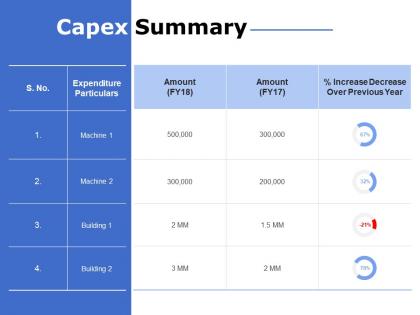
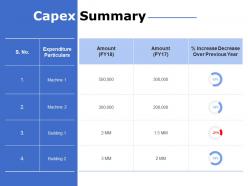
Capex summary management ppt powerpoint presentation file ideas




Try Before you Buy Download Free Sample Product
 Impress Your
 Audience
 100%
100% Editable
 Save Hours
 of Time


Build greater interest with our Capex Summary Management Ppt Powerpoint Presentation File Ideas. Increase the degree of enthusiasm felt.
People who downloaded this PowerPoint presentation also viewed the following :
Capex summary management ppt powerpoint presentation file ideas with all 5 slides:
Increase the degree of enthusiasm felt with our Capex Summary Management Ppt Powerpoint Presentation File Ideas. It will build greater interest.


FAQs for Capex summary management ppt powerpoint
Focus on the big stuff first - project status, budget vs actual, timeline milestones, and ROI projections. Your exec summary needs the wins AND red flags right up top because honestly, that's all they'll read anyway. Charts and visuals beat text walls every time. Track your variances and call out anything that's way off from your original plan - like seriously off, not just minor stuff. Include completion dates and remaining budget for each major project. Oh, and do these monthly so you catch problems while they're still fixable instead of when everything's on fire.
Honestly, most companies have zero clue where their capex money actually goes. Get a centralized system first - track requests, approvals, and spending in real-time. Create standard criteria so you're not comparing random projects that make no sense together. Don't just do annual planning either, that's outdated. Build in quarterly reviews because stuff changes constantly. Connect every decision to actual ROI and business outcomes. Oh, and set up dashboards so people stop bothering finance every week asking "where are we on budget?" Trust me, automated reporting saves everyone's sanity.
So basically, tech automates all that annoying manual stuff - pulling data from different systems, matching budgets to actual spending, cranking out those monthly reports. You can set up workflows that grab info from your ERP and project tools automatically. Game-changer honestly, because who wants to copy-paste numbers into Excel all day? Real-time dashboards are where it gets good though - they'll flag when projects start bleeding money. Exception reporting catches the problems before they get ugly. I'd map out which manual tasks are eating your time first. That's probably where you'll see the biggest wins anyway.
Look, tech companies are all about speed - quick approvals, lots of experimenting. Manufacturing? Total opposite. They plan everything out forever and crunch every ROI number twice. Honestly, you want bits of both approaches. For smaller stuff, steal tech's "let's just try it" mentality. But big investments? That's when you need manufacturing's hardcore evaluation process. I've seen too many companies mess this up by going all-in on one style. Map out what you're doing now first. Quick approvals for low-risk projects, serious gates for anything that'll actually hurt if it fails.
Focus on budget vs actual spend first - that's your core stuff. Variance percentages and project completion status matter too. Executives always want to know if things will finish on time and budget, so include forecast-to-completion and timeline data. ROI is huge for bigger projects. Cash flow timing affects working capital planning (honestly, finance gets cranky when you miss this). The variance analysis usually shows what's really going down with your projects. Keep it to one page with good visuals. Makes it way easier for leadership to spot issues and actually make decisions instead of drowning in spreadsheets.
So first thing - get super clear on what you're actually trying to accomplish strategically. Then for every Capex project, trace a line back to those goals. Does it fit? Build some kind of scoring system that looks at ROI, how well it aligns with strategy, timing, all that stuff. Honestly, the hardest part is saying no to shiny projects that seem cool but won't really move things forward. You'll need regular check-ins too - maybe quarterly? - because priorities change and you don't want to keep throwing money at something that made sense six months ago but doesn't anymore. It's brutal but necessary.
Ugh, Capex management is such a pain. Data inconsistencies are probably your biggest enemy - everyone's using different formats and it makes consolidation awful. Then you've got approval bottlenecks slowing everything down. First thing I'd do is get everyone on the same reporting templates. Set up automated workflows so approvals don't sit on someone's desk forever. Real-time dashboards actually help here (I was skeptical at first but they work). Most crucial part though? Find one person who truly owns this mess, not just another committee member. Regular reviews with clear ownership make all the difference between functional and disaster.
Here's what I'd do - make a simple scoring sheet that weighs ROI against how well projects fit your strategy and their risk level. Calculate expected returns first, then see which ones actually support your main business goals. Those flashy tech projects always look incredible on paper, but honestly? The unglamorous infrastructure stuff often pays off better. Timeline matters too since a quick win with solid returns can beat waiting years for something bigger. Just use a basic spreadsheet system and check it every quarter when things inevitably change.
Set up monthly reviews with your PMs to catch budget overruns early - trust me on this one. Track committed spend, not just invoices, because POs will mess with your numbers way before bills show up. I got burned by this in Q4 once! Break down capex by project type and business unit so you can actually see what's happening. Keep these meetings short though - 15 minutes tops or people will start avoiding them. Oh, and set those calendar reminders now. You think you'll remember but you won't.
So basically you build different "what-if" scenarios to test your Capex plans. Think budget cuts, delays, market shifts - the usual suspects. Run your projects through best case, worst case, and most likely outcomes. See which ones survive all three? Those are your must-haves. The rest are probably fluff. Honestly saves you from looking stupid in front of leadership later when things go sideways (and they always do). Way better than showing up with just one overly optimistic forecast. You'll actually look like you know what you're doing for once.
Ugh, compliance is such a pain but you gotta deal with it early. Map out every permit and environmental review you'll need before you even start planning. Seriously, this stuff can completely wreck your timeline if you're not ready for it. Build in way more buffer time than you think - regulatory reviews always take longer than expected. Oh, and budget for pricier contractors who actually know the specs you need to hit. I learned this the hard way on my last project when we had to redesign halfway through. Start identifying all your regulatory checkpoints now and bake those delays right into your schedule.
Historical data is your best friend for Capex forecasting. Look back 3-5 years and you'll see actual spending patterns - like how your IT department always goes over budget in Q4 or equipment costs that creep up every year. Seasonal trends jump out too. I always tell people it's basically having years of receipts that show what really happened vs what you planned. You can spot correlations between business growth and when you need new infrastructure. Honestly, without this stuff you're just guessing. Check for timing patterns, cost overruns, and which project types consistently surprise you.
Look, you absolutely need everyone on board before making big capital decisions - finance, ops, the actual users, all of them. Skip this step and you'll get budget fights, scope changes, and people refusing to cooperate later. Honestly, I've watched so many projects crash because nobody talked to the right people upfront. Get their thoughts during planning instead of dealing with angry emails during rollout. Oh and set up regular updates throughout the whole process - keeps everyone happy and prevents those "wait, what?" moments. Map out who matters most and schedule check-ins. Trust me on this one.
Honestly, you gotta stop talking like an accountant and start telling stories. Show them how that new equipment means less grunt work for their team. Facility upgrades? That's happier employees, not just "infrastructure improvement." Ditch the spreadsheets - nobody wants to decode your formulas anyway. Build simple visual dashboards instead. Before/after scenarios work great too. Just connect everything to stuff they actually measure already, like productivity or customer satisfaction. The whole trick is making it about their department's wins, not your budget line items. Way more effective that way.
Honestly, machine learning for predicting project overruns is where it's at right now. Companies are catching budget blowouts before they happen, which is pretty sweet. Cloud platforms give you real-time visibility across everything too - way better than the old days of chasing down updates. Digital twins are getting popular, though some feel kinda gimmicky to me. The tools that really work? Integrated planning systems that tie your spending directly to cash flow and business results. If you're still doing this stuff in Excel... yikes. Time for an upgrade, my friend.
No Reviews