


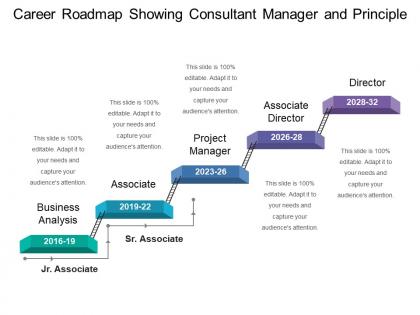
Career roadmap showing consultant manager and principle




Try Before you Buy Download Free Sample Product
 Impress Your
 Audience
 100%
100% Editable
 Save Hours
 of Time


Get accepted as accomplished with our Career Roadmap Showing Consultant Manager And Principle. You will exhibit great competence.
People who downloaded this PowerPoint presentation also viewed the following :
Career roadmap showing consultant manager and principle with all 5 slides:
Hard work has never scared you off. Our Career Roadmap Showing Consultant Manager And Principle aren't afraid of pitching in to help with the heavy lifting on your next big presentation.

FAQs for Career roadmap showing consultant
Honestly, you'll need rock-solid problem-solving skills since you're basically a detective figuring out messy business problems. Communication is huge too - you're presenting to executives who don't have time for BS. Get really good at Excel (seriously, like *really* good) and learn MECE frameworks for structuring your thinking. The tricky part? Clients rarely know what they actually need help with. You'll bounce between totally different industries, so being adaptable is key. Oh, and start doing case interviews now - they're annoying but they'll train your brain to think the way consultants do.
LinkedIn's your best bet for reaching out to consultants directly. Most are pretty cool about grabbing coffee or hopping on a quick call. Your alumni network is honestly clutch here - use those school connections! Industry events are decent but they can feel kinda fake sometimes, you know? The conversations that actually matter happen when you're asking real questions about their day-to-day work instead of just collecting contacts. Oh, and case competitions are solid too if you're into that. Try to have at least two genuine chats with consultants monthly. It's way more about building actual relationships than networking for the sake of it.
So basically you start as an Analyst, then Senior Analyst, Consultant, Senior Consultant, and eventually Principal/Manager if you're lucky enough to make it that far. Partner is the holy grail but honestly most people don't get there. Each level takes about 2-3 years depending on how well you perform and which firm you're at. The real shift happens at Principal - that's when you stop doing the actual work and start managing clients and selling new business instead. Oh and different firms use slightly different titles but the ladder's pretty much the same everywhere. Start working on those relationship-building skills now because that's what'll set you apart later.
Honestly, specializing is kind of a mixed bag. You'll definitely make more money and get invited to the big strategy meetings when you're *the* supply chain person or whatever. Clients will start requesting you by name, which feels pretty good. But then you risk getting stuck in that box forever - like my friend who's been doing the same ERP implementations for 5 years straight. Pick something you actually care about that's also in demand. Then go deep but don't completely ignore other stuff. You want to be known for something without becoming a one-trick pony.
Dude, imposter syndrome's gonna hit you like a truck - you'll be advising VPs on stuff you googled the night before. The learning curve is insane. You're trying to memorize frameworks, understand client drama, and look smart in meetings all at once. Time management? Good luck with that when you've got five projects due yesterday. And yeah, those 70-hour weeks everyone jokes about? They're not joking. Oh, and work-life balance basically disappears for a while. But here's the thing - everyone feels completely lost their first few months. Ask tons of questions. Seriously, way more than feels comfortable.
Dude, you HAVE to keep learning in consulting - like, it's not optional. Clients are paying big money expecting you to know the latest stuff, not outdated methods from years ago. Certifications are huge too since firms get excited seeing those on resumes. The cool part? Most places will cover the costs for training and certs. Pick maybe 2-3 that actually matter for your area and plan out the next year. Trust me, nobody wants a consultant who's stuck in the past giving stale advice.
Dude, you NEED a mentor if you want to move up in consulting. I can't stress this enough - I've watched so many smart people just... stagnate because nobody was fighting for them behind closed doors. Your mentor becomes your inside person, right? They'll teach you how to handle tricky clients, show you what partners actually care about (versus what they say they care about), and most importantly - they'll speak up for you during promotion talks. It's honestly the difference between getting promoted and staying stuck. Find someone whose career you want and just ask them straight up. Most senior people are weirdly flattered and will say yes.
Dude, you've gotta set those boundaries from day one and actually stick to them. Block off time that's yours - gym, family dinners, whatever keeps you sane. I totally crashed and burned in year two because I didn't do this! Be smart about when you're "available" vs when you go dark. Stop checking emails at night (seriously), and use your vacation days. Most stuff that seems super urgent? It's really not. Oh and start turning down busy work that won't help you grow or matter to clients.
Tech and healthcare are absolutely crushing it right now - literally everyone's chasing digital transformation help and AI stuff. Financial services is still massive too with all the fintech chaos. Sustainability consulting is finally having its moment (took long enough honestly). Private equity can't get enough operational consultants either. Supply chain optimization is everywhere after COVID screwed everything up - though I'm kinda sick of hearing about supply chains at this point. My take? Don't spread yourself too thin. Pick one area and really get to know their specific pain points instead of being generic about it.
PowerPoint and Excel are non-negotiables - you'll live in those for presentations and number crunching. Project management stuff like Monday or Asana is pretty standard now. Obviously video calls became essential after COVID (remember when we thought that was temporary? lol). SQL or Python basics can really set you apart, especially on data-heavy projects. But honestly? Being adaptable matters more than knowing specific tools since every client has their own setup. I'd get comfortable with Tableau or Power BI first, then just learn whatever your firm uses once you're there.
Start by chopping problems into bite-sized chunks - makes everything way less overwhelming. Form your best guess about what's happening, then test it step by step. Frameworks help too, like mapping out issue trees or asking "so what?" after each finding. Honestly? Most people skip the obvious step of asking good questions first. They just dive into spreadsheets and wonder why they're lost. Figure out what decision you're actually trying to make upfront. Does your final answer pass the common sense test? Practice on random stuff - like why your commute sucked today.
Honestly, the big ones are conflicts of interest and keeping client info secure. Don't oversell what you can actually deliver either - I know it's tempting when chasing a contract, but you'll regret it. Be upfront about any competing clients from day one. Also watch for pressure to push solutions that make your firm more money instead of what's actually best for them. Sometimes you'll feel torn between short-term cash and doing right by the client. Choose the client every time, even if it stings financially. Oh, and never assume confidentiality is obvious - spell it out clearly upfront.
Dude, take that international gig if you can. Your career will thank you later - you'll learn way more about different markets and business cultures than staying put. Clients eat up that global experience too, it's like instant credibility. The networking alone is huge. Plus firms are always looking for people who can handle cross-border stuff, so you're setting yourself up for leadership roles down the line. Yeah, moving internationally is a pain and the personal stuff gets complicated, but honestly? Most people I know who did it say the career boost made it worth it.
Honestly, everyone thinks consulting is just making PowerPoints and flying to cool cities. That's not really it anymore though. Most of your time goes into data analysis and actually solving problems for clients. Oh, and people assume consultants just tell companies stuff they already know - but you're usually there because you have expertise they don't. The work ends up being way more collaborative than I expected when I started. My biggest advice? Find someone who actually works at the firms you're looking at and ask them what their days look like. Way better than any job description.
Honestly, just be super clear from day one about what you're doing and when. Write everything down - scope, deadlines, what success looks like. I learned this the hard way lol. Check in regularly even if things seem fine. When something goes wrong (and it will), don't hide it. Tell them immediately and bring solutions. Clients actually prefer honesty over you pretending everything's perfect. Oh, and always do a kickoff meeting to make sure you're both on the same page. Saves so many awkward conversations later when expectations don't match up.
-
Much better than the original! Thanks for the quick turnaround.
-
Very unique, user-friendly presentation interface.
-
Very Good
-
Very Good
-
Very Good
-
Very Good