


Cashless Payment Adoption To Increase Business Sales Powerpoint Presentation Slides




Try Before you Buy Download Free Sample Product
 Impress Your
 Audience
 100%
100% Editable
 Save Hours
 of Time


The Cashless Payment Adoption to Increase Business Sales presentation is a comprehensive guide to businesses transitioning to digital transactions, aiming to enhance customer convenience, payment security, and record-keeping efficiency. Starting with a digital payment overview encompassing benefits, trends, and challenges, the presentation delves into diverse transaction methods and conducts a detailed comparison between cashless and contactless payments. Additionally, our digital payment PPT provides valuable insights into harnessing market trends for a competitive edge, optimizing payment choices, and includes realworld examples of businesses applying cashless payment strategies. By addressing evolving consumer preferences and offering insights into various digital payment options such as mobile wallets, QR codes, cryptocurrencies, and more, this adaptable presentation equips businesses with strategies to elevate sales through embracing cashless payment mechanisms. Its user friendly format, compatible with Google Slides, ensures seamless customization to fit specific business needs, making it an invaluable tool for any enterprise aiming to leverage the power of digital payments for increased sales.
People who downloaded this PowerPoint presentation also viewed the following :
Content of this Powerpoint Presentation
Slide 1: This slide introduces Cashless Payment Adoption to Increase Business Sales. State your company name and begin.
Slide 2: This slide states Agenda of the presentation.
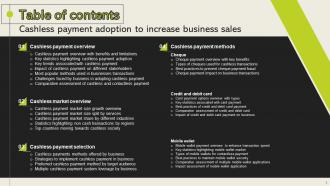
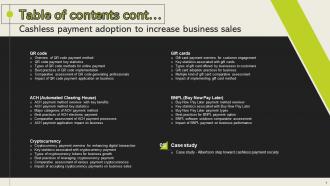
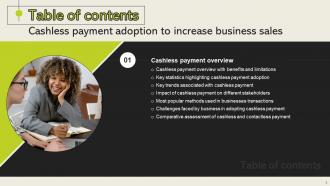
Slide 3: This slide shows Table of Content for the presentation.
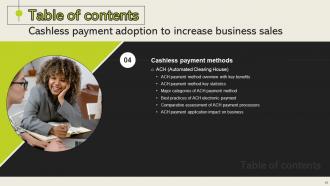
Slide 4: This is another slide continuing Table of Content for the presentation.
Slide 5: This slide highlights title for topics that are to be covered next in the template.
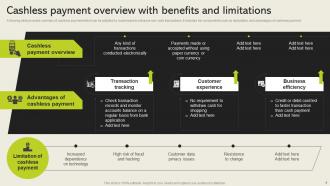
Slide 6: This slide presents Cashless payment overview with benefits and limitations.
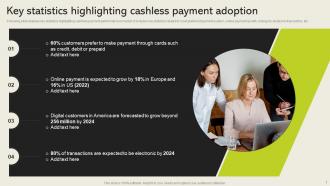
Slide 7: This slide displays Key statistics highlighting cashless payment adoption.
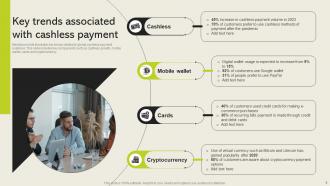
Slide 8: This slide represents Key trends associated with cashless payment.
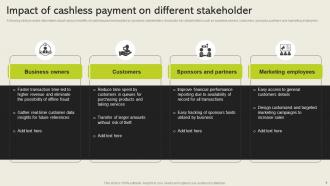
Slide 9: This slide showcases Impact of cashless payment on different stakeholder.
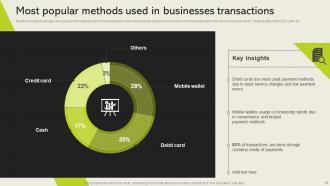
Slide 10: This slide shows Most popular methods used in businesses transactions.
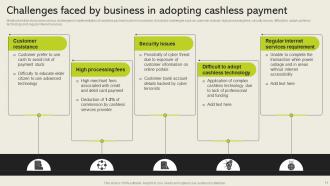
Slide 11: This slide presents Challenges faced by business in adopting cashless payment.
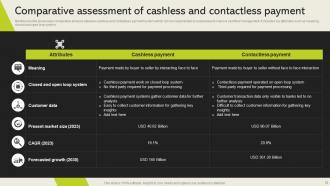
Slide 12: This slide represents Comparative assessment of cashless and contactless payment.
Slide 13: This slide highlights title for topics that are to be covered next in the template.
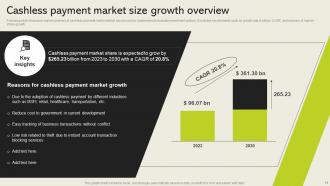
Slide 14: This slide showcases Cashless payment market size growth overview.
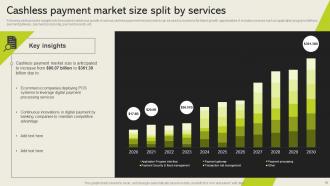
Slide 15: This slide shows Cashless payment market size split by services.
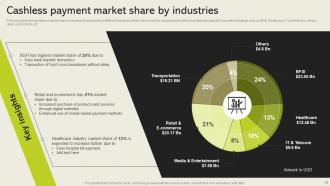
Slide 16: This slide presents Cashless payment market share by industries.
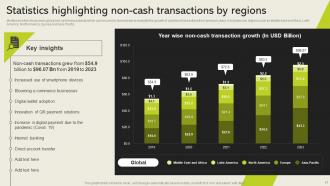
Slide 17: Mentioned slide showcases global non cash transactional which can be used by businesses to evaluate the growth of cashless transactions.
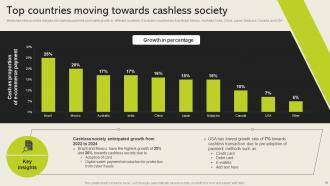
Slide 18: This slide displays Top countries moving towards cashless society.
Slide 19: This slide highlights title for topics that are to be covered next in the template.
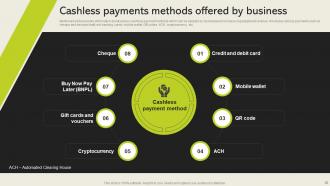
Slide 20: This slide represents Cashless payments methods offered by business.
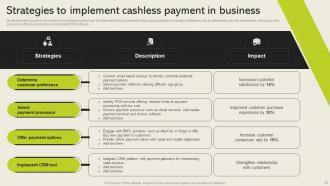
Slide 21: Mentioned slide provides information about strategies which can be implemented by businesses before going cashless.
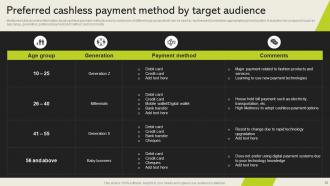
Slide 22: This slide showcases Preferred cashless payment method by target audience.
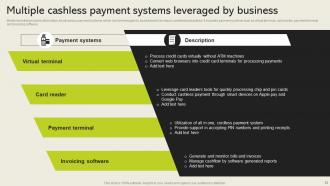
Slide 23: This slide shows Multiple cashless payment systems leveraged by business.
Slide 24: This slide highlights title for topics that are to be covered next in the template.
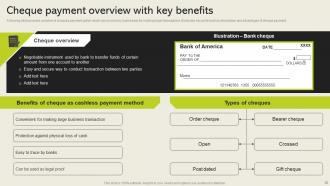
Slide 25: This slide presents Cheque payment overview with key benefits.
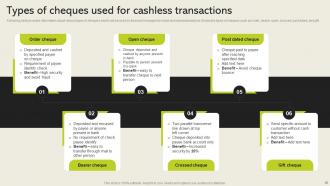
Slide 26: This slide displays Types of cheques used for cashless transactions.
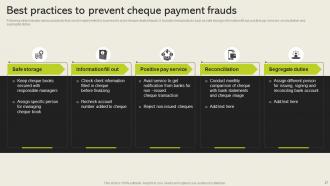
Slide 27: This slide represents Best practices to prevent cheque payment frauds.
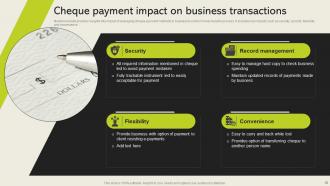
Slide 28: This slide showcases Cheque payment impact on business transactions.
Slide 29: This slide highlights title for topics that are to be covered next in the template.
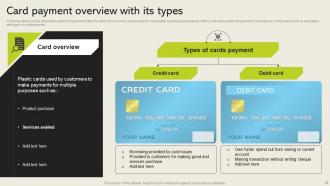
Slide 30: This slide shows Card payment overview with its types.
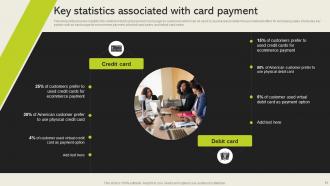
Slide 31: This slide presents Key statistics associated with card payment.
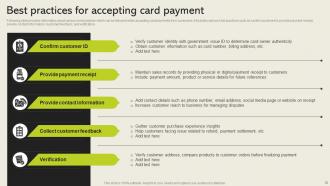
Slide 32: This slide displays Best practices for accepting card payment.
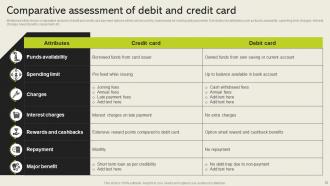
Slide 33: This slide represents Comparative assessment of debit and credit card.
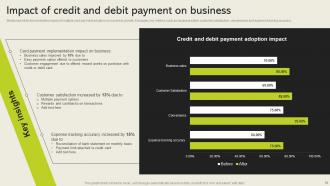
Slide 34: This slide showcases Impact of credit and debit payment on business.
Slide 35: This slide highlights title for topics that are to be covered next in the template.
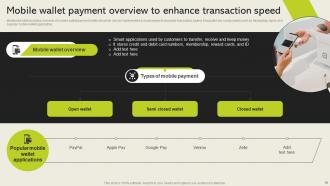
Slide 36: This slide shows Mobile wallet payment overview to enhance transaction speed.
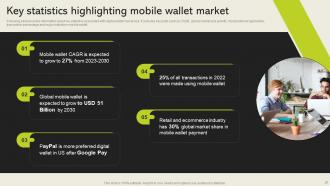
Slide 37: This slide presents Key statistics highlighting mobile wallet market.
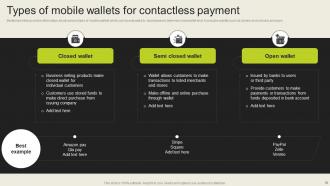
Slide 38: This slide displays Types of mobile wallets for contactless payment.
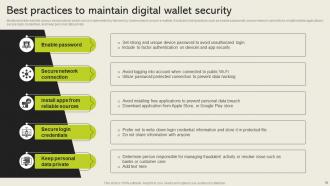
Slide 39: This slide represents Best practices to maintain digital wallet security.
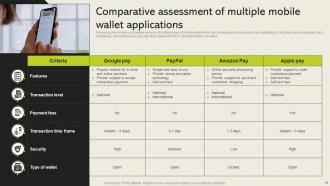
Slide 40: This slide showcases Comparative assessment of multiple mobile wallet applications.
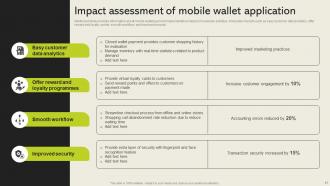
Slide 41: This slide shows Impact assessment of mobile wallet application.
Slide 42: This slide highlights title for topics that are to be covered next in the template.
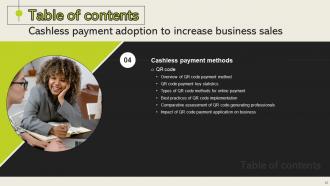
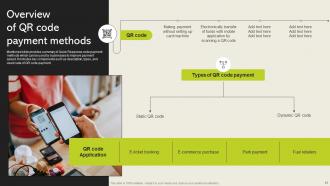
Slide 43: This slide presents Overview of QR code payment methods.
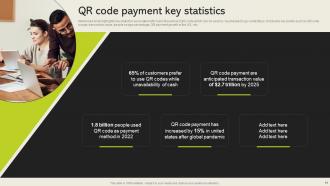
Slide 44: Mentioned slide highlights key statistics associated with Quick Response (QR) code.
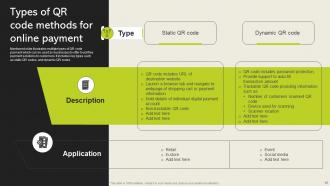
Slide 45: This slide displays Types of QR code methods for online payment.
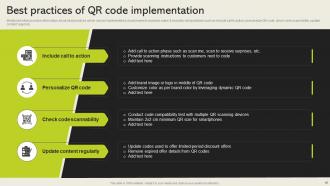
Slide 46: This slide represents Best practices of QR code implementation.
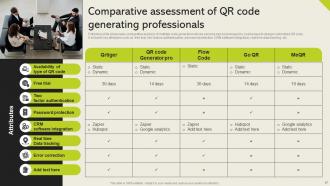
Slide 47: This slide showcases Comparative assessment of QR code generating professionals.
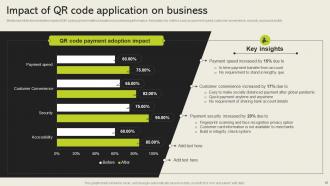
Slide 48: This slide shows Impact of QR code application on business.
Slide 49: This slide highlights title for topics that are to be covered next in the template.
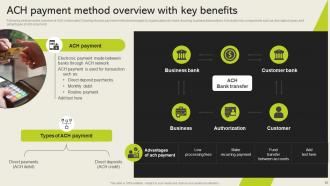
Slide 50: This slide presents ACH payment method overview with key benefits.
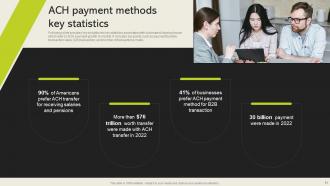
Slide 51: This slide displays ACH payment methods key statistics.
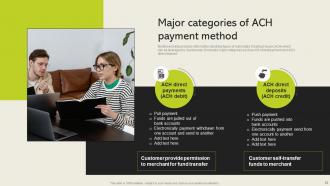
Slide 52: This slide represents Major categories of ACH payment method.
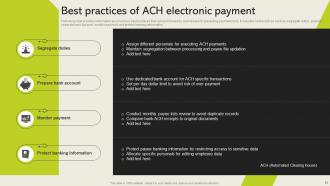
Slide 53: This slide showcases Best practices of ACH electronic payment.
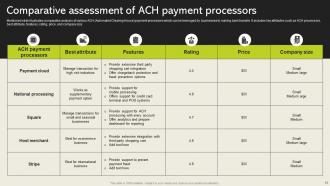
Slide 54: This slide shows Comparative assessment of ACH payment processors.
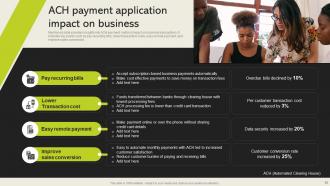
Slide 55: This slide presents ACH payment application impact on business.
Slide 56: This slide highlights title for topics that are to be covered next in the template.
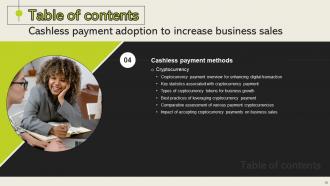
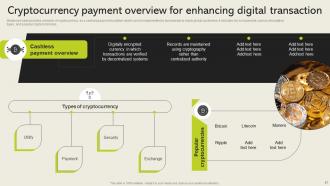
Slide 57: This slide displays Cryptocurrency payment overview for enhancing digital transaction.
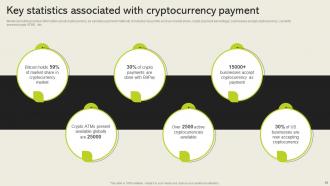
Slide 58: This slide represents Key statistics associated with cryptocurrency payment.
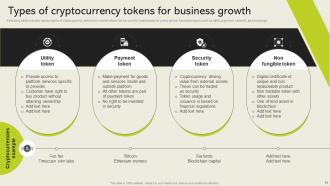
Slide 59: This slide showcases Types of cryptocurrency tokens for business growth.
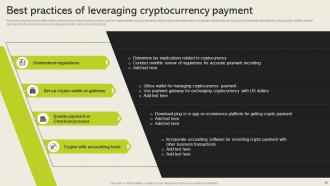
Slide 60: This slide shows Best practices of leveraging cryptocurrency payment.
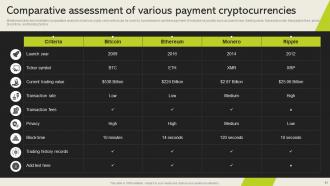
Slide 61: This slide presents Comparative assessment of various payment cryptocurrencies.
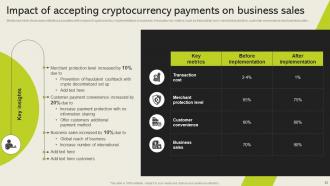
Slide 62: This slide displays Impact of accepting cryptocurrency payments on business sales.
Slide 63: This slide highlights title for topics that are to be covered next in the template.
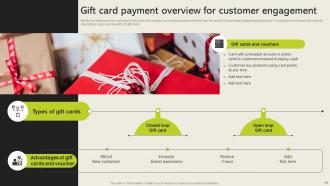
Slide 64: This slide represents Gift card payment overview for customer engagement.
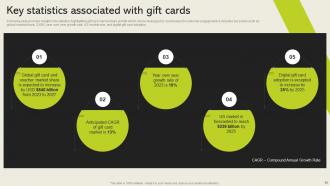
Slide 65: This slide showcases Key statistics associated with gift cards.
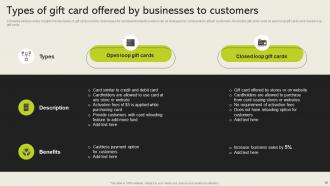
Slide 66: This slide shows Types of gift card offered by businesses to customers.
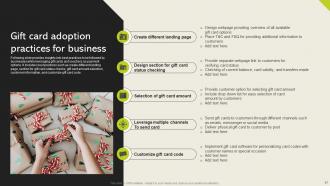
Slide 67: This slide presents Gift card adoption practices for business.
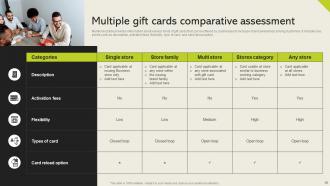
Slide 68: This slide displays Multiple gift cards comparative assessment.
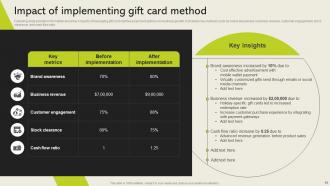
Slide 69: This slide represents Impact of implementing gift card method.
Slide 70: This slide highlights title for topics that are to be covered next in the template.
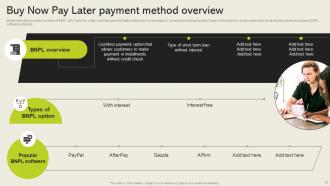
Slide 71: This slide showcases Buy Now Pay Later payment method overview.
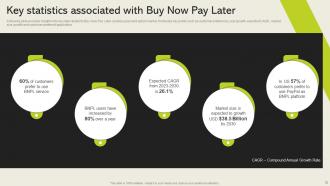
Slide 72: This slide shows Key statistics associated with Buy Now Pay Later.
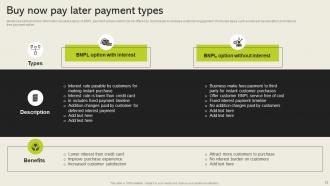
Slide 73: This slide presents Buy now pay later payment types.
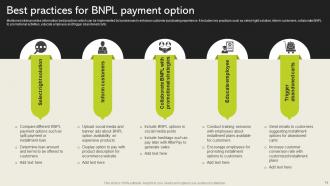
Slide 74: This slide displays Best practices for BNPL payment option.
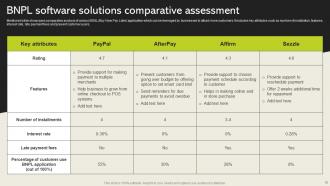
Slide 75: This slide represents BNPL software solutions comparative assessment.
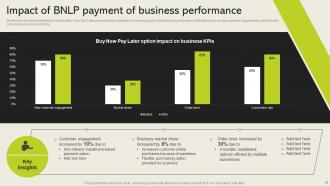
Slide 76: This slide showcases Impact of BNLP payment of business performance.
Slide 77: This slide highlights title for topics that are to be covered next in the template.
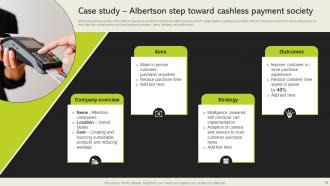
Slide 78: Mentioned slide provides information case study based on Albertson retail business.
Slide 79: This slide contains all the icons used in this presentation.
Slide 80: This slide is titled as Additional Slides for moving forward.
Slide 81: This slide shows SWOT describing- Strength, Weakness, Opportunity, and Threat.
Slide 82: This is an Idea Generation slide to state a new idea or highlight information, specifications etc.
Slide 83: This slide contains Puzzle with related icons and text.
Slide 84: This is a Timeline slide. Show data related to time intervals here.
Slide 85: This is a Thank You slide with address, contact numbers and email address.
Cashless Payment Adoption To Increase Business Sales Powerpoint Presentation Slides with all 90 slides:
Use our Cashless Payment Adoption To Increase Business Sales Powerpoint Presentation Slides to effectively help you save your valuable time. They are readymade to fit into any presentation structure.







FAQs for Cashless Payment Adoption To Increase Business Sales
Honestly, it's all about convenience - nobody wants to dig around for exact change anymore. Younger people especially just expect to tap their phone for everything. COVID was huge too since cash suddenly felt gross to handle. Plus businesses are obsessed with it because there's less theft and they get all this data on what customers buy. I still carry some cash for like food trucks or whatever, but yeah, going back to counting out quarters feels ancient now. If you're not taking Apple Pay or whatever, people will literally just go somewhere else instead.
Honestly, COVID changed everything with payments. People who used to clutch their cash suddenly wanted contactless everything. Young people were already all over mobile wallets and QR codes, but even my parents started tapping their phones to pay - which still kinda blows my mind. Security used to be everyone's biggest worry, but now it's all about convenience. Customers expect tons of digital options now, not just one or two. If you don't have multiple ways for people to pay digitally, you're behind.
Dude, the tech behind cashless payments is actually wild when you think about it. Your card info gets encrypted so it's scrambled, plus they use tokenization - basically swapping your real card number for random codes. Those chip cards are way better than the old swipe ones too. Biometrics like fingerprint scanning add another layer. The crazy part is there's AI watching for fraud in real-time, blocking sketchy transactions before they even happen. Oh and make sure your payment apps are updated - some people never do that but it matters. All those security features only work if you actually turn them on though.
So age is huge here - Gen Z and millennials jumped on mobile payments way faster than older folks who still love their cash. Income plays a role too since people with more money tend to try new tech first. City people use way more cashless stuff than rural areas, probably because the infrastructure's just better there. Education level also matters, which honestly makes sense when you think about it. Oh, and if you're trying to reach different groups, you'll definitely want to switch up your payment options based on who you're targeting. The marketing approach should change too.
COVID definitely sped up the whole contactless payment thing big time. Like, stuff that would've taken years happened in months because nobody wanted to touch cash anymore - totally understandable tbh. Your local coffee shop, grocery stores, even random small businesses suddenly had tap-to-pay options everywhere. Digital wallet usage jumped like 50% during 2020-2021. Now people just expect it. If you're running any kind of business, you'll want multiple contactless options set up because customers basically see it as standard now, not some fancy extra feature.
Honestly, cashless payments are huge for getting more people into the financial system. Look at Kenya's M-Pesa - millions of people who couldn't access banks suddenly could send money and pay bills through their phones. Rural areas especially benefit since they don't need bank branches nearby. The cool thing is these systems work on basic phones, not just fancy smartphones, so pretty much anyone can use them. Oh and here's the key part - if you're thinking about developing markets, go mobile-first rather than copying the credit card stuff we use here. Way more practical.
Honestly, the fees are brutal - processors grab 2-3% per transaction, which sucks when you're already watching every penny. Setting up the tech stuff can be a nightmare too if you're not into that sort of thing. Oh, and you'll probably still need cash around because some people (my dad included lol) act like card readers are the devil. But seriously, just start with Square - their basic reader won't break the bank and it's actually pretty simple to figure out. You can always upgrade later once you see if it's worth it.
Look, payment regulations are tricky - you need clear rules but can't kill innovation. Security standards and consumer protection? Obviously necessary. Same with making sure different systems can actually work together (interoperability is huge). Here's the thing though: heavy compliance costs will destroy startups before they even get going. Anti-fraud stuff and privacy protections build trust, which honestly the whole industry needs right now. Good frameworks let companies compete while keeping payment infrastructure accessible to everyone. If you're dealing with this, push for rules that protect people without strangling new tech. It's a balancing act.
Dude, mobile wallets are crazy right now. WeChat Pay totally owns Asia, and Apple/Google Pay keep cramming more stuff in beyond just paying for things. Everything's getting smooshed into one app - payments, loyalty cards, even crypto trading (which honestly feels like a lot sometimes). China and Sweden are actually testing out their own digital currencies now, not just talking about it. Oh and buy-now-pay-later is everywhere in these apps too. I'd just focus on whatever platforms your people already use. Nobody wants to learn a completely new system when their current one works fine, you know?
Honestly, most people still trust regular banks way more for payments - they've been around forever and have all that government oversight stuff. Younger people don't really care as much though, they just want apps that actually work well. Fintech companies are getting better at the trust thing by partnering with real banks and talking up their security more. My advice? Don't just go with whatever bank your parents use. Check if they're properly regulated, what kind of insurance they have, and read some actual user reviews first. The gap's closing but traditional banks still have that credibility edge for now.
Honestly, it's kind of a toss-up environmentally. Going cashless cuts out tons of carbon from printing money, shipping it around, and all those ATM runs we make. Less bank branches too. But then you've got all these data centers sucking up electricity 24/7 - those things are power hungry monsters. Payment terminals everywhere need juice constantly, plus they break and get tossed eventually. I guess the silver lining is that more renewable energy should make the whole system cleaner as time goes on. My bank just upgraded all their card readers again, which got me thinking about this stuff.
Yeah, so there's this thing called "pain of payment" where your brain doesn't register digital spending the same way as cash. Makes sense when you think about it - swiping doesn't hurt like counting out bills. You'll probably spend more without realizing it, especially on those random small purchases that somehow add up to like $50 by lunch. The upside though? Way better records for tracking everything. I'd set up spending alerts on your cards or grab a budgeting app that shows real-time spending. Trust me, seeing those notifications pop up keeps you way more honest about where your money's actually going.
Honestly, the coolest stuff coming is biometric payments - like paying with your palm or face scan. Your smartwatch will probably handle complex transactions soon too, which is wild. Voice payments through Alexa are getting big, and blockchain currencies might just cut banks out completely. There's also this crazy AI fraud detection happening in real-time now. Oh, and AR shopping where you point your phone at something to buy it instantly - though I'm not sure if that's helpful or dangerous for my impulse buying lol. CBDCs are worth watching since governments are basically creating their own digital money.
Put up clear signs at checkout saying "faster than cash, no change needed" - that messaging really works. Train staff to casually mention the benefits, especially the contactless hygiene thing (people still care about that). Digital receipts are actually way more popular than you'd think once customers try them. Maybe offer a small discount or loyalty points for first-time users? Honestly, the best approach is just letting them see it in action. When they watch someone tap and go in 3 seconds while they're digging for exact change, they'll usually switch on their own. Focus on what's in it for them personally rather than getting too technical about it.
Track your operational stuff first - transaction volume, how fast things process, error rates. That's your foundation right there. Then look at customer metrics like adoption rates and satisfaction scores. Cart abandonment is huge too since nobody wants to deal with clunky payment flows. Cost savings from less cash handling is a nice bonus to measure. Honestly, the magic happens when you see transaction volumes go up while customers are actually happier. Start with these basics, then you can get fancy with industry-specific metrics later.
-
Wow! The design and quality of templates on SlideTeam are simply the best.
-
Professional and unique presentations.