


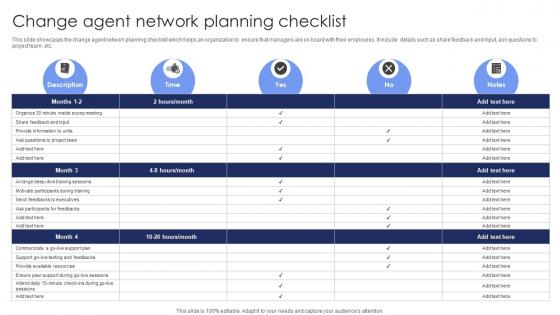
Change Agent Network Planning Checklist




Try Before you Buy Download Free Sample Product
 Impress Your
 Audience
 100%
100% Editable
 Save Hours
 of Time


This slide showcases the change agent network planning checklist which helps an organization to ensure that managers are on board with their employees. It include details such as share feedback and input, ask questions to project team, etc.
People who downloaded this PowerPoint presentation also viewed the following :
Change Agent Network Planning Checklist with all 9 slides:
Use our Change Agent Network Planning Checklist to effectively help you save your valuable time. They are readymade to fit into any presentation structure.








FAQs for Change Agent
Communication skills are huge - they need to break down complex stuff into messages that actually land with different people. Emotional intelligence matters too since they're constantly reading the room and dealing with pushback. Adaptability is probably the most underrated skill though, plans shift all the time! Look for someone who asks really good questions and has enough street cred that people actually listen. Oh, and they should already have some informal influence in your company. The perfect person can collaborate well but isn't afraid to push back when something's not working. Trust me on this one.
You want people who already have that natural pull - you know, the ones everyone goes to when they're stuck on something. Watch for who gets genuinely pumped about new stuff and speaks up in meetings (not just to hear their own voice, but with actual good ideas). These aren't always your obvious "promotion track" people either. They help teammates out, build solid relationships across departments, and don't freak out when things change. I'd start by asking managers who the real influencers are, then test them on smaller projects. Communication skills and peer respect matter way more than whatever's on their resume.
So basically you scatter change champions throughout your company who can spot opportunities and push ideas forward. They bridge different teams so innovations don't get trapped in departmental silos. These people test new concepts early and give honest feedback - saves you from those "what were we thinking" disasters later. Honestly, the best part is how they make experimentation feel normal instead of risky. Start with your natural innovators and give them a real platform to share insights. You'll be surprised how quickly momentum builds once people see others trying new things successfully.
Honestly, communication makes or breaks the whole thing. Your change agents will be totally lost without regular check-ins and clear messaging. I've seen it happen - people start working toward completely different goals because nobody's talking to each other. Set up weekly huddles where agents can share what's actually working and what sucks. Also create some basic templates for updates, nothing fancy. The key is keeping everyone on the same page so information flows smoothly to their teams. Otherwise it's like that telephone game but with real consequences for your business.
Start with whatever platform your team already uses - Slack, Teams, whatever. Don't overthink it. Set up channels for sharing wins and coordinating projects. Video calls are great but honestly, async tools are lifesavers when everyone's swamped. Digital whiteboards let you brainstorm together even if you're in different time zones (which happens more than you'd think). Create shared folders for templates and lessons learned - sounds boring but it's clutch when someone's already solved your problem. Build one thing that works before adding more tools.
Honestly, the main stuff that kills these programs? People lose steam fast, communication gets spotty, and your agents start feeling like they're on an island. Monthly virtual coffee chats help a ton - sounds cheesy but it works. Quick celebration of wins keeps momentum going too. Don't dump some massive toolkit on them that nobody will actually use. Give them what they really need and clear roles so they're not guessing. Oh, and feedback loops are huge. Let agents tell you what's broken instead of assuming you know. Small visible wins beat one giant overwhelming launch every single time.
Track both quick wins and long-term stuff to see the real picture. Change adoption rates, engagement scores, rollout speed - that's your immediate feedback. Then watch retention, productivity, how fast you recover from chaos. The hard part? Figuring out what's actually from your change agents vs everything else going on (which honestly gets messy). I'd run surveys asking specifically about change agent support. Compare areas with strong agents to weak ones. Oh, and start measuring now - you need that baseline data or you're flying blind later.
Honestly, start with celebrating their wins - even the tiny ones. Change work is brutal and they need to see progress. Monthly check-ins are huge too, just to gauge where their heads are at. Give them actual training so they don't feel thrown to the wolves (this stuff isn't intuitive!). Set up ways for them to talk to each other - like, they're probably facing similar roadblocks and can help each other out. Oh, and here's the big one: let them actually shape the initiatives instead of just executing whatever comes down from above. Nobody wants to be a mindless implementer. Three buckets basically - recognition, development, connection.
Honestly, mixing up your change agents is huge for spotting problems early. Different people will catch resistance you'd totally miss otherwise - saved my butt more than once. Your usual volunteers are great, but they all think similarly. Grab someone from accounting, maybe a junior person, definitely someone from that team that always pushes back on everything. They'll tell you when your message sounds like BS corporate jargon. Plus you get way more creative ideas when people approach stuff differently. Each agent has credibility with their own crowd, so the change feels less top-down and fake.
Start with the basics - ADKAR or Kotter's process for methodology. Communication skills are huge too. Honestly, emotional intelligence training might be the most important since people hate change and you're basically a therapist half the time. Stakeholder management rounds out the core three. Make sure they get hands-on practice with resistance sessions and building communication plans. Role-playing beats death-by-PowerPoint every time. I'd do a foundation program first, then add specialized stuff based on what types of changes you're actually dealing with. Don't forget adoption metrics - you need to prove this stuff works.
Honestly, you've gotta force people to work together - hoping it happens naturally is wishful thinking. Cross-functional project teams are your best bet. Get people from different departments on the same initiatives with shared goals they actually care about. Those "collaboration cafes" sound cheesy but they work - just informal sessions where agents swap war stories and solutions. Start small though, maybe pair up departments that already kinda overlap. Once you get some wins, you can expand from there. Oh and make sure they're tracking the same metrics or nobody will care.
So feedback loops are basically your secret weapon for making change agents way more effective. You set up regular check-ins - maybe weekly quick surveys or casual feedback sessions - and suddenly everyone's sharing what's actually working vs. what's bombing. Resistance points become obvious fast. Your agents can swap tactics that are landing well in different departments. Honestly, it's like having a bunch of really smart friends texting you updates about what they're seeing on the ground. Way better than waiting months to find out your whole strategy missed the mark. The real-time intel lets you pivot quickly when needed.
Honestly, get your Change Agents in those strategy meetings from day one. Don't just dump finished decisions on them later - that's a recipe for disaster. Help them understand WHY you're doing each change (this part is huge for getting people actually invested). I've seen too many companies skip this step. Tie what they're doing to real numbers - revenue, customer scores, whatever metrics actually matter. Check in regularly and pivot when something isn't working. Treat them like actual partners who can think, not human megaphones. Show them how their work connects to results.
Honestly, focus on three main things: clear roles, learning structure, and getting them involved fast. Give newcomers a solid overview of what the network does and what they're supposed to be doing - being confused from day one sucks. Pair them with experienced agents as mentors, plus make sure they have the right tools and resources. But here's the thing - don't just lecture them forever. Get them working on an actual project within their first month so they can build relationships and see real results. People learn way better by doing than sitting through endless orientation sessions.
Honestly, psychological safety can make or break your whole network. People need to feel safe calling out problems without getting their heads chopped off. I've watched networks fall apart because agents were too scared to share the real pushback they were getting from their teams - and that's just pointless. When you actually create that safe space though? Your agents turn into real advocates who'll flag issues before they blow up. My advice: be vulnerable first. Don't pretend you have all the answers, and actively ask for honest feedback. It sounds simple but it works.
-
These stunning templates can help you create a presentation like a pro.
-
Good research work and creative work done on every template.