


Change Communication Plan Powerpoint Ppt Template Bundles




Try Before you Buy Download Free Sample Product
 Impress Your
 Audience
 100%
100% Editable
 Save Hours
 of Time


Our Change Communication Plan Powerpoint Ppt Template Bundles are topically designed to provide an attractive backdrop to any subject. Use them to look like a presentation pro.
People who downloaded this PowerPoint presentation also viewed the following :
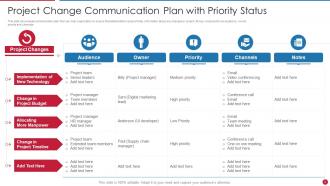
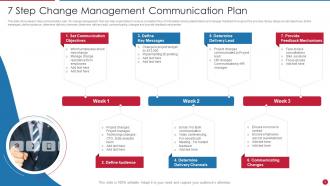
Change Communication Plan Powerpoint Ppt Template Bundles with all 20 slides:
Use our Change Communication Plan Powerpoint Ppt Template Bundles to effectively help you save your valuable time. They are readymade to fit into any presentation structure.
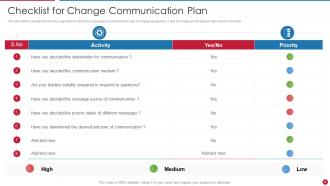
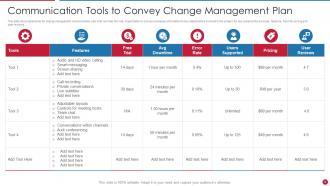
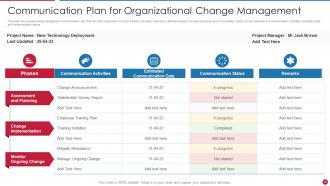
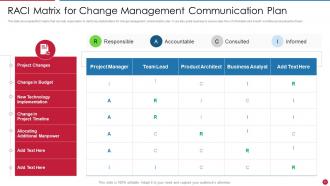





FAQs for Change Communication Plan Powerpoint
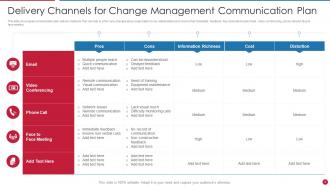
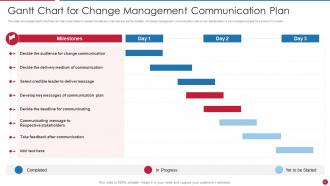
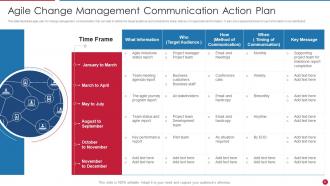
Ok so you need four main things: messaging that actually explains WHY the change matters (not just what's happening), figuring out your key people and what they're worried about, picking the right ways to reach each group, and setting up a timeline with regular check-ins. Most people totally blow the messaging part - they get so caught up explaining the change itself that they forget to tell people why they should care. Oh and don't make it one-way! Build in ways for people to give feedback. Start by mapping who needs what info when. That's your foundation right there.
Honestly, surveys and one-on-ones are your best bet for figuring out if people are ready for change. Hit up employees at different levels - ask about their comfort with change, past experiences, current workload. Why they think this change is even happening. But here's the thing - sometimes you'll learn way more from break room gossip than any formal feedback session! Focus groups work too, though they can get a bit awkward depending on the group dynamics. Look for patterns in where people push back, what skills they're missing, how they prefer getting info. Getting real input early means you can actually address their concerns before everything goes sideways.
Think of stakeholder analysis as figuring out who matters and how to talk to them. Map everyone by their influence and how much they actually care about your change. Executives worry about different stuff than frontline workers, right? So you can't use the same approach. I'd start by literally writing down all your stakeholders and rating where they stand. Some will be your cheerleaders, others will fight you tooth and nail. The fence-sitters are honestly the trickiest group. Once you know who's who, you can pick the right messaging and timing for each group. Makes the whole communication thing way less chaotic.
Think about who you're talking to and what they actually care about. Executives just want the big picture - business impact, timelines, that's it. Your frontline people need the nitty-gritty: "how does this change my Tuesday morning routine?" Managers get stuck doing the heavy lifting (honestly feel bad for them) - they need talking points for their teams plus reassurance about the chaos ahead. Don't send everyone the same boring email either. Busy execs might scan a dashboard while teams want detailed walkthroughs. Figure out each group's biggest worries and hit those directly.
Ugh, communication overload is the worst one honestly. People just shut down when you blast them with too many updates at once. But then if you wait too long, everyone starts making up their own stories about what's happening. Don't use the same message for everyone either - your front desk folks need totally different info than the C-suite does. And please don't make it all one-way communication. Nobody wants change just dumped on them without any chance to react. I'd start by figuring out who needs what info, then time everything around when big decisions actually get made.
Honestly, surveys beat email open rates every time - ask people if they actually get what's changing and feel confident about it. Track your engagement numbers, sure, but the real gold is in those pulse checks throughout the process. I'd set up regular check-ins rather than waiting till everything's done. Also pay attention to the hallway conversations and what people are saying in meetings. Sometimes that informal stuff tells you way more than any metric. Are people adopting the actual changes? Do they understand why it's happening and what they need to do differently? That's your real test right there.
Honestly, face-to-face meetings are still king for this stuff. Email works for updates, and whatever platform you're using (Slack, Teams) helps too. Town halls are solid for big announcements, but your managers need to actually talk to their teams - that's where the magic happens. Oh, and people are weird - they need to hear the same message like 5-7 times before it clicks. Don't sleep on informal chats either. Water cooler conversations, team huddles, random hallway bumps. Start with getting leadership on the same page first, then work your way down.
Honestly, you gotta bake feedback right into your timeline from the start. Skip those useless suggestion boxes - nobody trusts those things anyway. Set up real pulse surveys or town halls at major milestones so people can actually speak up. Here's the key part though: you have to show them their input changed something. Otherwise they'll stop participating real quick. Maybe start with a quick anonymous survey this week to see where everyone's heads are at? Course-correcting your messaging based on what you hear back makes all the difference.
Listen first - that's honestly the biggest thing. Most people resist because they're scared or feel left out, so bring them into the planning conversations. Don't just bulldoze through with the same pitch over and over. Be real about timelines and what'll be tough - nobody buys sugar-coated nonsense anyway. Find those people everyone actually listens to (hint: it's rarely the official spokespeople) and win them over first. Oh, and start small! Quick wins build trust way faster than promising the moon. People need to see it actually works before they'll buy in.
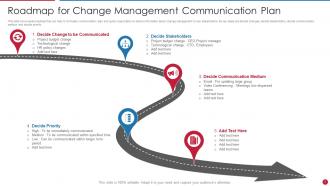
Honestly, visual stuff is a game-changer for getting people on board with big changes. Most folks process pictures way better than walls of text anyway. Try making simple infographics or timelines that show where you're going - like a roadmap with actual milestones people can track. Progress dashboards work great too because everyone loves seeing those bars fill up (weird how motivating that is, right?). Before/after comparisons help tons since people can actually picture the end goal. Just plaster these visuals everywhere - meetings, emails, even the break room. Complex ideas become so much clearer when you can literally see the path forward instead of just talking about it.
Honestly, your leaders make or break this whole thing. Employees can smell BS from a mile away - if the boss just sends one email then vanishes, everyone knows it's just another pointless initiative. But when leaders actually show up to meetings and start doing the new stuff themselves? That's when people realize it's legit. I've watched so many changes crash and burn because executives went MIA after the kickoff. Your leaders need to be out there answering the hard questions and dealing with pushback head-on. Oh, and definitely prep them with talking points so they're not all saying different things!
Honestly, it's all about how big the change is, but I'd say weekly updates during busy periods work best. Major org changes? At least every two weeks, though weekly's better if you can manage it. Nobody wants to be left wondering what's happening - that's how you lose people. When you hit big milestones or things start falling apart, daily check-ins might be necessary. My take? It's way better to over-communicate than go silent. Start weekly and see how it feels. You can always pull back if there's not much to report week to week.
Honestly, just keep people in the loop constantly - even boring "nothing happened this week" updates are better than radio silence. People get weird when they don't know what's going on. Set up different ways for them to reach out too, like town halls or anonymous surveys (some people won't speak up otherwise). The big thing though? Always explain your reasoning. Don't just say "we're doing X" - tell them why you picked X over Y and what you weighed. That whole decision-making transparency thing builds trust way faster than just dropping announcements on people.
Honestly, stories work so much better than just dumping spreadsheets on people. Find real examples - like how Sarah in accounting now saves 2 hours weekly with the new system. People actually remember that stuff. Nobody's gonna recall your bullet points though. Get stories from your pilot groups about their struggles and wins. Those "aha" moments are gold. I'd start collecting these now while they're fresh. The human angle is what makes change feel real instead of just another corporate initiative being pushed down. Stories stick, data doesn't.
Honestly, you'll want to track the obvious stuff first - attendance at town halls, training sessions, survey responses. When people stop showing up, that's your red flag right there. Pulse surveys are clutch for measuring trust and communication scores. But here's what I've learned - the soft signals matter more sometimes. Watch voluntary turnover rates and transfer requests like a hawk. Monthly manager check-ins give you the real tea on team morale. Oh, and definitely start tracking before you announce changes so you're not flying blind with comparisons later.
-
Thanks for all your great templates they have saved me lots of time and accelerate my presentations. Great product, keep them up!
-
“I required a slide for a board meeting and was so satisfied with the final result !! So much went into designing the slide and the communication was amazing! Can’t wait to have my next slide!”