


Change Management Analysis Powerpoint Presentation Slides





Try Before you Buy Download Free Sample Product
 Impress Your
 Audience
 100%
100% Editable
 Save Hours
 of Time


Our Change Management Analysis Powerpoint Presentation Slides are a source of delight. They will leave your audience enraptured.
People who downloaded this PowerPoint presentation also viewed the following :
Content of this Powerpoint Presentation
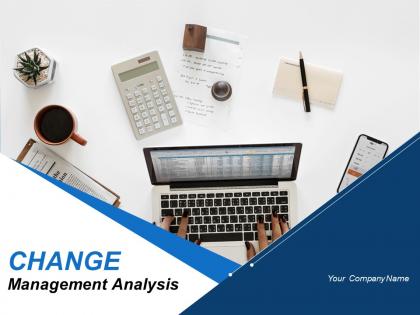
Slide 1: This slide introduces CHANGE Management Analysis. State Your Company Name and get started.
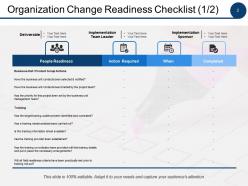
Slide 2: This slide showcases Organization Change Readiness Checklist (1/2) with these of the following parameters- Deliverable, Implementation Team Leader, Implementation Sponsor.
Slide 3: This slide presents Organization Change Readiness Checklist (2/2).
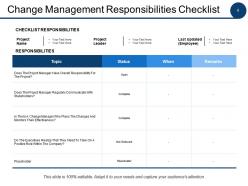
Slide 4: This slide showcases Change Management Responsibilities Checklist.
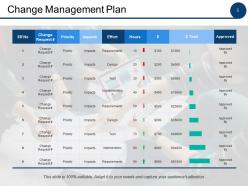
Slide 5: This slide presents Change Management Plan.
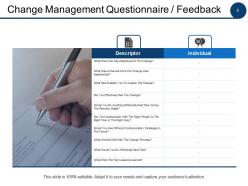
Slide 6: This slide showcases Change Management Questionnaire / Feedback.
Slide 7: This slide presents Change Management Icons Slide.
Slide 8: This slide shows Change Management Questionnaire / Feedback (2/2).
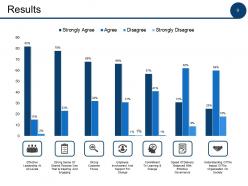
Slide 9: This slide presents Results.
Slide 10: This slide showcases Change Management Experience
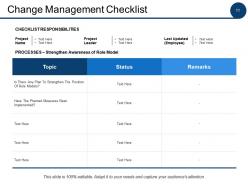
Slide 11: This slide presents Change Management Checklist.
Slide 12: This slide showcases Change Management Performance Dashboard which further presents Change Management Score.
Slide 13: This slide is titled Additional Slides.
Slide 14: This is a Vision, Mission and Goals slide. State them here.
Slide 15: This is an Our Team slide with name, image &text boxes to put the required information.
Slide 16: This is an About Us slide showing Our Company, Value Client, and Premium services as examples
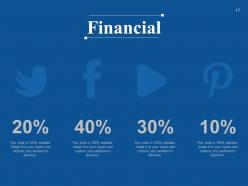
Slide 17: This is a Financial score slide. State financial aspects etc. here.
Slide 18: This slide shows Comparison of Positive Factors v/s Negative Factors with thumbs up and thumb down imagery.
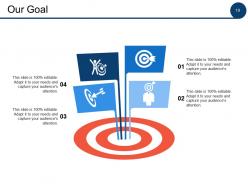
Slide 19: This slide shows Our Goals for your company.
Slide 20: This is a Quotes slide to highlight, or state anything specific.
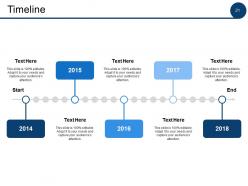
Slide 21: This slide shows Project Events Timeline with icons and text boxes.
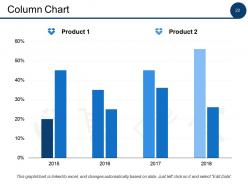
Slide 22: This slide presents Column Chart.
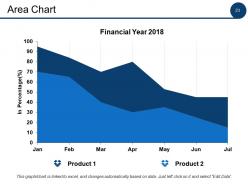
Slide 23: This slide showcases Area Chart.
Slide 24: This slide presents Scatter Chart.
Slide 25: : This is a Thank You slide with image.
Change Management Analysis Powerpoint Presentation Slides with all 25 slides:
Our Change Management Analysis Powerpoint Presentation Slides ensure there are no hard feelings. They generate a congenial atmosphere.













FAQs for Change Management Analysis
The key stages in effective change management include preparation and assessment, stakeholder engagement, communication planning, implementation execution, and monitoring evaluation. These stages work together by building organizational readiness, securing leadership buy-in, and ensuring systematic rollout across departments, with many companies finding that structured approaches significantly reduce resistance while accelerating adoption timelines.
Organizations can assess change readiness through employee surveys, leadership capability evaluations, cultural assessments, resource availability analysis, and stakeholder engagement measurements. These comprehensive evaluations enable companies to identify potential resistance points, communication gaps, and skill deficiencies across departments, ultimately delivering strategic insights that streamline implementation timelines and enhance transformation success rates.
Communication serves as the foundation of successful change management by building trust, reducing resistance, ensuring clarity, and maintaining employee engagement throughout transitions. Through transparent messaging and consistent updates, organizations streamline adoption processes, minimize uncertainty, and enhance stakeholder buy-in, with many companies finding that strategic communication ultimately delivers faster implementation and sustained organizational transformation.
Resistance to change can be anticipated through stakeholder analysis, communication assessments, and identifying potential impact areas across departments. Organizations address resistance by implementing transparent communication strategies, involving employees in planning processes, providing comprehensive training programs, and establishing feedback mechanisms, ultimately delivering smoother transitions and higher adoption rates.
Common change management tools include Kotter's 8-Step Process, ADKAR model, Lean Six Sigma, Prosci methodology, and change readiness assessments. These frameworks streamline transformation by establishing clear communication channels, measuring employee adoption rates, and tracking progress milestones, with many organizations finding that structured approaches ultimately deliver faster implementation and higher success rates.
Leadership styles significantly impact change management outcomes by shaping employee engagement, communication effectiveness, and implementation speed. Transformational leaders typically achieve higher success rates through inspiring vision and collaboration, while autocratic approaches may accelerate decisions but reduce buy-in, with many organizations finding that adaptive leadership combining multiple styles delivers optimal change adoption and sustainability.
Stakeholder engagement ensures change initiatives gain necessary support, reduce resistance, and achieve sustainable adoption across organizations. When stakeholders participate in planning and implementation, they become change champions rather than obstacles, with many companies finding that early engagement accelerates timelines, minimizes disruption, and ultimately delivers higher success rates and smoother organizational transitions.
Success in change management projects can be measured through employee adoption rates, productivity metrics, stakeholder feedback, timeline adherence, and ROI analysis. These indicators collectively assess both quantitative outcomes and qualitative transformation, with many organizations finding that combining financial performance data with employee engagement scores provides the most comprehensive view of change effectiveness and long-term sustainability.
Effective strategies include transparent communication about change rationale, involving employees in planning processes, providing comprehensive training and support, recognizing contributions during transitions, and maintaining regular feedback channels. These approaches help organizations minimize resistance while building trust, with many companies finding that early employee engagement and clear milestone celebrations significantly reduce anxiety and accelerate adoption of new processes.
Organizational culture significantly influences change management by shaping employee attitudes, resistance levels, communication patterns, and adaptation speed throughout transformation initiatives. Organizations with collaborative, flexible cultures typically experience smoother transitions, while rigid, hierarchical environments often face greater resistance, requiring more strategic communication and leadership alignment to successfully implement changes and drive sustainable adoption.
Training serves as the foundational bridge between current capabilities and required future skills, encompassing technical competencies, process workflows, behavioral adaptations, and cultural alignment. Through comprehensive learning programs, organizations minimize resistance, accelerate adoption rates, and ensure consistent implementation across departments, with many companies finding that well-structured training reduces change timelines by 40-60% while enhancing employee confidence and engagement.
Effective feedback gathering during change initiatives involves regular surveys, focus groups, one-on-one meetings, suggestion systems, and real-time pulse checks throughout the process. These mechanisms enable organizations to identify resistance early, adjust communication strategies, and refine implementation approaches, with many companies finding that continuous feedback loops significantly enhance employee buy-in and accelerate successful change adoption.
Common change management pitfalls include poor communication, insufficient stakeholder engagement, lack of leadership support, inadequate training, and resistance underestimation. These challenges can be avoided by establishing clear communication channels, involving key stakeholders early, securing executive sponsorship, and providing comprehensive training programs, with many organizations finding that proactive planning and continuous feedback loops ultimately deliver smoother transitions and higher adoption rates.
Technology facilitates change management by automating workflow transitions, providing real-time progress tracking, and enabling seamless communication across all organizational levels. Through digital platforms and analytics tools, companies streamline employee training, monitor adoption rates, and identify resistance patterns early, while delivering faster implementation timelines and enhanced transparency that ultimately drives more successful organizational transformations.
Change management varies significantly across industries based on regulatory requirements, organizational culture, stakeholder complexity, and operational constraints. Healthcare and financial services require extensive compliance protocols and risk assessments, while technology companies often embrace agile, rapid-iteration approaches, and manufacturing sectors focus on minimizing production disruptions, ultimately requiring tailored strategies that align with each industry's unique challenges and competitive landscape.
No Reviews