


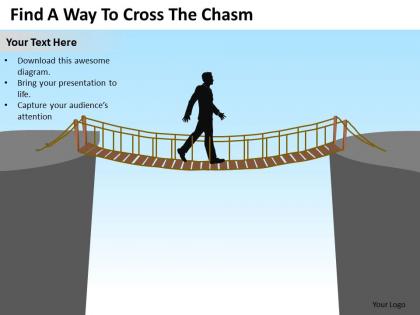
Change management consulting way to cross the chasm powerpoint templates ppt backgrounds for slides




Try Before you Buy Download Free Sample Product
 Impress Your
 Audience
 100%
100% Editable
 Save Hours
 of Time


Presently offer wings to your introduction plan with our change management consulting way to cross the chasm PowerPoint templates ppt backgrounds for slides. The ppt layout has been created understanding the necessities and prerequisites of the business firms. The introduction deck features the design that speaks to the entire information stream administration process which can be imparted effectively to the customers, colleagues and so on. The outlining group has given their best push to make this plan accessible for you. Depicting the data in the visual frame empowers you to have an effect on the gathering of people and it encourages them to get the points of interest in the better way. This PowerPoint slide gives you an entrance to the plan that can without much of a stretch meet any industry require. Download this amazing ppt template.Dig for gold with our Change Management Consulting Way To Cross The Chasm Powerpoint Templates PPT Backgrounds For Slides. Your thoughts will come up with gems.
People who downloaded this PowerPoint presentation also viewed the following :
Change management consulting way to cross the chasm powerpoint templates ppt backgrounds for slides with all 5 slides:
Don't spend all night trying to get your presentation looking good. Out library of high quality Change Management Consulting Way To Cross The Chasm Powerpoint Templates PPT Backgrounds For Slides can have you done in now time.


FAQs for Change management consulting way to cross the chasm powerpoint templates ppt
Effective change management consulting principles include stakeholder engagement, clear communication strategies, structured implementation frameworks, resistance mitigation techniques, and continuous monitoring systems. These approaches streamline organizational transitions by building employee buy-in, establishing measurable milestones, and addressing cultural barriers, with many organizations finding that strategic change consulting ultimately delivers faster adoption rates and sustainable business transformation.
Change management consultants assess organizational readiness through comprehensive evaluations of leadership commitment, employee engagement levels, cultural adaptability, existing communication systems, and available resources for transformation initiatives. These assessments involve stakeholder interviews, organizational surveys, and capability audits across departments, enabling consultants to identify potential resistance points, strategic enablers, and implementation pathways that ultimately deliver smoother transitions and higher success rates.
Communication serves as the foundation for successful change management by building trust, reducing resistance, providing clarity, and ensuring stakeholder alignment throughout transformation processes. Effective communication strategies enable organizations to address employee concerns proactively, maintain transparency about objectives and timelines, and create feedback loops, with many companies finding that consistent, multi-channel messaging ultimately accelerates adoption and minimizes disruption.
Change management consultants measure intervention impact through employee engagement surveys, performance metrics analysis, adoption rate tracking, productivity assessments, and cultural transformation indicators. These measurement approaches enable organizations to quantify behavioral shifts, operational improvements, and strategic alignment, with many consulting firms finding that comprehensive data collection across multiple touchpoints delivers clearer insights into transformation success rates.
Common change initiative pitfalls include inadequate communication, insufficient leadership buy-in, resistance to cultural shifts, poor resource allocation, and unrealistic timelines. Organizations avoid these challenges by establishing clear communication channels, securing executive sponsorship, involving employees in planning processes, and implementing phased rollouts, with many finding that comprehensive training and continuous feedback loops ultimately deliver smoother transitions and sustainable organizational transformation.
Consultants tailor change management strategies by conducting thorough cultural assessments, analyzing communication patterns, decision-making processes, and employee behaviors within each organization. They adapt their approaches based on factors like hierarchy levels, risk tolerance, and collaborative preferences, with technology companies requiring agile methodologies while traditional manufacturing firms need structured, sequential implementation plans, ultimately ensuring higher adoption rates and sustainable transformation outcomes.
Change management consultants typically use frameworks like Kotter's 8-Step Process, ADKAR model, Lean Six Sigma, McKinsey 7-S Framework, and Prosci methodology, alongside tools such as stakeholder mapping, communication plans, and impact assessments. These strategic approaches streamline organizational transitions by enhancing employee engagement, minimizing resistance, and accelerating adoption, with many companies finding that structured methodologies deliver measurable improvements in project success rates.
Stakeholder engagement is critical to change management success, as it builds buy-in, reduces resistance, identifies potential obstacles, and ensures sustainable adoption across the organization. Through regular communication, feedback sessions, and collaborative planning, companies like those in healthcare and manufacturing find that engaged stakeholders become change champions, ultimately accelerating implementation timelines and improving transformation outcomes.
Consultants use strategies including stakeholder engagement, transparent communication, phased implementation, training programs, and feedback mechanisms to manage resistance. Through these approaches, organizations can address employee concerns, build buy-in across departments, and create supportive environments, with many companies finding that early involvement and clear messaging ultimately deliver smoother transitions and higher adoption rates.
Technology facilitates change management initiatives by automating communication workflows, providing real-time progress tracking, and delivering data-driven insights into adoption patterns. Digital platforms enable organizations to streamline training delivery, monitor employee engagement, and identify resistance points early, with many companies finding that integrated change management systems ultimately accelerate transformation timelines while reducing costs.
Change management involves structured processes, methodologies, and systematic approaches to guide organizational transitions, while change leadership focuses on inspiring vision, influencing stakeholders, and driving cultural transformation through personal engagement. From a consulting perspective, management delivers frameworks and tools for implementation, whereas leadership creates emotional buy-in and strategic direction, with successful consultants combining both to ensure sustainable organizational change and competitive advantage.
Change management consultants support long-term sustainability by establishing continuous monitoring systems, embedding change capabilities within existing teams, and creating feedback mechanisms that track adoption rates. Through strategic training programs and cultural integration initiatives, organizations develop internal expertise while maintaining momentum, with many companies finding that structured follow-up processes and measurable milestones ultimately deliver lasting transformation and competitive advantage.
Emerging trends in change management consulting include digital transformation facilitation, agile change methodologies, employee experience design, data-driven change analytics, and hybrid workforce adaptation strategies. These approaches streamline organizational transitions by emphasizing continuous feedback loops, real-time performance metrics, and personalized change journeys, with many consulting firms finding that technology-enabled change processes deliver faster adoption rates and sustained behavioral shifts.
Small businesses benefit from change management consulting through structured transition planning, employee engagement strategies, and risk mitigation approaches that minimize operational disruptions. These services enable smaller organizations to navigate growth phases, technology implementations, and market shifts more effectively, with many finding that professional guidance accelerates adoption timelines and reduces costly implementation mistakes.
**INPUT**: What case studies or success stories exemplify effective change management consulting? **OUTPUT**: Successful change management consulting includes Microsoft's cultural transformation under Satya Nadella, General Electric's digital restructuring, and Netflix's evolution from DVD to streaming services. These transformations demonstrate how strategic consulting enables organizations to navigate complex transitions, minimize resistance, and accelerate adoption, with many companies finding that structured change management delivers measurable improvements in employee engagement and operational efficiency. [Word count: 60]
-
Informative presentations that are easily editable.
-
Great quality slides in rapid time.