


Change Management Roadmap For Transformation Office




Try Before you Buy Download Free Sample Product
 Impress Your
 Audience
 100%
100% Editable
 Save Hours
 of Time


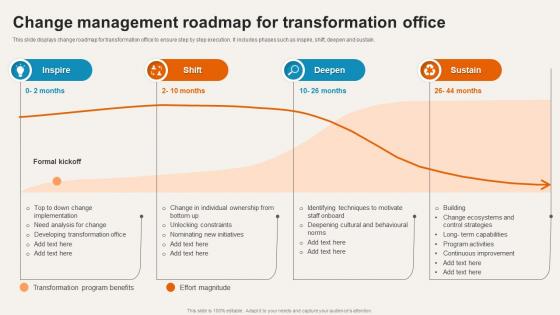
This slide displays change roadmap for transformation office to ensure step by step execution. It includes phases such as inspire, shift, deepen and sustain.
People who downloaded this PowerPoint presentation also viewed the following :
Change Management Roadmap For Transformation Office with all 6 slides:
Use our Change Management Roadmap For Transformation Office to effectively help you save your valuable time. They are readymade to fit into any presentation structure.





FAQs for Change Management Roadmap
Honestly, most change fails because leaders just dump announcements without explaining why it matters. Get your key people bought in first - they'll do half the selling for you. Communication has to be crystal clear from day one, and involve employees in the process instead of surprising them. Training matters too, obviously. People will resist (totally normal), so plan for pushback and celebrate small wins when you get them. I always think measuring progress is huge - you need to know if it's actually working and pivot if it's not. Oh, and leadership buy-in isn't optional. Without that, you're basically screwed from the start.
Honestly, I'd start with surveying your people about how they feel about change - that's where you'll find the real resistance hiding. Check if your current processes can actually handle what you're planning. Leadership buy-in is huge too, plus you need decent communication already in place. Look at how your team handled recent changes (even small ones count). Do you have any change champions already? Resources available? I always think it's wild how many companies skip this step and then wonder why everything falls apart. Figure out the gaps first before jumping into anything major.
Honestly, if your leadership isn't fully on board, you're screwed from day one. They've got to be the ones explaining why this change matters and actually showing up consistently - not just sending one email and vanishing. The worst thing? When they try to dump the whole thing on someone else's plate. You can't just delegate this stuff away. Leaders need to stay visible, clear obstacles when they come up (and trust me, they will), and keep hammering home the message. Oh, and they better walk the walk too. People see right through leaders who preach one thing but do another.
Honestly, you've gotta hit them from multiple angles with stuff that actually matters to them - job security, what their daily grind will look like, that kind of thing. Most leadership sends one sad email and thinks they're done (spoiler: they're not). Town halls, team meetings, Slack - whatever fits your vibe. Be real about timelines and when things might get messy. The magic happens when you create actual feedback loops. People need to ask questions and complain a little, it's natural. Regular check-ins are clutch, but you have to actually listen and respond. Trust me, that beats fancy slide decks every time.
Honestly, the biggest pain points are people freaking out about losing their jobs or status. Also, when leadership acts all wishy-washy about their own plan? Total momentum killer. Poor communication is another big one - like, nobody explains WHY we're doing this mess in the first place. Resources and timing issues will bite you too. My advice? Get your leaders to actually walk the walk, not just talk. Start communicating early and loop in the key players when you're planning stuff. Quick wins are gold for showing the doubters it's actually worth it. Oh, and don't underestimate how much transparency helps.
Honestly, tech makes change management so much less painful. Communication platforms keep everyone updated without constant meetings (thank god). Analytics help you spot who's struggling with adoption before things go sideways. Survey tools catch resistance early too. E-learning platforms are a lifesaver for training - way better than dragging people into conference rooms. But here's the thing: don't go overboard picking tools. You'll just stress people out more. I'd grab one or two that fix your worst headaches first. Maybe start with whatever communication issue is driving you crazy, then build from there.
Track the obvious stuff first - adoption rates, timelines, budget. Leadership loves those numbers. But here's the thing: soft metrics actually tell you way more about whether people will stick with changes long-term. Survey teams about engagement and how much they're fighting the new processes. I'd also watch training completion and support tickets (nobody talks about those enough). Oh, and resist the urge to measure everything. Pick maybe 3-5 metrics that actually matter for your specific situation. You'll go crazy otherwise.
Honestly, the best thing you can do is loop people in from the start - nobody likes being blindsided. Be upfront about what's happening and why. Sometimes when people push back, they're actually onto something you didn't think of. Create ways for them to speak up without feeling like they'll get shut down. Fear drives most of the pushback anyway, so the more details you share early on, the less drama later. Oh, and definitely win over your informal leaders first - you know, those people everyone actually listens to. Once they're on board, everything else gets way easier.
Honestly, it's all about talking to people regularly instead of just dropping big announcements on them. Map out who matters most first - your executives need totally different info than regular employees do. I'd start with your top 5 influential people and grab coffee with them this week. Set up ways for folks to give feedback anonymously too, because some won't speak up otherwise. When people push back (and they will), don't ignore it - tackle it directly. Always explain why you're making changes, not just what's changing. Oh, and frequent check-ins beat those massive all-hands meetings every time.
Company culture is honestly everything when it comes to change. Some places are super open to trying new stuff - those teams will jump on board pretty quickly. Others are stuck in that "we've always done it this way" mindset, and man, those are tough nuts to crack. Here's what I've noticed: people's trust in leadership makes a huge difference in how they react to changes. Plus your culture basically determines if employees see change as exciting or terrifying. My advice? Figure out what kind of culture you're dealing with first, then tailor your approach from there.
Honestly? Mix hands-on workshops with peer support - that's what actually works. Role-specific training is great, but the emotional stuff matters way more than most people think. Set up buddy systems so your veteran employees can mentor the folks who are freaking out about changes. Oh, and have managers do regular check-ins to catch problems early. Quick reference guides help too, or maybe an internal wiki thing. The trick is making support feel totally normal, not like you're weak for needing it. Start with your biggest complainers first - give them extra help and they'll end up being your biggest cheerleaders. Weird how that works.
Dude, it totally depends on your industry. Healthcare moves at a snail's pace because, well, people die if you mess up - so they test everything forever. Tech is the wild west though, they'll push updates and figure out problems later. Manufacturing has to deal with safety stuff and unions (which honestly can be a nightmare). Financial companies? Don't even get me started on all the regulatory hoops they jump through. You really gotta match your approach to what your industry actually cares about. There's no magic formula that works everywhere.
Honestly, change freaks people out even when it's good for them - our brains just hate unpredictability. You'll see anxiety, that whole "loss of control" thing, plus people get genuinely sad about leaving behind the old way. It's wild how nostalgic they get about systems that totally sucked! Fear kicks in too - like "can I even handle this new stuff?" Performance definitely takes a hit if you ignore all these feelings. Communication is huge here. Start early, keep talking, and don't pretend their concerns aren't valid. Extra support during transitions makes all the difference.
So there's three big ones everyone uses - Kotter's 8-Step, ADKAR, and Lewin's 3-Stage thing. Kotter's is everywhere and covers the whole process: creating urgency, getting buy-in, making stuff stick. ADKAR's my favorite though - it breaks down how individuals actually change (awareness, desire, knowledge, ability, reinforcement). Way more realistic about human psychology. Lewin's is ancient but professors still love it for some reason. If you're dealing with user adoption specifically, go ADKAR. Need something bigger for the whole organization? Kotter's your best bet.
Don't wait until the end to ask people how they feel about changes - build it right into every step. Weekly check-ins during pilot phases work great. Mix it up with pulse surveys, focus groups, or just grab coffee with people individually. Honestly, I've watched so many change projects blow up because nobody bothered asking "hey, how's this actually going for you?" until it was too late. The trick is giving people multiple ways to speak up about problems or suggestions. Oh, and actually do something with their feedback - people get pretty annoyed when their input just vanishes.
-
“Love it! I was able to grab an exciting proposal because of SlideTeam.”
-
Awesome presentation, really professional and easy to edit.