


Client Acquisition Cost For Startups Powerpoint Presentation Slides





Try Before you Buy Download Free Sample Product
 Impress Your
 Audience
 100%
100% Editable
 Save Hours
 of Time


Do you need to showcase the client acquisition cost to the management and team members through a PPT? SlideTeam has come up with ready to use client acquisition cost PowerPoint presentation slides. Utilize this consumer acquisition cost PPT presentation to showcase the cost associated in assuring the clients to buy a product or service. This customer relationship management price PPT presentation covers a slide on the ideal acquisition cost model, customer acquisition cost, the cost estimate to acquire a customer, and CAC by channels. This customer service PPT presentation will aid you to decide the worth of the consumer of a business. With the support of this customer acquisition cost PPT slides, you can illustrate the idea of customer relationship management, customer lifecycle management, customer lifetime value, CAC e-commerce, customer experience, customer services, customer satisfaction and more. Our researchers have researched the data of the presentation, and our graphics experts have converted it into an impactful presentation. Utilizing graphs and charts illustrations, you can quickly highlight the variation in the price of customer acquisition. Let this presentation be an essential tool to influence your viewers. Make a defining contribution with our Client Acquisition Cost For Startups Powerpoint Presentation Slides. Your ideas will help determine the future.
People who downloaded this PowerPoint presentation also viewed the following :
Content of this Powerpoint Presentation
Slide 1: This slide showcases Client acquisition cost for start-ups. State your company name and begins your presentation. Your company name.
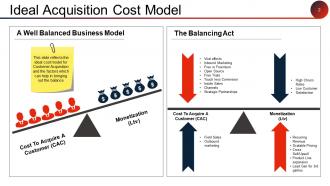
Slide 2: This slide shows Ideal Acquisition Cost Model. You can use for checking your business with cost to acquire customer and monetization.
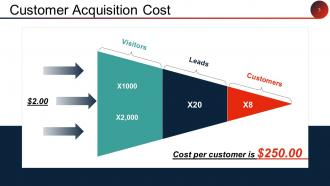
Slide 3: This slide Customer Acquisition Cost with visitors, leads and customer information.
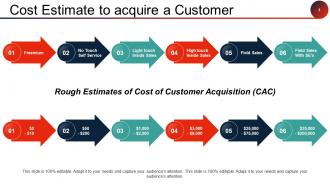
Slide 4: This slide presents Cost Estimate to acquire a Customer which includes six steps. You can edit your as per your requirement.
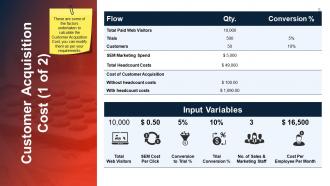
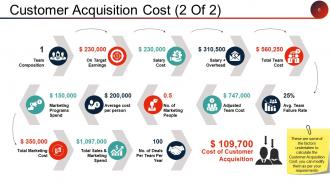
Slide 5: This slide displays Customer Acquisition Cost. These are some of the factors undertaken to calculate the Customer Acquisition Cost, you can modify them as per your requirements
Slide 6: This slide shows Customer Acquisition Cost. You can use data as per your requirement.
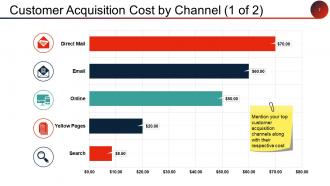
Slide 7: This slide shows Customer Acquisition Cost by Channel. Mention your top customer acquisition channels along with their respective cost
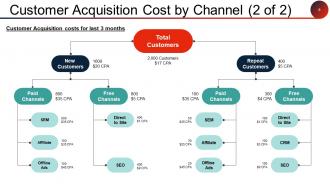
Slide 8: This slide presents Customer Acquisition Cost by Channel. You can track the customers through this flowchart.
Slide 9: These are the Client Acquisition Cost For Start -ups Icon slide. You can use as per your requirement.
Slide 10: This is a Coffee Break slide to halt.
Slide 11: This slide is titled Graphs and Charts to proceed forward.
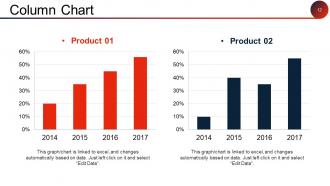
Slide 12: This slide shows a Column Chart for product comparison.
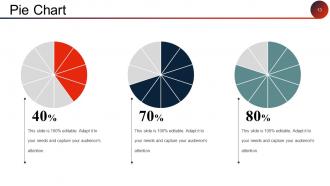
Slide 13: This is a Pie Chart image slide. State specifications, information here.
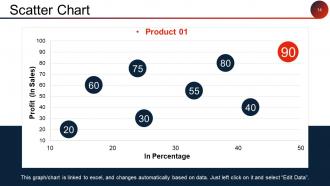
Slide 14: This is a Scatter Chart slide to show product/entity comparison.
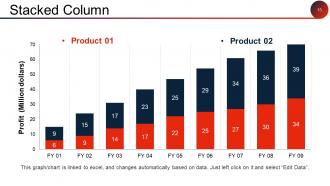
Slide 15: This is a Stacked column slide to show product comparison.
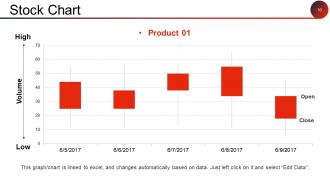
Slide 16: This slide displays Stock Chart. With this you can show how many are at high and at low.
Slide 17: This slide is additional for heading forward.
Slide 18: This slide is showing Our vision. You can edit your company vision as per requirement.
Slide 19: This is Our Team slide showing the designation and pictures.
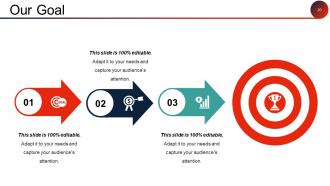
Slide 20: This is an Our Goal slide text boxes to state.
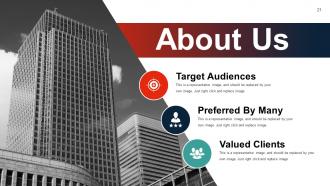
Slide 21: This is an About Us slide. State company/team specifications here.
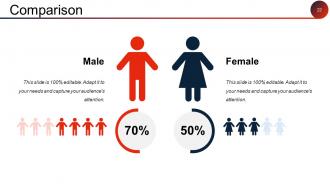
Slide 22: This slides showing Comparison of male and female percentages.
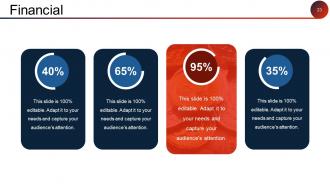
Slide 23: This slides showcases the comparison for four years.
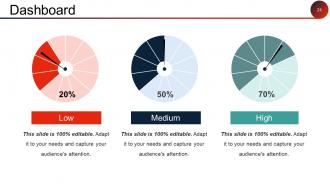
Slide 24: This slide displays three comparison dashboards showing different percentage
Slide 25: This slide showcases the quotes, you can make use of this as per your own requirement.
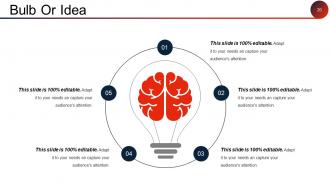
Slide 26: This slide is showing bulb and inside is brain that relates innovative idea from mind, so use to add innovative ideas.
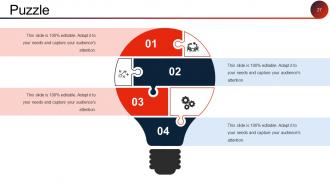
Slide 27: This slide displays the bulb and the puzzles in it. You can add description according to you requirement.
Slide 28: This is a Thank You slide with Address, Street number, city, state, Contact Numbers, Email Address.
Client Acquisition Cost For Startups Powerpoint Presentation Slides with all 28 slides:
Our Client Acquisition Cost For Startups Powerpoint Presentation Slides are handy to have around, They give you the advantage of convenience.






FAQs for Client Acquisition Cost For Startups
Client Acquisition Cost (CAC) is the total expense required to acquire a new customer, including marketing, sales, and operational costs divided by new customers gained. It's crucial because understanding CAC enables businesses to optimize resource allocation, evaluate marketing effectiveness, and ensure sustainable growth, with companies across retail, SaaS, and financial services using CAC metrics to maximize profitability and competitive advantage.
Calculate CAC by dividing total acquisition costs—including marketing spend, sales team salaries, advertising expenses, and campaign costs—by the number of new customers acquired during a specific period. Effective CAC measurement incorporates customer lifetime value ratios, payback periods, and channel-specific breakdowns, enabling businesses to optimize marketing investments, identify high-performing acquisition strategies, and ultimately improve profitability across customer segments.
Digital marketing significantly influences CAC by enabling precise audience targeting, automated lead nurturing, and data-driven campaign optimization across multiple channels simultaneously. Through strategic SEO, social media advertising, and marketing automation platforms, businesses streamline customer acquisition costs while enhancing conversion rates, with many organizations finding that integrated digital approaches deliver measurably lower acquisition expenses.
Businesses optimize marketing strategies to reduce CAC through targeted audience segmentation, conversion rate optimization, marketing automation, referral programs, and content marketing initiatives. These approaches streamline lead generation by improving campaign precision, enhancing customer journey experiences, and leveraging existing customer networks, ultimately delivering lower acquisition costs and higher ROI across marketing channels.
Common pitfalls include cutting marketing spend too drastically, focusing solely on cheaper channels without considering quality, neglecting customer lifetime value calculations, over-optimizing for short-term metrics, and reducing customer support investments. These approaches often backfire by attracting lower-quality leads or damaging retention rates, with many businesses finding that sustainable CAC reduction requires balancing acquisition costs with long-term customer value and experience quality.
Longer sales cycles significantly increase Client Acquisition Cost by requiring extended engagement, additional touchpoints, and prolonged resource allocation across marketing and sales teams. Organizations with complex B2B sales often find that streamlining processes, automating nurturing sequences, and implementing strategic qualification frameworks reduces cycle duration while maintaining conversion quality, ultimately delivering lower acquisition costs and improved operational efficiency.
Client Acquisition Cost and Customer Lifetime Value share an inverse relationship that determines business profitability, with successful companies maintaining a CLV-to-CAC ratio of at least 3:1. This strategic balance enables organizations to optimize marketing spend, enhance resource allocation, and maximize long-term returns, with many financial services and SaaS companies finding that improving this ratio significantly accelerates sustainable growth.
Segmentation and targeting reduce CAC by identifying high-value customer segments, focusing marketing spend on qualified prospects, and creating personalized campaigns that convert more efficiently. This strategic approach enables companies to allocate resources toward audiences most likely to purchase, minimizing wasted spend on unresponsive segments, ultimately delivering higher conversion rates and lower acquisition costs per customer.
Customer acquisition cost tracking tools include CRM platforms like Salesforce, marketing automation software such as HubSpot, analytics tools like Google Analytics, attribution platforms including Mixpanel, and comprehensive business intelligence solutions. These technologies streamline CAC analysis by consolidating marketing spend data, tracking customer journeys across multiple touchpoints, and providing real-time performance insights, ultimately enabling organizations to optimize their acquisition strategies and improve resource allocation efficiency.
Referral programs and word-of-mouth marketing significantly reduce CAC by leveraging existing customers to acquire new ones at minimal cost, eliminating expensive advertising spend. These organic acquisition methods deliver higher-quality leads with better conversion rates and longer retention, with many businesses finding that referred customers generate 25% higher profit margins while costing 5x less to acquire.
**INPUT**: What is the significance of CAC relative to different industries or business models? **OUTPUT**: CAC significance varies dramatically across industries, with SaaS companies targeting ratios below 3:1, while retail businesses often operate with higher acquisition costs due to lower lifetime values. This variance reflects different customer retention patterns, pricing models, and competitive landscapes, with subscription-based businesses typically justifying higher upfront investments through recurring revenue streams, ultimately enabling more strategic long-term growth planning. [Word count: 60 words]
Presentation templates effectively communicate CAC strategy by standardizing key metrics visualization, creating consistent stakeholder messaging, and streamlining complex data into digestible formats that highlight acquisition funnel performance, cost-per-channel breakdowns, and ROI projections. These templates enable marketing teams and executives to present unified CAC analyses across departments, facilitate strategic discussions around budget allocation, and ultimately deliver transparent reporting that drives informed decision-making and stakeholder buy-in.
Content marketing significantly reduces CAC over time by building organic visibility, establishing thought leadership, nurturing prospects through educational touchpoints, and creating scalable lead generation systems. Through consistent blogging, video content, and resource libraries, organizations attract qualified prospects at lower costs while improving conversion rates, with many companies finding their content-driven leads cost 60% less than traditional acquisition channels, ultimately delivering sustainable competitive advantage.
Businesses should monitor customer lifetime value (CLV) to CAC ratio, conversion rates across channels, average deal size, sales cycle length, and marketing qualified leads (MQLs) to sales qualified leads (SQLs) conversion rates. These metrics enable organizations to identify cost fluctuations early, optimize resource allocation across acquisition channels, and maintain sustainable growth trajectories, with many companies finding that regular monitoring delivers improved profitability and strategic competitive advantage.
Customer feedback helps refine CAC strategies by identifying the most effective acquisition channels, revealing messaging that resonates with target audiences, and highlighting service gaps that impact conversion rates. Through systematic feedback analysis, businesses can reallocate marketing spend toward higher-performing channels, optimize campaign messaging, and address friction points in the customer journey, ultimately reducing acquisition costs while improving conversion quality.
-
Much better than the original! Thanks for the quick turnaround.
-
Awesomely designed templates, Easy to understand.