


Cloud Data Acquisition Monotone Icon In Powerpoint Pptx Png And Editable Eps Format




Try Before you Buy Download Free Sample Product
 Impress Your
 Audience
 100%
100% Editable
 Save Hours
 of Time


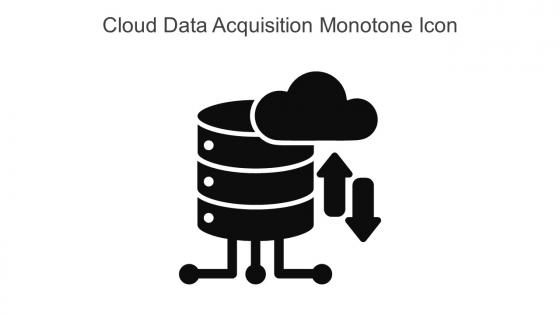
This Cloud data acquisition monotone icon in powerpoint pptx png and editable eps format is a 100 percent editable icon. The downloaded file will have this icon in EPS, PNG and Powerpoint pptx format and is perfect for your next project. It has a simple yet stylish design.
People who downloaded this PowerPoint presentation also viewed the following :
Cloud Data Acquisition Monotone Icon In Powerpoint Pptx Png And Editable Eps Format with all 6 slides:
Use our Cloud Data Acquisition Monotone Icon In Powerpoint Pptx Png And Editable Eps Format to effectively help you save your valuable time. They are readymade to fit into any presentation structure.





FAQs for Cloud Data Acquisition Monotone Icon In Powerpoint Pptx Png And
Cloud data acquisition delivers enhanced scalability, cost efficiency, real-time processing capabilities, improved accessibility, and robust security features for modern businesses. These cloud-based systems streamline operations by eliminating infrastructure overhead, enabling remote monitoring, and facilitating seamless integration across platforms, with many organizations finding that this approach significantly reduces operational costs while accelerating decision-making processes.
Cloud data acquisition enhances accessibility by centralizing data storage, enabling real-time access from any location, and eliminating silos between departments. This approach streamlines collaboration through shared dashboards, automated data pipelines, and synchronized updates, with organizations in healthcare, finance, and retail finding that teams can make faster decisions while reducing data inconsistencies and operational costs.
Cloud data acquisition implementation challenges include data security concerns, integration complexity with existing systems, bandwidth limitations, latency issues, and compliance requirements across different jurisdictions. While these present significant hurdles, many organizations find that strategic planning, phased rollouts, and robust security frameworks enable them to overcome these obstacles, ultimately delivering enhanced scalability and operational efficiency.
Cloud data security often delivers enhanced protection through advanced encryption, automated threat detection, and continuous monitoring, while traditional methods rely heavily on physical security and manual oversight. Through centralized security protocols and real-time vulnerability assessments, organizations in banking, healthcare, and retail find that cloud environments enable faster security updates, better compliance tracking, and more comprehensive data protection strategies.
Healthcare, financial services, retail, manufacturing, and telecommunications benefit most from cloud data acquisition technologies due to their high-volume data requirements and regulatory compliance needs. These industries leverage cloud solutions to streamline patient records management, accelerate fraud detection, enhance customer analytics, and optimize supply chain operations, ultimately delivering faster services, reduced operational costs, and improved competitive positioning in increasingly data-driven markets.
Organizations ensure compliance with cloud data acquisition by selecting certified cloud providers, implementing robust data governance frameworks, conducting regular audits, and maintaining comprehensive documentation of data handling processes. Many financial services and healthcare institutions find that strategic combination of encryption protocols, access controls, and automated compliance monitoring ultimately delivers regulatory adherence while streamlining data operations across multiple jurisdictions.
Real-time data processing enables immediate analysis and decision-making during cloud data acquisition by processing streams as they arrive, detecting anomalies instantly, and triggering automated responses. This capability transforms raw data into actionable insights within milliseconds, with financial services using it for fraud detection and healthcare organizations for patient monitoring, ultimately delivering competitive advantages through faster, data-driven decisions.
Cloud data acquisition significantly reduces data storage costs through automated scaling, elimination of physical infrastructure investments, and pay-as-you-use pricing models. Companies in sectors like retail and healthcare find that cloud solutions minimize upfront capital expenditures while enabling flexible resource allocation, ultimately delivering cost efficiencies and improved operational transparency.
Popular cloud platforms for data acquisition include Amazon Web Services with its comprehensive data pipeline services, Microsoft Azure featuring robust integration capabilities, Google Cloud Platform offering advanced analytics tools, IBM Cloud providing enterprise-grade solutions, and Oracle Cloud delivering specialized database services. These platforms differ in their pricing models, integration ecosystems, and analytical capabilities, with many organizations finding that AWS excels in scalability, Azure streamlines hybrid deployments, and Google Cloud delivers superior machine learning integration.
Machine learning integrates into cloud data acquisition through automated data classification, predictive scaling, intelligent filtering, real-time anomaly detection, and adaptive data routing algorithms. These AI-driven capabilities enhance acquisition processes by automatically identifying valuable data sources, optimizing storage costs, and minimizing irrelevant data collection, with many organizations finding that ML-powered systems deliver significantly faster processing and improved data quality.
Organizations should implement automated data pipelines, establish clear governance frameworks, prioritize data quality validation, ensure robust security protocols, and maintain scalable storage architectures. These practices streamline operations by reducing manual errors, accelerating processing times, and enhancing compliance, with many financial services and healthcare institutions finding that strategic automation ultimately delivers faster insights and competitive advantage.
Cloud data acquisition supports scalability by automatically adjusting storage capacity, processing power, and bandwidth as data volumes increase, eliminating infrastructure constraints that traditionally limit growth. Growing businesses, particularly in e-commerce, fintech, and healthcare sectors, can seamlessly scale their data operations without upfront hardware investments, ultimately reducing costs while maintaining performance and enabling rapid expansion into new markets.
Essential cloud data acquisition tools include Apache Kafka, AWS Kinesis, Google Cloud Dataflow, Azure Data Factory, and Apache NiFi for streaming data ingestion. These technologies streamline data collection by automating extraction processes, enabling real-time processing, and ensuring seamless integration across multiple sources, with many organizations finding significantly enhanced operational efficiency and faster decision-making capabilities.
APIs serve as critical bridges enabling seamless data flow between cloud platforms, applications, and external sources through standardized communication protocols, authentication mechanisms, and real-time data transfer capabilities. Through RESTful and GraphQL APIs, organizations streamline data integration from multiple sources, automate collection processes, and ensure secure access controls, ultimately delivering faster insights and enhanced operational efficiency across diverse business environments.
Future trends in cloud data acquisition include real-time processing capabilities, AI-driven automated collection, edge computing integration, enhanced security protocols, and multi-cloud orchestration strategies. These advancements streamline data workflows by reducing latency, improving accuracy, and enabling seamless scalability, with many organizations finding that strategic combinations ultimately deliver competitive advantages and operational efficiency.
-
Unique research projects to present in meeting.
-
The templates are easy to get, and the chat customer support is excellent.