


Coca Cola Zero Integrated Marketing Communication Plan




Try Before you Buy Download Free Sample Product
 Impress Your
 Audience
 100%
100% Editable
 Save Hours
 of Time


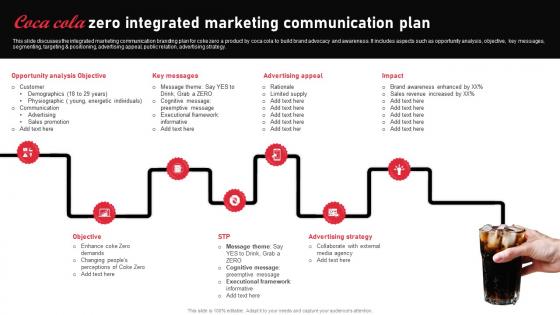
This slide discusses the integrated marketing communication branding plan for coke zero a product by coca cola to build brand advocacy and awareness. It includes aspects such as opportunity analysis, objective, key messages, segmenting, targeting and positioning, advertising appeal, public relation, advertising strategy.
People who downloaded this PowerPoint presentation also viewed the following :
Coca Cola Zero Integrated Marketing Communication Plan with all 6 slides:
Use our Coca Cola Zero Integrated Marketing Communication Plan to effectively help you save your valuable time. They are readymade to fit into any presentation structure.





FAQs for Coca Cola Zero Integrated
**INPUT**: What are the key objectives of the Coca Cola Zero integrated marketing communication (IMC) plan? **OUTPUT**: Coca Cola Zero's IMC objectives include brand differentiation from regular Coca Cola, targeting health-conscious consumers, driving trial adoption, and maintaining taste perception consistency across all touchpoints. These strategic communications enhance market penetration by leveraging digital platforms, experiential marketing, and cross-channel messaging, with many beverage companies finding that integrated approaches ultimately deliver stronger brand equity and sustained consumer engagement. [Word count: 58 words]
Coca-Cola Zero differentiates itself by emphasizing "real Coca-Cola taste with zero calories," targeting health-conscious consumers who want indulgence without compromise. Through strategic messaging focused on lifestyle compatibility, fitness alignment, and guilt-free consumption, the brand positions itself as the smart choice for calorie-aware demographics, ultimately delivering market expansion while preserving the core Coca-Cola experience.
Coca Cola Zero's IMC strategy utilizes television advertising, digital marketing, social media engagement, experiential activations, and strategic partnerships with sports and entertainment properties. These channels work synergistically by television building mass awareness, digital platforms enabling targeted messaging and real-time engagement, experiential events creating memorable brand interactions, and partnerships leveraging audience crossover, ultimately delivering consistent "Real Coca Cola Taste, Zero Sugar" messaging across multiple touchpoints while maximizing reach and reinforcing brand positioning.
Social media has revolutionized Coca Cola Zero's marketing through targeted advertising, influencer partnerships, real-time consumer engagement, and viral content campaigns that amplify brand reach exponentially. These digital platforms enable precise demographic targeting, interactive brand experiences, and user-generated content strategies, ultimately delivering enhanced customer loyalty, reduced advertising costs, and measurable campaign performance metrics across global markets.
Consumer feedback serves as a critical foundation for Coca Cola Zero's IMC plan, informing message positioning, channel selection, creative development, and campaign timing across all touchpoints. Through social media monitoring, taste tests, and market research, Coca Cola continuously refines their "Great Taste, Zero Sugar" messaging and promotional strategies, ensuring campaigns resonate with health-conscious consumers while maintaining brand authenticity and driving purchase intent.
Coca-Cola Zero leverages influencer partnerships by collaborating with fitness enthusiasts, lifestyle creators, and entertainment personalities who align with its zero-calorie positioning and target younger demographics. These strategic partnerships enhance brand authenticity, expand social media reach, and drive product trials through authentic content creation, with many campaigns integrating influencers across digital platforms, events, and product launches to maximize consumer engagement.
Coca-Cola Zero's advertising emphasizes USPs including zero calories with authentic Coca-Cola taste, targeting health-conscious consumers who refuse to compromise on flavor, premium positioning against diet alternatives, and lifestyle alignment with active, image-aware demographics. These strategic propositions enable the brand to capture market share from both regular cola drinkers seeking healthier options and diet beverage consumers wanting superior taste, ultimately delivering expanded consumer base and competitive differentiation in the increasingly crowded zero-sugar beverage market.
Coca-Cola Zero maintains brand consistency through unified visual identity, consistent messaging about taste and zero calories, and standardized brand guidelines across all platforms. The company ensures seamless integration between digital campaigns, traditional advertising, and retail activations, with marketing teams coordinating messaging strategies that reinforce the "Real Coke Taste, Zero Calories" promise, ultimately delivering cohesive brand experiences.
Coca Cola Zero primarily targets health-conscious adults aged 25-45, particularly males seeking sugar-free alternatives, busy professionals, and fitness enthusiasts across urban and suburban markets. These demographics are identified through comprehensive market research, consumer behavior analysis, social media engagement patterns, and purchase data analytics, with many beverage companies finding that lifestyle segmentation and health preference mapping ultimately deliver more precise targeting than traditional age-based approaches alone.
Coca Cola Zero's IMC plan addresses competitive pressures through integrated digital campaigns, strategic partnerships with sports and entertainment platforms, targeted health-conscious messaging, and consistent brand positioning across multiple touchpoints. This comprehensive approach enables differentiation from diet competitors like Pepsi Zero and emerging wellness brands, while reinforcing taste superiority claims and lifestyle alignment, ultimately delivering sustained market share growth in the increasingly crowded zero-calorie segment.
Coca-Cola Zero employs digital campaigns, experiential marketing, celebrity endorsements, social media contests, and targeted advertising to drive customer engagement. These tactics work by creating interactive brand experiences, leveraging influencer partnerships, and fostering community participation through user-generated content, ultimately delivering stronger brand loyalty and increased consumer interaction across multiple touchpoints.
Coca Cola Zero leverages consumer behavior analytics, social media sentiment analysis, and purchase pattern data to optimize messaging across channels, personalize campaigns, and identify high-performing touchpoints. Through predictive analytics and real-time performance tracking, the brand refines targeting strategies, adjusts creative content dynamically, and allocates media budgets more effectively, ultimately delivering higher engagement rates and improved ROI.
Sustainability plays a strategic role in Coca Cola Zero's messaging through recyclable packaging initiatives, carbon footprint reduction commitments, and water conservation programs that align with health-conscious consumer values. These environmental messages enhance brand credibility while appealing to eco-aware demographics, with many beverage companies finding that sustainability messaging strengthens customer loyalty and competitive positioning in increasingly environmentally-conscious markets.
Traditional media forms in Coca Cola Zero's IMC plan include television commercials during prime sports events, radio sponsorships targeting young adults, print advertisements in lifestyle magazines, and outdoor billboards in high-traffic urban areas. These channels work synergistically with digital platforms by reinforcing consistent brand messaging across touchpoints, with many beverage companies finding that traditional media amplifies reach and builds brand credibility, ultimately delivering broader market penetration and sustained brand awareness.
Coca-Cola Zero's branding has significantly enhanced consumer perception of sugar-free beverages by positioning them as flavorful, mainstream options rather than diet alternatives, appealing to broader demographics including younger males. This strategic rebranding approach has enabled beverage companies to overcome traditional diet stigmas, streamline market positioning, and deliver enhanced brand appeal, with many manufacturers finding that taste-focused messaging ultimately drives greater consumer acceptance and market penetration.
-
This design is not only aesthetically pleasing but it has many uses making the cost worthwhile. The graphics look stunning, and you can edit them as per your needs.
-
I downloaded some of the presentations for work. They were simple to modify and saved me a lot of time and effort.