


Community Health Powerpoint Ppt Template Bundles Survey




Try Before you Buy Download Free Sample Product
 Impress Your
 Audience
 100%
100% Editable
 Save Hours
 of Time


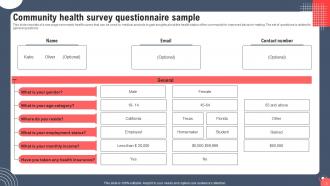
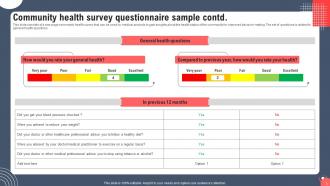
Revolutionize your community health research with our state of the art Community Health Survey PowerPoint PPT template. This comprehensive toolkit is designed to simplify the process of conducting public health surveys and gathering crucial data on diseases and health conditions. With a meticulously crafted questionnaire tailored specifically for community health, our template covers key aspects such as demographics, lifestyle factors, and healthcare access. Seamlessly customize each slide to fit your survey requirements and captivate your audience with visually stunning presentations. Empower your team to make data driven decisions and uncover valuable insights that will drive impactful community health initiatives. Stay at the forefront of public health research with our powerful Community Health Survey PPT, and make a lasting impact on the well being of your community.
People who downloaded this PowerPoint presentation also viewed the following :
Community Health Powerpoint Ppt Template Bundles Survey with all 10 slides:
Use our Community Health Powerpoint Ppt Template Bundles Survey to effectively help you save your valuable time. They are readymade to fit into any presentation structure.





FAQs for Community Health Powerpoint Ppt
Honestly, it mostly comes down to money and where you live. Income and education are huge - poverty just creates this awful cycle of health problems that's super hard to break. Your neighborhood matters too though. Like, can you actually walk places? Is there decent food around or just fast food? Air quality's a big one people don't think about enough. Then obviously the usual stuff - smoking, what you eat, exercise. But I swear the policy decisions around transportation and healthcare funding probably shape your health more than whether you hit the gym. If you're doing community health work, I'd map out what's actually happening in your area first.
Okay so here's the thing - people actually listen when it's coming from voices they already trust. Find your local leaders, neighborhood groups, whoever has real influence. Those folks know what barriers everyone's dealing with, like language stuff or transportation headaches. Interactive education beats dropping random pamphlets any day (honestly, who reads those?). Cultural relevance is huge too. Start by figuring out who the real community connectors are. Then ask them what health topics people are genuinely curious about, not what you think they should care about. Meet people where they're at instead of expecting them to come to you.
Your bank account basically decides what healthcare you get. Rich people? Great insurance, can miss work for doctor visits, afford treatments without stress. Poor folks end up skipping care they can't pay for or rushing to the ER when things get bad. It's wild how your address and income literally determine if you stay healthy. Oh, and fewer doctors even practice in low-income areas. When you're planning community health stuff, don't forget about transportation issues and work schedules - that practical stuff matters more than people think.
Look, start with the obvious stuff - health clinics, mobile units, preventive care where people actually are. But you've gotta go deeper than that. Food deserts, crappy housing, can't get to appointments - fix those too. Community groups are your best bet since they already have relationships built. Oh, and the data on this stuff? Super eye-opening when you actually look at it. I'd map out your biggest gaps first, then find programs that kill two birds - like community gardens tackling food access while people connect. Partner smart, don't reinvent the wheel.
Honestly, I'd start with getting people talking first - maybe partner with local radio stations or newspapers for basic mental health awareness stuff. Schools are huge for this too. Free workshops always draw crowds, especially if you focus on practical things like managing stress or recognizing depression signs. Libraries and community centers are perfect spots since everyone already goes there anyway. Don't sleep on social media though - that's where you'll actually reach younger people. The whole point is just making this stuff visible and normal to discuss. Pick one thing first and see what sticks.
Pollution basically destroys communities in so many ways. Air quality triggers asthma and breathing problems. Water contamination leads to stomach issues and messes with kids' development. Then there's soil pollution affecting what people eat - honestly, it's depressing how connected everything is. Poor neighborhoods always get hit worst since they're stuck near factories and busy roads. Even noise pollution screws with sleep and mental health (which people don't talk about enough). When you're looking at community health issues, start by mapping environmental hazards in the area. That'll show you why certain diseases cluster where they do and help figure out what to tackle first.
Start with getting everyone involved early - residents, local groups, healthcare people, government types. Mix up how you collect info: surveys, focus groups, plus whatever health data already exists. Your team should actually look like the community and speak their languages. Honestly, the biggest screwup I've seen is people rushing this part. Build trust first, that's huge. Then when you analyze everything, bring the community back in for their take before making any action plans. Oh and definitely share your results with everyone who helped - they earned it.
Honestly, partnerships are total game-changers for public health. You can pool resources and hit way more people than going solo. Like when hospitals work with schools and community centers - suddenly you're everywhere in people's lives. Each group brings different stuff too. Health departments have the data and clinical know-how, but that local community center? They actually know which families need help and how to talk to them without sounding weird. I'd start by figuring out what each potential partner offers and where you're missing pieces. It's like puzzle building but with organizations.
Okay so cultural competency is huge for health outcomes - people actually show up and follow through when programs respect their values and how they communicate. I've literally watched programs flip from meh to community favorites just by getting the cultural piece right. Your team definitely needs training on cultural stuff, language barriers, community health beliefs - all that. Oh and definitely get community leaders involved in designing things from the start. Trust me, when people see their culture reflected in healthcare services, participation rates go through the roof. It's honestly one of the best investments you can make.
Honestly, what people eat totally changes everything for a community's health. Better diets = way less diabetes, heart disease, obesity - you know, all the big ones. Healthcare costs drop too. Kids actually do better in school when they're eating well, which makes sense if you think about it. But when nutrition sucks? The whole system gets hit - hospitals overloaded, people can't work as much. The trick is getting fresh food into neighborhoods and teaching people how to use it. I mean, it's so much smarter to prevent these problems upfront than deal with them later when someone's already sick.
Honestly, you need trusted people doing the talking - local leaders, doctors, community groups that folks already respect. Way better than those generic health department flyers nobody reads. Then make it super easy to actually get vaccinated. Mobile clinics, workplace programs, events where people already are. Don't just brush off concerns either - address the specific stuff people worry about with info that makes sense for that community. Gift cards don't hurt as motivation! Building those relationships first is huge though. Once you've got trust, the facts land so much better.
Telehealth is honestly perfect for people who can't make it to clinics - bad transportation, crazy work hours, living way out in the middle of nowhere. You can do check-ups, mental health sessions, even manage diabetes through their phone. Wild how much doctors can actually do virtually now. Apps and wearables help you track what's happening health-wise in the community too, so you catch problems early. My advice? Start with something specific like diabetes management first. Don't try to do everything at once - that's how projects usually crash and burn.
Schools honestly make a huge difference since kids are there like 8 hours a day. Your kid's getting meals through their programs, moving around in PE and recess, plus learning health stuff that actually sticks. Teachers and nurses often catch things first too - vision issues, developmental stuff you might not notice at home. The annoying thing is every district does it differently. I'd check their wellness policy online or just ask the school nurse what they're actually doing. Way easier than guessing, and you'll know if it's any good or not.
Honestly, start by figuring out what you've actually got - volunteers, local businesses, maybe churches with extra space. Build those partnerships NOW, not when everything's falling apart. Get the mayor's office, nonprofits, community leaders all talking to each other ahead of time. That way when crisis hits, people already know who to call and what they're supposed to do. Oh, and don't let resources get wasted by having three groups doing the same thing - coordination is huge. Figure out where your community's most vulnerable first, then you can focus your efforts there. Those relationship conversations? Start them today.
So death rates and healthcare access are the obvious ones, but honestly? The social stuff tells you way more - like housing quality, food security, job rates. I'd track both the health outcomes (disease rates, life expectancy) AND what causes them upstream. Don't sleep on behavioral indicators either - vaccination rates, who's actually showing up for screenings. Environmental conditions matter too. Mix maybe 3-4 different types instead of just one metric, because relying on clinic visits alone is pretty useless for the bigger picture.
-
It's always a delight to see new templates from you! I am extremely pleased with the fact that they are easy to modify and fit any presentation layout in seconds!
-
Colors used are bright and distinctive.