


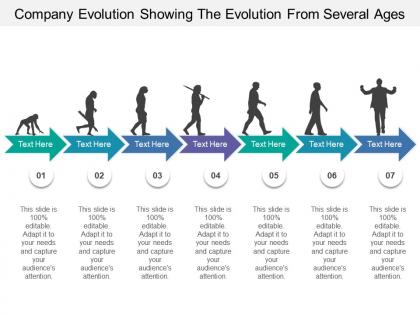
Company evolution showing the evolution from several ages




Try Before you Buy Download Free Sample Product
 Impress Your
 Audience
 100%
100% Editable
 Save Hours
 of Time


Come to no harm with our Company Evolution Showing The Evolution From Several Ages. Each experience will be good.
People who downloaded this PowerPoint presentation also viewed the following :
Company evolution showing the evolution from several ages with all 5 slides:
Firm up alliances with our Company Evolution Showing The Evolution From Several Ages. You will cement enduring bonds.

FAQs for Company evolution showing the evolution
So we started super small back in 2015 - just five people cramming into one office. Got our Series A in 2018 and expanded to three cities, which felt huge at the time. Then 2020 hit and honestly? Best thing that happened to us. Everyone went remote and our users jumped from 10K to 100K basically overnight. Wild year. Since then we've launched two new product lines and we're at 500K users in 15 markets now. There's a detailed timeline in the company wiki if you need specific numbers or whatever.
Yeah, we've mostly just been reacting to whatever's hot in the market, to be honest. Mobile-first hit around 2018 and boom - complete product team overhaul plus we moved like 60% of our engineers over. Then AI exploded and suddenly we're launching three new divisions in six months. Pretty wild pace, actually. The whole sustainability thing made us dump half our supply chain partners too. We're definitely not the company that gets ahead of trends - more like we scramble to catch up once everyone else is already there. Check out the quarterly strategy updates though, they're good at explaining how outside pressure shapes our moves.
Dude, cash flow and product-market fit nearly killed them early on. Classic startup nightmare stuff. Everyone was working insane hours for like 18 months, doing whatever needed doing. Game changer was switching from B2C to B2B - turns out businesses actually pay for solutions way faster than consumers do. Smart move bringing in that CFO too, she totally fixed their messy finances and got them real funding. Oh and honestly? Figure out what problem you're actually solving first. I know it sounds obvious but most people skip that step and wonder why nothing works.
Yeah, our audience has totally shifted younger and way more tech-focused. We used to target established businesses with pretty traditional marketing, but now it's mostly startups and scale-ups who want everything digital from day one. COVID definitely sped this up - probably by like 3 years, honestly. These clients expect self-service options and instant support, plus they're completely fine doing onboarding remotely. You'll probably want to check if your current campaigns actually speak to this younger crowd. The messaging might need tweaking - oh, and make sure you're on the right channels too.
Honestly, three things really made the difference for us. The mobile app we launched in 2019 was huge - doubled our users in six months and opened up customer segments we'd never touched before. Then switching to subscriptions in 2020 (pandemic timing was pure luck) completely stabilized our revenue stream. Oh, and the AI recommendation thing in 2021 bumped retention up 40%. The mobile app was probably the biggest win though. I mean, suddenly we weren't just competing for desktop users anymore. Check our growth deck if you want the actual numbers - they're pretty wild.
Dude, tech has literally been everything for our growth. We kicked off with just basic CRM stuff, then around 2018 we went all-in on cloud infrastructure. Now it's all AI and automation - crazy how fast things moved! The smart thing we did though was only adopting stuff that actually fixed real problems, not just shiny new toys. Every upgrade made our customer service way better and operations smoother. Those tech roadmap docs are pretty solid if you want the nitty-gritty on how each tool boosted our numbers.
Honestly, market stuff just forces us to stay super flexible with our roadmap. Competitors drop new features or the economy gets weird, and we're scrambling to pivot. That whole Q3 thing where we flipped everything after that startup raised crazy money? Perfect example. We're always watching what competitors do and listening to customer complaints - then adjusting timelines accordingly. Those quarterly planning meetings are where all this chaos gets sorted out. Smart move is building extra time into big projects so market changes don't totally wreck our progress. Oh, and definitely check those monthly competitor reports.
Yeah, we've definitely changed a lot since the early days. Used to be super casual - everyone eating lunch together, making calls on the fly in hallways. Now? Way more structured with actual processes and communication channels since we're spread across different time zones. Honestly, some of that startup energy is harder to maintain when you're bigger. The core values haven't disappeared though, just look different now. We do these cross-team projects and all-hands meetings to keep people connected. Oh, and definitely check out last quarter's culture deck - it's actually pretty good at explaining how we're trying to balance growth with staying true to what worked before.
Honestly? Adapt or die, that's the reality. We almost completely whiffed on mobile because our leadership was obsessed with desktop - such a dumb move looking back. Customer needs shift way faster than your company can pivot. The survivors in our space were brutal about it - they'd kill their own successful products before someone else did. Pretty counterintuitive but it works. When you're doing any long-term planning, don't get too rigid about it. Stay close to what customers actually want, not what you think they want.
Okay so here's the thing - you gotta pick different KPIs for each phase. Like, when you're just starting out, focus on whether people actually want your product. Customer retention, feedback scores, that kind of stuff. But once you're growing? Then it's all about revenue and market share. I made this mistake before where I stuck with the same metrics way too long - don't do that. What works in startup mode won't work when you're scaling up. Pick maybe 3-5 key things to track per phase and check in quarterly to see if they still make sense. Your metrics should grow with you, basically.
Honestly, we got lucky with our timing on a few big bets. Back in 2018 we ditched the whole B2B thing for direct sales - leadership was freaking out but revenue tripled in two years. Then instead of burning cash on marketing wars, we just bought our biggest competitor. Smart move, even if it felt weird at first. The remote thing during covid was huge too - we went all-in instead of pretending it was temporary like everyone else. I guess the pattern is we kept choosing the scary option that actually changed how we work. Don't play it safe when you hit those moments.
So we basically flipped our whole approach from talking about product specs to telling actual stories about experiences. Way more effective honestly. Those old feature-heavy ads? Gone. Now it's all lifestyle content that feels real. User-generated stuff became huge for us too - people trust their friends way more than our fancy marketing. The coolest part is we actually listen to social media feedback now and change campaigns while they're running instead of being stuck with some rigid yearly plan. Oh, and definitely check that brand evolution deck in our shared drive - the before/after comparison is pretty wild.
Dude, your ideas literally drive where the company goes next. Those random suggestions you make? They actually matter more than you think. I've seen huge changes happen just from someone mentioning something over coffee - it's wild how often that works. Sure, the higher-ups set the general direction, but honestly it's people like you who figure out if we can actually pull it off. Your feedback from dealing with stuff day-to-day is gold. Don't hold back in meetings with those "what if we..." thoughts. That's genuinely how things improve around here.
Dude, we basically let customer complaints drive everything. That clunky interface everyone hated? Fixed it in 2019. People wouldn't stop asking for mobile features, so we dropped other projects to build the app first. Sometimes I wonder if we're too reactive to feedback - probably beats ignoring users though, right? It's this constant cycle: listen, build, ship, repeat. Actually, looking at next quarter's roadmap, same thing's happening with all these API requests flooding in.
Honestly, AI integration is going to be huge for your next growth phase - that and the whole remote-first thing everyone's doing now. People want everything personalized these days, which is kind of exhausting but whatever. Sustainability stuff isn't optional anymore either; companies need it to stay competitive and actually hire decent people. Oh, and all those supply chain headaches? They're pushing everyone toward local partnerships instead. Just don't plan for these things separately - they're all connected and will probably hit you at once.
-
Informative design.
-
Use of different colors is good. It's simple and attractive.