


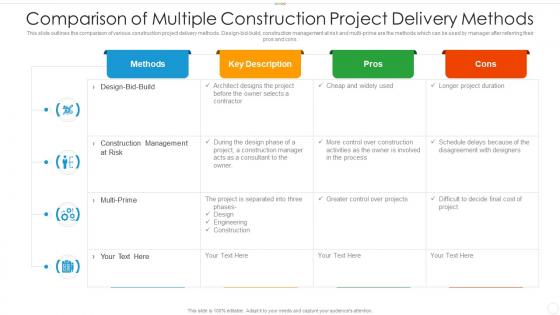
Comparison of multiple construction project delivery methods




Try Before you Buy Download Free Sample Product
 Impress Your
 Audience
 100%
100% Editable
 Save Hours
 of Time


This slide outlines the comparison of various construction project delivery methods. Design-bid-build, construction management at risk and multi-prime are the methods which can be used by manager after referring their pros and cons.
People who downloaded this PowerPoint presentation also viewed the following :
Comparison of multiple construction project delivery methods with all 2 slides:
Use our Comparison Of Multiple Construction Project Delivery Methods to effectively help you save your valuable time. They are readymade to fit into any presentation structure.
FAQs for Comparison of multiple construction
So there are basically three ways to handle this. Design-bid-build is the old school approach - you hire designers first, then contractors bid on it later. Takes forever but it's pretty straightforward. Design-build is way faster since one company handles everything, plus there's less drama when stuff goes wrong because nobody can blame each other. Then there's construction management at risk, which honestly sounds scarier than it is - they bring the construction manager in early to help with costs and timing while you still get to call the shots on design. Really just comes down to whether you prioritize speed, control, or keeping things simple.
Honestly, design-build is way better if you want things done fast. Everything happens at once instead of waiting around for each phase to finish. When problems pop up, there's no back-and-forth blame game between the architect and contractor - that's probably my favorite part tbh. Design-bid-build gives you more say in the design stuff, but you're looking at way longer timelines. Plus change orders can get expensive real quick. If you need speed and want to know your budget upfront, go design-build for sure.
Look, it really comes down to who you want dealing with the headaches. Design-bid-build means you're stuck handling most of the risk yourself. Design-build? Way better - the contractor takes on all that stress instead. I'd map out what scares you most about the project first. Tight deadline? Sketchy budget? Complex design stuff you don't fully get yet? Then just pick whichever method dumps those specific problems on whoever's actually equipped to handle them. Honestly, transferring risk away from yourself is usually the smart move if you can swing it.
Start with what matters most to you - budget, timeline, quality, or how much risk you can handle. Design-bid-build is solid if you've got a tight budget and your scope's locked down. Design-build's faster since phases can overlap, which is clutch when you're in a hurry. For tricky projects where you actually want the contractor weighing in early, design-build works well. IPD is cool but honestly still pretty rare. Also think about how hands-on your team wants to be - some methods need way more owner involvement than others. I'd just make a quick scoring matrix comparing each option against your specific needs.
CMAR gets your contractor involved super early, which is clutch for catching construction issues before they bite you. Design and building can happen at the same time too, so you'll finish faster. Plus they guarantee a max price, so no nasty cost surprises later. The catch? You're picking your contractor before knowing exactly what you're building. If they suck, you're kinda screwed. And yeah, it costs more upfront than the old school bid process - you pay extra for all that early input and risk coverage. Honestly though, if you need it done quick and hate budget uncertainty, CMAR rocks. Just don't cheap out on vetting contractors.
So IPD throws out the whole "us vs them" thing and gets architects, contractors, owners, engineers all working together from the start. Everyone shares the risks AND the profits, which honestly makes people give way more of a shit about getting things right. Instead of separate contracts, there's just one big agreement. They use shared digital models and sometimes even work in the same space - kinda like forced collaboration but it actually works. Problems get fixed immediately instead of turning into lawsuits later. Just know that control freaks hate this approach since you can't micromanage everything.
Yeah, so public projects are way more locked down by all the regulations and transparency stuff - they usually go with design-bid-build because of procurement laws. Private clients? They can pretty much pick whatever delivery method works best since they don't have those same bidding hoops to jump through. Budget predictability is huge for public work, which honestly makes them play it safe. Politics definitely complicates things on the government side too. Private projects care more about getting to market fast and how much risk they want to take on. Oh, and definitely check your local procurement regs first if there's any public money involved!
So basically, how you handle delivery totally changes your timeline and costs. Design-bid-build is usually cheapest but takes forever since everything's done step by step. With design-build, you'll cut months off because they overlap the design and construction phases - costs a bit more though. Construction management? That's what I'd go with for tricky projects since you get way more control over budget and schedule. Integrated delivery can be super fast and cost-effective, but honestly only works if your team doesn't hate each other. Just pick whatever matters most to you - saving money, speed, or staying in control.
Honestly, the main thing you need to watch out for is matching your contract risks to what your delivery method can actually handle. Design-bid-build keeps everything clean - designer does their thing, contractor does theirs, liability stays separate. But design-build? That's single-point responsibility, which sounds great until something breaks and everyone's pointing fingers. Different methods need different insurance too, which is annoying but whatever. DBB is straightforward since roles are crystal clear. IPD and those integrated approaches though - way more legal headaches. Definitely loop in your lawyer early, like before you even pick a method. Trust me on this one.
So here's the thing - BIM works way better with Design-Build or IPD because everyone's in the same digital model right from the start. Design-Bid-Build? Not so much. The contractor shows up too late to actually help build the model, which is kinda pointless. When everyone can spot clashes and problems early, owners get more comfortable with delivery methods that bring contractors in sooner. Risk-sharing becomes easier too. Honestly, if you're already spending money on BIM, you might as well pick a delivery method that'll actually let your team work together from day one. Makes the whole thing way more transparent.
Yeah, delivery method makes a huge difference for sub relationships. Design-bid-build means you're stuck picking subs after everything's designed - they can't help with constructability at all. Design-build and IPD let you bring key trades in early to actually shape the design, which honestly works way better. CM at-risk is kinda in between - you might get some sub input during preconstruction if you're lucky. Early involvement is clutch because subs can catch problems before they turn into expensive change orders later. So when you're choosing delivery methods, think about when you want your important subs in the game.
Honestly, it's wild how much culture affects which delivery methods work where. Japan loves collaborative approaches because consensus-building is huge there. Meanwhile, places with tons of lawsuits stick to traditional design-bid-build - gotta have clear liability, you know? Europe's way ahead of the US on integrated delivery, probably since they're cool with sharing risk. Local regulations matter too, plus insurance markets and how contractors have always done business. Oh, and definitely research regional preferences before planning international projects or you'll be fighting an uphill battle against what everyone's used to.
IPD and design-build are crushing the old design-bid-build model right now. Instead of that broken telephone game where everyone blames each other, teams actually collaborate from the start. Progressive design-build is getting popular too - contractors jump in during design instead of waiting around. My buddy's firm switched last year and swears by it. Way fewer change orders and drama. If you're doing any projects soon, definitely look into these approaches. The whole process just flows better when everyone's on the same page early.
Dude, you gotta nail down communication rules right from the start - doesn't matter if it's design-bid-build or whatever structure you're using. I've literally watched projects implode because everyone just assumed people would naturally talk to each other. Spoiler alert: they don't. Get your contracts to spell out who talks to who and when. Set up regular check-ins. Use some kind of shared platform where everyone can actually see what's happening - dashboards, project software, whatever works for your team. Before you do anything else on your next project, map out how info flows between all the players first.
Dude, the biggest mistake I see is people just going with whatever's cheapest or what they've always done. Bad idea. You've gotta match your delivery method to what the project actually needs - timeline, complexity, all that stuff. I can't tell you how many traditional design-bid-build jobs I've watched implode because the owner needed it done fast but picked the slowest possible route. Be real about your constraints from day one. Tight schedule? Design-build might save your ass. Scope's all over the place? Look at CM-at-risk. Don't let some random procurement rule box you into the wrong choice.
-
Amazing product with appealing content and design.