


Comprehensive Analysis Of Ready To Eat Food Industry Complete Deck




Try Before you Buy Download Free Sample Product
 Impress Your
 Audience
 100%
100% Editable
 Save Hours
 of Time


Comprehensive Analysis of Ready to Eat Food Industry PowerPoint presentation provides a comprehensive overview food market in the USA. The industry analysis summary showcases the competitive landscape, key trends, and economic indicators related to the food production segment. The PowerPoint deck includes a basic overview of the food manufacturing industry regarding contribution toward GDP, estimated revenues, and the total number of registered plants in the USA. Also, this PPT module includes a comprehensive industry analysis using SWOT, PESTEL, and Porters Five Forces techniques. Additionally, it covers an in-depth market analysis of food production industry sub-segments meat, dairy, grains, fruits, and vegetables. Further, the PPT presentation contains an action plan to adopt Industry 4.0 to overcome the food manufacturing challenges. It also includes details of Industry 4.0 impact on the food manufacturing sector in terms of enhanced surveillance of the food manufacturing ecosystem, better control over complex supply chains, etc., and the possible risks that can hinder the successful adoption of Industry 4.0. Eventually, it also incorporates dashboards to monitor consumer goods sales and supply chain costs. Download it now.
People who downloaded this PowerPoint presentation also viewed the following :
Content of this Powerpoint Presentation
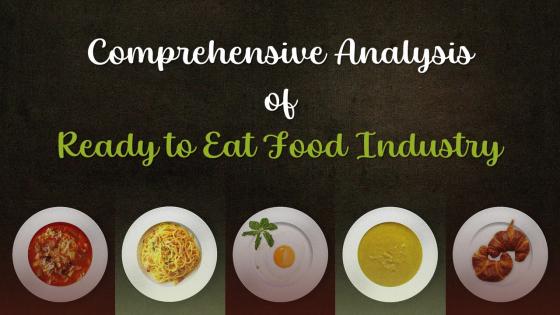
Slide 1: This slide displays the title Comprehensive Analysis of Ready to Eat Food Industry.
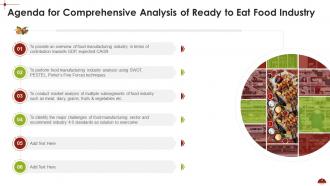
Slide 2: This slide displays the Agenda for Comprehensive Analysis of Ready to Eat Food Industry
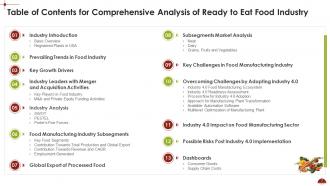
Slide 3: This slide exhibit table of content.
Slide 4: This slide exhibit table of content- Industry Introduction.
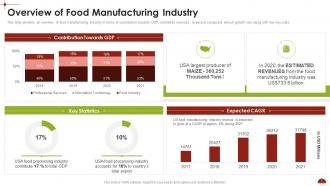
Slide 5: This slide provides an overview of food manufacturing industry.
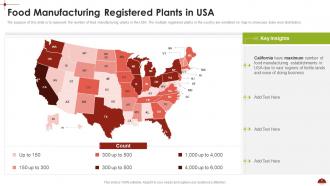
Slide 6: This slide is to represent the number of food manufacturing plants in the USA.
Slide 7: This slide exhibit table of content- Prevailing Trends in Food Industry.
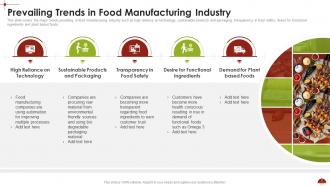
Slide 8: This slide covers the major trends prevailing in food manufacturing industry.
Slide 9: This slide exhibit table of content- Key Growth Drivers.
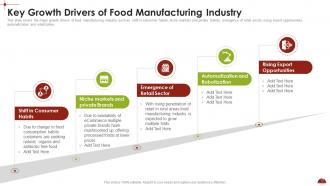
Slide 10: This slide covers the major growth drivers of food manufacturing industry.
Slide 11: This slide exhibit table of content- Industry Leaders with Merger and Acquisition Activities.
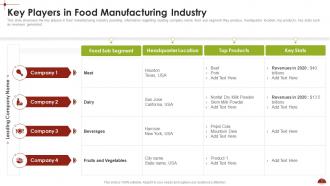
Slide 12: This slide showcase the key players in food manufacturing industry.
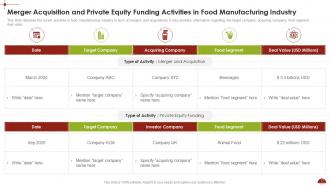
Slide 13: This slide tabulates the recent activities in food manufacturing industry in term of mergers and acquisitions.
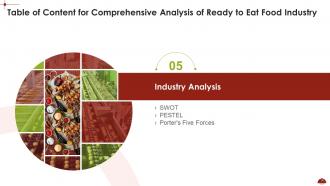
Slide 14: This slide exhibit table of content- Industry Analysis.
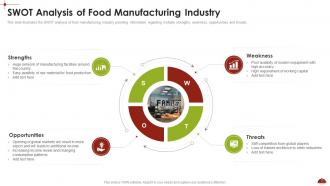
Slide 15: This slide illustrates the SWOT analysis of food manufacturing industry.
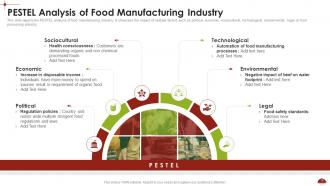
Slide 16: This slide depicts the PESTEL analysis of food manufacturing industry.
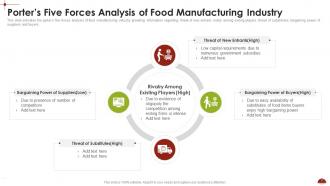
Slide 17: This slide indicates the porter’s five forces analysis of food manufacturing industry.
Slide 18: This slide exhibit table of content- Food Manufacturing Industry Subsegments.
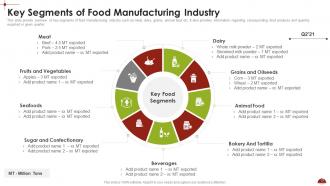
Slide 19: This slide provide overview of key segments of food manufacturing industry.
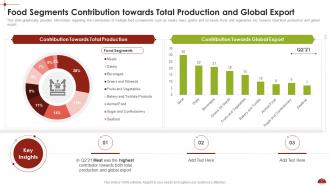
Slide 20: This slide graphically provides information regarding the contribution of multiple food components.
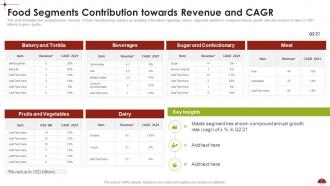
Slide 21: This slide illustrates the Food Segments Contribution towards Revenue and CAGR.
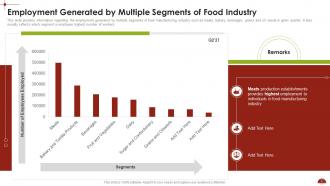
Slide 22: This slide provides information regarding the employment generated by multiple segments of food manufacturing industry.
Slide 23: This slide exhibit table of content- Global Export of Processed Food.
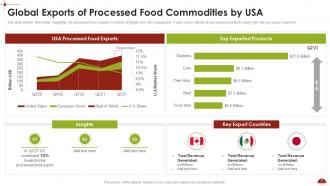
Slide 24: This slide provide information regarding the processed food exports in context of global and USA perspective.
Slide 25: This slide exhibit table of content- Subsegments Market Analysis.
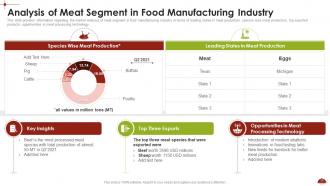
Slide 26: This slide provides information regarding the market analysis of meat segment in food manufacturing industry.
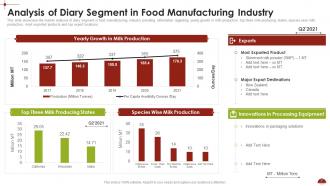
Slide 27: This slide showcase the market analysis of diary segment in food manufacturing industry.
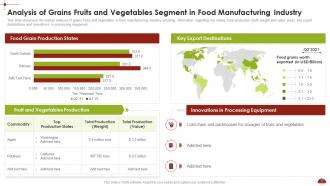
Slide 28: This slide showcase the market analysis of grains fruits and vegetables in food manufacturing industry.
Slide 29: This slide exhibit table of content- Key Challenges in Food Manufacturing Industry.
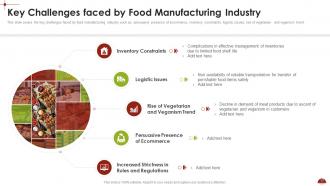
Slide 30: This slide covers the key challenges faced by food manufacturing industry.
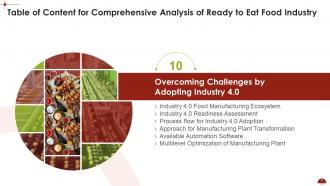
Slide 31: This slide exhibit table of content- Overcoming Challenges by Adopting Industry 4.0
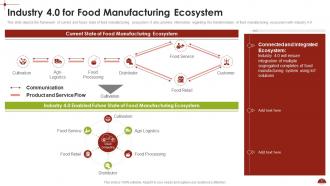
Slide 32: This slide depicts the framework of current and future state of food manufacturing ecosystem.
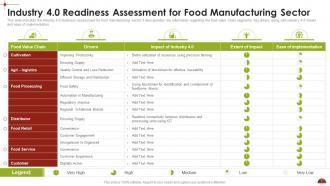
Slide 33: This slide indicates the industry 4.0 readiness assessment for food manufacturing sector.
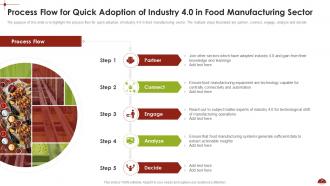
Slide 34: The purpose of this slide is to highlight the process flow for quick adoption of industry 4.0 in food manufacturing sector.
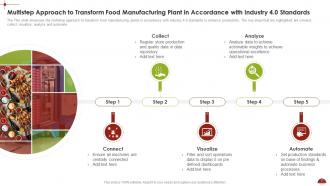
Slide 35: This slide showcase the multistep approach to transform food manufacturing plants in accordance with industry 4.0 standards to enhance productivity.
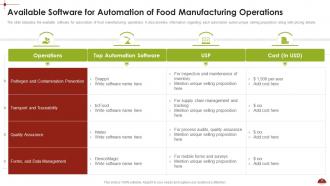
Slide 36: The slide tabulates the available software for automation of food manufacturing operations.
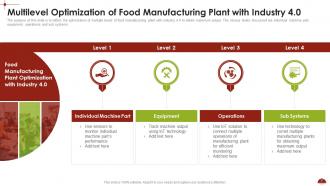
Slide 37: The purpose of this slide is to reflect the optimization of multiple levels of food manufacturing plant with industry 4.0
Slide 38: This slide exhibit table of content- Industry 4.0 Impact on Food Manufacturing Sector.
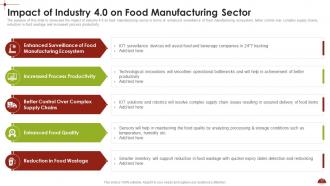
Slide 39: The purpose of this slide to showcase the impact of industry 4.0 on food manufacturing sector.
Slide 40: This slide exhibit table of content- Possible Risks Post Industry 4.0 Implementation.
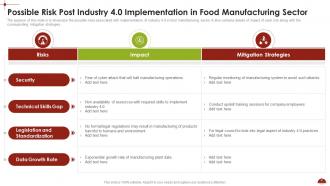
Slide 41: This slide is to showcase the possible risks associated with implementation of industry 4.0 in food manufacturing sector.
Slide 42: This slide exhibit table of content- Dashboards.
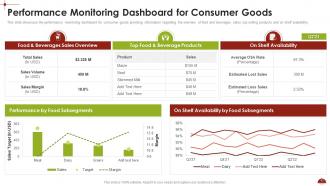
Slide 43: This slide showcase the performance monitoring dashboard for consumer goods.
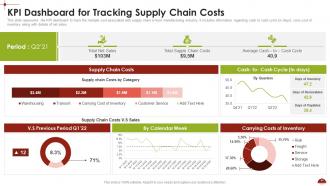
Slide 44: This slide represents the KPI dashboard to track the multiple cost associated with supply chain in food manufacturing industry.
Slide 45: This is the icons slide.
Slide 46: This slide presents title for additional slides.
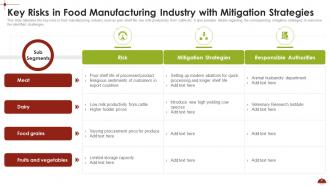
Slide 47: This slide tabulates the Key Risks in Food Manufacturing Industry with Mitigation Strategies.
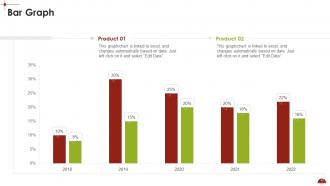
Slide 48: This slide displays yearly bar graph for different products.
Slide 49: This slide shows details of team members like name, designation, etc.
Slide 50: This slide shows about your company, target audience and its client's values.
Slide 51: This slide exhibits yearly timeline of company.
Slide 52: This slide depicts posts for past experiences of clients.
Slide 53: This slide displays Venn.
Slide 54: This slide shows roadmap of company.
Slide 55: This slide showcase Our Goal.
Slide 56: This slide shows puzzle for displaying elements of company.
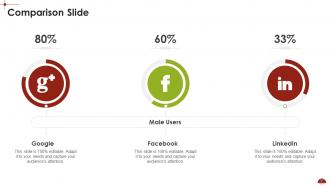
Slide 57: This slide presents Comparison of Facebook Users,Twitter Users and LinkedIn.
Slide 58: This is thank you slide & contains contact details of company like office address, phone no., etc.
Comprehensive Analysis Of Ready To Eat Food Industry Complete Deck with all 63 slides:
Use our Comprehensive Analysis Of Ready To Eat Food Industry Complete Deck to effectively help you save your valuable time. They are readymade to fit into any presentation structure.










FAQs for Comprehensive Analysis Of Ready To Eat Food
Current trends driving growth include health-conscious options, plant-based alternatives, global flavor profiles, convenient packaging innovations, and premium ingredient sourcing. These developments enhance consumer appeal by addressing dietary preferences, lifestyle demands, and quality expectations, with many food manufacturers finding that strategic combinations of convenience and nutrition ultimately deliver competitive advantage in an increasingly diverse market landscape.
Consumer preferences are driving ready-to-eat meals toward healthier ingredients, sustainable packaging, diverse global flavors, and convenient portion sizes. These evolving demands enable food manufacturers to innovate with organic options, plant-based alternatives, and culturally-inspired cuisines, while retailers leverage personalized offerings and premium positioning, ultimately delivering enhanced customer satisfaction and competitive market differentiation.
Technology revolutionizes ready-to-eat food production through automated processing systems, advanced packaging techniques, modified atmosphere packaging, high-pressure processing, and smart quality control sensors. These innovations streamline manufacturing by extending shelf life, maintaining nutritional value, and ensuring food safety, with many food manufacturers finding that automated systems significantly reduce production costs while delivering consistent quality and faster market distribution.
Convenience and health considerations significantly influence ready-to-eat purchasing decisions through factors like preparation time, nutritional content, ingredient transparency, and lifestyle compatibility. While busy professionals prioritize quick meal solutions, health-conscious consumers increasingly seek organic options, reduced sodium, and clean labels, with many retailers finding that products balancing both convenience and wellness deliver stronger sales performance.
New entrants in the ready-to-eat food market face challenges including supply chain complexities, regulatory compliance requirements, intense competition from established brands, distribution network access limitations, and consumer trust building. These obstacles present both barriers and opportunities, with many startups finding that strategic partnerships, innovative packaging solutions, and targeted niche positioning ultimately enable market penetration and sustainable growth in this competitive landscape.
Packaging innovation significantly influences consumer perception by enhancing visual appeal, communicating freshness, and emphasizing convenience through resealable features, transparent windows, and sustainable materials. Modern packaging technologies enable brands to differentiate products, build trust through clear nutritional information, and ultimately drive sales growth, with many food manufacturers finding that strategic packaging redesigns can increase purchase intent by up to thirty percent.
Companies are employing product line diversification, strategic partnerships with plant-based ingredient suppliers, innovative packaging solutions, and targeted marketing campaigns to capture the growing plant-based market. Many food manufacturers are investing in R&D facilities dedicated to plant protein alternatives, while retailers like Whole Foods and Target expand dedicated plant-based sections, ultimately delivering enhanced consumer choice and competitive positioning in an increasingly health-conscious marketplace.
Ready-to-eat food manufacturers must navigate complex FDA regulations, HACCP compliance, labeling requirements, allergen disclosures, and varying international food safety standards. These regulatory frameworks present both compliance challenges and competitive opportunities, with many companies finding that robust quality systems ultimately streamline operations, enhance consumer trust, and enable faster market expansion across multiple jurisdictions.
Sustainability practices can be integrated through eco-friendly packaging, local ingredient sourcing, waste reduction programs, energy-efficient production facilities, and carbon footprint optimization. These approaches streamline operations by minimizing environmental impact, reducing costs, and enhancing brand reputation, with many food manufacturers finding that sustainable supply chains ultimately deliver competitive advantage and meet increasingly conscious consumer demands.
Cultural and regional preferences significantly shape ready-to-eat product offerings through localized flavors, ingredient adaptations, dietary restrictions, and preparation methods tailored to specific markets. These preferences enable food companies to create targeted product lines, with many brands finding that regional customization enhances market penetration, builds consumer loyalty, and ultimately delivers competitive advantage in increasingly diverse global markets.
E-commerce revolutionizes ready-to-eat meal distribution by enabling direct-to-consumer delivery, subscription-based models, and partnerships with third-party platforms like DoorDash and Instacart. These digital channels streamline inventory management, expand market reach beyond traditional retail locations, and deliver personalized meal experiences, with many food companies finding that online sales ultimately enhance customer convenience while reducing distribution costs.
Social media and marketing enable ready-to-eat food brands to showcase convenience, engage target demographics through visual storytelling, influencer partnerships, and targeted advertising campaigns. These platforms streamline customer acquisition by highlighting product benefits, nutritional information, and lifestyle integration, with many food manufacturers finding that strategic social media presence significantly enhances brand visibility and drives purchasing decisions.
Health and wellness trends are driving ready-to-eat manufacturers to reformulate products with reduced sodium, added plant proteins, organic ingredients, and functional nutrients like probiotics and omega-3s. These innovations enable companies to capture the growing health-conscious market segment while delivering convenient meal solutions, with many food brands finding that clean-label formulations significantly enhance consumer trust and market competitiveness.
Ready-to-eat food innovations include plant-based protein texturization, fermentation-enhanced umami profiles, microencapsulation for sustained flavor release, and 3D food printing for customized textures. These technologies enhance consumer experiences by delivering restaurant-quality taste, improving nutritional density, and enabling personalized meal options, with food manufacturers increasingly finding that texture innovation drives customer loyalty and market differentiation.
Shelf-life plays a crucial role in consumer purchasing decisions for ready-to-eat products, influencing buying frequency, bulk purchasing patterns, and brand loyalty across grocery chains, convenience stores, and online retailers. Extended shelf-life enables consumers to stock up confidently, reduces food waste concerns, and allows manufacturers to expand distribution networks, with many retailers finding that products with longer shelf-life generate higher turnover rates and customer satisfaction.
-
I didn’t expect such a good service for the money I am paying. But, they exceed my expectations. Great work SlideTeam.
-
Fantastic and innovative graphics with useful content. The templates are the best and latest in the industry.