

Comprehensive Analysis Of Starbucks Company Value Chain Powerpoint Ppt Template Bundles





Try Before you Buy Download Free Sample Product
 Impress Your
Audience
 100%
Editable
 Save Hours
of Time


Our Comprehensive Analysis Of Starbucks Company Value Chain Powerpoint Ppt Template Bundles are topically designed to provide an attractive backdrop to any subject. Use them to look like a presentation pro.
People who downloaded this PowerPoint presentation also viewed the following :
Comprehensive Analysis Of Starbucks Company Value Chain Powerpoint Ppt Template Bundles with all 32 slides:
Use our Comprehensive Analysis Of Starbucks Company Value Chain Powerpoint Ppt Template Bundles to effectively help you save your valuable time. They are readymade to fit into any presentation structure.








FAQs for Comprehensive Analysis Of Starbucks Company Value Chain Powerpoint
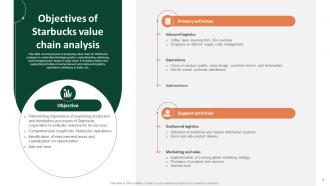
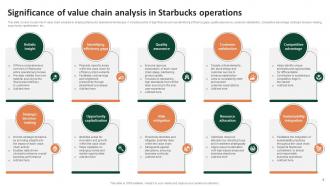
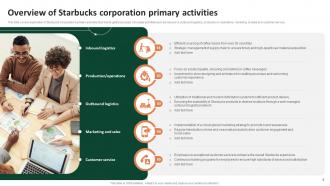
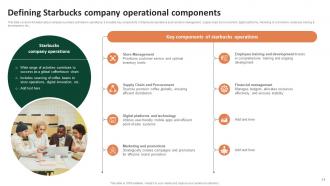
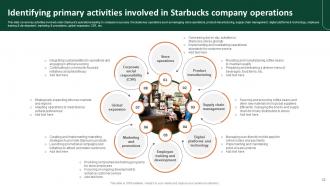
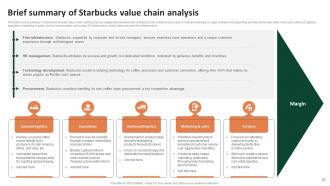
Starbucks' value chain includes premium coffee sourcing, sophisticated roasting and blending processes, strategic store location selection, comprehensive barista training, and robust supply chain management. These components work together by ensuring quality consistency, enhancing customer experiences, and maintaining operational efficiency across global markets, ultimately delivering brand differentiation and sustained competitive advantage in the crowded coffeehouse industry.
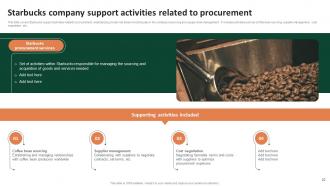
Starbucks sources coffee beans through direct relationships with farmers, cooperative partnerships, and ethical sourcing programs like C.A.F.E. Practices, emphasizing quality control and sustainability standards. This strategic sourcing approach streamlines their value chain by ensuring consistent quality, reducing supply disruptions, and enhancing brand reputation, ultimately delivering premium customer experiences while maintaining competitive advantage in the specialty coffee market.
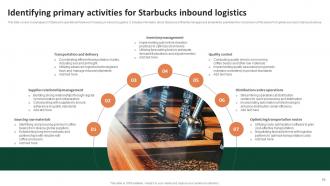
Starbucks leverages predictive analytics, automated inventory management systems, blockchain technology for transparency, mobile ordering platforms, and IoT sensors for real-time monitoring throughout its supply chain operations. These technologies streamline procurement processes, optimize distribution routes, and enhance quality control from bean sourcing to customer delivery, with many retail locations finding that integrated systems significantly reduce waste while accelerating service speed.
Barista training contributes to Starbucks' competitive advantage by ensuring consistent product quality, enhancing customer experiences, and building brand loyalty across thousands of locations globally. Through comprehensive training programs, baristas master coffee preparation techniques, customer service standards, and brand values, ultimately delivering the premium experience customers expect while reducing operational inconsistencies and strengthening Starbucks' market differentiation.
Customer experience serves as a central differentiator throughout Starbucks' value chain, influencing store design, barista training, product customization, digital ordering platforms, and loyalty programs. This strategic focus enables enhanced customer retention, premium pricing capabilities, and sustained competitive advantage, with many coffee retailers finding that superior experience delivery ultimately drives both customer loyalty and revenue growth across increasingly competitive markets.
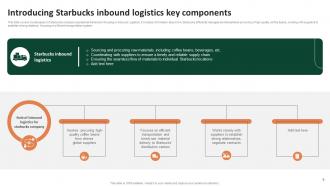
Starbucks manages supplier relationships through direct sourcing partnerships, comprehensive farmer support programs, ethical sourcing verification, long-term contracts, and sustainability certifications like C.A.F.E. practices. These strategic approaches enable quality consistency, environmental responsibility, and supply chain transparency, with many coffee-growing communities finding that collaborative partnerships deliver improved livelihoods while ensuring premium product standards.
Starbucks employs comprehensive quality control systems including rigorous supplier certification programs, multi-stage bean testing protocols, standardized brewing equipment calibration, and regular store audits across all locations. These integrated quality measures streamline consistency by monitoring sourcing standards, optimizing roasting processes, and ensuring uniform customer experiences, with many retail chains finding that such systematic approaches ultimately deliver enhanced brand reliability and competitive advantage in increasingly demanding markets.
Starbucks' marketing strategy integrates seamlessly across its value chain by reinforcing premium brand positioning through every touchpoint, from sourcing ethical coffee to creating distinctive store experiences. This strategic alignment enables consistent brand messaging throughout operations, supply chain partnerships, and customer interactions, ultimately delivering enhanced brand loyalty, premium pricing power, and sustainable competitive advantage in an increasingly crowded coffeehouse market.
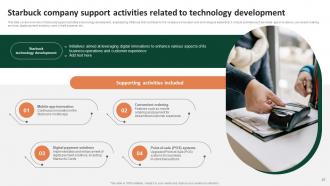
Starbucks has implemented mobile ordering, AI-driven inventory management, automated espresso machines, predictive analytics for demand forecasting, and integrated supply chain technologies. These innovations streamline operations by reducing wait times, optimizing stock levels, and enhancing customer experiences, with many locations finding that digital integration ultimately delivers faster service and improved operational efficiency.
Starbucks leverages data analytics through predictive inventory management, customer behavior analysis, store performance optimization, demand forecasting, and supply chain streamlining. These analytics enable precise staffing decisions, reduce waste through accurate demand predictions, and enhance customer experiences with personalized offerings, ultimately delivering operational efficiency and competitive advantage across their global network.
Starbucks' retail environment design enhances their value chain by creating experiential spaces that encourage longer visits, increase average transaction values, and build brand loyalty through consistent ambiance. These carefully crafted spaces featuring comfortable seating, strategic lighting, and acoustic design ultimately drive customer retention and premium pricing power, with many locations becoming community hubs that generate sustained revenue beyond traditional coffee transactions.
Starbucks' global expansion significantly complicates its value chain through increased supply chain complexity, diverse regulatory requirements, varying consumer preferences, and cultural adaptation needs across different markets. This international presence enables economies of scale, strategic supplier partnerships, and enhanced brand recognition, while creating challenges in quality consistency and logistics coordination, ultimately delivering competitive advantages through market diversification and operational learning across regions.
Starbucks addresses environmental sustainability through ethical sourcing programs like C.A.F.E. Practices, renewable energy initiatives, waste reduction strategies, and sustainable packaging development across its operations. These comprehensive efforts streamline environmental compliance while enhancing brand reputation, with many retail organizations finding that integrated sustainability approaches ultimately deliver cost savings, customer loyalty, and competitive advantage in increasingly environmentally-conscious markets.
Starbucks faces challenges including cultural preference variations, supply chain complexities across regions, local regulatory compliance requirements, staffing and training standardization, and competitive pricing pressures. These operational hurdles are addressed through strategic localization approaches, robust supplier partnerships, and comprehensive training programs, with many international locations finding that balancing global brand consistency with local market adaptation ultimately delivers sustained competitive advantage.
Partnerships and collaborations significantly enhance Starbucks' value chain by strengthening supplier relationships, expanding distribution channels, and accelerating market penetration across global regions. Through strategic alliances with coffee farmers, technology companies, and retail partners, Starbucks streamlines procurement, reduces operational costs, and delivers consistent customer experiences, while these collaborations ultimately provide competitive advantages in an increasingly interconnected coffee industry landscape.
-
The designs by SlideTeam are honestly the best I have seen so far. Will be definitely coming back for more.
-
SlideTeam is the best in the business. Their templates are engaging and customizable. You can rely on them.