


Airline Value Chain Analysis Powerpoint Ppt Template Bundles





Try Before you Buy Download Free Sample Product
 Impress Your
 Audience
 100%
100% Editable
 Save Hours
 of Time


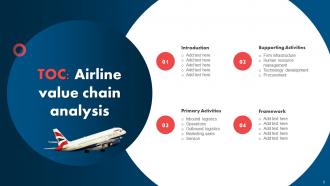
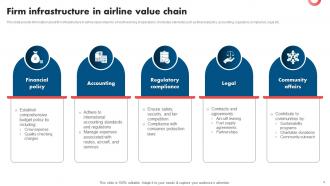
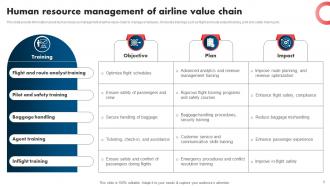
Embark on a high flying exploration of the aviation industry with our illuminating PowerPoint presentation, Airline Value Chain Analysis. Navigate through the intricacies of the aviation industry value chain, unraveling the key components that propel air transport to new heights. Delve into the dynamics of commercial aviation, dissecting each element within the airline operations continuum. Explore the seamless integration of flight services within the value chain, showcasing the strategic orchestration of this critical sector. This analysis provides a comprehensive understanding of the interwoven threads that sustain the flight service value chain, making it an essential resource for aviation enthusiasts and industry professionals alike. Soar above the clouds of curiosity with this insightful presentation.
People who downloaded this PowerPoint presentation also viewed the following :
Airline Value Chain Analysis Powerpoint Ppt Template Bundles with all 22 slides:
Use our Airline Value Chain Analysis Powerpoint Ppt Template Bundles to effectively help you save your valuable time. They are readymade to fit into any presentation structure.










FAQs for Airline Value Chain Analysis Powerpoint
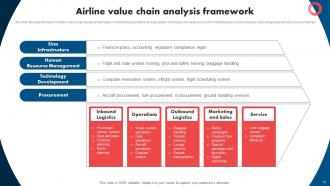
So there's basically 5 main parts that all connect: route planning, fleet management, operations (ground + flight stuff), passenger services, and revenue management. Route planning kicks everything off - that determines what planes you need. Operations runs the actual schedules while passenger services deals with customers. Revenue management is kind of the mastermind, setting prices across everything. It's like... imagine a conductor but for airline logistics. When one part screws up, the whole thing falls apart. Oh, and watch those handoff points between departments - that's where things usually go sideways.
Dude, customer service literally makes or breaks your whole airline operation. Happy passengers = fewer headaches for everyone down the line. One cranky gate agent can snowball into flight delays that screw up crew rotations and mess with your aircraft schedules - it's crazy how connected everything is. When check-in runs smoothly, boarding stays on track, and that keeps your whole day from falling apart. Bad service creates these weird bottlenecks you wouldn't expect. Everyone obsesses over fuel costs (fair enough, those are brutal), but honestly? Your customer-facing stuff deserves just as much attention if you want real efficiency gains.
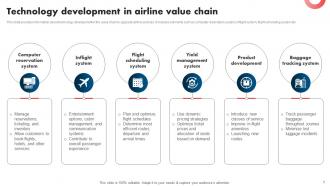
Airlines are getting crazy smart with tech these days. Revenue management systems automatically adjust prices, while AI handles route planning and fuel optimization. Your mobile app experience from booking to boarding? That's all streamlined now. Predictive analytics cut maintenance costs big time. Even crew scheduling uses algorithms - honestly the amount of math just to figure out pilot rotations is insane. Oh, and here's the thing: if the tech doesn't directly save money or make customers happier, you're basically just throwing cash at fancy gadgets. Each investment has to move the needle somehow.
Regulations totally mess with how airlines run stuff depending on where they operate. EU hits you with crazy passenger rights and emissions rules - airlines have to budget for tons of compensation payouts and expensive green tech. Meanwhile the US is more hands-off market-wise but their labor laws and security stuff still changes how you structure operations. Asia's all over the place honestly - some countries won't let foreigners own much while others are going nuts for digital innovation. You definitely can't just drop the same business model everywhere though. Each market needs its own approach mapped against what you're actually doing - route planning, customer service, all of it.
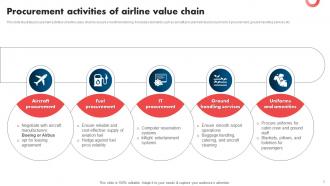
Honestly, fuel and MRO costs are where you'll see the biggest impact - those two alone eat up most of your supply budget. Get some long-term hedging contracts locked in for fuel procurement. For maintenance stuff, predictive analytics can seriously streamline your operations. The spare parts inventory thing is huge too - I've seen airlines blow ridiculous money on parts just sitting there collecting dust. Partner up strategically with suppliers for better deals and integrate everything digitally. Oh, and definitely work on demand forecasting and automate the boring procurement tasks. Start with fuel and MRO first since that's your low-hanging fruit.
Airlines are basically everywhere digitally now - apps handle everything from booking to rebooking when your flight gets delayed (which happens way too often). Customers expect to manage seats, meals, loyalty points, all that stuff without calling anyone. The data goldmine is crazy though - you can predict what people want before they even search. I'd look at where you're still making customers go offline for things. Those friction points? That's where you'll see the biggest wins. Way better than the old call center nightmare we used to deal with.
Focus on fuel efficiency and smarter routing first - that's where the big savings are. Use data analytics to match capacity with actual demand instead of guessing. Predictive maintenance tech saves tons on unexpected repairs. Honestly, outsourcing stuff like ground handling works great, just watch the quality closely. Automate check-in and baggage but keep real people where passengers actually care about service. Consolidate suppliers and renegotiate those contracts too. Start by auditing your biggest cost centers - figure out what actually affects customer experience versus just operational stuff. The trick is cutting costs without passengers noticing.
Airlines basically team up through alliances to share routes and resources without actually merging companies. Think Star Alliance or oneworld - these partnerships let smaller airlines compete with the giants by offering global networks they could never build alone. Pretty genius strategy, honestly. The whole competitive game changes because now it's alliance vs alliance instead of just individual carriers fighting. You'll see coordinated pricing, shared airport lounges, joint marketing campaigns. Creates these powerful network effects that totally reshape the industry. So when you're analyzing airline competition, you really gotta look at which alliance they're part of, not just the airline itself.
Airlines pump out about 2-3% of global CO2, mostly from burning jet fuel. They're trying different stuff - sustainable aviation fuels, newer planes like the 787 that sip less fuel, better flight paths. Carbon offsets are kinda sketchy though, if I'm being honest. Electric planes could work for short flights eventually, but that's still pretty far off. The real money is in tracking which airlines are actually committing to SAF and upgrading their fleets. That's where you'll see who's serious about this vs. just doing PR moves.
Look, pricing is basically the backbone of your whole airline operation - it touches everything from which routes you pick to how you handle customers. Business travelers? They'll cough up whatever you charge (honestly, it's kind of crazy), but leisure folks will jump ship over twenty bucks. Peak seasons make this even messier since demand goes all over the place. Every pricing call you make ripples through your load factors and revenue per seat. I'd start by breaking down your routes - separate business from leisure travelers, factor in seasonality. Then build some dynamic models that can pivot fast when demand shifts. Gets complicated but that's where the money is.
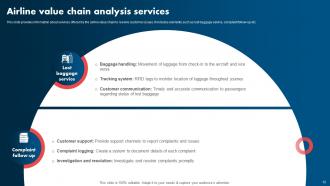
Look, maintenance isn't just some boring behind-the-scenes thing - it's literally what keeps customers happy. Good upkeep means flights actually leave on time and people aren't stuck at gates forever (which honestly drives me crazy). Plus well-maintained planes run smoother and use less fuel. The cool part? It's not just about avoiding disasters. When airlines nail their maintenance game, passengers trust them more and keep coming back. Yeah, it costs money upfront, but it pays off through better reputation and fewer angry customers. Pretty smart business move if you ask me.
So basically you want to look at your old booking data and seasonal stuff - like holidays always mess with patterns. Weather and local events help too. Machine learning is actually crazy good at finding weird connections you'd never think of. Once you've got decent forecasts, adjust your flight schedules and plane assignments accordingly. Pricing strategies matter a lot here. I'd honestly start simple though - just analyze your booking curves and no-show rates first to find the obvious patterns. You can get fancy later. Keep updating your models as you go since things change constantly.
Look, when customers change what they want, airlines have to rebuild everything. Passengers now care about being eco-friendly, want personalized stuff, and need flexible bookings. Operations, buying, service delivery - it all has to change. Airlines ignoring this? They're done for. Take the sustainability push - it's driving investments in better aircraft and carbon programs. Premium economy demand is literally reshaping how cabins look. Also, I noticed airlines are getting way better at the tech side of personalization lately. Bottom line: you've got to watch these shifts constantly and build flexibility in so you can pivot fast when people's behavior changes.
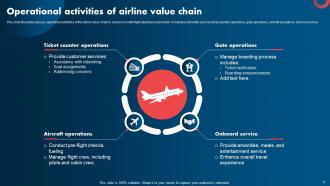
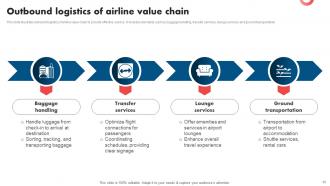
Look, ground ops are what make or break everything before passengers even board. Check-in speed, baggage handling, turnarounds - when these teams screw up, guess who gets blamed? Not the airport. You do. Faster aircraft turnarounds boost your on-time stats and cut costs. Those handoffs from check-in through security to boarding? That's literally the whole experience passengers judge you on. I learned this the hard way watching delays cascade from one bad ground crew day. Bottom line: treat these partnerships like they're your own employees because honestly, passengers can't tell the difference anyway.
So airlines are getting creative with making money beyond just seats - cargo flights, digital check-ins, flexible bookings. Remember those weird "flights to nowhere" during COVID? Anyway, the smart ones are going all-in on tech upgrades and training staff to handle different jobs. Partnerships with suppliers are getting more flexible too, which honestly makes sense after everything that's happened. The whole point is building operations that can shrink or expand fast. If you're in the industry, focus on digital infrastructure first. That's where the real resilience comes from when things go sideways again.
-
The ease of modifying templates is just superb! Also, the vast collection offers plenty of options to choose from.
-
Designs have enough space to add content.