


Airline Value Chain Analysis Framework




Try Before you Buy Download Free Sample Product
 Impress Your
 Audience
 100%
100% Editable
 Save Hours
 of Time


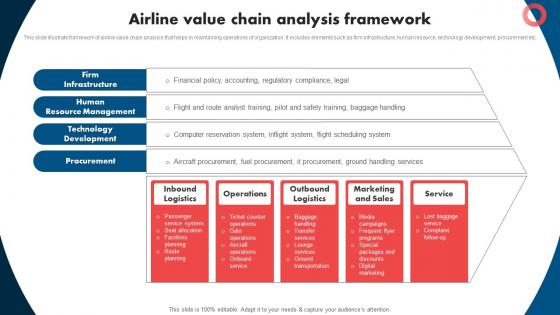
This slide illustrate framework of airline value chain analysis that helps in maintaining operations of organization. It includes elements such as firm infrastructure, human resource, technology development, procurement etc.
People who downloaded this PowerPoint presentation also viewed the following :
Airline Value Chain Analysis Framework with all 9 slides:
Use our Airline Value Chain Analysis Framework to effectively help you save your valuable time. They are readymade to fit into any presentation structure.








FAQs for Airline Value
Airlines basically have five big chunks that all connect: route planning, managing their planes, day-to-day operations (ground crew, pilots, maintenance), customer stuff, and pricing strategy. The tricky part? Everything has to work together perfectly. Route planning feeds into operations, which connects to what passengers actually experience. Honestly, it's kind of insane how many things can go wrong. If scheduling doesn't match how many planes you have, or operations can't deliver what customer service promised, everything falls apart fast. The key thing to remember - delays in one area create a domino effect throughout the whole system.
Look, operational efficiency is basically like a multiplier for your whole airline. Tight turnaround times? Your planes fly more, which means way more revenue per aircraft. Fuel management gets predictable. Crew scheduling becomes less of a nightmare - and trust me, that's huge. When everything clicks, it's actually pretty cool to watch. But here's where it gets tricky. One operational screw-up ripples through customer satisfaction, your margins, everything. I'd honestly focus on tracking your key metrics daily and automate whatever you can. Human error kills efficiency faster than anything else.
Honestly, customer service is what separates airlines that actually make money from those stuck in price wars. Think about it - when you have a smooth experience from booking to picking up your bags, you'll totally pay extra to fly with them again. Bad service though? You're just another budget carrier fighting over whoever's cheapest that day. Plus dealing with angry passengers costs a fortune in complaints and delays. I mean, flights are pretty much flights at this point, right? So service becomes the only real way to get people loyal and willing to pay more instead of just shopping around for deals.
AI-powered demand forecasting and dynamic pricing are huge money makers - they'll maximize your revenue per seat. Operations get way smoother with automated check-ins and predictive maintenance catching issues early. Your customers can handle everything on their phones now, from booking to boarding passes. Fuel optimization and crew scheduling algorithms? Those cut costs like crazy. I mean, we're talking serious savings across the board. Real-time updates and personalized services keep passengers happy too. Don't go for random tech fixes though - integrated solutions across your whole operation give you the best bang for your buck.
So airlines basically lock into long-term deals with Boeing or Airbus because switching would cost a fortune. These contracts bundle everything - maintenance, spare parts, training, the works. Delta and Southwest are pros at this. Most carriers also spread their MRO work across multiple providers so they're not stuck with just one. Here's the thing though - you gotta build these relationships early since delivery delays will totally mess up your route planning. It's all about finding that sweet spot between saving money and keeping planes in the air. Going too cheap means grounded aircraft, which nobody wants.
Look, marketing and sales literally bring in all the money for airlines - without them you've got nothing. Marketing builds your brand and sets you apart from everyone else, then sales actually gets people to book flights. The competition is insane with all these price comparison sites now. But here's what's cool - all that customer data flows back to operations for demand forecasting and route planning. Like, your marketing team's insights directly decide which routes stay or get cut. Oh and definitely track customer lifetime value, not just conversion rates - way more useful in the long run.
Honestly, compliance stuff is annoying but it pays off big time. Passengers pick airlines they trust - nobody wants to fly sketchy carriers, you know? Strong safety records let you charge more and get cheaper insurance rates. Yeah, the audits and training are a drag, but think about it this way: one major incident costs way more than all that boring paperwork. Airlines with solid reputations don't just avoid penalties. They actually make more money because customers feel safe. It's basically free marketing when your safety record is spotless.
So basically, airlines need to get smart about dynamic pricing - constantly adjusting fares based on demand and what competitors are doing. The algorithms doing this stuff now are honestly insane. Business travelers and vacation people react totally differently to price changes, so you've got to segment them. Don't forget about all those add-on fees either - baggage, seats, food, whatever. That's where a lot of money actually comes from these days. Oh, and pricing isn't something you set once and walk away from. You'll want to dig into your booking data first to see what opportunities you're currently missing.
So data analytics is pretty game-changing for airlines - you get real-time visibility into everything from booking trends to when planes need maintenance. Pricing becomes way smarter because you're spotting passenger patterns and adjusting on the fly. Same with crew schedules and route planning. The fuel savings alone can be huge. What I'd do first is figure out where you're bleeding money or having the biggest headaches, then see what data you've already got sitting around about those issues. It's wild how much you can predict once you start connecting the dots - way better than just winging it.
So airlines are getting killed by these old booking systems - the GDS fees are insane, like billions industry-wide. They can't control pricing across different sites, which is a nightmare. Plus when people book through Expedia or whatever, airlines lose all that customer data. Makes building relationships way harder. My take? They need to push direct bookings hard and maybe look into NDC tech to cut out the middleman. Those legacy systems are basically parasites at this point, but switching isn't exactly simple either.
Airlines basically team up instead of going solo these days. Star Alliance, oneworld - you know those logos everywhere? A smaller airline suddenly has access to hundreds of destinations by joining one of these groups. Pretty smart move honestly. They split costs, sync up schedules, and you can earn miles across the whole network. The competition isn't really about who has the biggest fleet anymore (though that still matters I guess). It's about who's got the best partnerships. When you're looking at airline stocks or whatever, check their alliance deals first - that's where they're actually making their money.
So there's actually tons airlines can do. Newer planes burn way less fuel, plus sustainable aviation fuels are getting better. Flight routes matter too - smarter paths = fewer emissions. Ground stuff is underrated though - electric vehicles, solar power at airports, going paperless where possible. Honestly the food waste thing drives me crazy because it's so wasteful. They throw out ridiculous amounts daily. Partner with green suppliers, offer passengers carbon offsets if they want. Don't overlook the small wins either - ditch single-use plastics while you're planning the bigger investments like new fleets. Staff training helps but fleet changes are where the real impact happens.
Airlines make crazy money from all those extra fees - we're talking 15-40% more revenue on top of ticket prices. Baggage fees, seat upgrades, priority boarding, WiFi, you name it. The margins are insane since they don't have fuel costs or whatever tied to those services. I mean, $35 for a checked bag is highway robbery but it works. Smart business move though - they basically took apart the whole flying experience and now charge separately for each piece. If you're willing to pay extra for comfort, they'll definitely take your money.
Look, passenger experience is everything now. Happy travelers will pay more and keep coming back - smooth booking, decent seats, flights that actually leave on time. But mess it up? People will literally spend extra money just to avoid you (trust me, I have my own airline blacklist). Your load factors and pricing power take a hit when word gets around that you suck. Different passengers want different things though. Business folks care way more about WiFi and legroom than families do. Figure out what matters to your main customers and nail those specific touchpoints.
So loyalty programs are basically how airlines trap you in their whole world, not just flights. Hotels, rental cars, credit cards - they partner with everyone so you're earning points constantly. It's pretty genius actually. Your program becomes like its own little economy that keeps people hooked. The data goldmine is insane too - they can predict when you'll travel, send you targeted deals, adjust prices based on what they know about you. I'd start by looking at every single place customers interact with you and see where it makes sense to add loyalty benefits beyond the usual seat upgrades.
-
I came across many PowerPoint presentations with excellent creatives and I believe they would be beneficial to my work.
-
Appreciate the research and its presentable format.